








Vintage French Spelter Sculpture
Vintage french spelter sculpture brings tactile figures, lamps and bookends into a room, forged from zinc alloy with patinated finishes.
Vintage French Spelter Sculpture
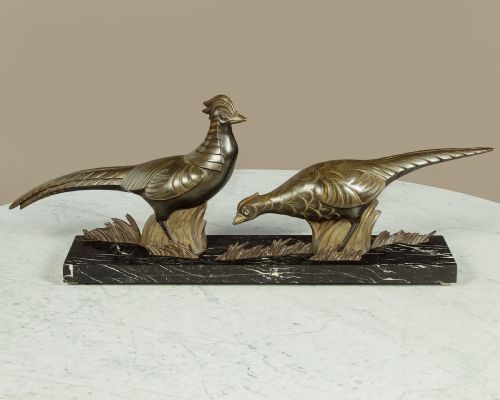
When someone searches for vintage french spelter sculpture, they encounter decorative figures, animals, lamps, bookends and mantel clocks originating from the nineteenth century up through the nineteen-thirties. The most common pieces met on this page belong to the Art Deco period, depicting dancers, athletes, animals such as panthers and deer, and figural groups.
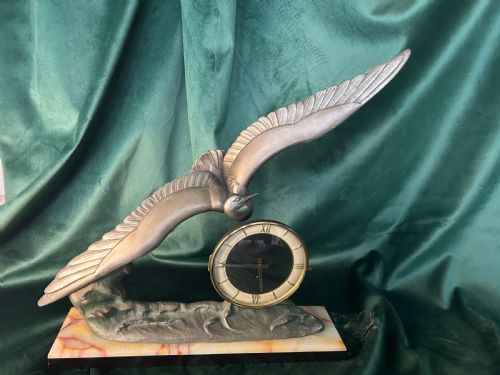
Makers and sculptors often mounted these metal figures upon heavy plinths made of black marble or onyx. Alongside pure sculptures, many pieces serve a domestic function as table lamps, clock garnitures or bookends.
How they were made
These items are cast primarily in spelter, a zinc-based alloy, which manufacturers frequently treated with patinated, gilt or painted metallic finishes to imitate bronze. To give the figures stability and presence, makers secured them to solid bases of marble, onyx, wood or glass.
The casting process allowed for sharp detail in clothing, hair and animal musculature, which was then hand-finished by patination. Glass elements appear in lamps and torchere shades alongside the metal and stone components.
Listings span from the nineteenth century through the nineteen-thirties, featuring materials like marble, onyx, glass and patinated metal.
What varies in quality
Quality separates through the crispness of the casting and the ambition of the design, distinguishing mass-market output from signed studio pieces. Figures bearing the names of known sculptors command attention for their sculptural energy and refined surface patination.
The choice and integration of the base material also dictate standard; heavy, well-fitted marble and onyx plinths complement the metal figure far better than simple substitutes. The preservation of the original painted or patinated finish remains central to the integrity of each piece.
P Sega·C Masson·Geo Maxim·Chiparus·Moreau
The Vintage French Spelter Sculpture Glossary
- Spelter
- A zinc alloy commonly utilised as an economical alternative to bronze in decorative European sculpture. It takes patination well but possesses a softer metallic structure than bronze.
- Patination
- The surface treatment or applied finish on metal that imparts colour, age and depth. This finish simulates bronze or creates distinct metallic tones.
- Art Deco
- A design style spanning the nineteen-twenties and nineteen-thirties characterising many of these sculptures. It relies on streamlined forms, geometric bases and stylised human and animal figures.
- Garniture
- A set of decorative objects, such as a mantel clock flanked by matching lamps or urns. They formed coordinated decorative schemes for nineteenth and twentieth-century interiors.
Vintage French Spelter Sculpture: Frequently Asked Questions
What is spelter?
Spelter is a zinc-based metal alloy used extensively in France for affordable decorative figures and lamps.
It allows for fine casting detail and accepts various patinated or painted finishes easily.
Are these figures solid bronze?
These pieces are cast from spelter rather than bronze, making them lighter and historically more accessible.
Makers often mounted them onto heavy marble or onyx plinths to provide stability.
When were these sculptures made?
The pieces span from the nineteenth century through the Art Deco era of the nineteen-twenties and thirties.
Nineteenth-century examples lean towards classical or pastoral subjects, while later pieces favour modern lines.