
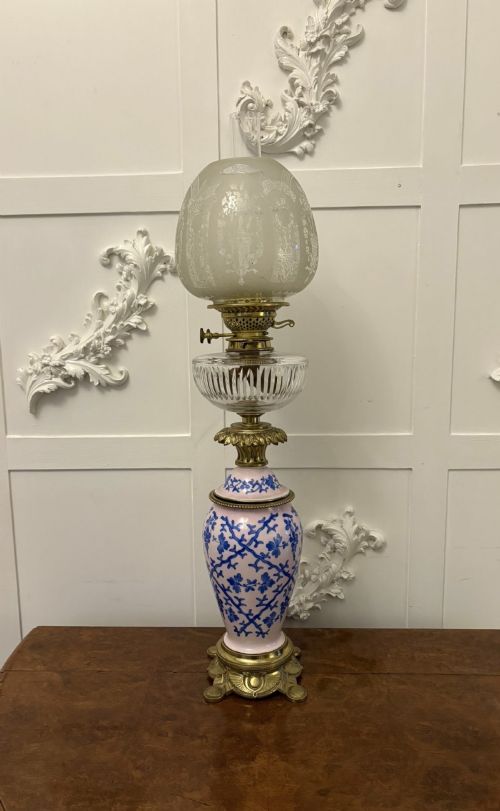


Vintage French Oil Lamp
These vintage french oil lamp selections offer heavy cast bronze, moulded glass, and hand-painted porcelain to anchor a room.
Vintage French Oil Lamp
When you search for a vintage french oil lamp, you encounter lighting fixtures and converted vessels originating from the nineteenth century onward. The selection spans periods from the Victorian era and Napoleon III reigns through to mid-century modernism.
Most examples you meet on this page utilise brass, porcelain, and glass, often taking the form of table lamps or converted oil lamps. Styles range from French Rococo Revival and Neoclassical to Victorian Gothic Revival and French Modernist.
Makers and creators drew upon diverse influences, resulting in pieces that combine functional metalwork with decorative ceramic bodies. These items bring period character to interiors through varied ornamentation and tactile materials.
How they were made
Construction relies on durable metals like brass, bronze, gilt bronze, and ormolu combined with ceramic elements such as porcelain, faience, and terracotta. Artisans stamped, cast, and repousséd the metal components to create intricate relief work and structural mounts.
Glass elements appear in coloured, opaline, or frosted varieties, frequently paired with hand-painted ceramic bodies. Many pieces incorporate marble bases to add weight and stability to the completed lamp structure.
Listings feature items from the 1850s, 1860s, 1880s, 1900, 1920, and 1960, demonstrating styles from Neoclassical to French Modernist.
What varies in quality
The standard of a piece rests on the crispness of the metal casting and the delicacy of the ceramic painting. Heavier mounts in cast bronze or ormolu demonstrate superior craftsmanship compared to lighter stamped brass alternatives.
Design complexity also defines the better examples, where figural elements like cherub orchestras or detailed enamel work elevate the object. The integration of high-grade materials such as bleu celeste porcelain or opaline glass marks out the more ambitious pieces.
The Vintage French Oil Lamp Glossary
- Ormolu
- Gilded bronze used widely for decorative mounts on nineteenth-century furniture and lighting. It involves applying a mercury-gilding process to a bronze base.
- Opaline glass
- A pale, translucent glass popular in Victorian and nineteenth-century decorative objects. It often exhibits a milky or pastel appearance.
- Repoussé
- A metalworking technique where the artisan hammers the design from the reverse side to form a raised relief on the front. This method creates tactile surface decoration on brass and copper.
- Faience
- Tin-glazed earthenware produced in France and across Europe. It provides a smooth white ground for colourful painted decoration.
- Bleu celeste
- A bright sky-blue ceramic ground colour associated with Sèvres porcelain. It forms a vibrant backdrop for gilt or painted details.
Vintage French Oil Lamp: Frequently Asked Questions
Are these lamps still wired for oil?
Most pieces listed under this search have been converted from oil use to electric operation for modern interiors. The conversion process typically adapts the original burner mechanism to house standard electrical fittings.
Buyers should inspect the specific wiring of each piece to ensure it meets contemporary safety standards upon arrival.
How do I identify a Napoleon III period lamp?
Napoleon III pieces often feature ornate cast brass, copper, or gilt bronze mounts reflecting the eclectic revival styles of the mid-nineteenth century. Look for sculptural details such as cherubs, classical motifs, and heavy stamped metalwork.
These characteristics separate them from simpler later designs found in the category.
What materials are most common in these lamps?
Brass, bronze, porcelain, and various types of glass dominate the construction of these items. Marble frequently appears as a heavy base material to support the weight of the metal and ceramic bodies.
Combinations of gilt bronze and coloured glass or faience are standard across the nineteenth-century examples.
How do I care for antique brass and bronze?
Maintain metal surfaces by dusting gently with a soft cloth to prevent the accumulation of dirt in recessed areas. Avoid abrasive cleaners that can strip original patinas or damage delicate ormolu and gilt finishes.
Preserving the natural ageing of the metal maintains the historical character of the piece.