
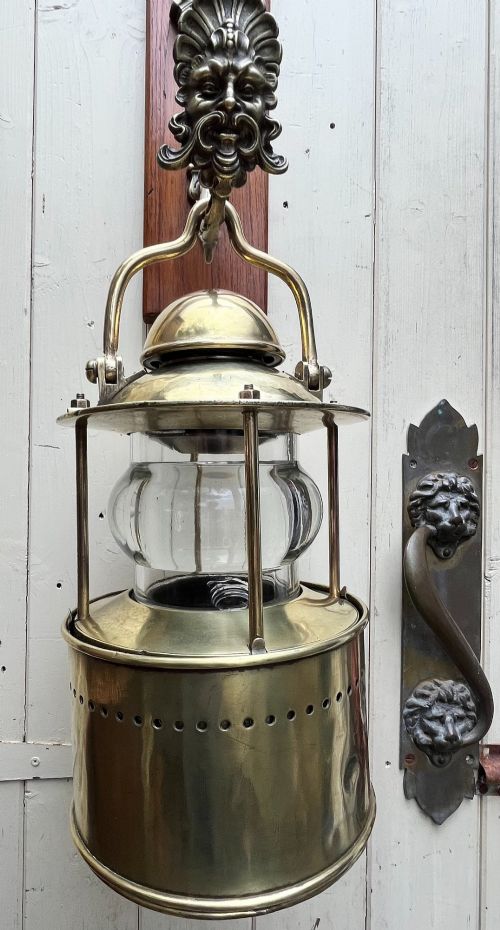


Brass Mounted Oil Lamp
A brass mounted oil lamp brings warm Victorian character and tactile weight to a room.
Brass Mounted Oil Lamp
When you search for a brass mounted oil lamp, you encounter nineteenth century domestic lighting designed for burning paraffin or oil before conversion to electricity. These pieces combine metal mountings with reservoirs made from glass, porcelain, faience or cloisonne enamel, spanning table lamps, wall lanterns and converted vases.
The versions most frequently met on this page date from the Victorian era and the late nineteenth century, including English, French and Asian export pieces. You see standard table lamps alongside pairs of tall glass columns and wall mounted sconces.
Some examples retain their original burners and reservoirs, whilst others have been safely adapted for modern electrical use. Their forms range from simple brass horns to elaborate French Rococo revival designs and Meiji period Japanese metalwork.
Construction and materials
These lamps rely on a combination of cast or spun brass for the structural mounts, collars and bases, paired with blown lead crystal glass, moulded porcelain or cloisonne enamel for the main body. Bronze and faience also appear as primary structural and decorative elements in the better workshops.
Metal components are joined using traditional mechanical fixings, threaded collars and brass mountings that secure the delicate glass or ceramic reservoirs in place. Many examples incorporate intricate enamel work or applied decorative motifs directly onto the metal or ceramic surfaces.
Listings span the nineteenth century, with specific dates recording production in eighteen seventy, eighteen eighty and eighteen ninety.
Judging quality and craftsmanship
Quality reveals itself in the weight and thickness of the brass mountings and the clarity of the lead crystal or the precision of the cloisonne wirework. Superior pieces exhibit crisp chasing on the metal components and well balanced proportions between the brass base and the reservoir.
The distinction between standard domestic lighting and finer exhibition pieces lies in the artistic ambition of the decoration, such as hand painted porcelain panels or complex enamelling. Finer examples show careful integration of metal mounts that complement rather than overwhelm the central glass or ceramic body.
The Brass Mounted Oil Lamp Glossary
- Cloisonne
- A decorative metalwork technique where fine wire creates raised cells filled with enamel paste before firing. This method appears on late nineteenth century Japanese export pieces.
- Faience
- Tin glazed earthenware that provides an opaque, colourful surface for hand painted designs. It is often combined with bronze mounts in continental European lighting.
- Lead Crystal
- A heavy, high clarity glass containing metallic oxide that allows for deep cutting and brilliant light refraction. Osler used this material for table lamps.
- Rococo Revival
- A nineteenth century decorative style featuring asymmetric scrolls, naturalistic shell motifs and curving, flamboyant lines. It heavily influenced Victorian brass and bronze mounts.
Brass Mounted Oil Lamp: Frequently Asked Questions
How do I wire an old oil lamp?
Conversion usually involves running a discreet flex through the existing burner collar or central draught tube without damaging the historical metalwork. Professional rewiring ensures the piece complies with modern safety standards while preserving the original brass components.
Many lamps arrive already converted to electricity by previous owners, often retaining toggle switches or period appropriate plugs that suit domestic placement.
Can I still burn oil in them?
Most pieces found on the market have had their internal burners removed or sealed during electrical conversion to meet safety requirements in domestic interiors. Restoring a piece back to functional oil burning requires careful inspection of the reservoir and wick mechanism.
For daily living, keeping them electrified is standard practice to avoid the smoke, odours and fire risks associated with nineteenth century paraffin fuels.
How do I date a Victorian lamp?
Dating relies on stylistic clues within the brass casting, the manufacturing patents stamped on the burner mechanisms and the fashion of the glass or ceramic body. Victorian pieces often display registration marks or specific aesthetic movement influences.
Comparing the construction of the brass mounts and the type of glass helps narrow down the decade of production between eighteen seventy and eighteen ninety.
Where should I place a heavy table lamp?
These substantial pieces require sturdy sideboards, desks or occasional tables capable of supporting the combined weight of brass, glass or ceramic. Their height and visual presence make them effective focal points in traditional or eclectic interiors.
Ensure the placement allows easy access to the switch and keeps the flex safely routed away from foot traffic.