






Vintage French Modernist Artwork
Vintage french modernist artwork gathers paintings, drawings and prints spanning the decades from the nineteen-twenties through to the nineteen-sixties.
Vintage French Modernist Artwork
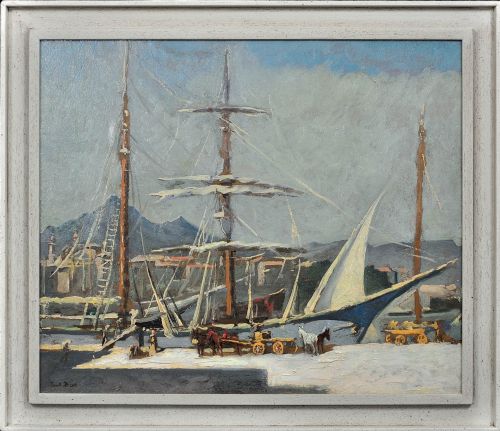
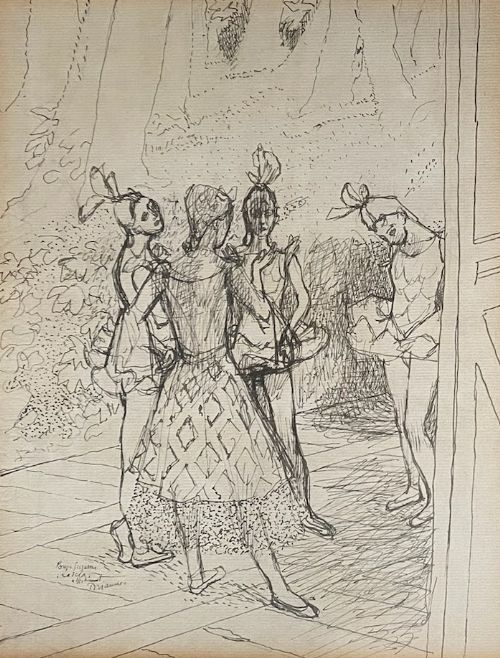
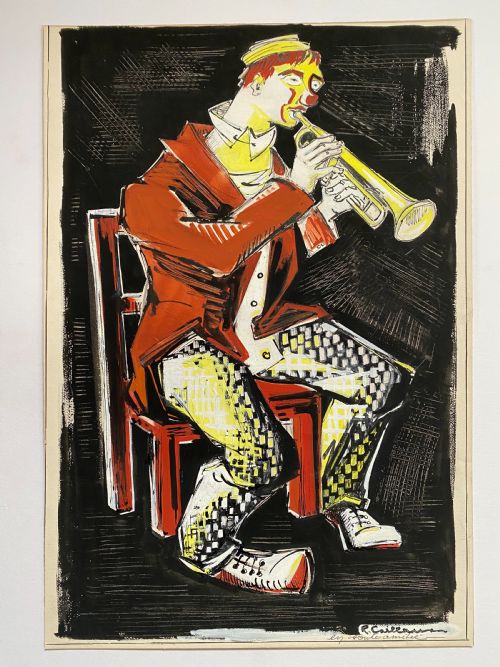
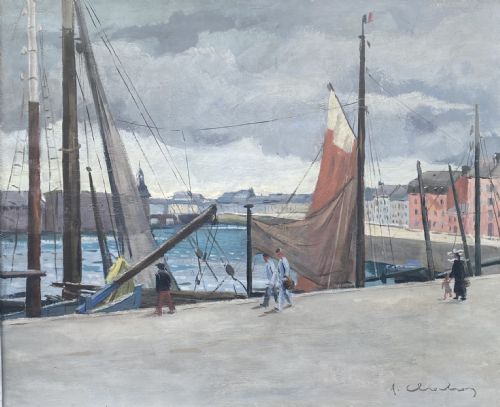
When you examine vintage french modernist artwork, you encounter oil paintings, gouache works, watercolours and ink drawings produced across several decades of the twentieth century. These pieces record landscapes, harbours, interiors and figurative scenes through the lenses of cubism, fauvism and mid-century abstraction.
The selections on this page lean heavily towards canvas and paper supports housed in wood frames. You will find works originating from the nineteen-twenties, nineteen-thirties, nineteen-forties, nineteen-fifties and nineteen-sixties, reflecting varied stylistic shifts in twentieth-century French visual culture.
Materials and techniques
Artists relied primarily on oil paint applied to canvas or board, alongside gouache, ink and watercolours on paper. Certain compositions employ encaustics or mixed applications like oil on paper mounted on canvas.
Framing typically involves wood frames tailored to the proportions of the canvas or paper support. The combination of oil paint, canvas and original wood framing defines the physical substance of these works.
Vintage French Modernist Artwork Retail Price Guide 2026
Typical asking prices for vintage french modernist artwork among the pieces listed under this phrase on Sellingantiques today, from the lower quarter to the upper quarter. They describe what is for sale here now, not the wider market.
Materials span canvas, paper, wood frames and terracotta elements across various modernist and art deco styles.
Distinctions in quality
Quality rests in the confidence of the line work, the handling of pigment, and the structural integrity of the composition. A successful piece demonstrates deliberate spatial control whether the subject is a figurative interior or an abstracted landscape.
The strength of provenance and the clarity of the artist's hand further separate standard decorative examples from masterworks. The dialogue between colour, brushwork and surface texture dictates the visual success of each composition.
Paul Bret·Maurice Brianchon·Lilian Colbourn·Raymond Moritz·Gabriel Dauchot·Demetrios Galanis·Pinchus Krémègne·Matisse·Andre Delfau·Lamotte·Yves Brayer·Archille Zavatta
The Vintage French Modernist Artwork Glossary
- Fauvism
- An early twentieth-century movement characterised by fierce brushwork and bold, non-naturalistic colours. Painters working in this manner prioritised painterly qualities and strong colour over realistic representation.
- Cubism
- An avant-garde art style that disrupted traditional perspective by breaking subjects up into multi-faceted geometric cubes and planes. Objects are analysed, broken up and reassembled in an abstracted form.
- Gouache
- An opaque water-based pigment that dries to a heavy, matte finish. It allows for vibrant colour blocking and sits distinctively on paper or board supports.
- Encaustic
- A technique involving heated beeswax mixed with coloured pigments. The resulting mixture is applied to a surface, usually canvas or wood panel, producing a luminous and durable finish.
- Provenance
- The chronological documentation showing the custody, control, and ownership of an artwork from its creation to the present. Strong provenance adds historical weight to a piece.
Vintage French Modernist Artwork: Frequently Asked Questions
What periods do these artworks cover?
The pieces span from the nineteen-twenties through to the nineteen-sixties. This timeframe captures distinct movements including art deco, cubism, fauvism and mid-century modernism.
Each decade brought shifts in palette and form, moving from early avant-garde experiments towards more abstracted post-war compositions.
What mediums are most common?
Oil paint on canvas is widely represented, alongside gouache and ink drawings on paper. Board supports and watercolour also appear across the selection.
Many of these paintings retain their period wood frames, preserving the complete object as it was displayed in the mid-twentieth century.
How do I style these works at home?
These pieces integrate easily into contemporary interiors by providing a focal point of colour and texture. Pairing a modernist oil painting with minimalist furniture allows the brushwork to stand out.
Consider matching the wood tone of the frame with existing room accents to create a cohesive display.
How can I tell different styles apart?
Art deco and early pieces often feature defined figurative outlines and calmer palettes, whereas nineteen-fifties works frequently lean into abstraction and dynamic colourist application.
Examining the handling of paint and the geometric breakdown of subjects reveals whether a piece leans towards fauvism, cubism or standard figurative realism.