
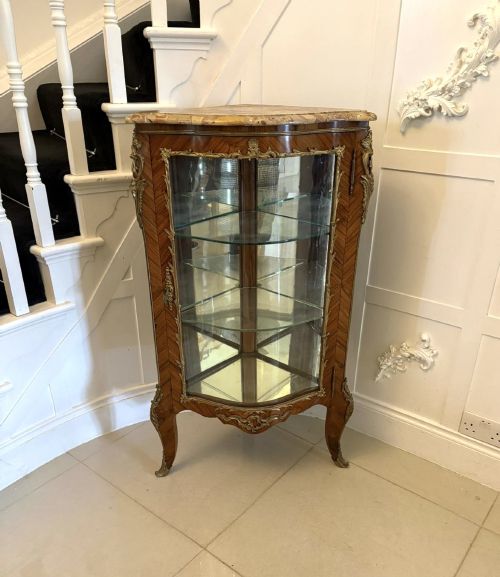
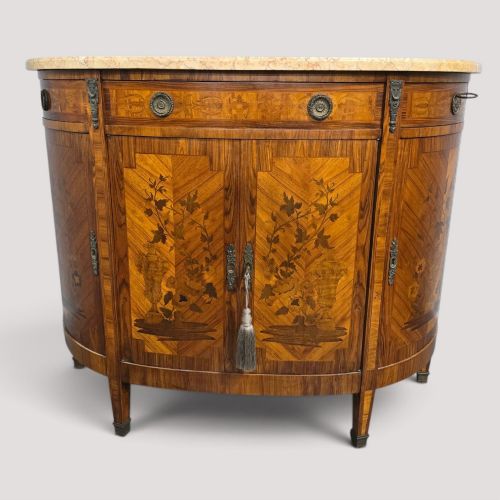
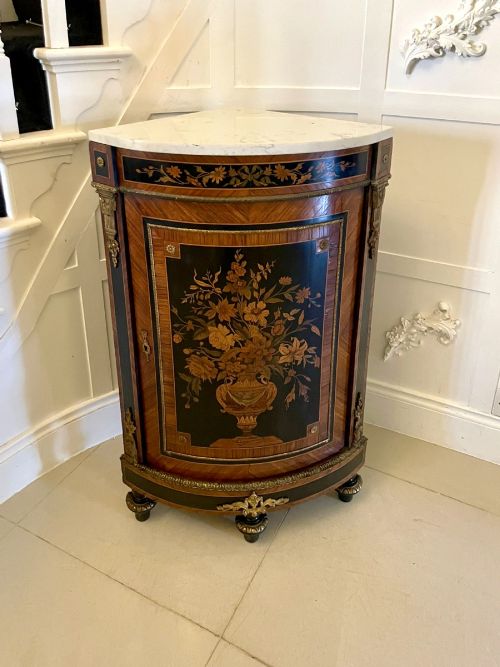
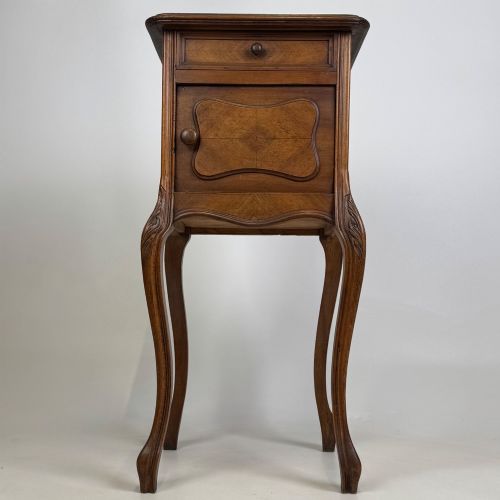
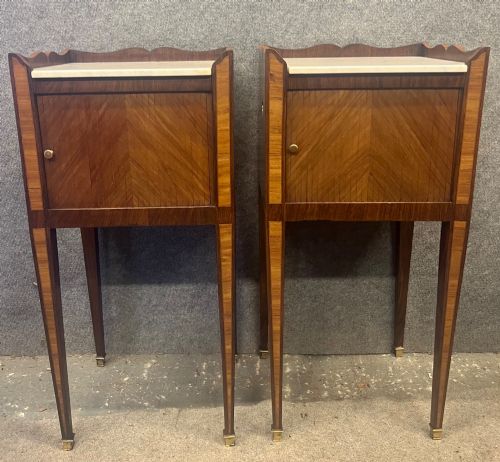
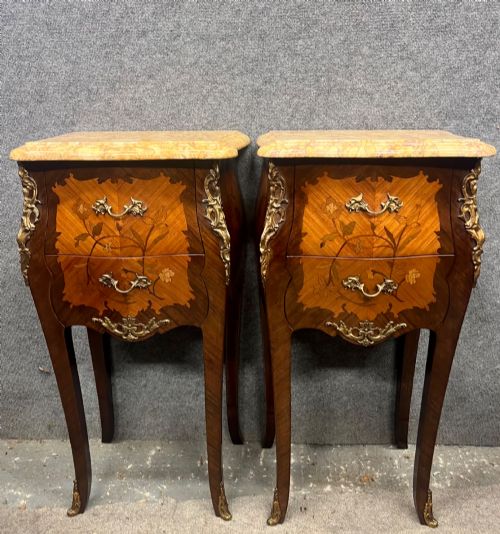
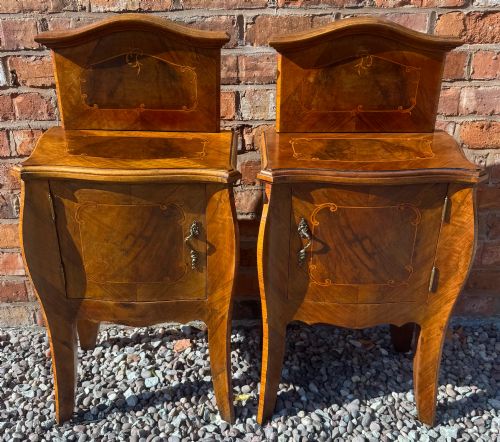
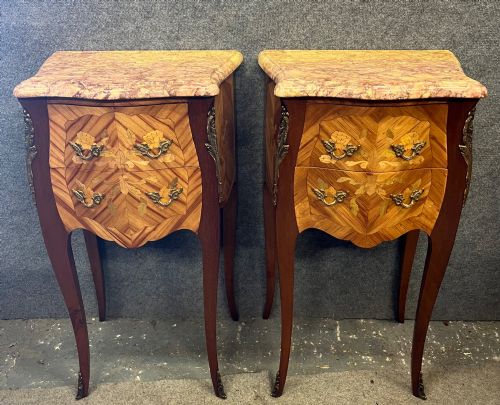


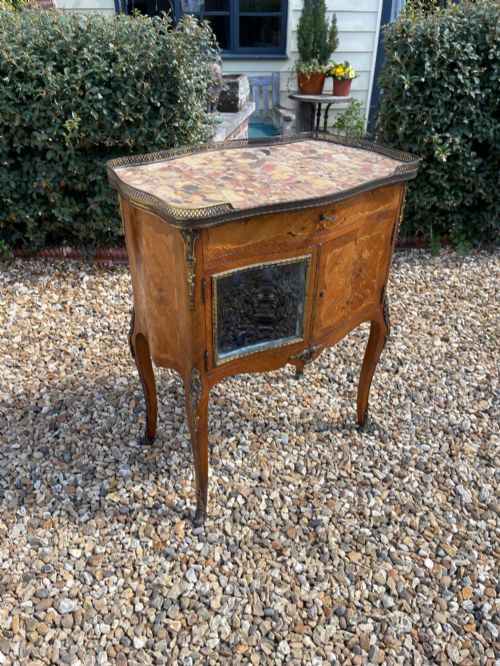
Vintage French Marquetry Cupboard
These vintage french marquetry cupboard pieces combine intricate wood veneers with classic continental forms to anchor a room.
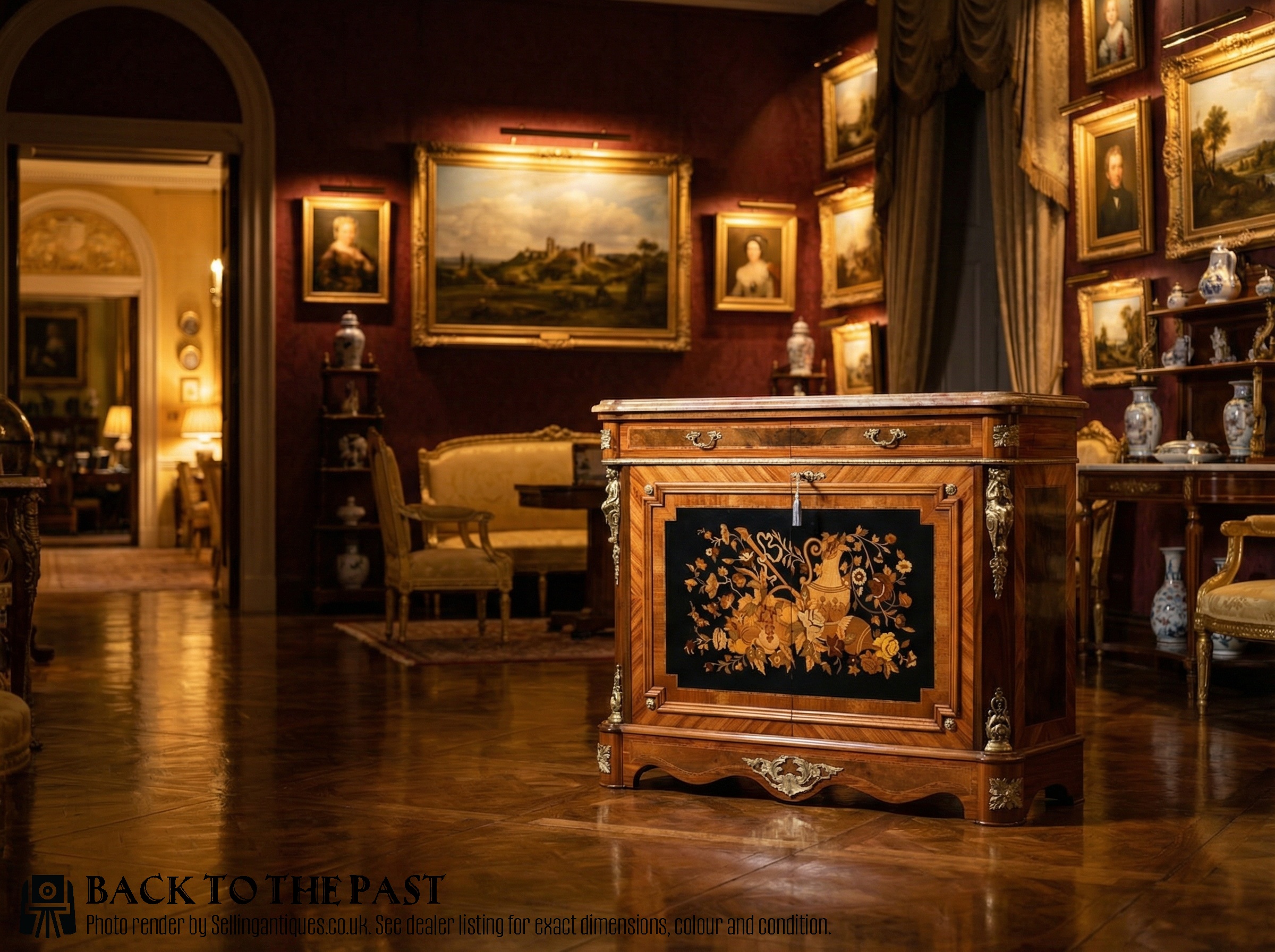
Vintage French Marquetry Cupboard
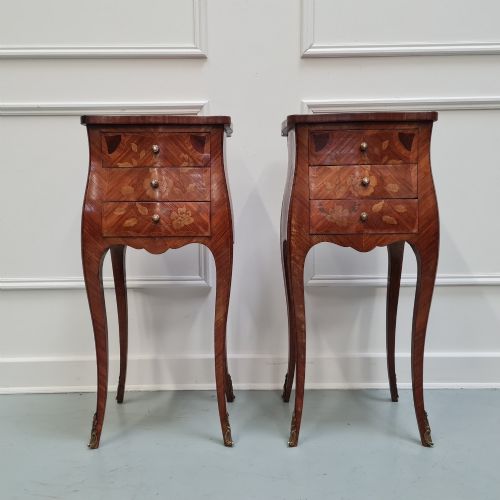
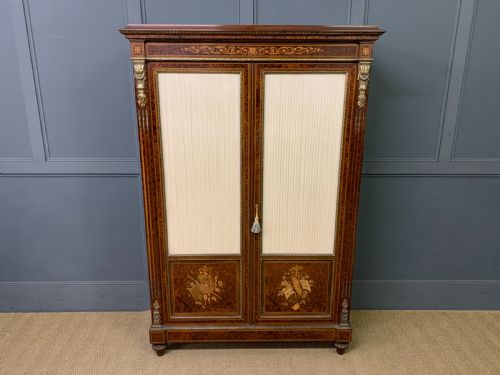
A vintage french marquetry cupboard brings continental craftsmanship into a modern interior through patterned wood veneers and practical storage. When exploring this selection, buyers encounter everything from compact bedside chests to grand corner display cabinets.
The objects span multiple decades from the nineteenth century into the twentieth century, reflecting shifting tastes in interior design. Forms range from demilune side cabinets to tall bookcases and bedside tables, with Louis XV and Louis XVI revivals dominating the aesthetic.
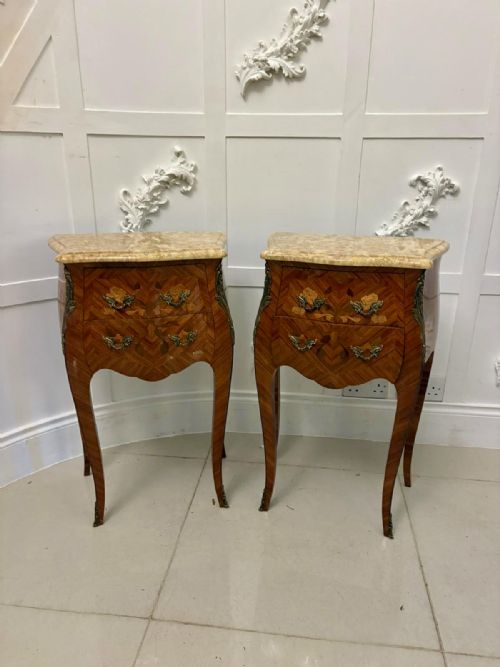
Many examples incorporate fitted marble tops and cast metal mounts, uniting utility with decorative flair. These pieces serve equally well as lamp tables, bedside storage or focal points in a hallway.
How They Were Made
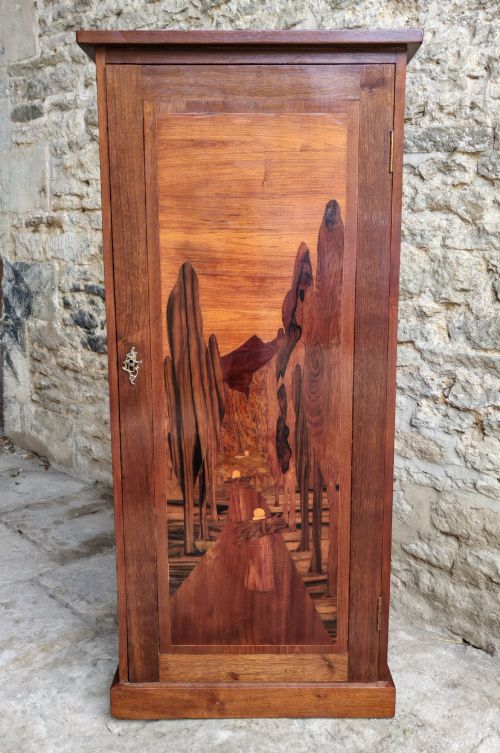
Cabinet makers utilised contrasting timbers such as kingwood, walnut, mahogany, satinwood and rosewood to build up intricate floral and geometric marquetry patterns. Veneers were carefully selected and hand-cut to create harmonious grain directions and pictorial scenes across the doors and top surfaces.
Structural carcasses often relied on solid secondary woods beneath the decorative skin, ensuring stability across changing household temperatures. Marble slabs were shaped to fit the upper surface precisely, while cast ormolu and brass mounts were applied to corners and feet to protect vulnerable edges.
Several bedside chests hide small pull-out writing slides originally designed for midnight notes.
What Varies in Quality
The standard of execution in the veneer work marks the primary division between ordinary items and superior examples. Finer pieces display crisp, tight joints in the marquetry without visible filler, using naturally coloured woods rather than painted details to create depth.
The weight and finish of the metal mounts, alongside the thickness and matching of the marble top, signal the original tier of production. Superior items maintain integrity in the drawer runners and door hinges, allowing smooth movement after decades of domestic use.
The Vintage French Marquetry Cupboard Glossary
- Marquetry
- Decorative veneer work arranged in pictorial or geometric patterns. Craftsmen apply thin slices of varied timbers onto a carcase to form intricate surface designs.
- Ormolu
- Gilded bronze mounts applied to furniture edges and handles. This decorative technique adds a bright metallic contrast to dark wood surfaces.
- Parquetry
- Geometric wood inlay forming repetitive patterns such as cubes or stripes. It differs from marquetry by sticking to strict geometric grids rather than floral motifs.
- Demilune
- Half-moon shape used for tabletops and cabinet fronts. This curved profile allows the furniture to sit flush against a wall while saving floor space.
- Vernis Martin
- A type of simulated Japanese lacquer developed in France. Artisans applied successive layers of translucent varnish to achieve a glossy, decorated finish.
Vintage French Marquetry Cupboard: Frequently Asked Questions
How do I clean the marble top?
Wipe the surface gently with a soft damp cloth using neutral soap. Avoid acidic cleaners or lemon juice that can etch the polished stone.
Dry thoroughly with a clean towel to prevent water spots and maintain the natural lustre of the marble.
Where should I place a bedside cabinet?
These cupboards suit bedrooms as nightstands or lamp tables where enclosed storage keeps small items hidden. Their decorative tops also accommodate reading lights and books.
They function equally well in living spaces as small side tables or in hallways for storing keys and correspondence.
How do I identify Louis XV style?
Look for characteristic serpentine curves, cabriole legs, and asymmetrical floral or rococo mounts. The overall silhouette avoids harsh right angles in favour of flowing organic lines.
In contrast, later Louis XVI revivals favour straighter lines, symmetry, and neoclassical detailing.
Are the veneer patterns hand cut?
Historic pieces feature hand-cut veneers assembled with a fretsaw using multiple contrasting timber layers. Close inspection reveals tiny variations in the grain and tight joints characteristic of manual workshop production.
This painstaking method creates the rich pictorial depth seen on superior cabinet doors.