


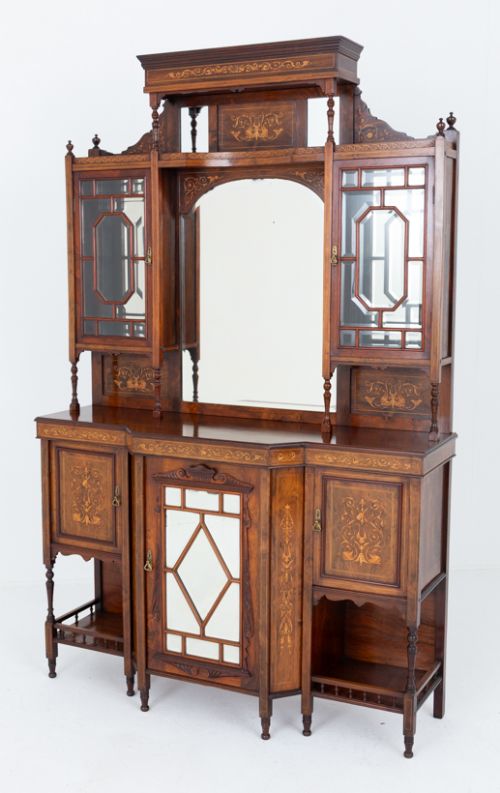


Antique Marquetry Chiffonier
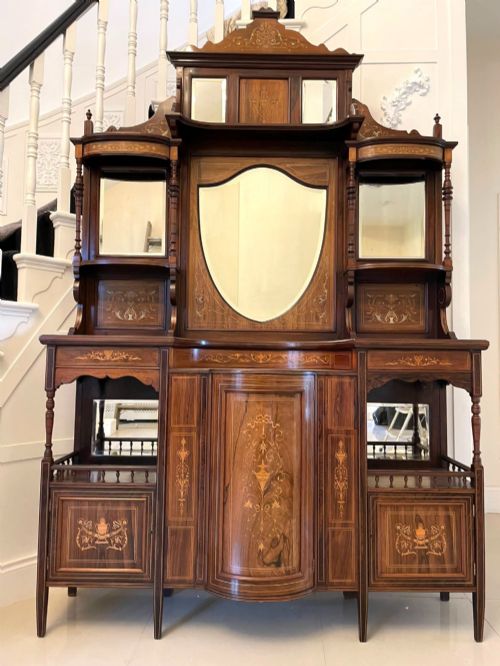
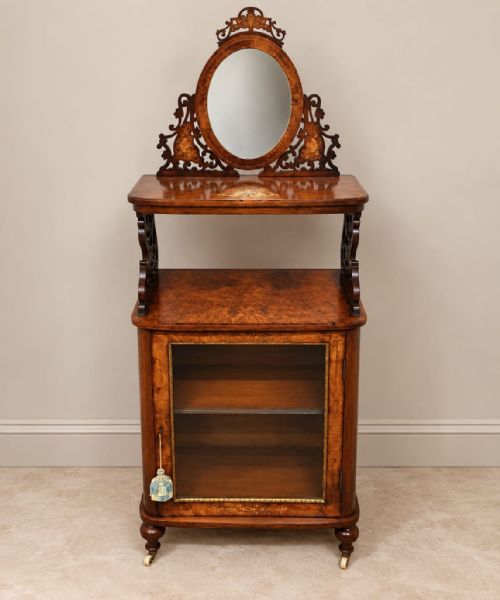
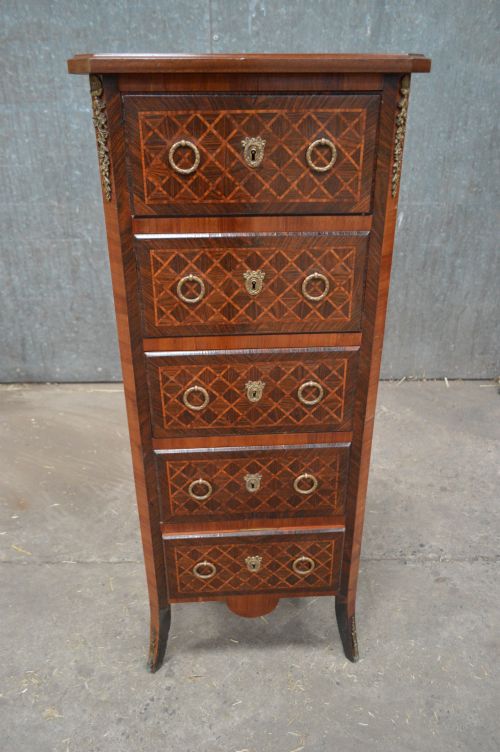
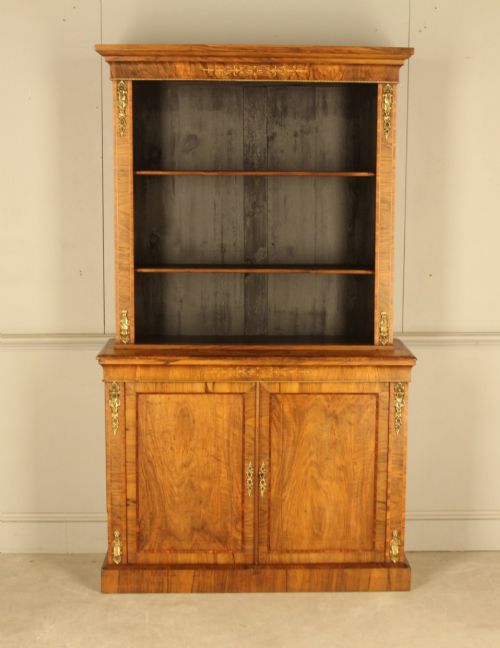
An antique marquetry chiffonier brings rich timber surfaces and delicate floral or geometric veneers into a principal room.
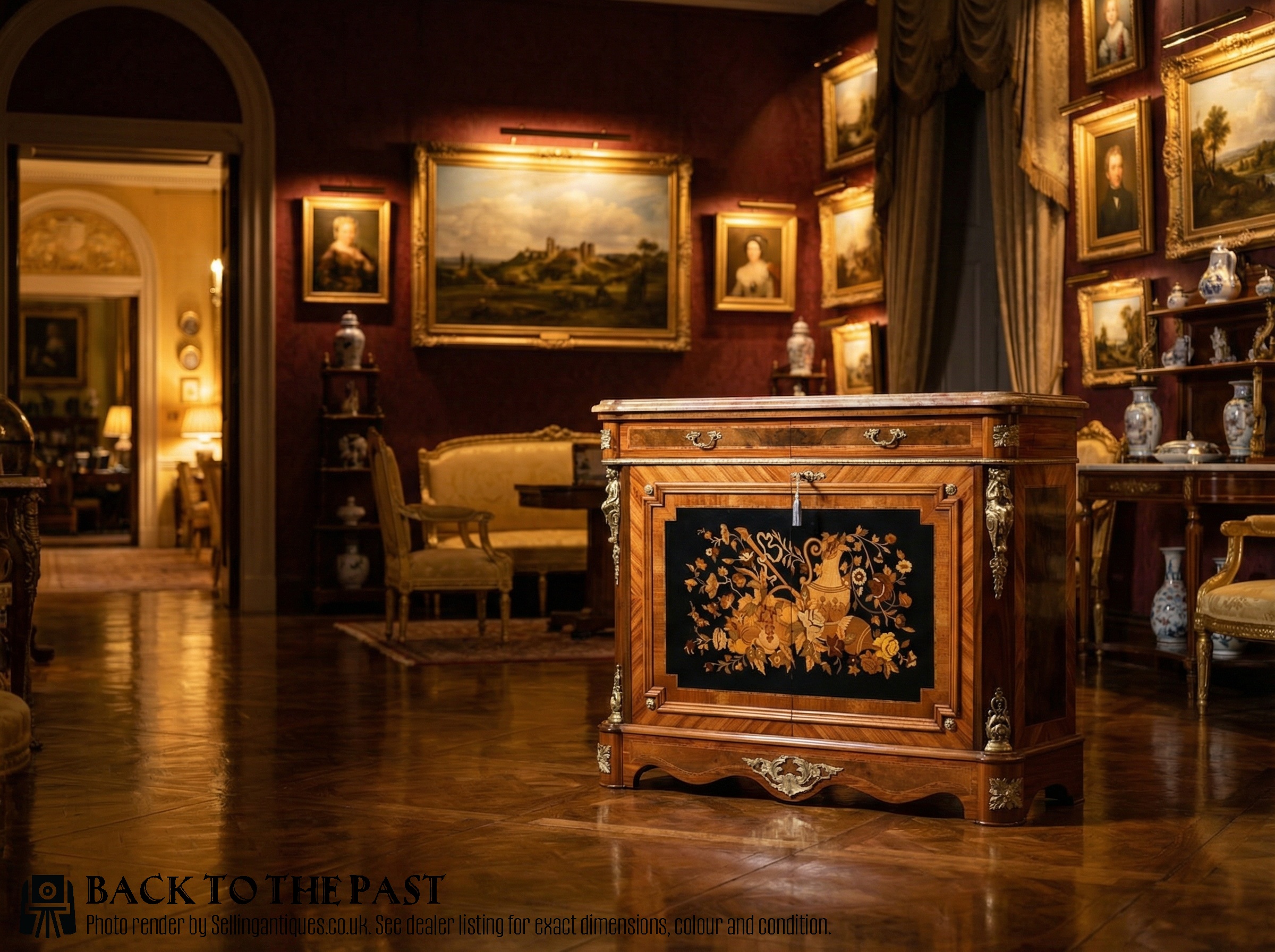
Antique Marquetry Chiffonier
When you search for an antique marquetry chiffonier, you are looking at low timber sideboards and cabinets built primarily during the Victorian and Edwardian periods. These pieces combine a lower cupboard section with elaborate surface decoration, frequently appearing alongside related side cabinets, credenzas and mirror-backed parlour furniture.
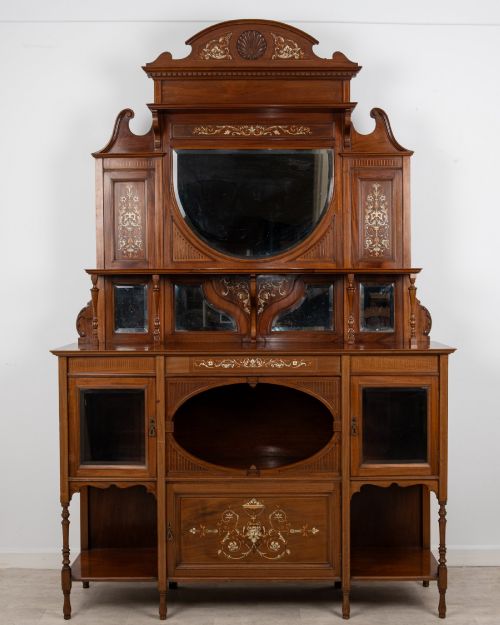
The version you are most likely to meet on this page is a late nineteenth-century cabinet formed from rosewood or walnut, decorated with contrasting floral or scrolling veneers. They originated as functional living and dining room storage units designed to display ornaments on top while concealing books or linens behind closed doors.
How they were made
Cabinet makers constructed the carcases from solid timbers such as mahogany, walnut and rosewood, applying thinner veneers and contrasting wood slices across the exterior surfaces to form complex pictures and banding. Artisans embedded brass stringing and floral marquetry directly into the timber ground, securing the patterns with animal glue before scraping and polishing the panels to a smooth finish.
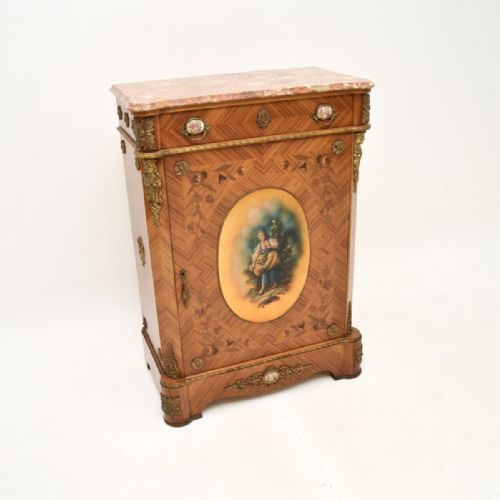
Many examples incorporate cast or chased ormolu mounts, mirrored glass back panels and marble tops, particularly in pieces following French tastes. The internal shelving and drawer linings typically utilise secondary softwoods, while structural joints rely on traditional dovetailing and mortise and tenon construction.
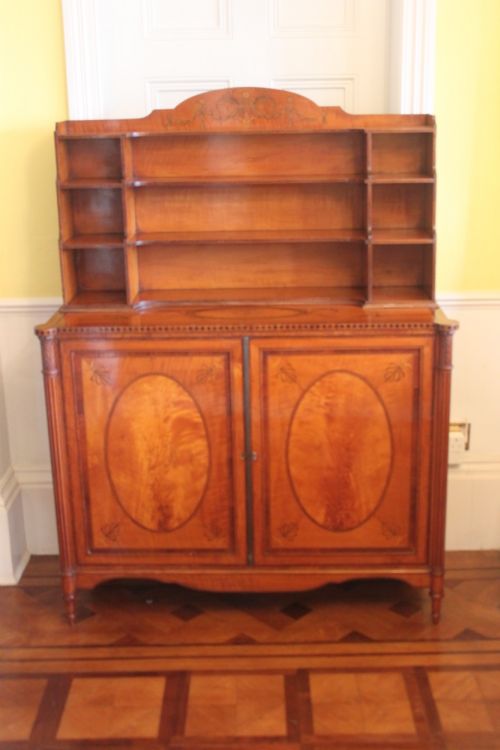
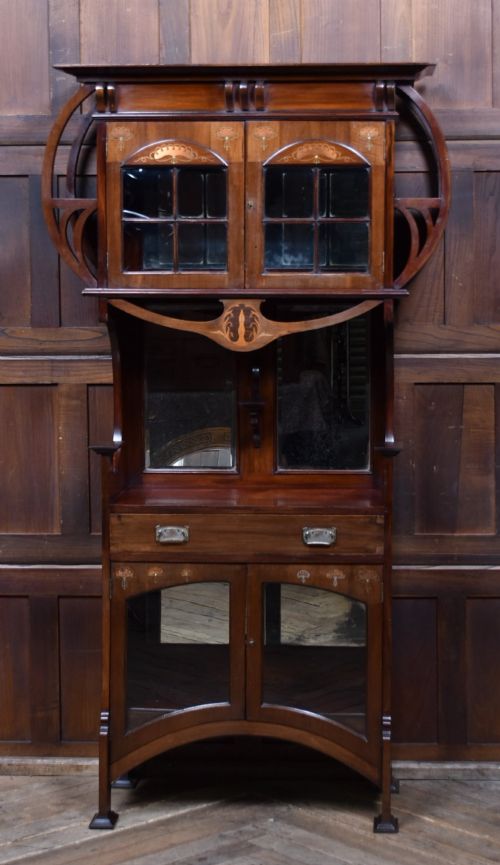
Listings for this phrase span the Regency, Victorian and Edwardian eras, utilising rosewood, walnut, mahogany and satinwood.
What varies in quality
The distinction between ordinary and superior pieces rests upon the precision of the timber selection and the complexity of the veneer work. Master workshops employed finely figured burr walnut and dense rosewood, cutting the marquetry elements with microscopic accuracy so that the joints between light satinwood, fruitwood and darker grounds remain virtually invisible.
Structural heft and secondary details also separate the tiers of manufacture. Better cabinets feature substantial brass hardware, heavy marble slabs, finely bevelled mirror glass and crisply cast ormolu mounts rather than stamped brass plating or plain pine carcase interiors.
Collinson and Lock·Edwards and Roberts·Gillows
The Antique Marquetry Chiffonier Glossary
- Marquetry
- A decorative technique where small pieces of veneer are assembled into pictorial or geometric patterns on a paper backing before being glued to a carcase. It differs from parquetry by forming pictorial scenes or floral motifs rather than geometric tiling.
- Chiffonier
- A low sideboard or cabinet, typically featuring a closed cupboard base beneath a drawer or open shelf. In nineteenth-century usage, the form often overlaps with smaller side cabinets and gentleman's credenzas.
- Ormolu
- Gilded bronze mounts used extensively as decorative feet, escutcheons and corner brackets on nineteenth-century cabinet work. The alloy provides a bright golden finish that contrasts with dark rosewood and walnut.
- Parquetry
- Geometric wood inlay forming regular patterns such as cubes, chequers orlozenges across a furniture surface. It forms the structural counterpart to floral marquetry.
- Palisander
- A dense, dark timber resembling rosewood, frequently utilised by cabinet makers during the Regency and Victorian eras for its heavy grain and rich purple-brown tones.
Antique Marquetry Chiffonier: Frequently Asked Questions
How do I date an antique chiffonier?
Dating relies upon examining the secondary timbers, construction methods and prevailing aesthetic styles of the piece. Regency examples display classical brass inlay and heavier classical proportions, whereas Victorian and Edwardian pieces frequently utilise rosewood grounds and intricate floral marquetry.
Hardware, screw types and mirror glass bevelling also offer firm chronological clues. Hand-bevelled mirror plates and machine-cut screws point toward the later nineteenth century, while earlier Regency pieces utilise hand-forged fittings and simpler internal carcase assembly.
Where should I place a chiffonier?
These cabinets suit principal reception rooms, dining areas or hallways where their decorative veneer work can be appreciated without obstruction. Because many incorporate low display shelves or mirror backs, placing them against a primary wall anchors the room's proportions.
Keep the timber away from direct heat sources and strong sunlight to prevent the delicate veneer from drying, warping or fading over time. A stable room temperature preserves both the animal glue beneath the marquetry and the polished finish of the wood.
How do I care for marquetry surfaces?
Maintain the finish by dusting gently with a dry, soft cloth and applying a quality beeswax sparingly to nourish the timber. Avoid liquid polishes containing silicones or harsh detergents, which can penetrate hairline cracks in the veneer and soften the historic glue.
Inspect the surface periodically for any lifting veneer or loose brass stringing. Addressing minor lifting immediately with appropriate conservation adhesive prevents small sections from breaking away during routine cleaning.
What is the difference between a chiffonier and a credenza?
A chiffonier is traditionally a compact sideboard featuring a lower cupboard section, sometimes surmounted by a small shelf or mirror back. They were designed for everyday storage in Victorian living spaces.
A credenza generally refers to a more formal, symmetrical low cabinet, often featuring curved glass end doors and extensive ormolu mounts influenced by French taste. Credenzas tend to be longer and more decorative than standard chiffoniers.