
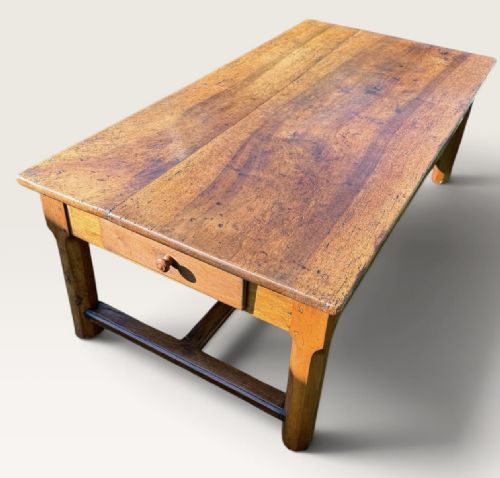
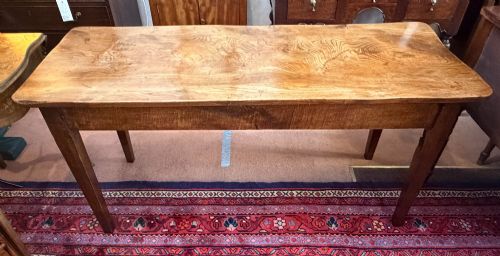
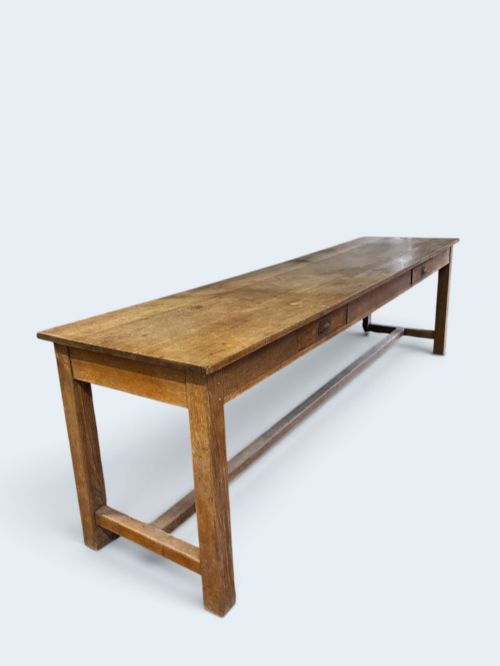

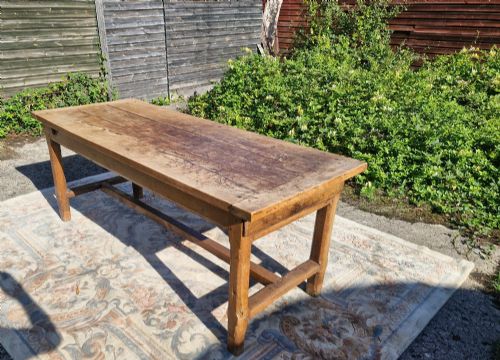
Vintage French Country Table
A vintage french country table brings honest timber and utility to a room, offering sturdy dining and side surfaces shaped by rural use.
Vintage French Country Table
When you search for a vintage french country table, you are looking at practical furniture designed for domestic and rural life across the nineteenth and early twentieth centuries. These pieces encompass dining tables, console tables, bedside cabinets, and coffee tables originating from provincial workshops.
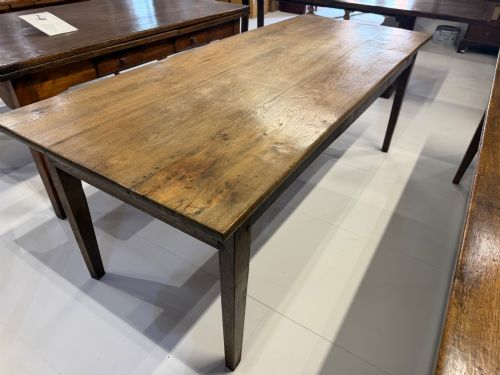
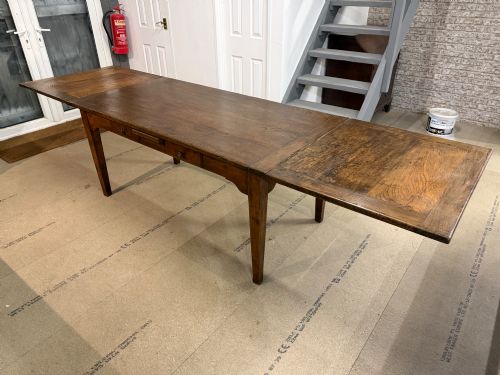
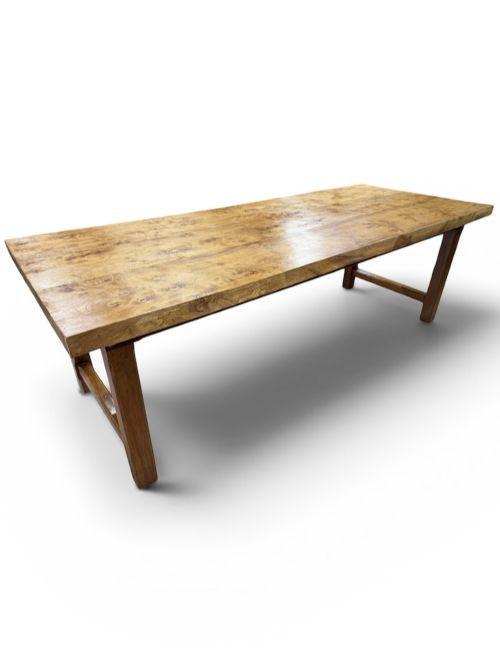
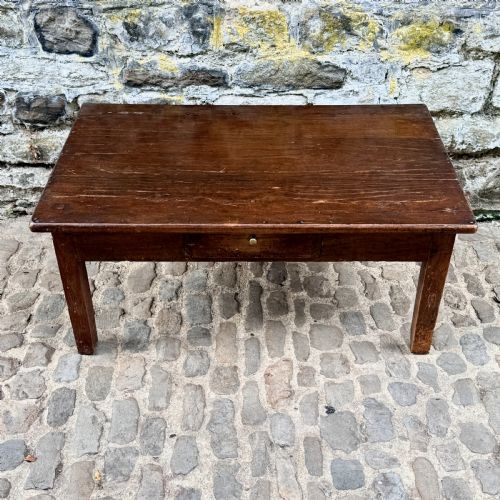
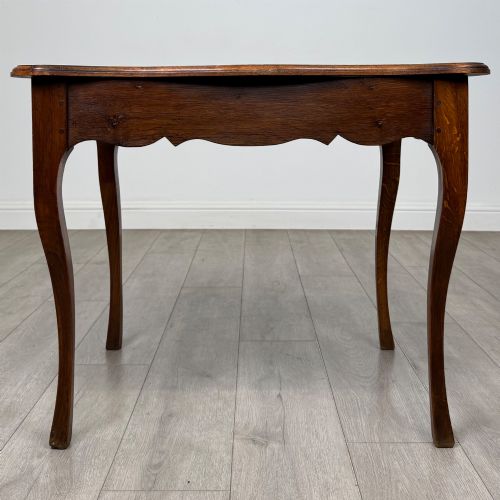
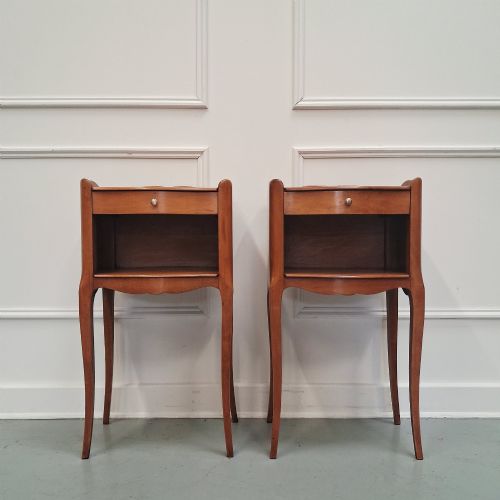
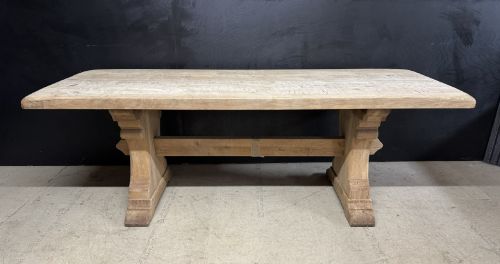
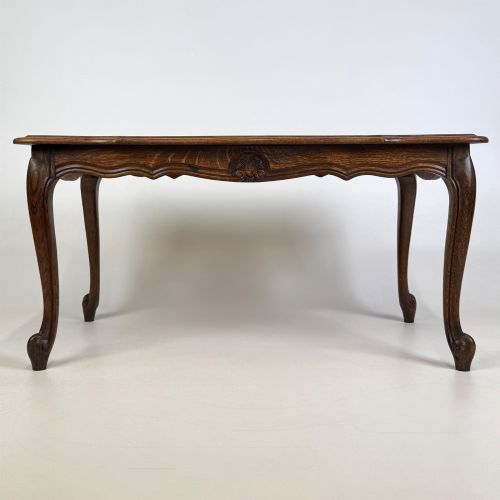
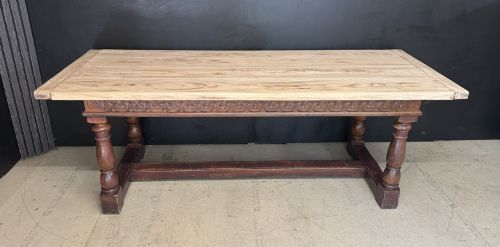
The version you are most likely to meet on this page is a dining or farmhouse table rendered in oak, pine, or fruitwood, often featuring simple lines and functional proportions. Alongside large dining surfaces, smaller forms like bedside tables and side tables appear frequently in the listings.
Originating largely from the nineteenth century and extending into the twentieth century, these items display styles ranging from rustic farmhouse and French provincial to primitive country and French chateau. Their forms reflect decades of everyday service in French homes and kitchens.
How these tables were constructed
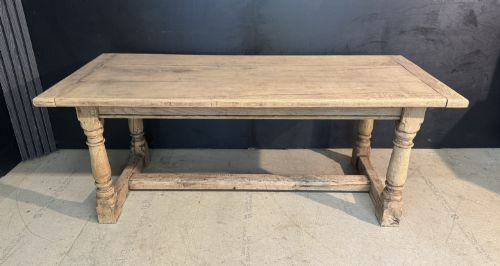
Makers utilised solid timbers such as oak, pine, fruitwood, beech, and chestnut, building surfaces designed to endure daily household labour. Many dining surfaces feature planked timber tops, including two-board configurations, joined to sturdy legs with simple aprons.
Secondary materials like brass hardware, iron accents, and marble slabs appear on specific functional forms such as prep tables and side furniture. Surfaces show hand-finished treatments, ranging from natural grain exposure to painted finishes and bleached oak effects.
What separates the best examples
Quality rests upon the selection of timber and the integrity of the original construction, where dense hardwoods like oak and fruitwood provide greater durability than softer woods. The character of the grain and the honesty of the joints dictate the visual presence of each piece.
Proportion and utility also separate everyday work tables from more decorative salon or console furniture. Pieces that retain their original unpainted timber surfaces or authentic period paintwork hold distinct advantages in material integrity.
The Vintage French Country Table Glossary
- Farmhouse table
- A large utility dining table constructed from solid timber for daily kitchen or dining room use. These pieces often feature generous overhanging tops and sturdy legs.
- Fruitwood
- Timber sourced from fruit-bearing trees such as cherry or pear, utilised by regional cabinetmakers for its fine grain and warm tone. It was a favoured material for provincial furniture.
- Bleached oak
- Oak timber that has undergone a lightening process to soften its natural dark tone, often seen on twentieth-century French tables. This treatment creates a pale, neutral surface.
- Bobbin legs
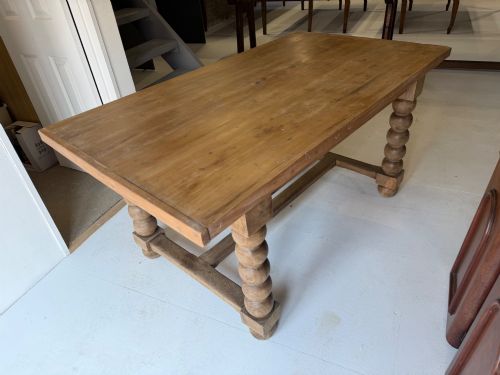
- Turned furniture supports shaped like a series of wooden bobbins or spools stacked end to end. This decorative turning technique appears on nineteenth-century tables.
Vintage French Country Table: Frequently Asked Questions
What defines a vintage french country table?
A vintage french country table is a utilitarian wooden piece originating from provincial France during the nineteenth or early twentieth centuries. These tables prioritise functional construction and sturdy timbers over ornate decoration.
They encompass large dining formats as well as smaller side and coffee tables. Their appearance is defined by regional styles like rustic farmhouse and French provincial.
How do I use a farmhouse table in a modern home?
These tables serve naturally as central dining surfaces in kitchens or open-plan living areas. Their durable timber tops handle daily family use while adding historical warmth to contemporary interiors.
Smaller iterations, such as side tables or console tables, fit easily into hallways and living rooms. They provide practical surface area without dominating the floor space.
What woods were used for these tables?
Provincial makers relied heavily on domestic hardwoods and softwoods available in their regions. Oak, pine, fruitwood, beech, and chestnut are the primary materials recorded in these pieces.
Some specialised prep tables incorporate marble slabs for culinary tasks. Iron and brass components also appear on specific occasional and garden furniture.
How do I tell different periods apart?
Nineteenth-century examples frequently feature heavy oak or fruitwood construction with simple planked tops and tapered or turned legs. Twentieth-century pieces often display bleached oak finishes or lighter pine structures.
Stylistic markers range from primitive country designs to refined French chateau and art nouveau influences. Examining the timber and joinery helps clarify the era of manufacture.