


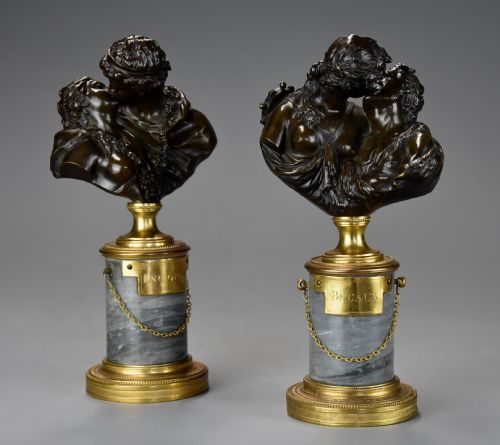


Vintage French Bust
A vintage french bust brings sculptural presence and historical character into a room, spanning delicate terracotta portraits to striking shop mannequins.
Vintage French Bust
When buyers search for a vintage french bust, they encounter a diverse array of sculptural forms ranging from classical portraits to commercial display pieces. The selection includes fine art works in terracotta, bronze, and alabaster alongside practical items like inkwells and advertising mannequins.
Pieces originating from the late nineteenth century lean towards Neoclassical and Art Nouveau styles, depicting historical figures or idealized female forms. Examples from the early twentieth century often showcase Art Deco aesthetics or functional shop displays from Parisian makers.
The materials vary widely across the inventory, capturing everything from carved stone and cast metal to painted plaster and linen-covered tailors' dummies. These objects reflect both domestic interior decoration and commercial French retail history across multiple decades.
Materials and construction
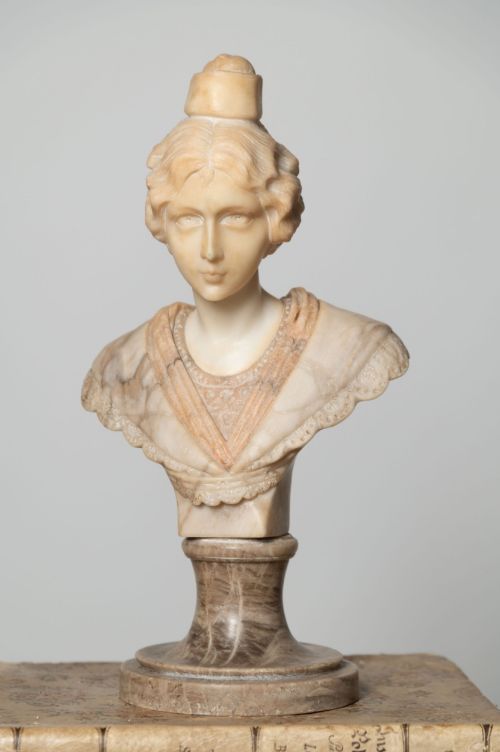
Sculptors and makers utilised a variety of media, notably casting bronze and terracotta to capture fine facial details and flowing drapery. Alabaster and marble provided a smooth, luminous finish for classical and portrait subjects, often mounted on contrasting stone columns or ormolu bases.
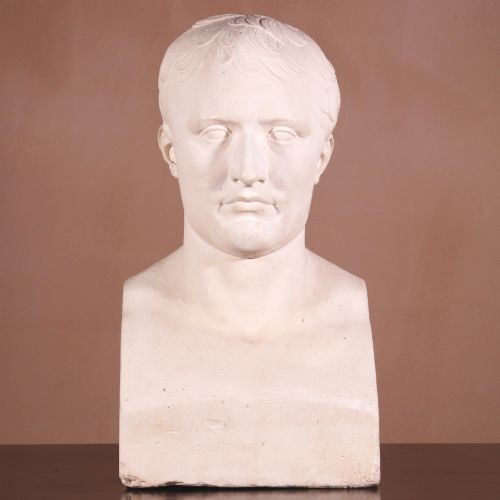
Plaster and painted finishes served both fine art sculptures and commercial advertising displays, where papier-mâché, wood, and linen formed durable shop mannequins. Metalwork components such as gilt bronze integrated functional elements like inkwells and clock mounts into decorative forms.
Materials documented across the selection include carved alabaster, gilt bronze, painted plaster, and traditional linen-covered tailors' dummies.
Assessing quality in French sculpture
Quality rests in the crispness of the modelling and the sensitivity of the carving, whether working in soft terracotta or hard marble. Finer examples display subtle transitions in expression and careful attention to anatomical detail, distinguishing individual artistic merit from mass production.
The integrity of the original surface patination or paint layer dictates the visual impact of metal and plaster pieces. Integrity of materials, from matched marble bases to authentic period mounts, sets superior decorative objects apart.
Jean Antoine Houdon·Georges-Charles Coudray·Gilbert Privat·Georges Morin·Emmanuel Villanis·P.H Mourey·J C De Blezer·A.Gory
The Vintage French Bust Glossary
- Terracotta
- Fired clay used extensively for sculptural busts and figures, often left with a natural matte finish or painted. It allows for highly expressive modelling by the artist's hand.
- Ormolu
- Gilded bronze mounts and decorative elements applied to pedestals, clocks, and inkwells. This technique creates a rich metallic contrast against stone or marble.
- Alabaster
- A fine-grained mineral carved into translucent sculptures and portrait busts. Its softness permits delicate detailing but requires careful handling.
- Mannequin
- A three-dimensional form used for displaying clothing or millinery in Parisian shops. These pieces often combine plaster, wood, papier-mâché, and fabric.
- Patina
- The surface sheen and colour developed on metals, wood, and paint over time through age and handling. It serves as an indicator of original material integrity.
Vintage French Bust: Frequently Asked Questions
How do I date a French bust?
Dating relies on stylistic markers such as Art Nouveau curves, Art Deco geometry, or Neoclassical proportions, alongside any artist signatures or foundry marks.
Material composition and manufacturing techniques, such as cast bronze methods or early plaster casting, also provide reliable clues to the period of origin.
Where were shop mannequins made?
Many commercial mannequins and dress forms originated in specialised Parisian workshops and firms, such as Stockman or Charmereine, during the late nineteenth and early twentieth centuries.
These pieces were specifically built for fashion houses and department stores to display contemporary garments.
Are terracotta busts fragile?
Terracotta is a fired earthenware material that requires careful placement away from high traffic areas to prevent chipping or impact damage.
Maintaining a stable indoor environment protects the porous clay and any applied painted surfaces from moisture fluctuation.
What is the difference between a bust and a sculpture?
A bust specifically depicts a person's head, neck, and upper shoulders, often mounted on a dedicated plinth or base.
Sculptures encompass full figures, decorative objects, and functional items like inkwells alongside portrait work.