
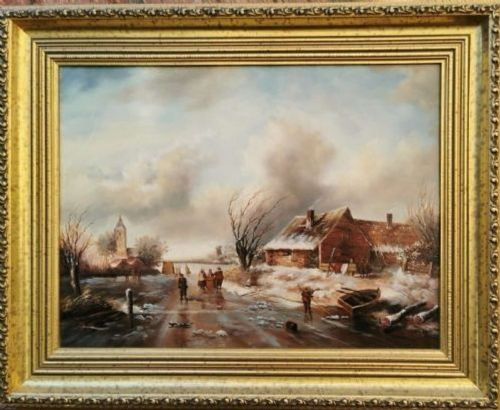
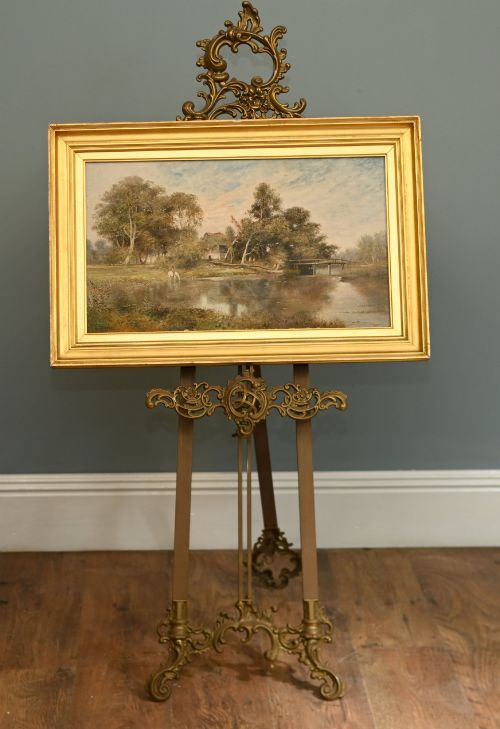
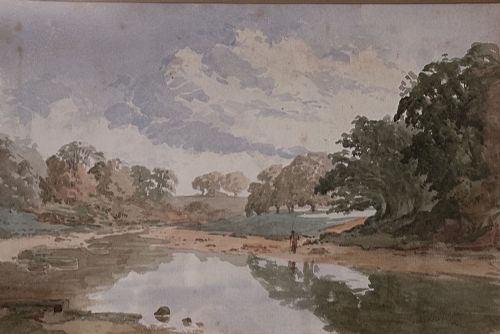
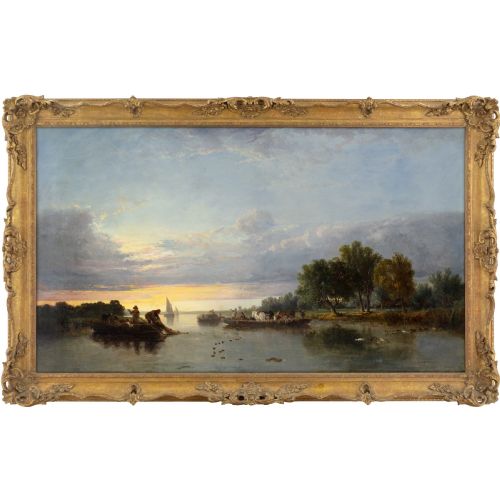

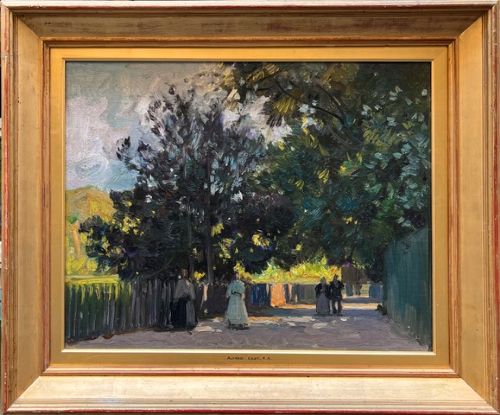
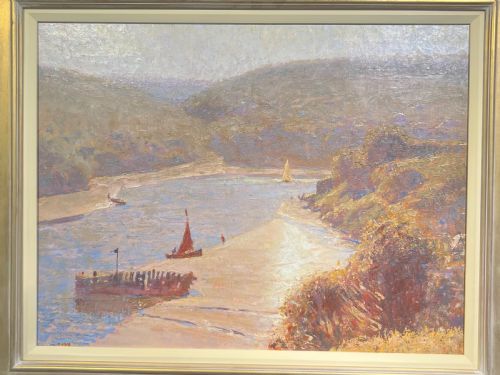
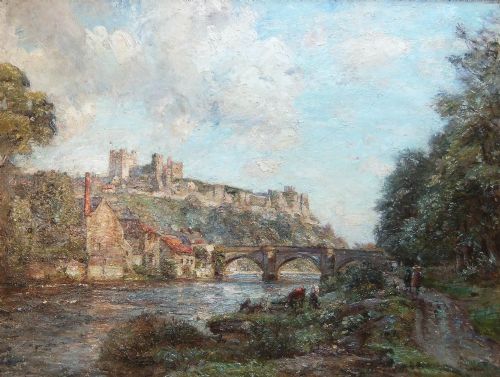
Vintage Framed River Landscape
A vintage framed river landscape brings quiet water and open banks indoors through nineteenth and twentieth-century brushwork.
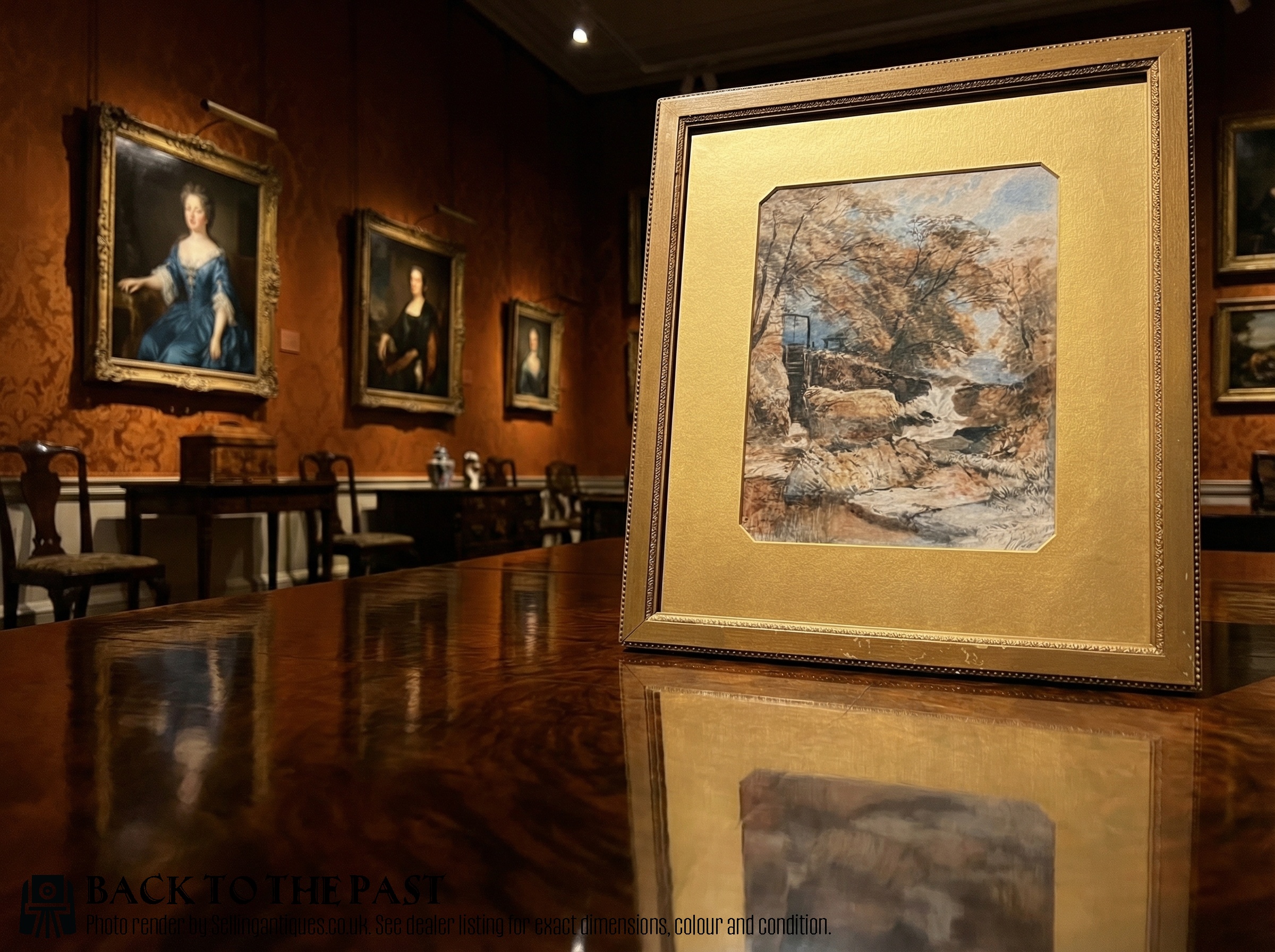
Vintage Framed River Landscape
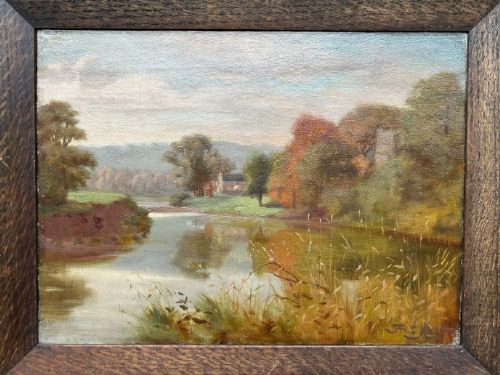
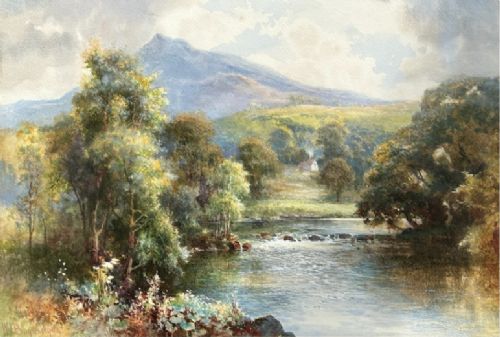
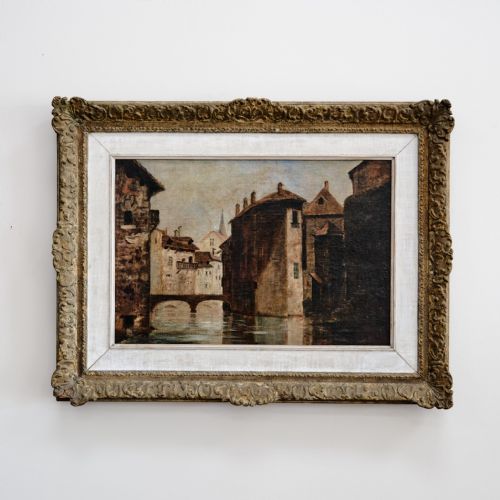
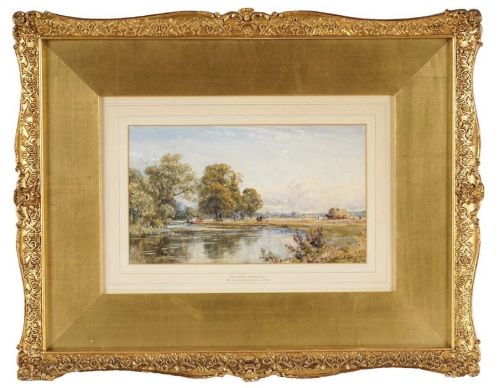
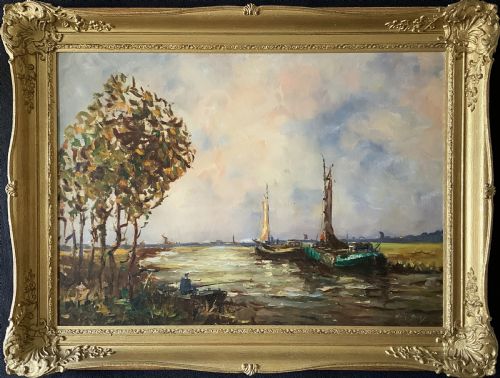
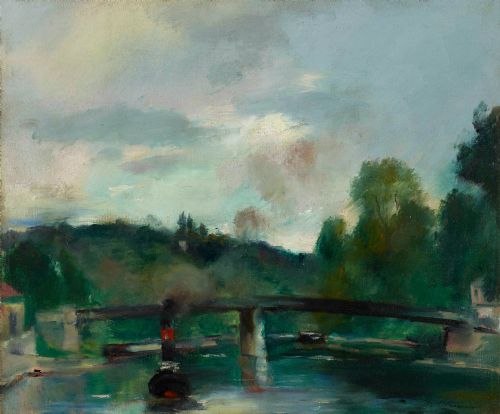
A vintage framed river landscape encompasses original oil paintings, watercolours and lithographs depicting waterways from various British and European schools. Buyers encounter works ranging from Victorian watercolours of Welsh rivers to mid-century French and Dutch impressionist canvases.
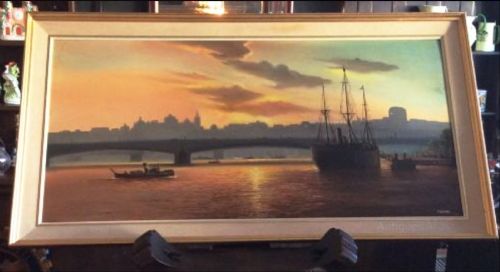
The assortment spans traditional pastoral scenes with figures fishing under willow trees to architectural bridge and canal views. Most examples date from the nineteenth century through the mid-twentieth century, presented in period frames.
Materials and construction
Artists painted primarily with oil on canvas or wood panel, alongside watercolours on paper and occasional gouache. Canvases frequently feature heavy impasto or detailed brushwork, sometimes later laid onto board for structural support.
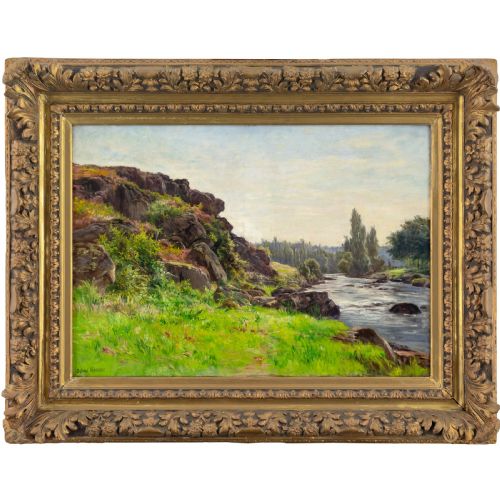
Frames rely on wood moulded with gesso and gilt finishes to house and protect the artwork. These materials reflect the standard framing practices of the Victorian, Edwardian and mid-century periods.
Listings feature works spanning the nineteenth century through the mid-twentieth century, utilising canvas, wood panel and paper.
Factors of distinction
Quality rests in the fluency of the brushwork and the artist's handling of natural light on water and foliage. Stronger pieces display confident composition and atmospheric depth rather than mechanical execution.
The integrity of the original frame and the preservation of the paint surface also separate standard decorative works from notable examples by listed artists.
Frederick Marriott·William Joseph Boyes·Gabriel Mathieu·Robert Thorne Waite·Willem Bos·Henri Ottmann·Sir Alfred East·Herbert Royle·Florence Adelina Hess·Sydney Yates Johnson·Hubert Wellington·Archibald Kay·Charles Clair·Alexandre Le Bihan·Mario Pinetti·Gabriel Dauchot·Carl Johan Fahlcrantz·Ron Folland·Thomas Bush Hardy
The Vintage Framed River Landscape Glossary
- Impasto
- Paint applied thickly to a canvas or panel, standing visibly above the surface. This technique creates a textured effect that catches light.
- Gesso
- A plaster-like mixture applied to wooden frames before gilding or painting. It provides a smooth base for decorative moulding.
- Gilt
- A thin layer of gold leaf applied to the surface of a frame. It adds a reflective metallic finish to the woodwork.
- Provenance
- The documented history of ownership surrounding a work of art. It helps establish authenticity and origin.
- Wash
- A thin, transparent layer of watercolour paint diluted with water. Artists use it to build up soft skies and flowing water.
Vintage Framed River Landscape: Frequently Asked Questions
How do I hang a heavy oil painting safely?
Ensure your wall fixings are secured directly into masonry or wooden wall studs rather than plasterboard alone. Heavy frames require sturdy picture wire and robust screw eyes rated for the weight of the piece.
Hang the painting at eye level so the centre of the canvas sits roughly five feet from the floor. This viewing height matches standard gallery placement and reduces neck strain.
How do I date a framed landscape?
Examine the stretcher bars, nails and backing boards of the frame for signs of age. Hand-cut nails and older wood types often indicate nineteenth-century origins.
Stylistic clues in the clothing of painted figures, framing materials and signatures also help narrow down the decade. Comparing the artist's recorded exhibition dates provides a reliable timeframe.
Where should I place a watercolour at home?
Watercolours are sensitive to ultraviolet light and fade quickly when exposed to direct sunlight. Hang them on interior walls away from south-facing windows.
Keep paintings away from high-moisture areas such as kitchens or bathrooms where humidity damages paper and causes mould. Stable room temperatures protect both the paper and the surrounding mount.