



Vintage Folding Table Mirror
A vintage folding table mirror sits on a surface to tilt or fold, bringing practical adjustability and period charm to a dressing space.
Vintage Folding Table Mirror
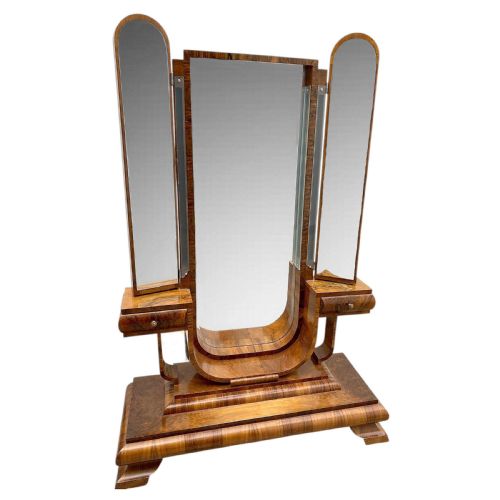
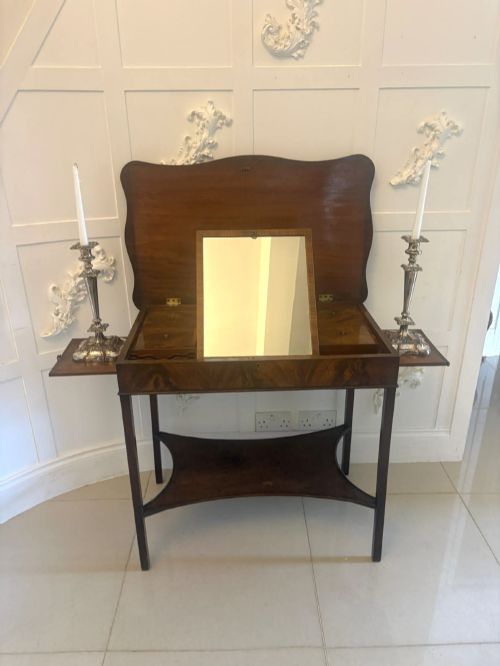
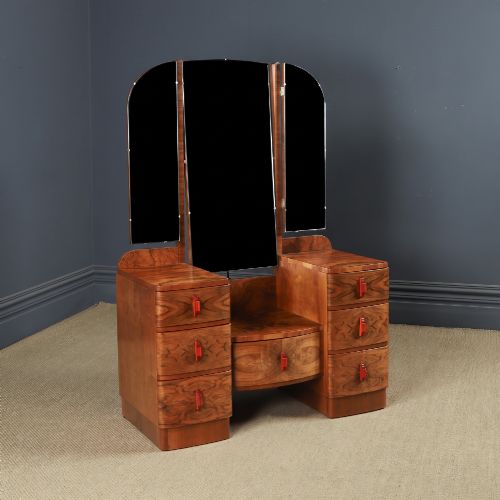
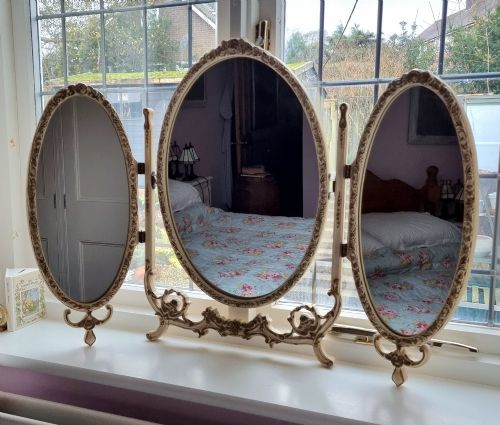
When you search for a vintage folding table mirror, you encounter vanity mirrors, tabletop mirrors, and triptych dressing mirrors designed for everyday use on top of a dressing table or chest. These pieces primarily date from the Georgian and Edwardian eras up through the early twentieth century, spanning decades of personal grooming furniture.
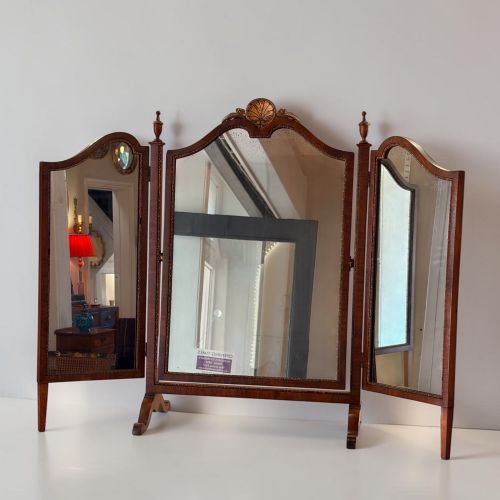
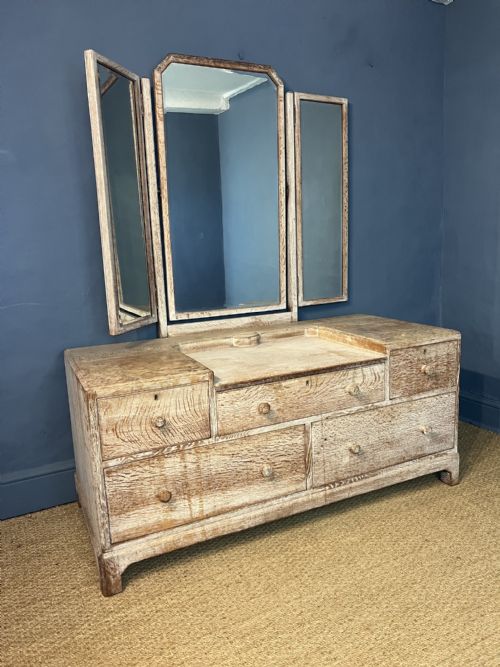
The most common forms on this page include brass-framed trifold mirrors, mahogany shaving mirrors, and inlaid wood travel mirrors. They range from simple pivoting plates to multi-panel designs with folding wings that adjust the angle of reflection.
How they were made
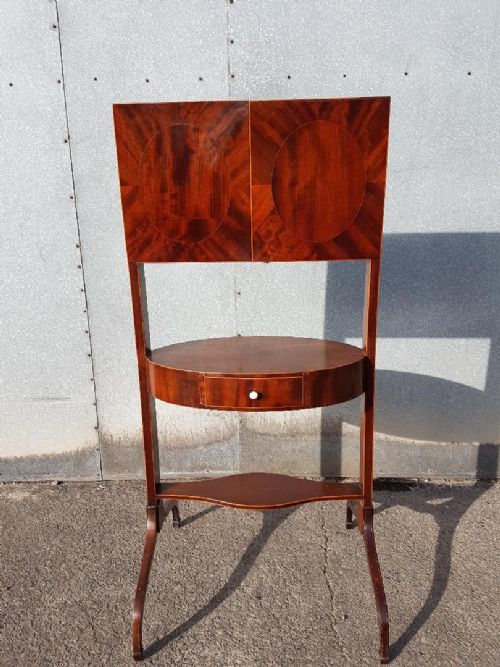
Cabinetmakers constructed these frames using solid timbers such as mahogany, walnut, and limed oak, often incorporating intricate veneer work and marquetry in styles like Italian Sorrento ware or Viennese inlay. Brass featured heavily for hinges, stands, and decorative mountings, allowing the folding panels to move smoothly.
Mirrors utilised traditional glass plate techniques set within rebated wooden frames or secured by cast brass brackets. Finishes varied from polished natural wood and paint to gesso and brass embellishments.
Vintage Folding Table Mirror Retail Price Guide 2026
Typical asking prices for vintage folding table mirror among the pieces listed under this phrase on Sellingantiques today, from the lower quarter to the upper quarter. They describe what is for sale here now, not the wider market.
Travellers once packed olive wood folding mirrors from Sorrento to ensure good grooming on the move.
What varies in quality
The distinction between standard examples and finer pieces lies in the precision of the joinery, the selection of timber grain, and the weight of the metal hardware. Higher quality mirrors employ substantial brass hinges that hold their position securely without sagging, alongside well-figured mahogany or olive wood.
Design complexity also separates pieces, with simple pivoting single plates sitting at one end and elaborate triptych or tri-fold constructions with inlaid decoration sitting at the other.
The Vintage Folding Table Mirror Glossary
- Triptych
- A mirror composed of three panels, where the two outer folding wings adjust inwards to let the user see angles from the side.
- Cheval mirror
- A full-length mirror hung in a frame that allows it to tilt, though smaller variations appear on tabletops.
- Sorrento ware
- Woodwork decorated with intricate micro-mosaic inlay, originating from the Italian town of Sorrento and frequently seen on travel items.
- Limed oak
- Timber treated with a specialised finish that leaves a white pigment in the grain, popular during the early twentieth century.
- Trifold mirror
- Another term for a three-panel mirror designed to fold inward or outward.
Vintage Folding Table Mirror: Frequently Asked Questions
How do I use a folding table mirror?
Place the mirror on a stable surface such as a dressing table, chest of drawers, or vanity.
Adjust the side panels or tilt the central glass to achieve the desired viewing angles for grooming.
What periods do these mirrors come from?
The selection spans multiple eras, including Georgian, Edwardian, and early twentieth-century decades up to the 1950s.
Each period brings distinct wood choices and decorative styles to the frames.
Are these mirrors portable?
Many smaller examples, particularly travel mirrors and folding designs, were built for easy movement between rooms or packing for journeys.
Heavier versions with marble tops or large wooden frames remain better suited to a permanent spot on a dressing table.