


Vintage Floral Wall Tapestry
These textiles bring colour and pattern to walls, offering traditional embroidery and woven design from various centuries and regions.
Vintage Floral Wall Tapestry
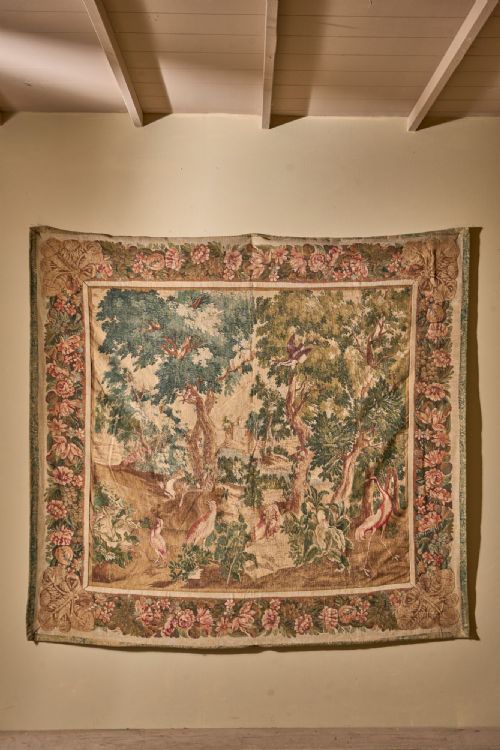
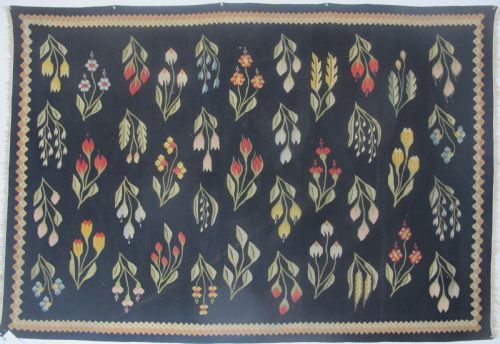
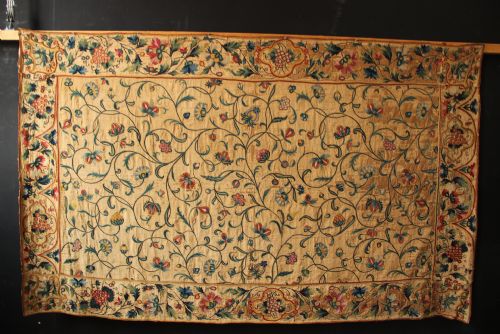
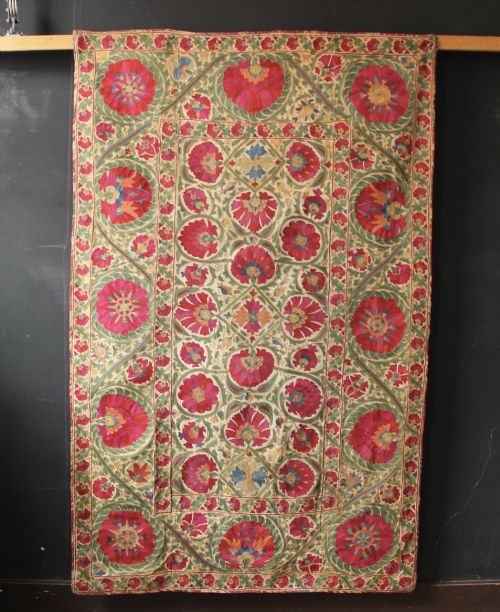
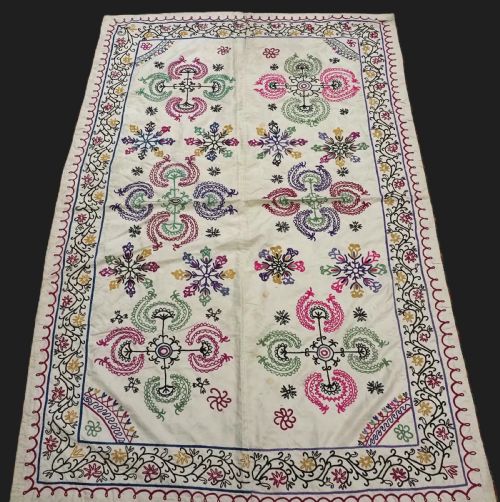
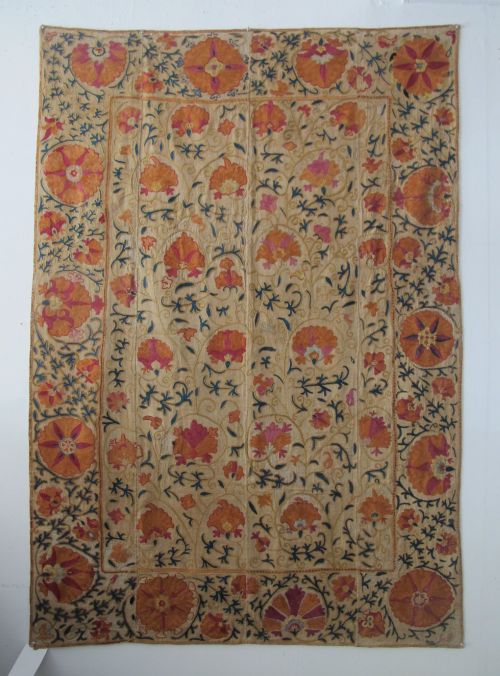
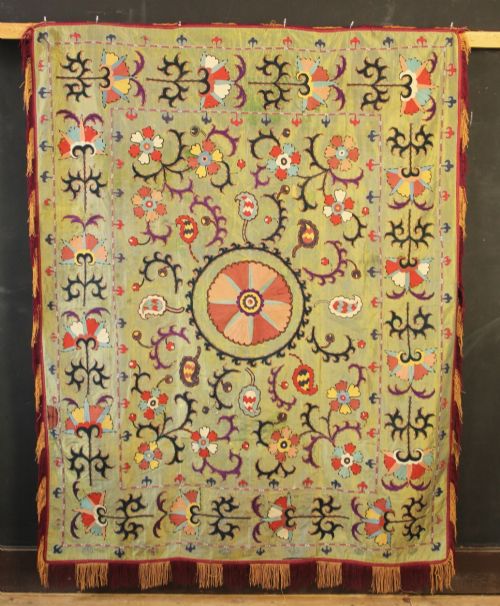
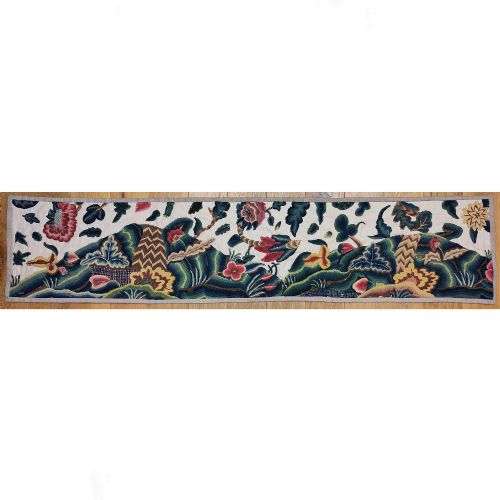
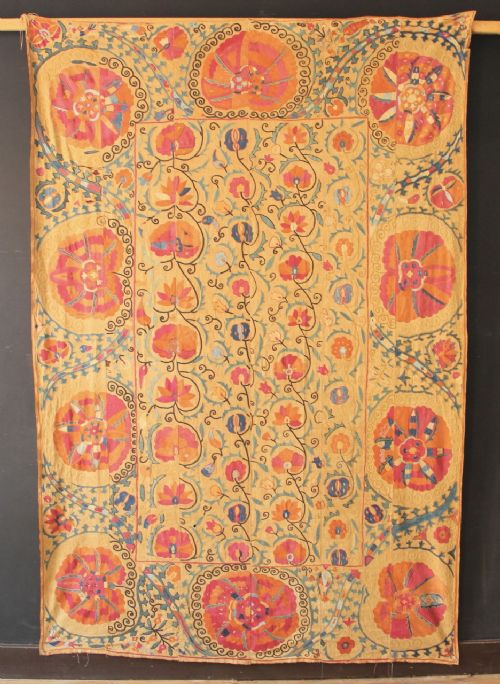
A vintage floral wall tapestry encompasses embroidered wall hangings, needlework panels, and woven textiles created across several centuries. Buyers encounter pieces ranging from Central Asian Suzanis to English crewelwork and French tapestries.
Originating from workshops and domestic settings alike, these textiles display diverse floral motifs rendered in various scales. Each example reflects the specific textile traditions of its geographic source.
How they were made
Artisans employed silk thread, wool, and cotton on grounds of linen, cotton, or wool, sometimes incorporating felt applique work. Natural dyes provided the palette for many of these historical embroideries and woven panels.
Techniques varied from fine needlework and crewelwork stitching to traditional loom weaving and embroidery executed on silk. Certain regional pieces utilise silk on silk or silk on cotton construction.
Needleworkers occasionally left small deliberate irregularities in large Suzani panels to ward off the evil eye.
What varies in quality
The density and precision of the needlework or weave dictate the refinement of a textile. Tightly executed silk embroidery on a stable ground represents a higher tier of craftsmanship than looser or coarser examples.
The complexity of the design, the preservation of natural dyes, and the integrity of the base fabric influence the standing of an individual piece within its type.
The Vintage Floral Wall Tapestry Glossary
- Suzani
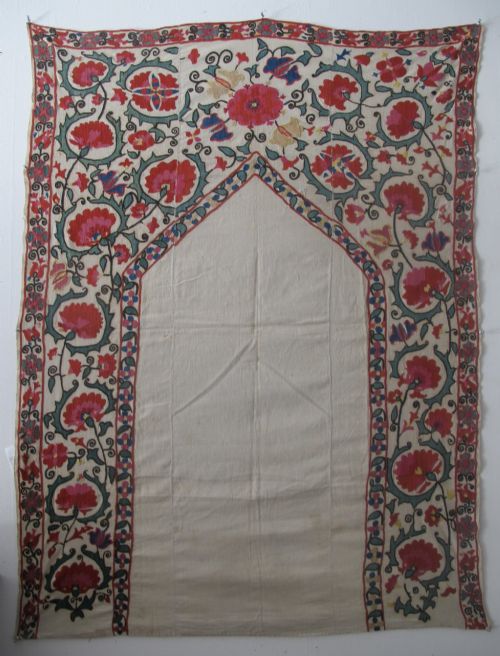
- An embroidered tribal textile originating from Uzbekistan and surrounding regions, typically featuring large-scale floral and medallion motifs on a cotton or linen ground.
- Crewelwork
- A type of embroidery executed using wool yarn on a heavy linen or cotton twill fabric, frequently seen in English decorative panels.
- Palampore
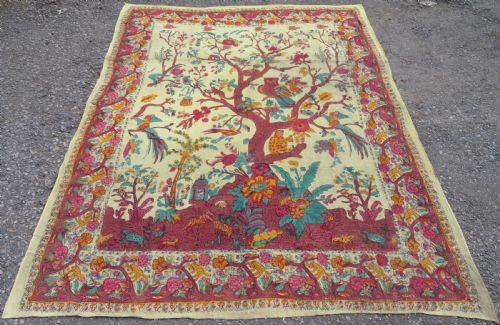
- A large, hand-painted or embroidered textile from India, often displaying a Tree of Life pattern and botanical motifs.
- Needlework
- Stitched decoration produced by hand using a needle and various threads on a woven foundation, encompassing samplers and pictorial wall panels.
- Rya
- A traditional Scandinavian knotted pile rug or wall hanging characterised by a deep, textured pile formed from wool yarns.
Vintage Floral Wall Tapestry: Frequently Asked Questions
How do I hang a vintage tapestry safely?
Wall hangings require weight distribution across the upper edge rather than direct pinning or nailing through the fabric. Professional framing or a fabric sleeve with a concealed support rod protects the textile structure over time.
Heavier pieces benefit from conservation-grade mounting onto a padded board covered in a neutral fabric. This method prevents stretching and distributes the tension evenly across the antique material.
What is the difference between a Suzani and a European tapestry?
Suzanis are embroidered textiles originating from Central Asia, featuring hand-stitched silk or wool designs on cotton or linen grounds. They typically display bold floral and medallion patterns created by domestic makers.
European tapestries, such as those from French or English traditions, are generally woven on looms using wool, silk, and metal threads to form pictorial scenes or repeating floral patterns.
How should I clean historical wall textiles?
Antique textiles require specialist care and should not be subjected to standard washing methods or immersion in water. Gentle surface dust removal using a low-suction vacuum with a mesh screen is the standard maintenance approach.
Professional textile conservators should handle deeper cleaning or structural repairs to prevent damage to fragile silk threads and natural dyes. Direct sunlight exposure should be avoided to prevent fading.
How do I determine the age of a textile?
Dating relies on examining the materials, dye types, stitching techniques, and regional design characteristics. Hand-spun yarns, specific regional motifs, and the condition of the ground fabric provide key indicators of the period.
Comparing structural details with documented examples from similar workshops or centuries helps establish a chronological timeframe for unlabelled pieces.