




Vintage Floral Wall Sconces
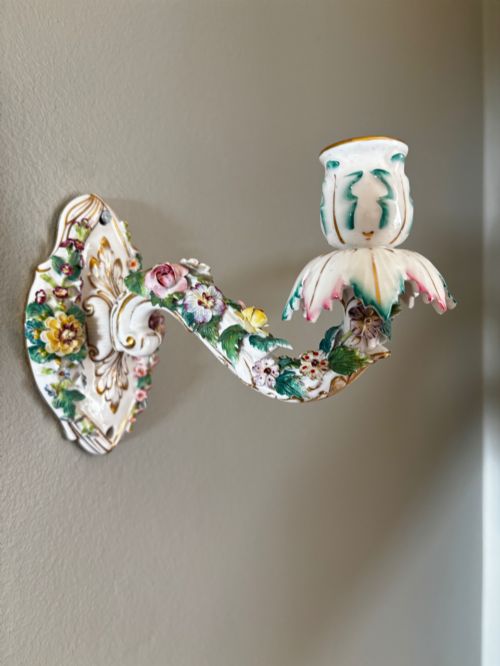
These vintage floral wall sconces bring rooms alive with petals and leaves cast in metal, shaped in glass, and modelled in porcelain.
Vintage Floral Wall Sconces
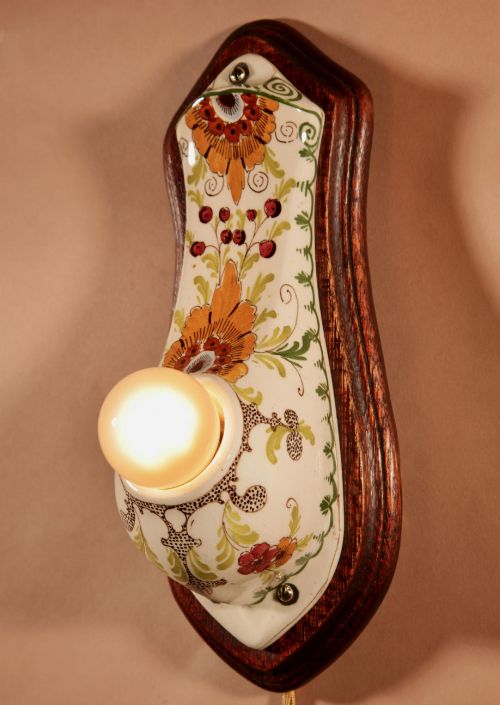
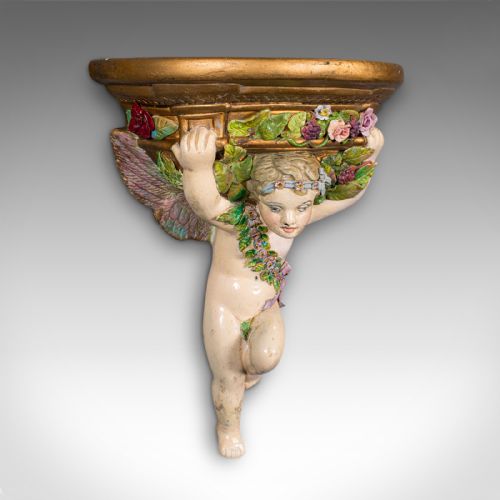
Vintage floral wall sconces combine functional wall lighting with botanical motifs, taking the form of candle holders, electric wall lights, and mirrored brackets. When you search for vintage floral wall sconces, you encounter pieces that range from Victorian and Art Nouveau designs to the painted toleware and porcelain flower creations of the 1930s. French chateau and rococo revival styles dominate these selections, alongside Dutch ceramic night lights and North Indian mirrored pieces.
The objects serve primarily to mount candles or bulbs securely to a wall while introducing organic shapes such as leaves, daisies, and delicate blooms into an interior space. Most examples found on this page date from the late nineteenth century up to the 1930s, reflecting periods when floral ornamentation was a central theme in domestic lighting.
How they were made
Manufacturers built these sconces using metals such as brass, iron, gilt metal, and painted toleware, often shaping them into twisting stems and foliage. Wrought iron and cast brass provide sturdy structural backplates and arms, while softer metals allow for intricate petal details.
Porcelain, glass, and enamel introduce colour and texture, seen in modelled porcelain flowers and decorated ceramic plates. Artisans also incorporated mirrors to reflect light from candles or early electric bulbs, mounting glass plates behind the metal or ceramic floral arrangements.
Materials appearing across the inventory include glass, metal, gilt metal, porcelain, enamel, brass, painted metal, and iron.
What varies in quality
Quality rests on the fineness of the modelling and the crispness of the metalwork, distinguishing mass-produced items from pieces shaped by skilled hands. Hand-painted enamel colours and carefully shaped porcelain petals show greater depth than simple stamped sheet metal.
The integrity of the construction matters greatly, particularly how securely the arms and floral elements join the backplate. Well-preserved gilding and original painted surfaces maintain the intended visual balance of the design.
Meissen·Von Schierholz
The Vintage Floral Wall Sconces Glossary
- Toleware
- Painted or lacquered metalware, commonly tin or iron, frequently decorated with floral motifs in green and other colours. This technique appears widely on French wall lights from the early twentieth century.
- Rococo Revival
- A nineteenth-century style drawing on eighteenth-century French rococo ornamentation, characterised by asymmetric scrolls, C-curves, and naturalistic plant forms. It influences the sweeping, leaf-heavy frames of many sconces.
- Art Nouveau
- An international style prominent around 1900 that prioritises organic, undulating lines inspired by natural forms such as stems, flowers, and vines. Sconces from this period translate these winding botanical shapes directly into metal and ceramic.
- Gilt Metal
- Metal that has received a thin layer of gold or gold-coloured wash to give the appearance of solid gold. It provides a reflective surface that catches candle or lamp light effectively.
- Wall Bracket
- A projecting architectural support or fixture attached to a wall, frequently utilised for holding lamps, candles, or decorative objects. In lighting, it functions similarly to a sconce.
Vintage Floral Wall Sconces: Frequently Asked Questions
Were these sconces originally for candles or electricity?
Many early pieces, including Victorian and nineteenth-century examples, were designed exclusively to hold wax candles. Later pieces from the 1930s often incorporate fittings for electricity alongside dummy candle tubes.
Conversion from candles to electric wiring is common in vintage lighting. Check the internal wiring and bulb fittings carefully before connecting any wall light to a mains power supply.
How do I date a floral wall sconce?
Examine the materials, manufacturing marks, and fastening techniques used on the backplate. Cast iron, heavy brass, and hand-modelled porcelain often point to nineteenth-century or turn-of-the-century origins, while painted toleware and specific green daisy motifs frequently align with 1930s French production.
Compare the aesthetic details against known historical movements like Art Nouveau or Rococo Revival. Stylistic cues in the leaf and petal formations provide reliable clues to the era of manufacture.
Can these wall lights be installed safely today?
Vintage electrical fittings must be inspected and often rewired by a qualified electrician to meet modern safety standards. The physical weight of iron, brass, and porcelain fixtures also requires secure wall anchors capable of supporting the load.
Ensure the mounting bracket matches the structural composition of your wall, whether plaster, brick, or wood, to prevent the fixture from pulling loose over time.