




Vintage Floral Tapestry Rug
These textiles bring together floral tapestry rugs, kilims, and embroidered panels spanning the nineteenth and twentieth centuries.
Vintage Floral Tapestry Rug
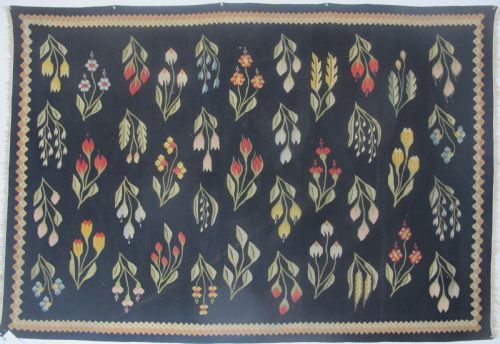
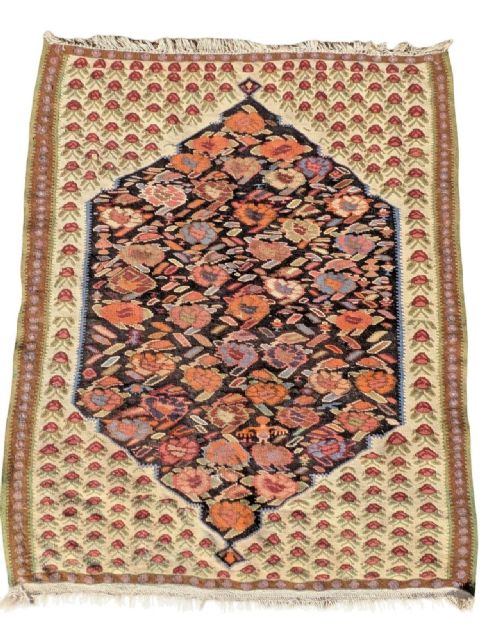
A vintage floral tapestry rug encompasses flat-woven carpets, embroidered wall hangings, and needlepoint floor coverings originating from diverse regions including Central Asia, Eastern Europe, and Western Europe. These textiles generally date from the mid-nineteenth century through the mid-twentieth century, capturing varied regional traditions in floral design and textile construction.
The selection frequently includes Bessarabian flat-weaves, Uzbek embroideries, French Aubusson carpets, and Portuguese needlepoint pieces. Buyers encounter various formats ranging from small wall-hanging panels to large area rugs designed for floor placement.
The visual vocabulary relies heavily on botanical motifs, floral sprays, and medallion layouts executed in wool, cotton, silk, and linen. Each regional tradition applies its own distinctive palette, from the muted natural dyes of European kilims to the vibrant silk thread work of Central Asian suzanis.
Materials and construction
Makers utilised natural fibres including wool, cotton, silk, and linen as the foundational base for these rugs and wall hangings. Silk thread and wool yarn provide the primary medium for surface embroidery and pile construction, often worked over sturdy cotton or linen canvas foundations.
Natural dyes impart the colour palette across the majority of these pieces, yielding rich tones that age with subtlety. Applique work and needlepoint stitches such as tent stitch and cross stitch appear frequently in European needlepoint and Persian Rasht examples.
Flat-weaving techniques dominate the kilim pieces, while intricate needlework and embroidery define the Central Asian suzanis and Portuguese needlepoints. Structural integrity relies on tightly spun yarn and dense stitching applied to supportive canvas or felt backings.
Listings feature pieces spanning from the mid-nineteenth century to the mid-twentieth century, utilising wool, cotton, silk, and natural dyes across European and Central Asian traditions.
Evaluating textile quality
Quality depends on the density of the weave or embroidery and the fineness of the thread utilised by the maker. Tighter stitching and finer silk or wool yarns yield greater durability and sharper definition in the botanical motifs.
The choice of materials significantly influences the character of the piece, with silk-on-silk embroidery or fine wool kilims representing higher tiers of craftsmanship compared to coarser cotton or felt supports. The complexity of the design layout, such as multi-layered medallion variants or intricate architectural borders, also indicates greater workshop skill.
The integrity of the natural dyes and the preservation of the original fibre structure dictate the longevity and visual impact of the textile. Harmonious colour saturation and even, skilful execution across the entire surface distinguish superior examples.
The Vintage Floral Tapestry Rug Glossary
- Kilim
- A flat-woven carpet or rug produced without a pile, common in Central Asian and Eastern European traditions. These pieces rely on interlocking or slit-tapestry weave techniques to create geometric and floral patterns.
- Suzani
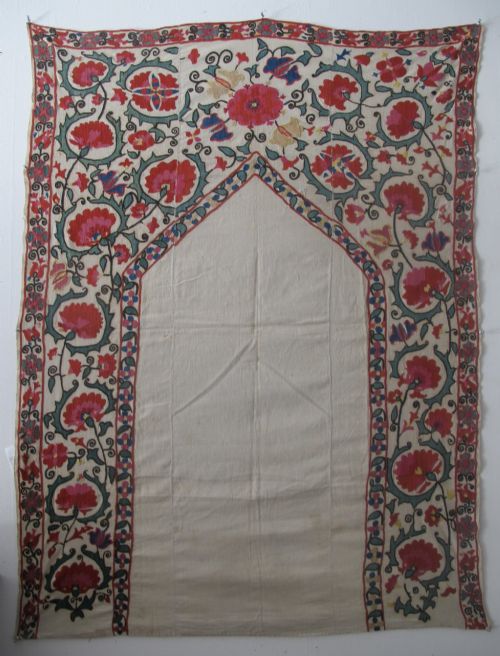
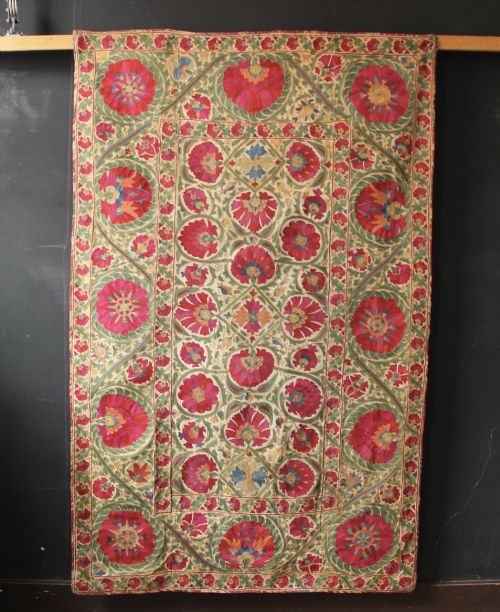
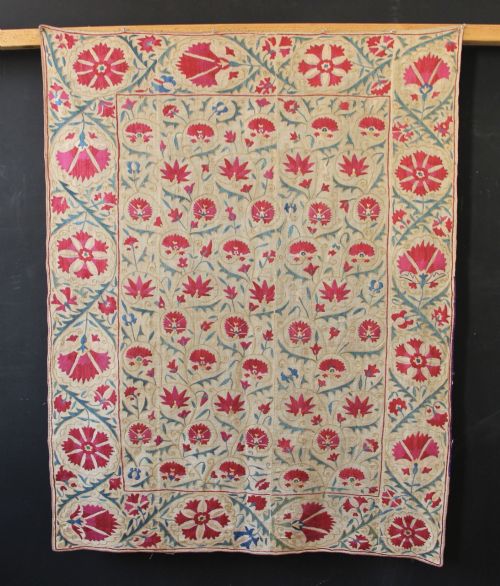
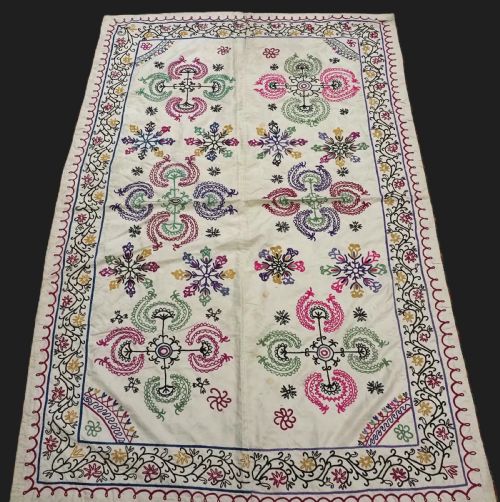
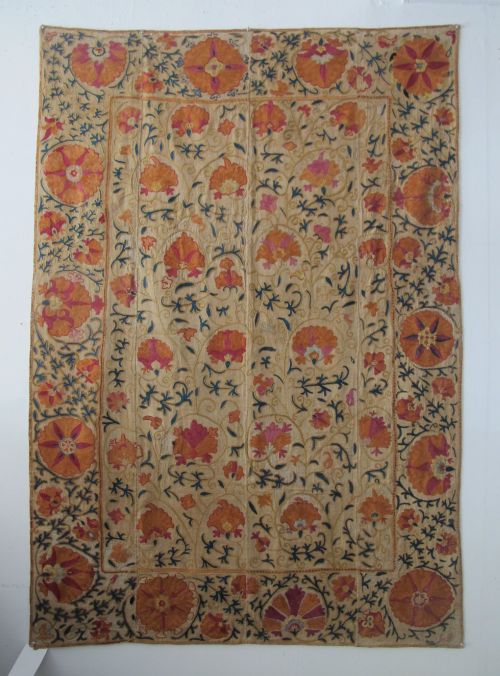
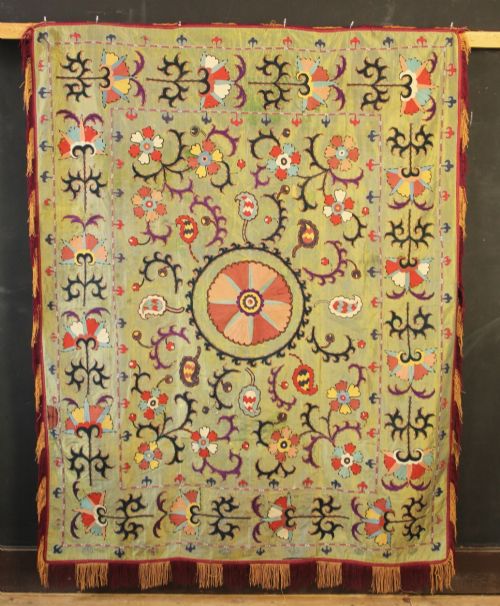
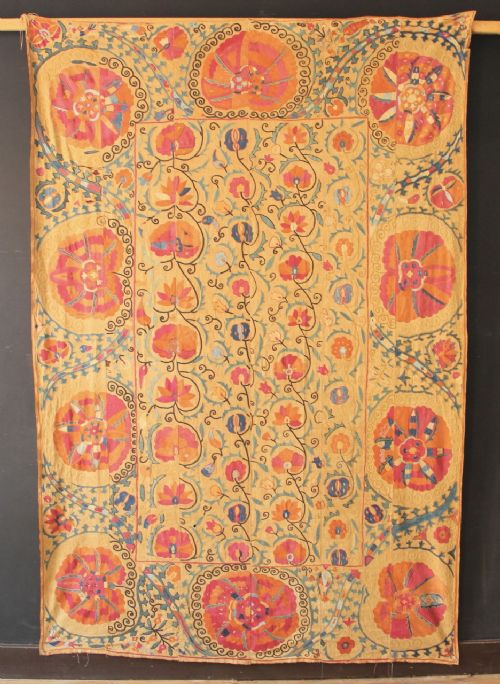
- A type of embroidered tribal textile originating from Uzbekistan and surrounding regions, typically worked in silk thread on a cotton or linen ground. They often feature large-scale floral discs and trailing botanical vines.
- Needlepoint
- A form of counted-thread embroidery where yarn is stitched through a stiff canvas mesh to cover the entire ground. Portuguese and French examples frequently employ this technique for floral carpet designs.
- Aubusson
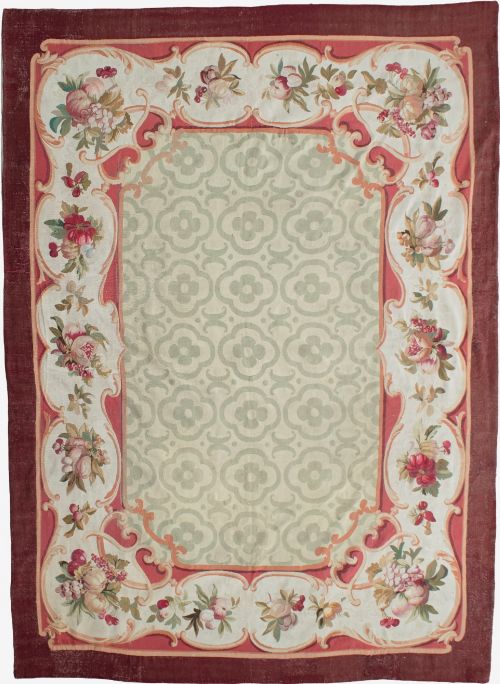
- A style of heavy woven tapestry carpet originating from France, known for classical floral and architectural motifs. These pieces mimic the appearance of high-end wall tapestries adapted for floor use.
- Palampore
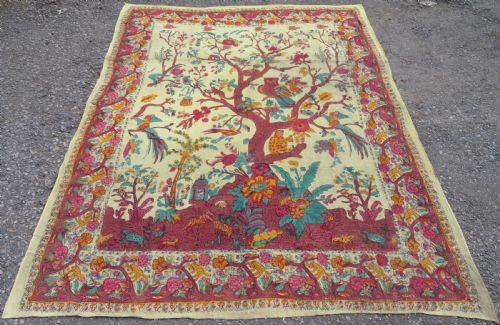
- A large, hand-painted or embroidered bed cover or hanging featuring a central tree-of-life design with profuse floral elements. These textiles reflect extensive trade and exchange of botanical motifs.
Vintage Floral Tapestry Rug: Frequently Asked Questions
How do I clean an antique textile?
Professional textile conservation cleaning is recommended for antique rugs and tapestries to prevent fibre degradation and dye bleeding. Routine maintenance should be limited to gentle surface vacuuming without a beater bar.
Avoid exposing these historical textiles to direct sunlight for extended periods to protect natural dyes from fading. Rotating the rug periodically ensures even wear across the surface.
What is a suzani rug?
A suzani is an embroidered textile panel from Central Asia, traditionally made by brides as part of their dowry. They typically feature bold floral motifs, vines, and medallions worked in bright silk threads.
While many suzanis serve as wall hangings or covers, smaller nimble variants function effectively as decorative accent rugs. Their distinctive designs reflect the cultural heritage of regions like Uzbekistan.
How are different periods identified?
Dating relies on stylistic markers, regional weaving traditions, and the types of materials and dyes present in the textile. Mid-nineteenth-century pieces often display specific botanical layouts and natural dye variations that evolved by the early twentieth century.
Comparing structural details, such as canvas grounds or specific embroidery stitches, helps differentiate nineteenth-century works from later twentieth-century interpretations.