




Vintage Five Drawer Dresser
A vintage five drawer dresser provides practical height and storage, uniting period character with everyday utility.
Vintage Five Drawer Dresser
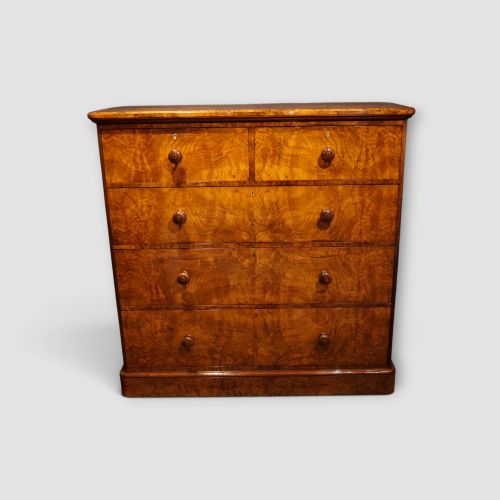
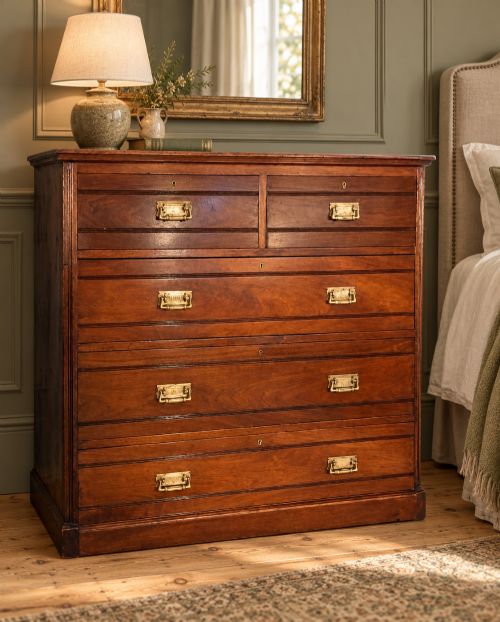
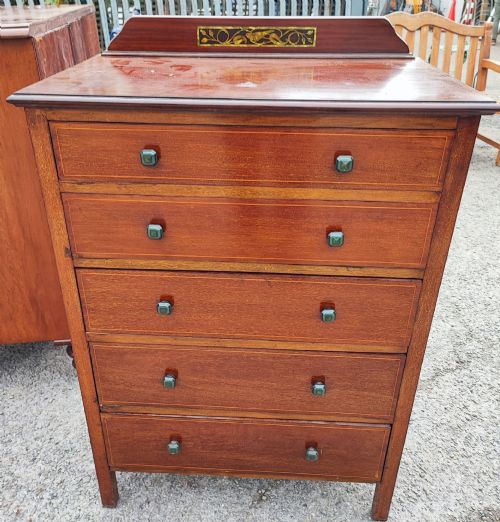
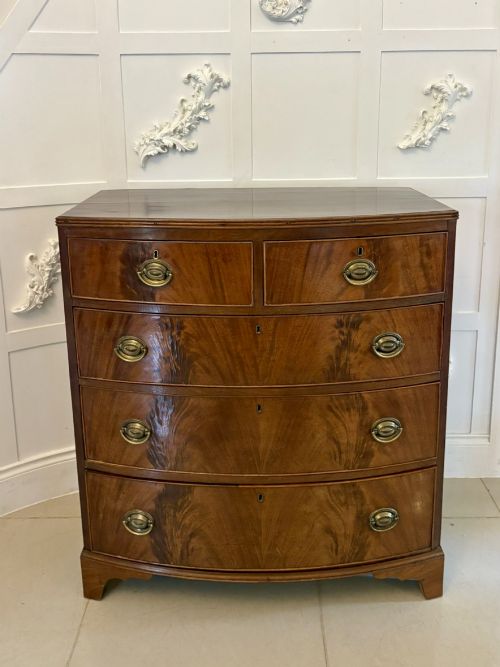
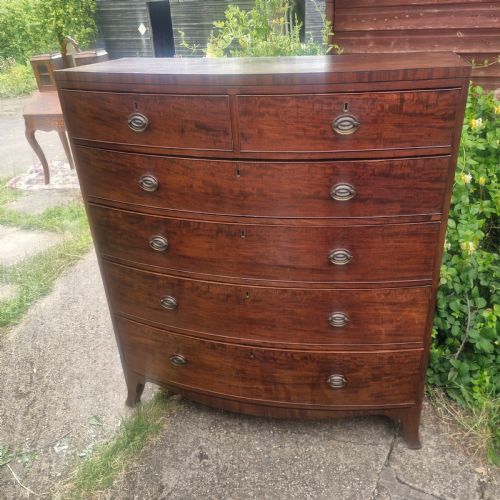
A vintage five drawer dresser primarily appears as a chest of drawers or tallboy spanning multiple historic periods. Buyers encounter pieces from the Regency and Victorian eras alongside 1930s Art Deco designs.
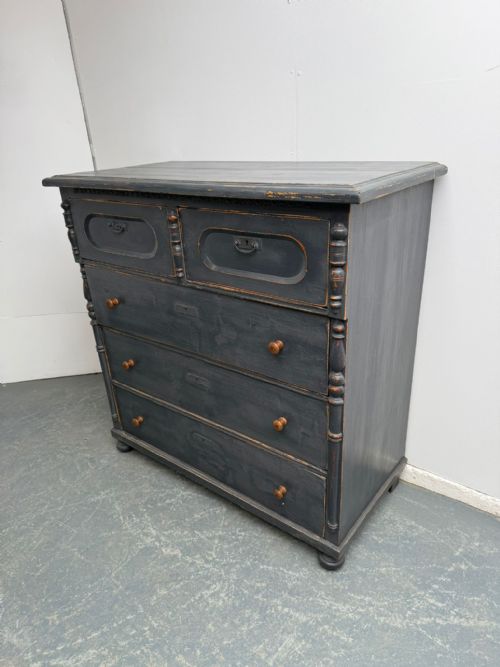
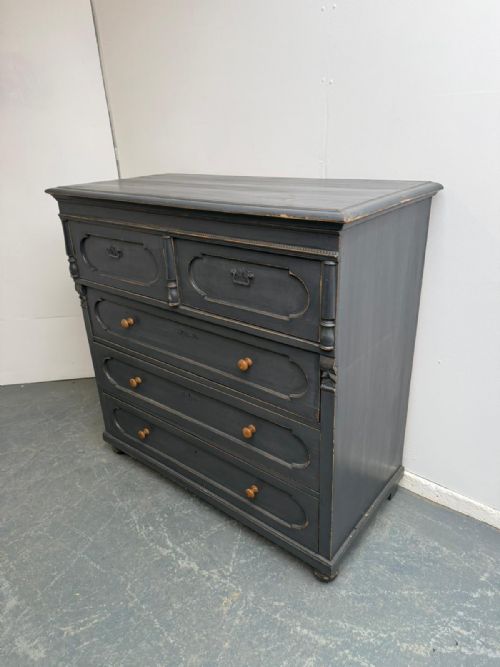
The format spans diverse regional aesthetics, including English mahogany pieces, Swedish flame birch examples, and waxed pine country furniture. These configurations offer five stacked tiers of storage suited to domestic interiors.
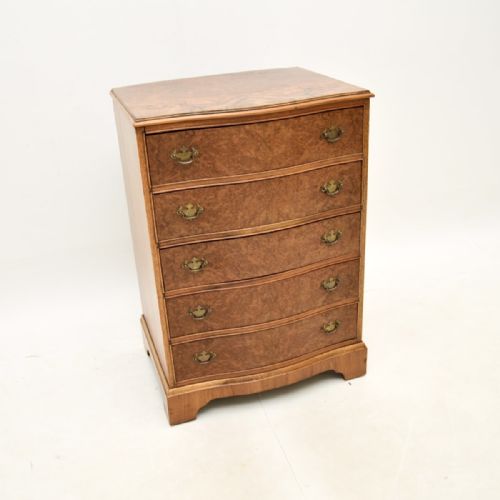
Formations range from bow-fronted and serpentine profiles to narrow panelled carcases and gentleman's tallboys. Mahogany, burr walnut, and pine dominate the structural vocabulary across these varied origins.
Materials and Construction
Cabinet makers utilised dense hardwoods like mahogany, walnut, and flame birch alongside softer timbers such as pine and oak. Veneers of burr walnut and satinwood provided decorative grain patterns across drawer fronts and top surfaces.
Joinery techniques incorporated dovetailed drawer construction and turned wooden handles or cast brass hardware. Finishes range from traditional wax and polish to painted surfaces and limed treatments on oak.
Vintage Five Drawer Dresser Retail Price Guide 2026
Typical asking prices for vintage five drawer dresser among the pieces listed under this phrase on Sellingantiques today, from the lower quarter to the upper quarter. They describe what is for sale here now, not the wider market.
Listings feature eighteenth century revivals alongside nineteenth century Victorian pieces and 1930s Art Deco designs.
Distinctions in Quality
The grade of timber selection dictates overall quality, visible in highly figured burr walnut veneers and matched flame birch grains. Superior examples exhibit precise proportions, such as bow-front or serpentine contours.
Hardware integrity and internal drawer construction reveal the maker's skill. Solid brass handles, well-fitted dust boards, and clean interior linings separate finer workshop productions from utility items.
Heal's
The Vintage Five Drawer Dresser Glossary
- Tallboy
- A tall chest of drawers, often comprising a smaller chest stacked upon a larger base or built as a single elongated unit. This form maximises vertical storage capacity.
- Bow front
- A convex curved cabinet front that projects outward in the centre. This decorative shaping appears frequently on Regency and nineteenth century examples.
- Serpentine
- A horizontally undulating front edge featuring a convex centre flanked by concave curves. It requires advanced woodworking skill to execute properly.
- Flame birch
- A striking wood veneer characterised by a flamelike ripple pattern in the grain. Swedish makers utilised this timber to great decorative effect.
- Burr walnut
- Wood harvested from walnut tree growths, producing intricate, swirling grain patterns. Cabinet makers prized this material for high-status drawer fronts.
Vintage Five Drawer Dresser: Frequently Asked Questions
What is a five drawer dresser?
A five drawer dresser is a tall chest of drawers designed to offer substantial vertical storage while occupying a modest floor footprint. These pieces accommodate clothing and linens within stacked horizontal compartments.
Examples span periods from the Georgian era through the Victorian epoch and into 1930s Art Deco designs. Their configurations vary from straightforward pine utilitarian boxes to serpentine burr walnut showpieces.
How do I date my chest of drawers?
Dating relies on identifying timber choices, construction methods, and stylistic cues present in the hardware and silhouette. Regency pieces display classical proportions, whereas Victorian examples often utilise heavy mahogany or waxed pine.
Art Deco items from the 1930s introduce streamlined walnut veneers and geometric handles. Examining internal drawer joints and secondary woods further clarifies the production era.
Where should I place a tall chest?
A tall chest fits comfortably in bedrooms, dressing rooms, or hallways where floor space is limited. Its vertical orientation provides maximum storage capacity without demanding wide clearances.
Ensure the piece is anchored securely to the wall if placed in heavy traffic areas or children's rooms. Position it away from direct sunlight to protect sensitive mahogany and walnut veneers.
Are these dressers made of solid wood?
Construction methods vary between solid timbers and veneered carcases depending on the period and style. Pine and oak pieces are typically constructed from solid boards throughout the frame and drawers.
Finer decorative items utilise stable softwood or hardwood bases covered with thin layers of burr walnut, satinwood, or flame birch. This technique prevented warping while displaying dramatic grain patterns.