
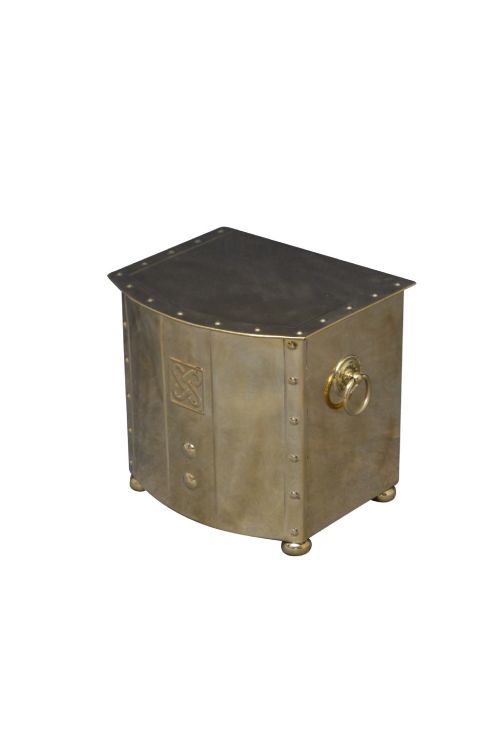


Vintage Fireplace Storage
Vintage fireplace storage brings together brass, copper, iron and timber vessels designed to keep hearth fuel close at hand.
Vintage Fireplace Storage
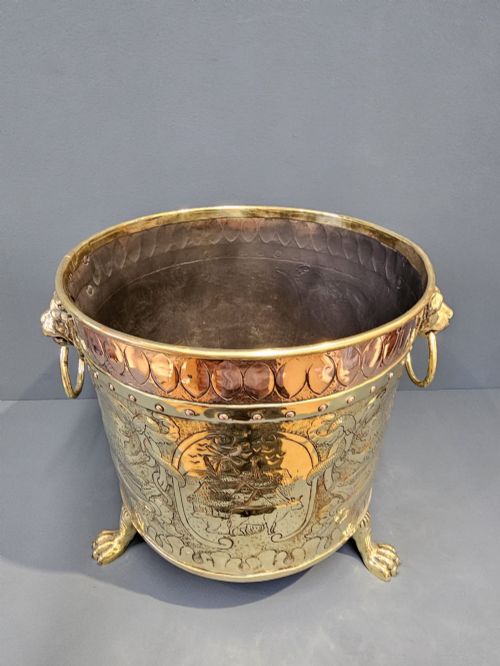
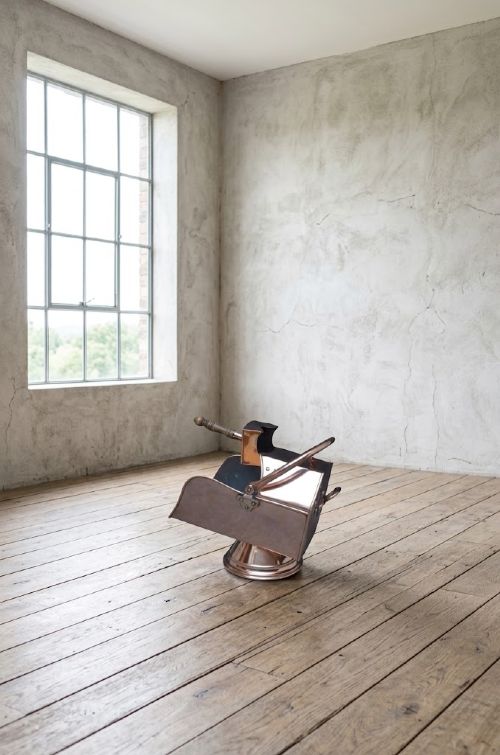
Vintage fireplace storage comprises coal boxes, log bins, coal scuttles, purdoniums and fireside buckets designed to hold solid fuel by the hearth. These pieces serve a practical function while adding character to a chimney breast or inglenook setting.
The most common examples on this page date from the nineteenth century and the Victorian era, alongside Edwardian and early twentieth-century designs. Materials range from hammered copper and polished brass to robust oak, mahogany, pine and wrought iron.
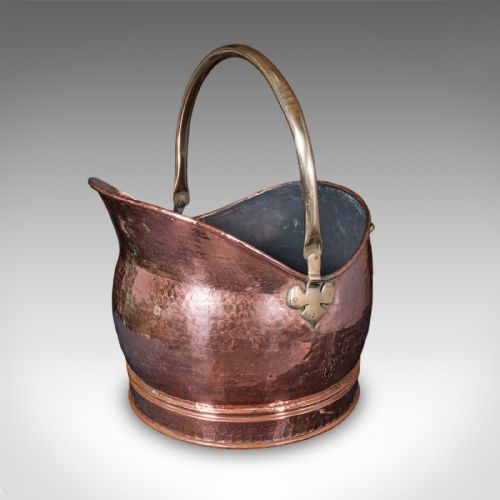
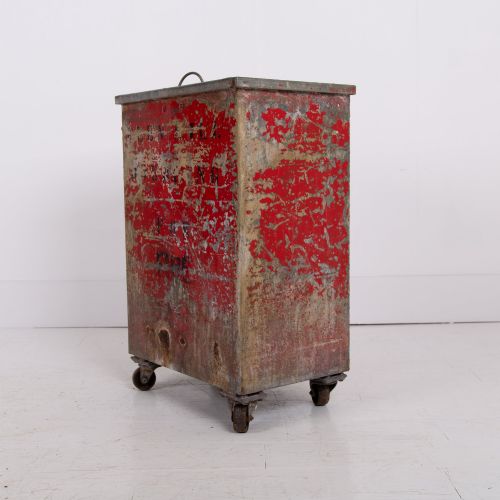
Forms vary from traditional helmet-shaped scuttles and lidded purdoniums to coopered barrels, metal bins on wheels and woven baskets. Each object reflects the heating methods and domestic interior tastes of its period.
Materials and construction methods
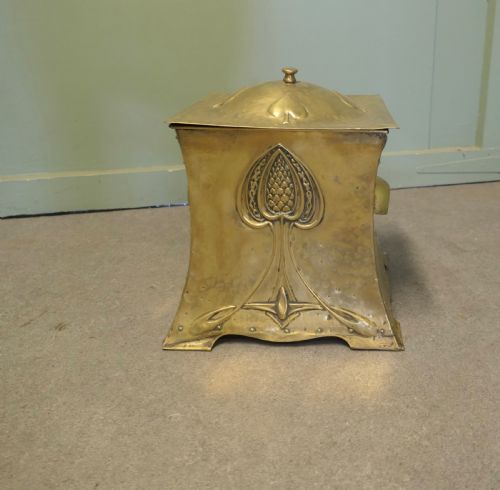
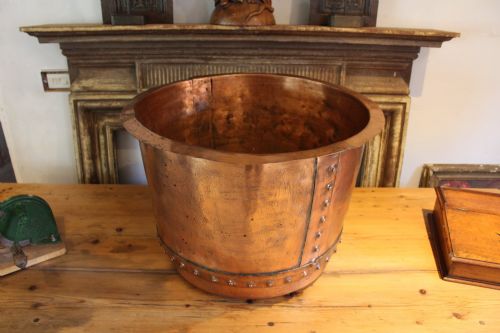
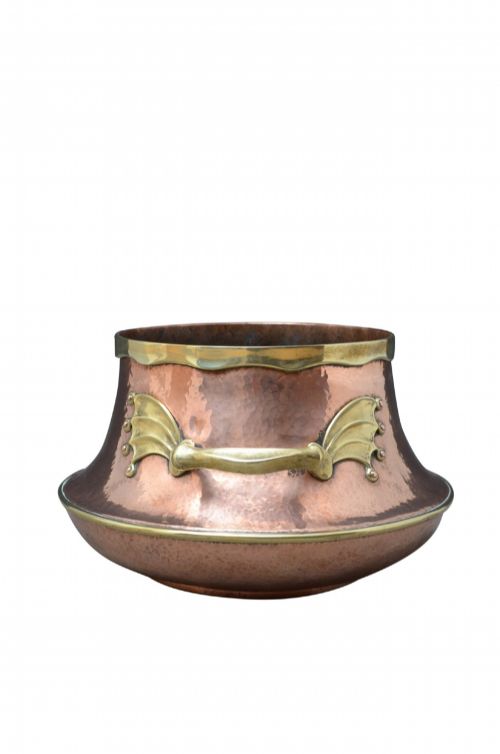
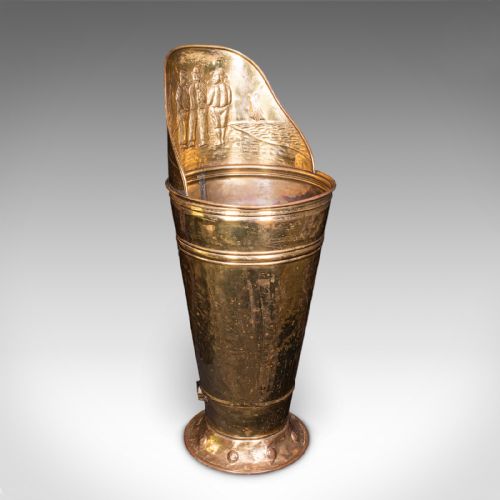
Metal vessels combine beaten copper, sheet brass and cast iron, often featuring embossed patterns, riveted seams and applied brass bands or swing handles. Smiths and metalworkers shaped these materials to withstand the heavy wear of daily coal and log storage.
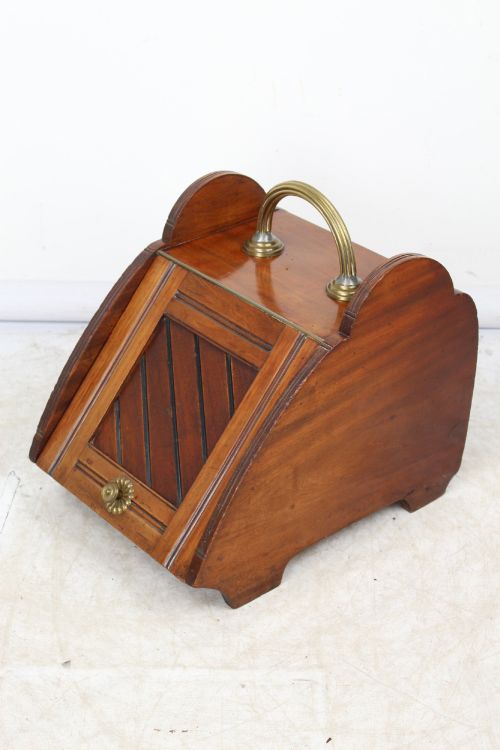
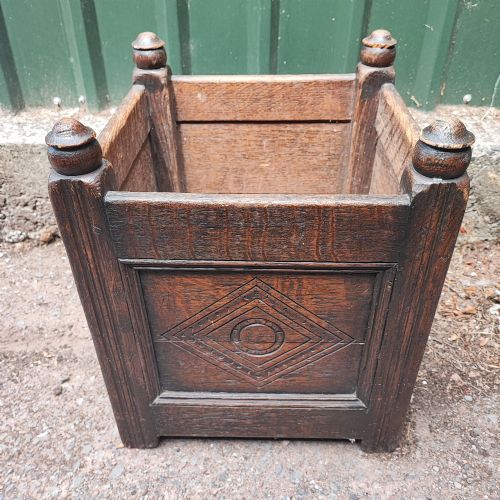
Wooden examples utilise oak, mahogany, walnut and pine, employing traditional coopered stave construction, dovetail joints or turned feet. Many wooden coal boxes and purdoniums incorporate zinc or metal liners to protect the timber from moisture and ash.
Distinctions in craftsmanship
Quality rests in the weight of the metal, the crispness of hand-hammered or embossed decoration, and the integrity of the joinery in wooden boxes. Thicker gauge copper and heavy brass retain their shape and polish better over generations.
Interior fittings differentiate standard utility items from finer parlour pieces, such as ceramic tile inserts, bevelled mirrors, original metal shovel linings and smoothly operating drop-front purdonium mechanisms.
The Vintage Fireplace Storage Glossary
- Purdonium
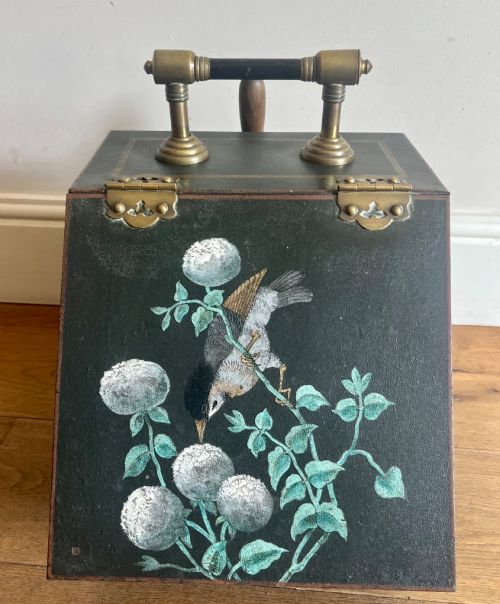
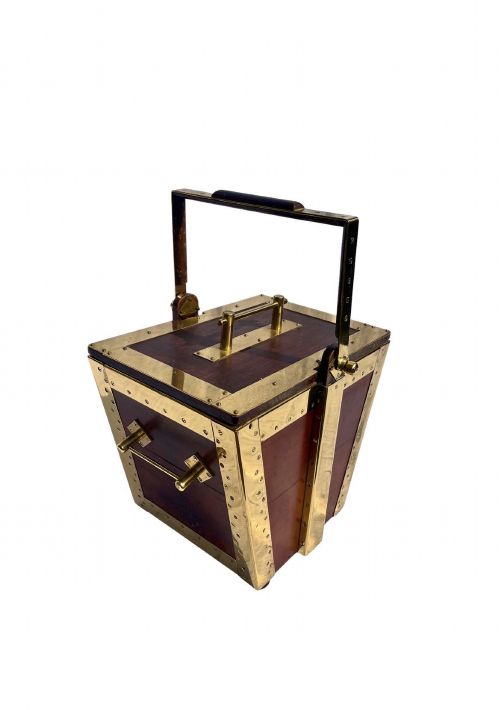
- A specialised coal cabinet featuring a sloping front or tipping box designed to dispense fuel cleanly. These lidded containers often incorporate interior metal scuttles and compartments for fire tongs.
- Coopered
- Constructed from wooden staves joined edge to edge and bound with metal hoops, much like a barrel. This technique provides robust housing for heavy logs and peat.
- Tole ware
- Enamelled or lacquered sheet metal items decorated with painted designs. These pieces introduce colour and pattern to fireside accessories.
- Helmet scuttle
- A traditional metal fuel container shaped like a classical helmet with an elevated back and a pointed pouring lip. A swing handle allows for balanced carrying.
Vintage Fireplace Storage: Frequently Asked Questions
What is a coal purdonium?
A coal purdonium is a specialised fireside cabinet designed to store and dispense coal neatly within a reception room. These lidded containers usually feature a drop-front or tilting mechanism holding an interior metal bucket.
They emerged during the Victorian period to keep domestic fuel hidden while complementing refined interior decor. Many examples include compartments for hearth shovels and decorative brass handles.
How do I clean antique brass and copper?
Cleaning depends on the desired finish, as many collectors prefer to leave an aged patina rather than polish metal to a bright shine. Gentle dusting and mild soapy water remove surface soot without disturbing historical marks.
If polishing is chosen, use a proprietary metal cleaner applied sparingly with a soft cloth to avoid damaging embossed or hammered surface details.
Can these bins be used for logs today?
These bins accommodate modern fireplace fuel depending on their original intended scale and internal lining. Metal log buckets and iron carriers handle heavy logs easily, while lidded wooden boxes suit smaller kindling or pellets.
Check that wooden interiors feature protective metal liners to prevent moisture and bark debris from staining the timber.
How do I date a copper coal bucket?
Dating relies on manufacturing techniques, handle attachments, and stylistic motifs linked to specific periods like the Victorian or Arts and Crafts eras. Hand-beaten surfaces and dovetail joints point towards nineteenth-century craftsmanship, whereas machine-rolled seams often suggest later dates.
Comparing decorative details such as repousse floral patterns or aesthetic movement motifs helps narrow the decade of production.