
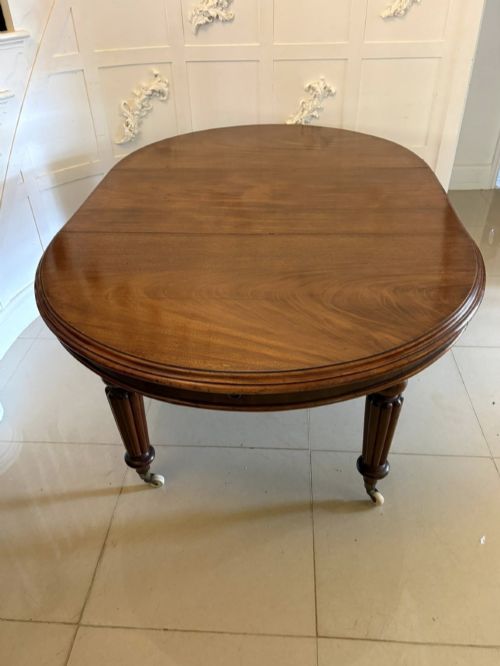
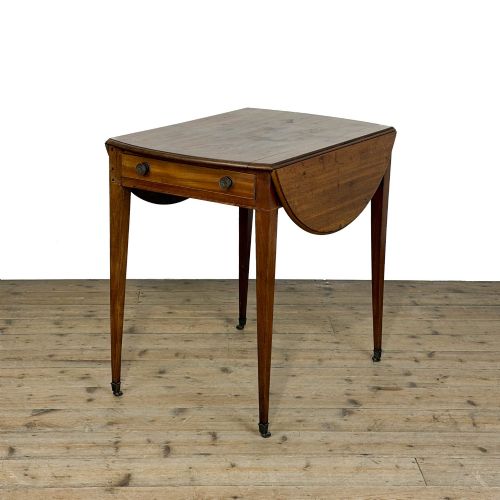
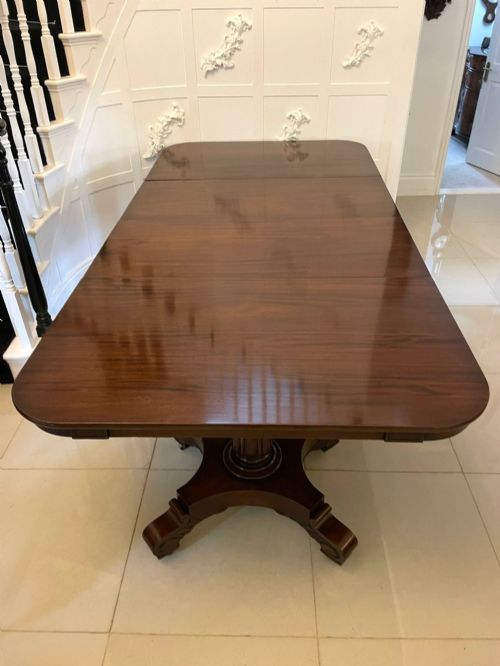
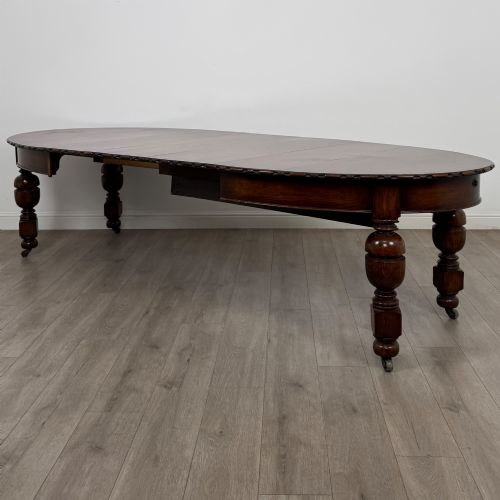
Vintage Extendable Table
A vintage extendable table offers the adaptability needed for modern dining rooms, bringing period timber and clever mechanisms together.
Vintage Extendable Table
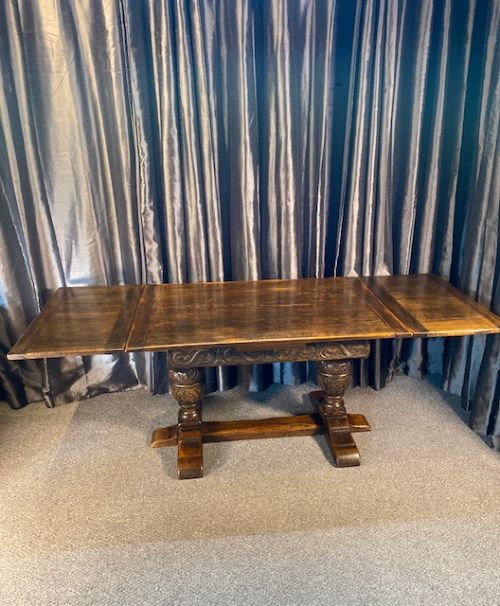
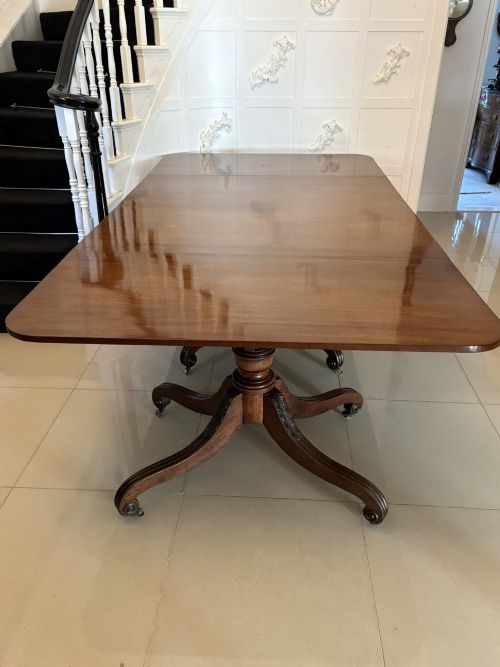
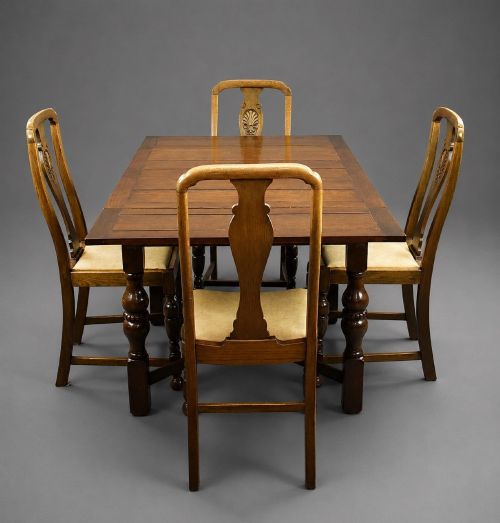
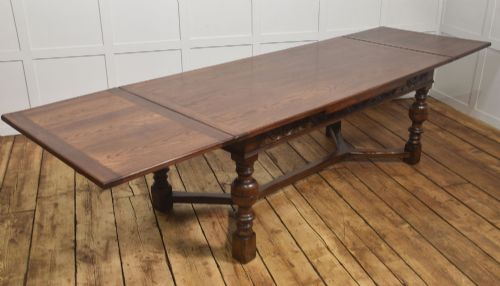
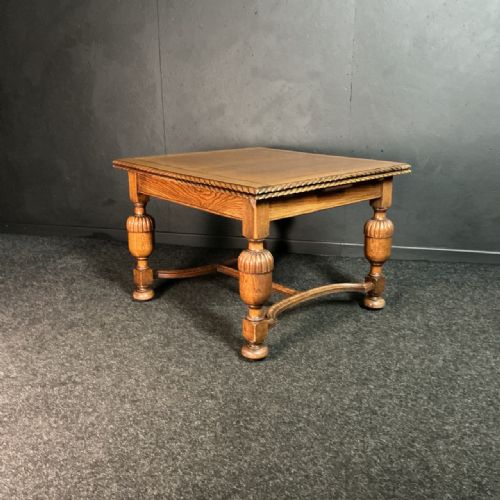
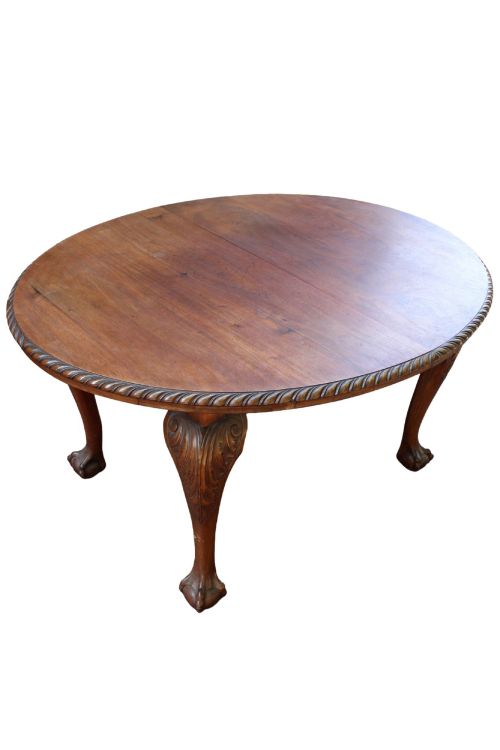
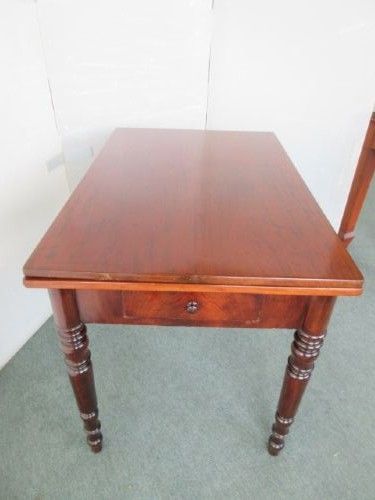
A vintage extendable table spans forms from sturdy oak draw-leaf refectories to sophisticated mahogany wind-out dining tables supported on brass castors. Buyers browsing this selection most frequently encounter mid-to-late nineteenth century Victorian pieces alongside early twentieth-century Edwardian and 1920s oak designs.
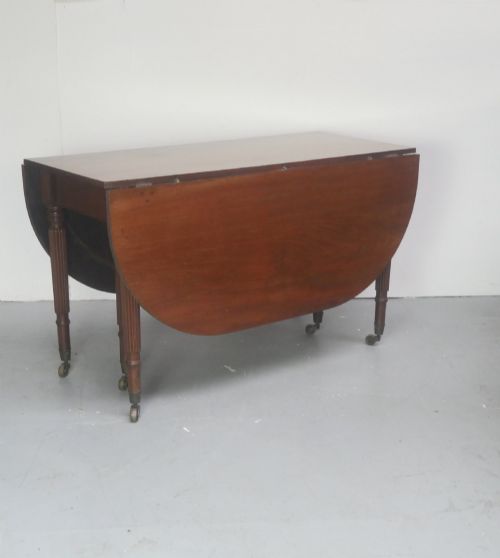
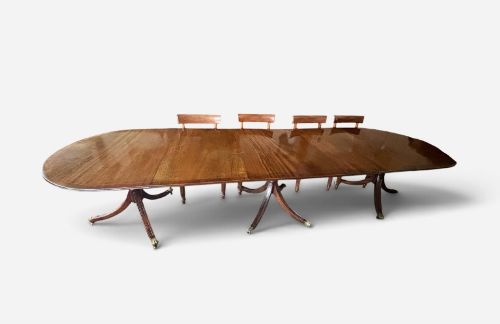
The inventory ranges from compact drop-leaf and gateleg tables suitable for smaller spaces to grand triple-pillar Regency revival pieces capable of seating large dinner parties. Oak and mahogany dominate the construction materials, reflecting the enduring popularity of these robust hardwoods for domestic furniture.
Stylistic influences stretch across Jacobean Revival, Art Deco, and French Provincial, showing how makers adapted historical motifs for practical twentieth-century dining rooms. Whether selecting a walnut Queen Anne revival piece or a cherry double-extending table, each format provides a distinct mechanical solution for expanding surface area.
Materials and construction methods
Craftsmen built these tables using dense timbers such as mahogany, oak, walnut, and burr walnut, frequently enhancing surfaces with figured veneers and decorative inlay. Solid brass components appear in the form of extendable winding mechanisms, castors, and hinges that facilitate smooth daily operation.
Internal mechanisms rely on timber runners, draw leaves, and drop-leaf hinges designed to bear weight securely when the table is fully extended. Joinery techniques range from traditional mortise and tenon frames in refectory models to complex geared winding screws housed beneath Victorian table tops.
Vintage Extendable Table Retail Price Guide 2026
Typical asking prices for vintage extendable table among the pieces listed under this phrase on Sellingantiques today, from the lower quarter to the upper quarter. They describe what is for sale here now, not the wider market.
One Swedish drop-leaf table arrives with a painted finish, breaking a sea of polished timber.
Distinguishing quality across the range
The division between standard workshop production and master cabinet-making rests in the precision of the extending mechanism and the selection of timber veneers. Superior examples exhibit seamless alignment between extension leaves and the main top, alongside tightly figured mahogany, burr walnut, or quarter-sawn oak.
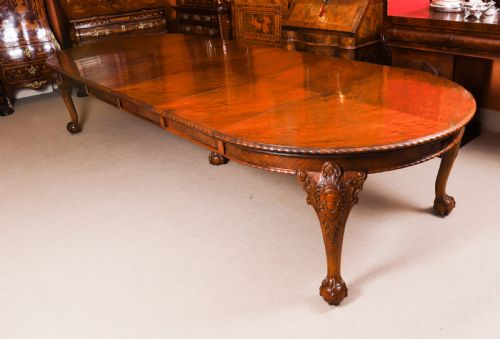
Makers known for exceptional joinery integrate winding handles, pedestals, and carved claw and ball legs with structural integrity that prevents sagging under heavy loads. Lesser pieces may display uneven timber matching across leaves or minor friction within sliding runner tracks due to simpler joinery methods.
Maple & Co·Whytock & Reid·Hille
The Vintage Extendable Table Glossary
- Draw-leaf
- A table construction where two hidden leaves slide out from beneath the main surface to extend the length.
- Wind-out
- A mechanical system utilising a turning handle and internal metal screw thread to part the table halves for inserting central leaves.
- Drop-leaf
- A table featuring hinged side flaps that fold down when not in use to save floor space.
- Triple-pillar
- A substantial dining table base design supported by three distinct central pedestals, usually fitted with branching legs and castors.
- D-End
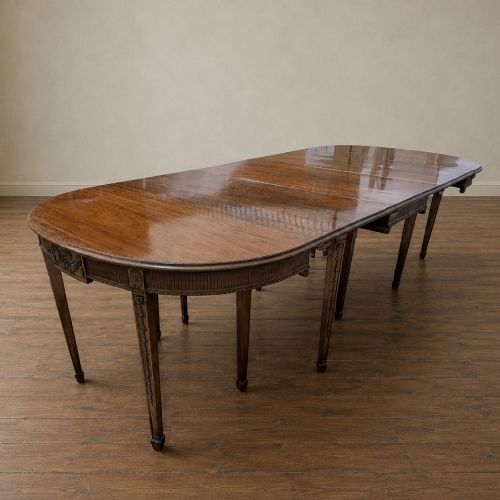
- A table formation featuring semicircular ends that can be detached or separated when extra leaf sections are removed.
Vintage Extendable Table: Frequently Asked Questions
How do wind-out tables operate?
Wind-out mechanisms use a dedicated metal crank inserted into the side apron of the table. Turning this handle rotates an internal screw thread that pulls the two main halves apart, creating the gap needed to drop in extra timber leaves.
Once the leaves are secured in place, the handle turns in the opposite direction to draw the table halves tightly back together. This locks the assembly firmly into a solid surface.
How do draw-leaf tables function?
Draw-leaf tables use a clever under-top sliding system where two supplementary panels rest just beneath the main surface. When you pull the ends outward, the main top lifts slightly before the leaves slide smoothly up and into place at each end.
This design removes the need to store separate loose leaves in a cupboard. The extensions remain permanently housed within the table frame ready for immediate use.
How do I care for antique wood?
Protect antique table surfaces by using felt mats beneath hot dishes and coasters under glasses. Natural timbers respond well to occasional applications of traditional beeswax, which nourishes the grain without building up synthetic residues.
Keep extendable tables away from direct heat sources such as radiators or fireplaces to prevent timber from drying out, warping, or splitting along glued joints.
Where were these tables used?
These tables served primarily in formal dining rooms, country house kitchens, and domestic parlours for daily family meals and hosting guests. Larger multi-pillar formats were built for substantial Victorian and Edwardian residences where entertaining large dinner parties was common.
Smaller drop-leaf and gateleg versions suited compact townhouses and cottages where floor space changed depending on the time of day.