



Antique Telescoping Table
These antique telescoping table pieces bring ingenious Victorian and Georgian engineering to your home.
Antique Telescoping Table
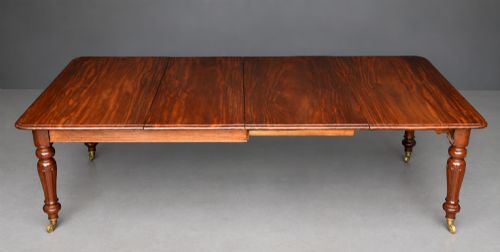
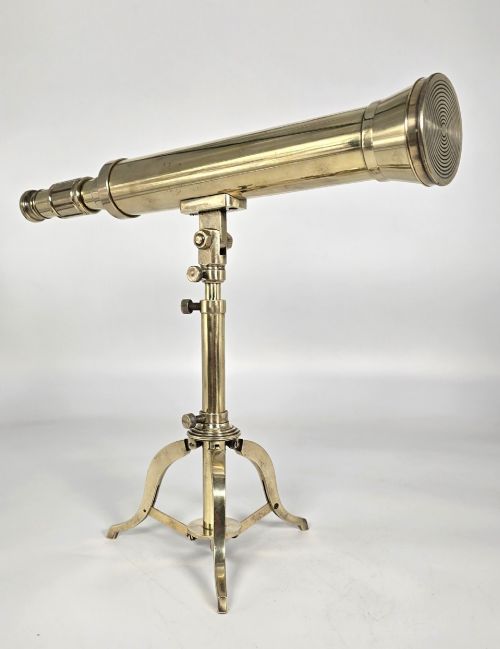
When you search for an antique telescoping table, you encounter a fascinating mix of optical instruments and expandable dining furniture. The term bridges the gap between scientific brass telescopes mounted on stands and large mahogany dining tables that extend to seat twelve.
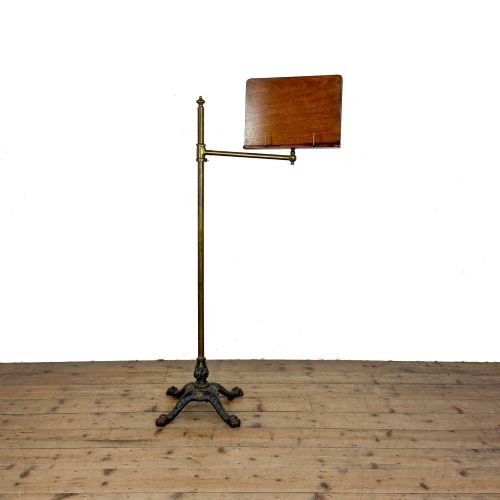
The pieces on this page span the Georgian, Victorian, and Edwardian periods. You will find library telescopes with folding tripods alongside extending mahogany dining tables and adjustable reading stands.
How they were made
Makers utilised rich timbers such as mahogany for dining tables and reading stands, often pairing them with brass for optical instruments and mechanical fittings. Cast iron and steel also appear in the structural and supporting elements of lamps and stands.
Optical instruments feature precision glass lenses housed within polished brass barrels. Dining tables employ internal wooden mechanisms that pull apart smoothly to accommodate additional leaves.
Listings feature items from the 18th century, Georgian, Victorian, and Edwardian periods, constructed from mahogany, brass, glass, and cast iron.
What varies in quality
Quality rests in the precision of the mechanics and the integrity of the materials. Fine optical pieces retain original glass and signed brass barrels by notable makers, while superior dining tables show careful selection of mahogany grain and smooth extending action.
Nairne & Blunt of London·S & B Solomons·G.adams of london
The Antique Telescoping Table Glossary
- Gregorian telescope
- A reflecting telescope design using a concave primary mirror and a small secondary mirror. This configuration produces an upright image suitable for terrestrial and astronomical viewing.
- Extending dining table
- A table designed with a mechanism to pull apart so that extra leaves can be inserted. This allows the seating capacity to expand significantly for dinner parties.
- Library telescope
- A large optical instrument mounted on a sturdy stand, designed for use in a study or library. These often feature brass construction and folding tripod bases.
- Reading stand
- An adjustable piece of furniture designed to hold books or papers at a comfortable angle. They frequently incorporate mechanical adjustments for height and tilt.
Antique Telescoping Table: Frequently Asked Questions
How do I extend the dining tables?
These tables utilise internal wooden tracks or runners that pull apart from the centre. Additional leaves drop into the gap to lengthen the surface.
Ensure you lift rather than drag the leaves to protect the mahogany edges and the extending mechanism.
Where were library telescopes used?
Library telescopes sat on heavy tables or dedicated tripod stands inside grand homes and studies. Owners used them to view distant landscapes or the night sky through tall windows.
Most examples remain mounted on brass or iron stands for easy adjustment.
How do I care for brass parts?
Brass components require gentle dusting with a soft cloth to prevent the accumulation of grime. Avoid harsh chemical polishes that strip away the aged patina.
Leaving the metal to age naturally preserves the historical character of the piece.
What woods are most common?
Mahogany dominates the furniture pieces from the Georgian and Victorian eras. Makers favoured it for its strength and deep reddish-brown colour.
Other materials like glass, cast iron, and ceramic appear in smaller supporting roles.