
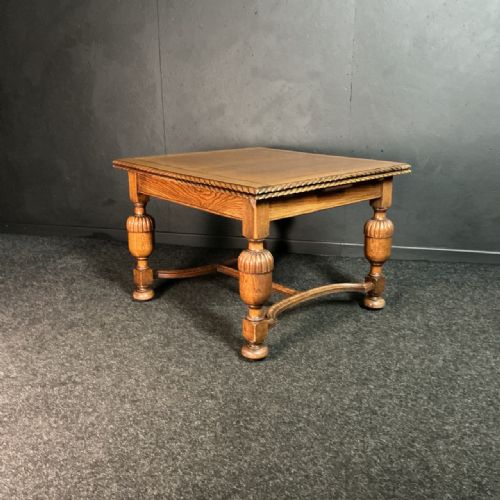
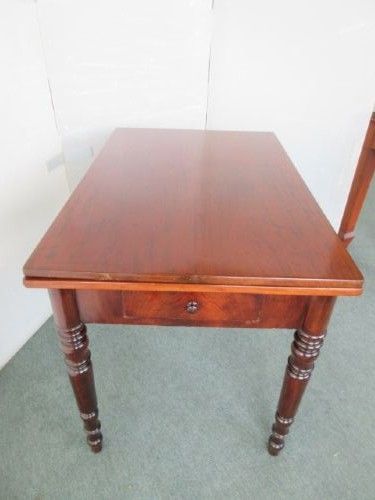
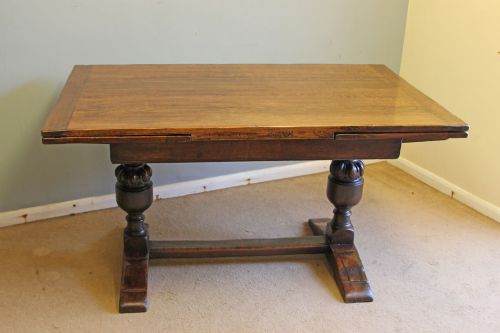
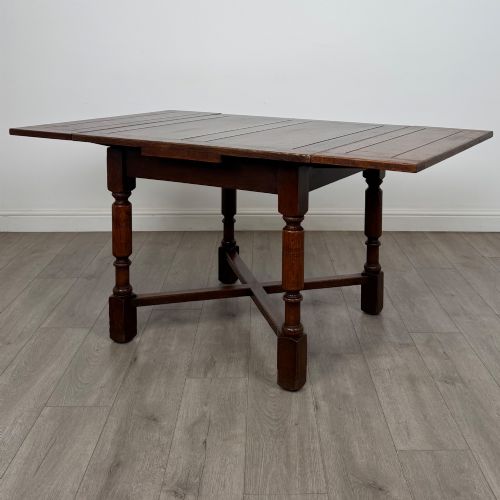
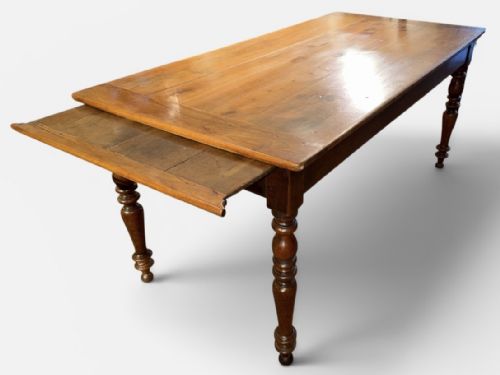


Vintage Extendable Kitchen Table
A vintage extendable kitchen table gives you everyday utility and period character without taking up half the room.
Vintage Extendable Kitchen Table
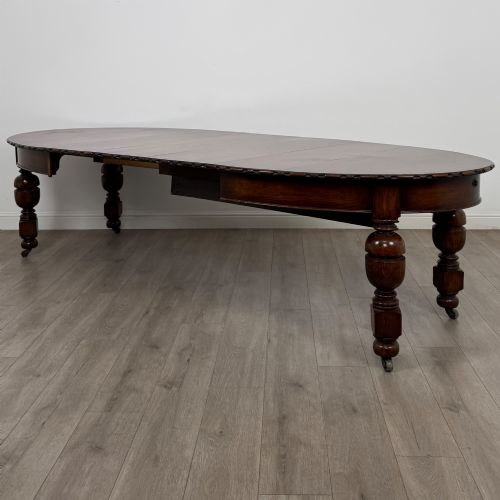
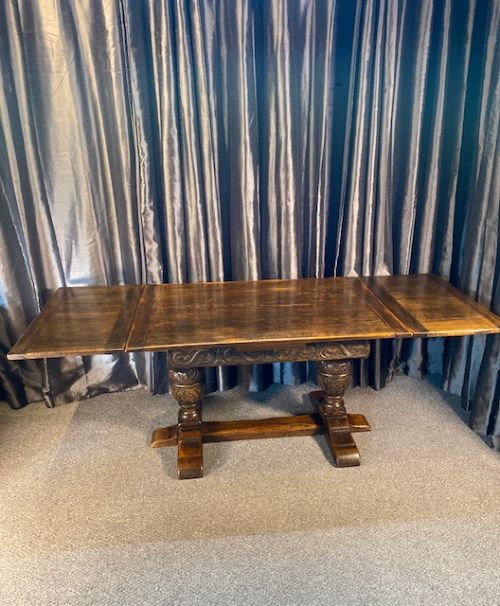
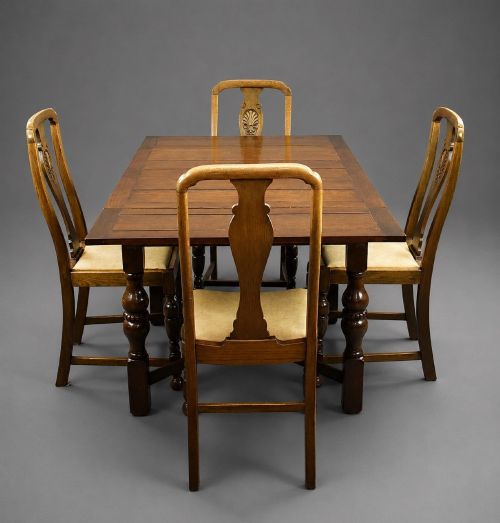
A vintage extendable kitchen table is a practical working surface designed to lengthen when extra space is needed for dining or preparation. You will most frequently meet these in solid oak or mahogany, often configured as draw leaf or drop leaf designs that hide their extra leaves until required.
The pieces listed on this page span several decades and styles, reaching from nineteenth century farmhouse designs through Edwardian examples to twentieth century interpretations. Oak dominates the selection, appearing in refectory and draw leaf formats alongside occasional mahogany and fruitwood pieces.
Buyers seeking a vintage extendable kitchen table want something that adapts to daily family life while offering genuine age and timber quality. The selection here ranges from simple rustic farmhouse boards to Jacobean revival and Arts and Crafts pieces with distinct regional character.
How they were made
Makers built these tables using sturdy timbers such as oak, mahogany, and cherry, selecting woods that could withstand the heavy daily wear of a kitchen or dining room. Joints were typically pegged or dowelled to ensure the frame remained rigid even when the top was fully extended.
The extension mechanisms rely on clever woodwork, such as draw leaves that slide smoothly beneath the main surface or drop leaves supported by hinged wooden arms. Brass fittings occasionally appear on mechanisms or handles, adding a subtle functional detail to the timber construction.
Period examples span from the nineteenth century through the Edwardian era up to the nineteen-sixties.
What varies in quality
Quality in these tables is judged by the selection of the timber and the precision of the extension mechanism. A superior piece uses quarter-sawn oak or well-figured mahogany with tight grain, avoiding warping across the main leaves.
The smoothness of the extending action separates standard production from finer craftsmanship. Well-made draw leaf and drop leaf tables move without binding, keeping the top flat and stable in both the closed and open positions.
Maple and Co
The Vintage Extendable Kitchen Table Glossary
- Draw leaf
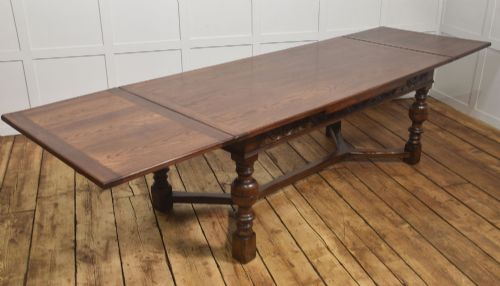
- A table design featuring two concealed leaves tucked beneath the main top that pull out to extend the surface length. This system allows the table to double in capacity without requiring separate storage for loose leaves.
- Refectory
- A long, narrow dining table style traditionally used in communal dining halls and adapted for domestic kitchens. These tables usually feature sturdy legs connected by low stretchers for added stability.
- Parquetry
- A geometric mosaic of wood pieces used for decorative effect on tabletops or floors. It adds visual texture and showcases the maker's skill in precision cutting.
- Gate leg
- A table style where the legs swing out like gates to support hinged drop leaves on either side. When folded down, the table occupies a minimal footprint against a wall.
Vintage Extendable Kitchen Table: Frequently Asked Questions
How do draw leaf tables work?
A draw leaf table has two extra leaves stored directly underneath the main tabletop. You simply pull them out from each end, and the main top drops slightly into place to create one continuous surface.
This clever design means you do not need to store spare leaves in a separate cupboard. It provides a quick way to seat extra guests during meals.
Are these tables suitable for everyday use?
These tables were originally built for heavy daily use in kitchens and dining rooms. Solid timbers like oak and mahogany handle daily family life remarkably well.
Using heat mats and wiping spills promptly will keep the wood finish in good condition. The sturdy construction ensures they remain stable under regular pressure.
How do I tell Edwardian tables from Victorian ones?
Victorian tables often feature darker timbers like mahogany and heavier proportions influenced by earlier revival styles. Edwardian examples tend to show lighter oak construction and simpler lines.
Construction techniques and hardware also offer clues, with Edwardian pieces occasionally reflecting the emerging Arts and Crafts influence. Examining the underside and joint construction helps confirm the period.
What is a bread slide?
A bread slide is a pull-out wooden shelf integrated into the frame of certain antique tables. Historically, bakers used these shelves to cool loaves or prepare food near the main surface.
Today, they add a charming historical detail and extra surface area for small items. They slide smoothly in and out beneath the tabletop.