


1920s Oak Leaf Table
A 1920s oak leaf table brings sturdy timber and clever folding mechanisms together for compact dining spaces.
1920s Oak Leaf Table
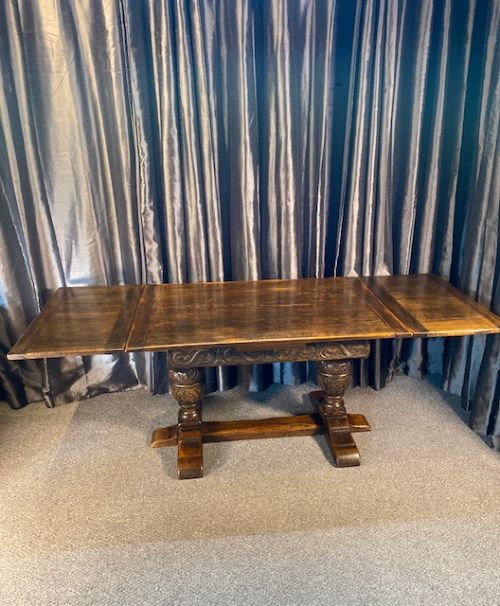
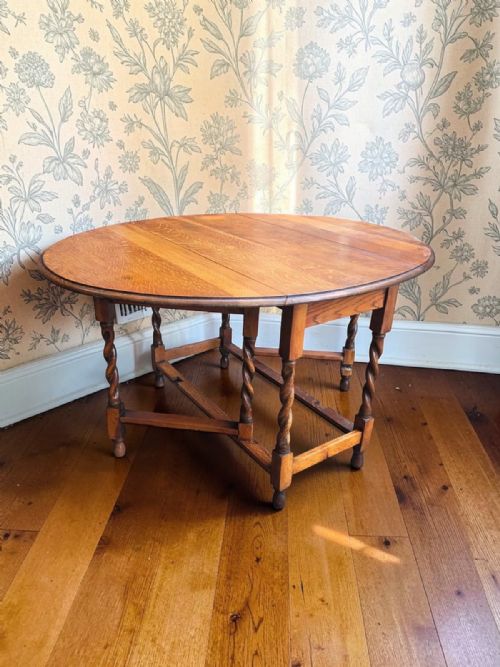
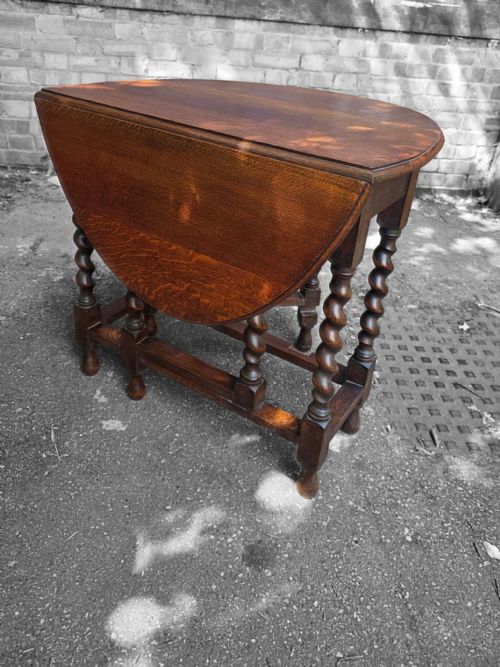
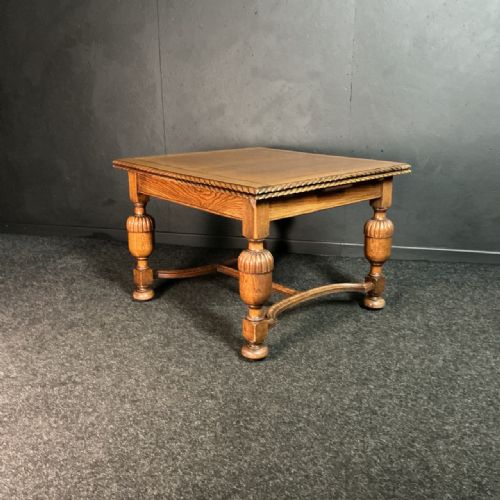
When you search for a 1920s oak leaf table, you encounter practical dining furniture designed to extend when needed and fold away to save floor space. The examples on this page are predominantly gateleg, drop-leaf, and draw leaf tables originating from the early twentieth century, alongside occasional earlier pieces.
Jacobean Revival and Arts & Crafts influences shape the appearance of these tables, frequently pairing solid timber construction with turned supports. Alongside these dining tables, the evidence includes related items such as cameo glass vases featuring foliage motifs, though furniture remains the main focus.
The selection ranges from compact drop-leaf designs to large refectory tables suited for family dining. Most pieces date directly to the nineteen-twenties or the late Edwardian era, though older 18th-century gate leg examples also appear in the archive.
Materials and construction
Solid oak forms the core material of these tables, chosen for its durability and strong grain pattern. Cabinet makers utilised this robust timber to support hinged leaves and extending leaves that withstand daily use.
Listings combine 1920s oak dining furniture with cameo and etched glass items featuring plant motifs.
Judging quality in oak tables
Quality rests in the weight of the timber and the precision of the mechanisms that allow leaves to draw or drop. Superior examples show careful matching of the grain across extending leaves and stable joints that support weight without sagging.
The crispness of turned details, such as barley twist legs, distinguishes finer workshop production from simpler commercial pieces. Surface finish also plays a part, with well-maintained patination indicating careful stewardship over the decades.
The 1920s Oak Leaf Table Glossary
- Gateleg table
- A table with hinged leaves supported by legs that swing out like a gate. This design provides a large surface area when open and folds flat for storage.
- Draw leaf table
- A dining table with two leaves hidden beneath the main top that pull out from the ends to extend the surface. It offers a simple method for lengthening the table without storing loose leaves elsewhere.
- Barley twist
- A spiral turning carved into furniture legs and supports. This decorative technique appears widely on early twentieth-century oak tables.
- Refectory table
- A long narrow dining table traditionally used for communal meals. Versions from the nineteen-twenties adapt this medieval form for domestic interiors.
- Cameo glass
- Glass formed with multiple layers of different colours carved to create a relief design. This technique decorates glassware associated with the period.
1920s Oak Leaf Table: Frequently Asked Questions
How do draw leaf tables work?
Draw leaf tables feature two hidden leaves stored underneath the main tabletop. You pull these leaves out from each end, and the main top drops slightly into place to create a flush, extended surface.
This mechanism allows you to seat more guests quickly without needing extra storage space for loose tableboards.
What is a gateleg table?
A gateleg table has hinged flaps on either side supported by movable legs that pivot outward. When closed, the drop leaves hang down vertically to minimise the footprint of the furniture.
Opening the leaves and swinging the supporting legs into position creates a sturdy, full-sized dining surface suitable for everyday use.
How do I care for antique oak furniture?
Antique oak benefits from regular dusting with a dry cloth and occasional treatment with suitable beeswax to nourish the timber. Keep the wood away from direct heat sources and strong sunlight to prevent drying and cracking.
Using coasters and placestents protects the polished surface from moisture rings and heat marks during meals.
Are these tables suitable for small dining rooms?
Drop-leaf and gateleg tables work well in compact spaces because you can fold the leaves down when they are not in use. This flexibility allows a large dining surface to shrink into a narrow console or side table.
Draw leaf versions offer a similar advantage by remaining compact until you specifically need extra seating space.