

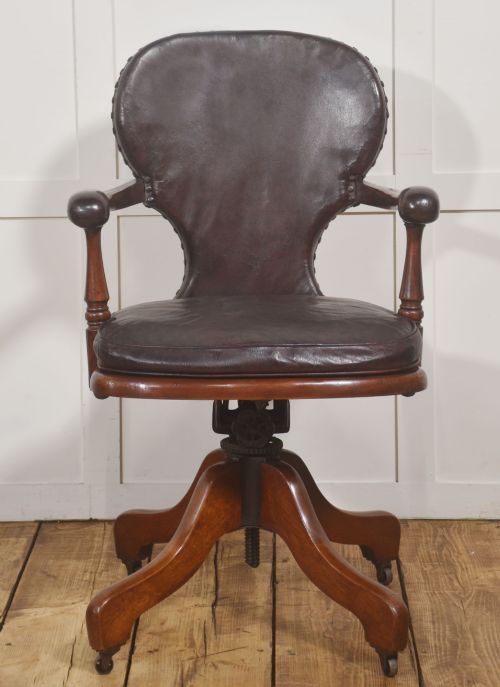
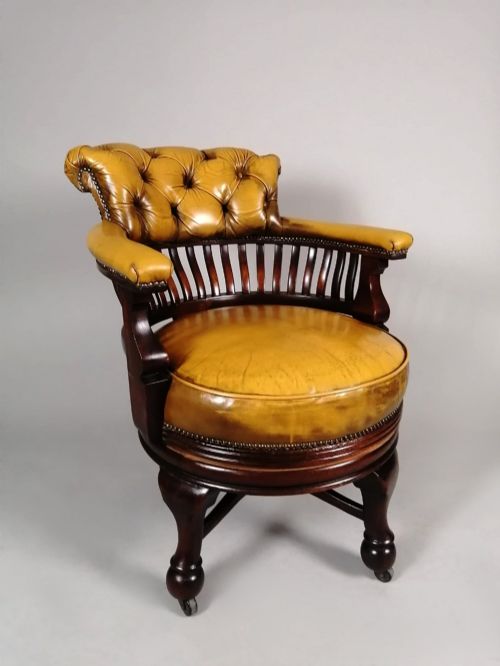
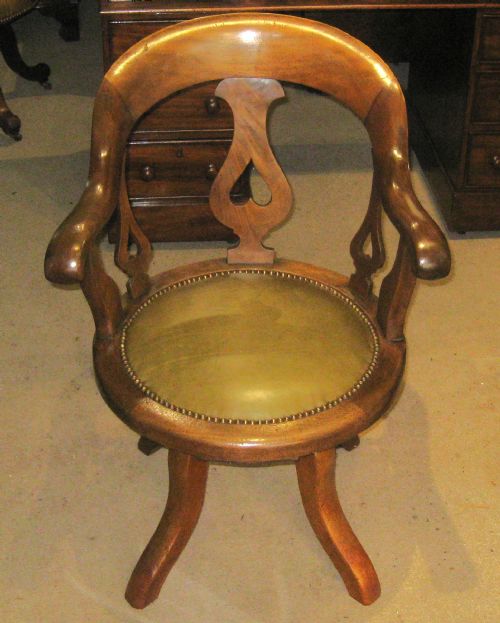


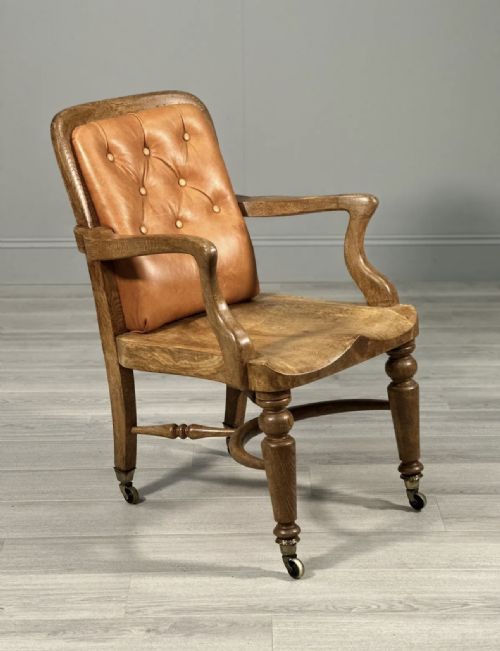
Vintage Executive Swivel Chair
A vintage executive swivel chair brings practical authority to a home workspace with solid timber frames and aged leather.
Vintage Executive Swivel Chair
When you search for a vintage executive swivel chair, you are looking at nineteenth- and early-twentieth-century seating designed for working at a desk. These pieces combine heavy timber frames with revolving mechanisms intended for office use.
The versions you are most likely to meet on this page hail from the Victorian and Edwardian eras, as well as the early twentieth century. They typically take the form of desk chairs and revolving office armchairs.
Makers of the period built these seats to function continuously in studies, banks and libraries. They survive today as working furniture that anchors a room with period character.
How they were made
Carpenters constructed the frames primarily from mahogany, oak and hardwood, often bending timber for supportive armrests and back rails. These dense woods provided the structural rigidity required for daily rotation and weight-bearing.
Workshops upholstered the seats in leather or fabric, securing the edges with brass tacks. Iron and cast iron mechanisms underneath allowed the seat to swivel and tilt on a central column.
Vintage Executive Swivel Chair Retail Price Guide 2026
Typical asking prices for vintage executive swivel chair among the pieces listed under this phrase on Sellingantiques today, from the lower quarter to the upper quarter. They describe what is for sale here now, not the wider market.
Current listings feature hardwood and mahogany frames paired with leather upholstery across Victorian, Edwardian and early twentieth-century periods.
What varies in quality
The standard of a vintage executive swivel chair depends largely on the timber selection and the complexity of the turnings on the frame. Richly figured mahogany and golden mahogany command attention for their warm grain.
Mechanisms also separate standard office seating from finer examples. Smoothly functioning cast-iron swivel and tilt assemblies show superior engineering that preserves the utility of the chair.
The Vintage Executive Swivel Chair Glossary
- Revolving desk chair
- A seat fitted with a central spindle that allows the user to turn in a full circle while seated at a desk. These designs appeared frequently in Victorian and Edwardian offices.
- Bentwood
- Wood that has been steamed and forced into curved shapes, commonly seen in the backrests of desk chairs. This technique added strength and ergonomic comfort without heavy joinery.
- Cast iron
- A strong, heavy alloy used for the undercarriage and revolving mechanisms of office chairs. It provided the necessary weight and stability for a secure swivel action.
- Golden mahogany
- A specific warm-toned variety of mahogany timber favoured by Victorian cabinet makers. It exhibits a bright, luminous grain when polished.
Vintage Executive Swivel Chair: Frequently Asked Questions
Are these chairs comfortable for daily work?
Most models feature supportive curved wooden backs and upholstered seats designed for long hours at a desk. The swivel action also helps with manoeuvrability in a modern study.
Because they were built for nineteenth- and twentieth-century offices, their ergonomics differ from modern office chairs. Many buyers use a cushion to adjust the seat height to their modern desk.
How do I identify a Victorian desk chair?
Victorian examples often feature rich mahogany frames, deep leather upholstery, and heavy cast-iron revolving mechanisms beneath the seat. Look for period joinery and traditional hand-tacked leather edges.
Design cues like bentwood elements and specific turnings help distinguish these pieces from later twentieth-century reproductions. The timber patination also indicates age.
What is the difference between oak and mahogany models?
Mahogany chairs tend to show a reddish-brown timber tone with a refined grain, often associated with formal libraries and executive offices. Oak versions generally present a more pronounced, textured grain pattern.
Both timbers provide the structural strength needed for a heavy swivel base. Your choice depends on the existing wood tones in your room.