


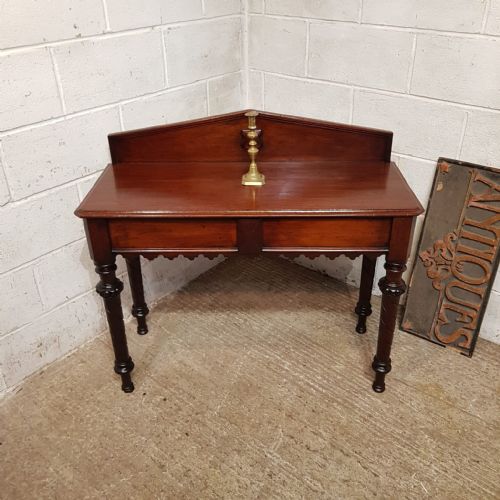

Vintage Entryway Console
These vintage entryway console options anchor a hallway with practical surface space and period character.
Vintage Entryway Console
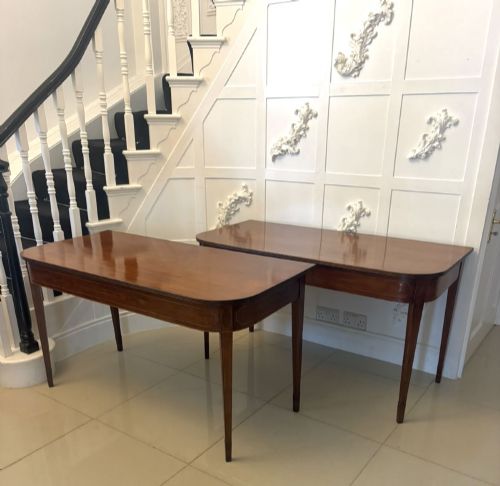
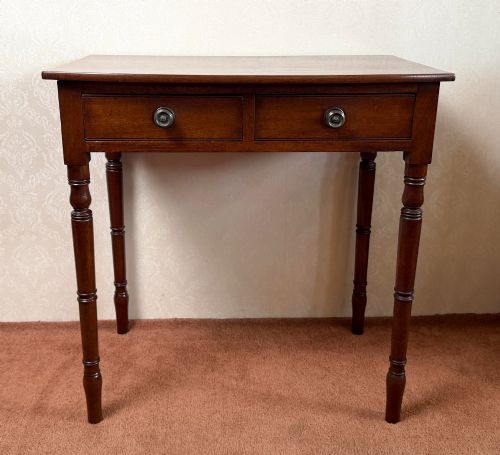
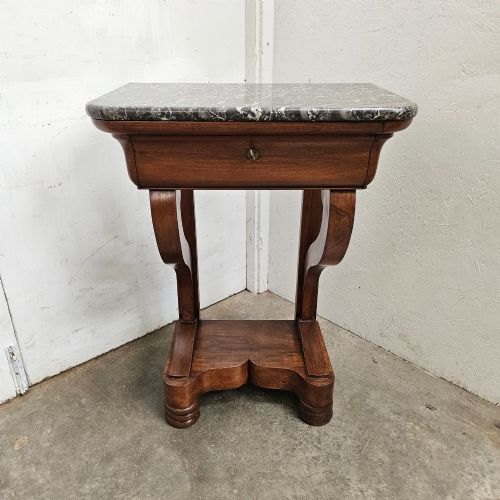
A vintage entryway console functions as a narrow surface for a hall or passage, appearing in forms such as console tables, hall tables, and hall stands. These pieces establish a functional focal point directly inside a doorway without obstructing foot traffic.
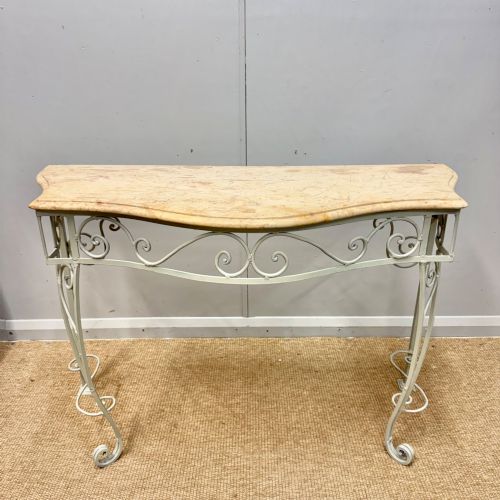
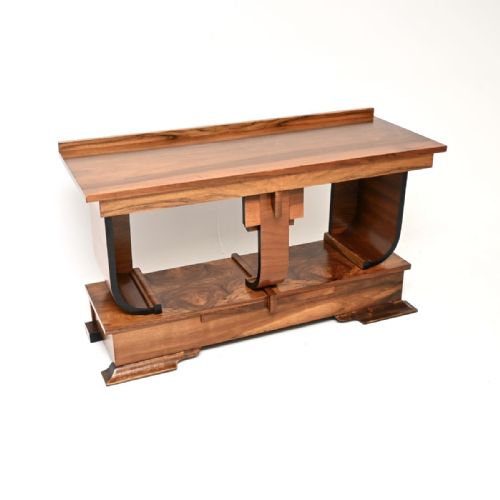
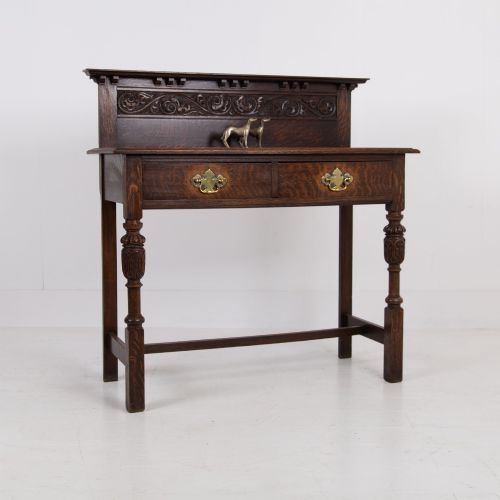
The selection ranges across several periods, including the Victorian era, Edwardian period, 1920s, and 1930s. Buyers frequently encounter oak and mahogany tables, alongside wrought iron frames paired with stone surfaces.
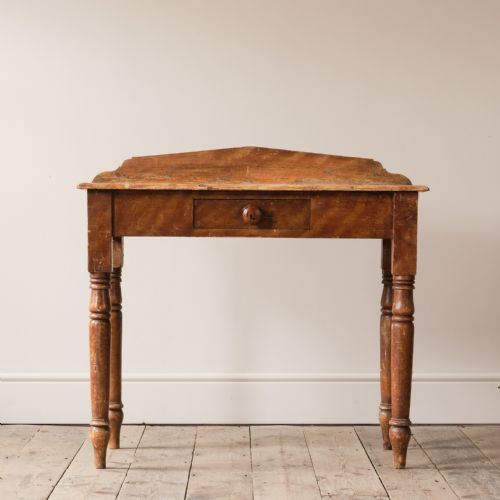
Origin styles vary widely, encompassing French Chateau and French Country influences alongside English Georgian and Victorian designs. This variety allows a hallway to receive either a formal mahogany ledge or a rustic painted timber frame.
Materials and construction
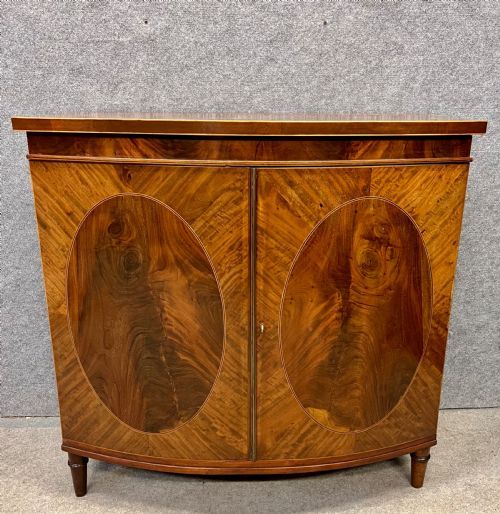
Cabinet makers utilised dense hardwoods like oak, mahogany, and walnut for structural stability in narrow frames. These timbers appear plain, figured, or inlaid depending on the stylistic requirements of the period.
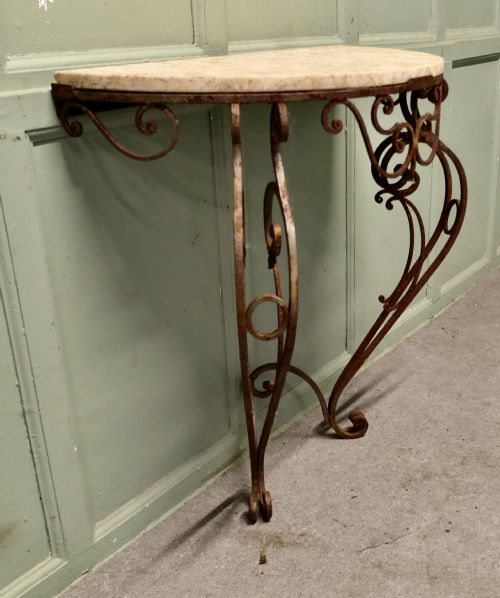
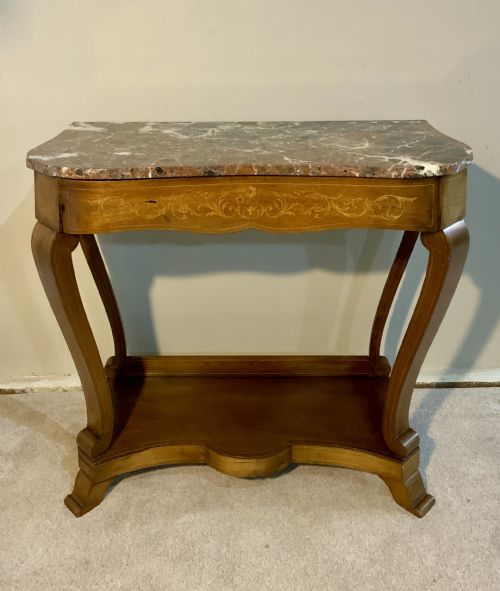
Stone surfaces frequently complement wooden or metal bases, featuring marble tops across many French and continental designs. Wrought iron and brass also form supportive bases, paired occasionally with fitted glass or painted finishes.
Judging quality in these tables
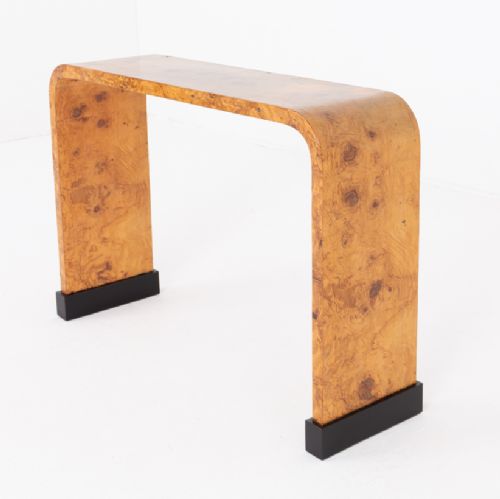
The integrity of the structural joints and the handling of the primary timber dictate the higher tier of these pieces. Fine execution shows in the crispness of carved details, the matching of burr walnut veneers, and the secure seating of heavy marble slabs.
Proportion and material harmony separate standard utilitarian items from finer decorative examples. Pieces retaining original paint finishes or integrated mirrors demonstrate superior survival and more complete original design intent.
The Vintage Entryway Console Glossary
- Console table
- A table designed to stand against a wall, frequently supported by wall brackets or front legs. These items provide a narrow surface suitable for entranceways and narrow corridors.
- Demi-lune
- A half-moon shape characteristic of tables with a curved front and a flat edge that sits flush against the wall. This silhouette saves floor space in tight hallways.
- Hall stand
- A tall hallway furnishing combining a mirror, coat hooks, and a small table or umbrella stand. They organise outerwear and accessories in domestic entryways.
- Giltwood
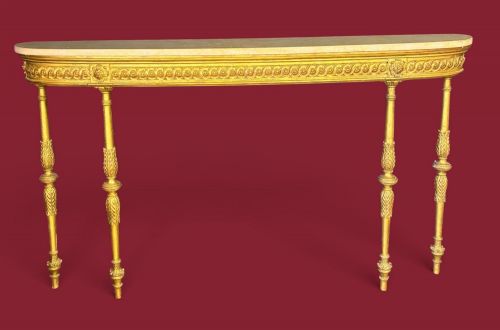
- Timber coated with a thin layer of gold leaf or gold paint. This technique appears on decorative frames and carved console tables.
Vintage Entryway Console: Frequently Asked Questions
What is a vintage entryway console used for?
These tables provide a narrow surface in hallways for placing keys, post, and decorative items upon entering a home. They sit flat against corridor walls to maximise usable surface area without blocking movement.
Taller variants incorporate mirrors and hooks to function as combined coat and hat stands. This creates an organised drop zone immediately inside the front door.
How do I fit a console table in a small hallway?
Measure the available corridor width carefully, keeping in mind that demi-lune and narrow console tables project less into the room than standard side tables. Placing a wall-mounted mirror above the table reflects light and expands the visual space of a compact entrance.
Ensure clearance for opening doors remains unobstructed by the depth of the frame. Wrought iron or glass designs also create a lighter visual footprint in confined areas.
How do I tell Victorian tables from Edwardian ones?
Victorian pieces tend to feature heavier proportions, darker mahogany or oak timbers, and more ornate carved decoration. They often prioritise solid utility and robust construction.
Edwardian examples frequently exhibit lighter construction, simpler lines, and delicate inlaid woodwork. These later pieces reflect a shift towards brighter, less imposing hallway furniture.
Are marble top tables practical for daily use?
Stone surfaces offer high durability and resistance to moisture from wet items placed upon them. They wipe clean easily after holding keys and everyday items.
Users should protect the stone from acidic spills like citrus or wine, which can etch the surface over time. Regular gentle cleaning preserves the polish of the marble.