


Vintage Enamelled Silver Spoons
These vintage enamelled silver spoons combine bright vitreous colour with precious metal, spanning the early to mid-twentieth century.
Vintage Enamelled Silver Spoons
Vintage enamelled silver spoons encompass tableware accessories like teaspoons, coffee spoons, and caddy spoons shaped during the opening decades of the twentieth century. These pieces appear individually or within fitted cases, often carrying bright polychrome decoration upon bowls and stems.
The selections span distinct stylistic periods including Art Deco, Art Nouveau, Arts and Crafts, and Mid-Century Modern designs. Buyers encounter British productions alongside Scandinavian imports from makers such as David Andersen.
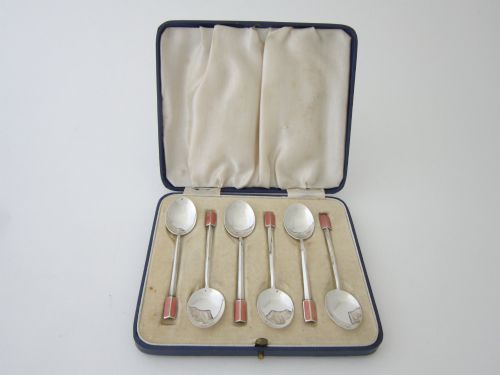
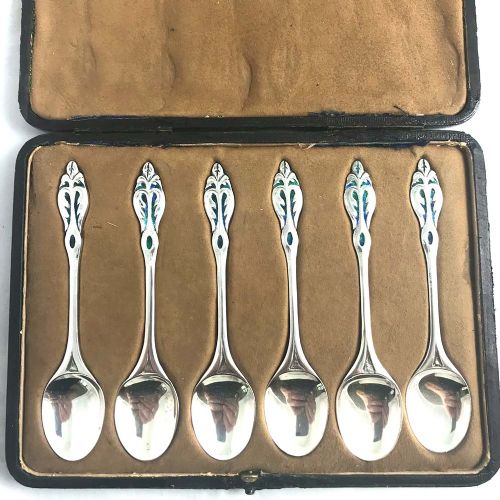
Cased sets frequently survive with their original satin or velvet linings inside leatherette presentation boxes. Individual collectible spoons also emerge, marking specific clubs or commemorative events.
Materials and construction methods
Silversmiths formed these utensils from solid silver or sterling silver, occasionally applying a layer of gold wash known as silver gilt. Metalworking techniques involved shaping the bowls and handles before ornamenting the surfaces with coloured glass paste.
Vitreous enamel was fused to the metal base through high-temperature firing, creating a smooth, glossy decorative layer. Artisans utilised techniques like guilloche engraving beneath translucent enamel to produce patterned light effects across the spoons.
Listings feature sterling silver and silver gilt pieces decorated with vitreous enamel across multiple decades.
Factors determining quality
The refinement of the metalwork and the complexity of the enamel work govern the standard of each piece. Superior examples display crisp chasing on the silver alongside flawless vitreous enamel free from chipping or restoration.
Complete sets retaining their original fitted presentation cases demonstrate higher desirability among collectors. The reputation of the maker and the distinctiveness of the design period further distinguish finer objects.
David Andersen·Harrods London·Liberty and Co
The Vintage Enamelled Silver Spoons Glossary
- Vitreous Enamel
- A material made by fusing powdered glass to a metallic substrate at high temperatures. This glass coating provides durable, glossy colour.
- Silver Gilt
- Silver that has been coated with a thin layer of gold. This treatment produces a rich golden appearance over the silver base.
- Caddy Spoon
- A short-handled spoon specifically designed for measuring loose tea leaves from a caddy. These pieces often feature decorative bowls.
- Guilloche
- A decorative engraving technique producing precise, intricate geometric patterns. When covered with translucent enamel, it reflects light through the coloured glass.
Vintage Enamelled Silver Spoons: Frequently Asked Questions
How should I clean vintage enamelled silver spoons?
Clean these items gently with warm soapy water and a soft cloth to protect the fragile glass coating. Avoid abrasive polishes and ultrasonic cleaning machines that can crack the enamel.
Dry the metal thoroughly immediately after washing to prevent tarnishing. Store loose spoons in soft flannel rolls or keep them secured within their original fitted cases.
Were these spoons used every day?
Many cased sets were reserved for formal entertaining, afternoon tea, or special guests rather than daily dining. Their delicate vitreous surfaces made them vulnerable to heavy wear.
Some pieces served commemorative functions or belonged to private clubs, limiting their practical usage. Consequently, many surviving sets retain their original pristine condition inside velvet-lined presentation boxes.
How do I identify Art Deco spoons?
Art Deco spoons display geometric motifs, clean architectural lines, and stylised patterns typical of the 1920s and 1930s. The enamel work often utilises bold, contrasting colour palettes.
Handles frequently feature stepped designs or linear engraving rather than the organic, flowing curves of earlier styles. Hallmarks stamped into the silver also help confirm the manufacturing decade.
What is the difference between teaspoons and coffee spoons?
Coffee spoons are noticeably smaller in scale than standard teaspoons, designed to accompany demitasse cups. Their reduced size suited the stronger brews served after meals.
Both types share similar decorative enamel techniques on their silver handles and bowls. Cased sets often standardise the size of the spoons to match specific service items.