



Enamelled Silver Coffee Spoons
Enamelled silver coffee spoons are small, brightly coloured pieces of tableware from the late nineteenth and early twentieth centuries that bring instant charm to a table.
Enamelled Silver Coffee Spoons
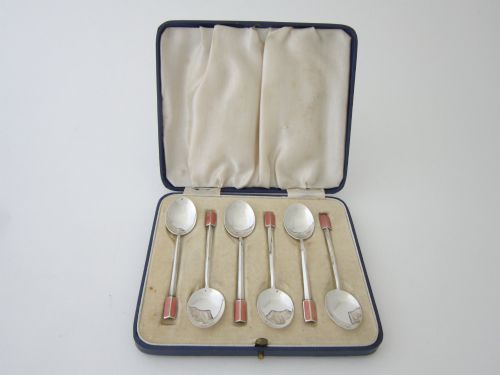
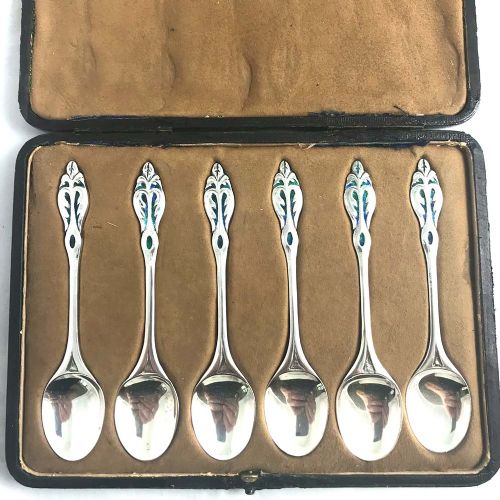
Enamelled silver coffee spoons are small items of flatware designed for after-dinner coffee, often supplied in matched sets within fitted presentation cases lined with satin, velvet, or leatherette. When you search for enamelled silver coffee spoons, you are looking at small silver spoons decorated with colourful vitreous enamel, originating from periods such as Art Deco, Art Nouveau, and Arts and Crafts.
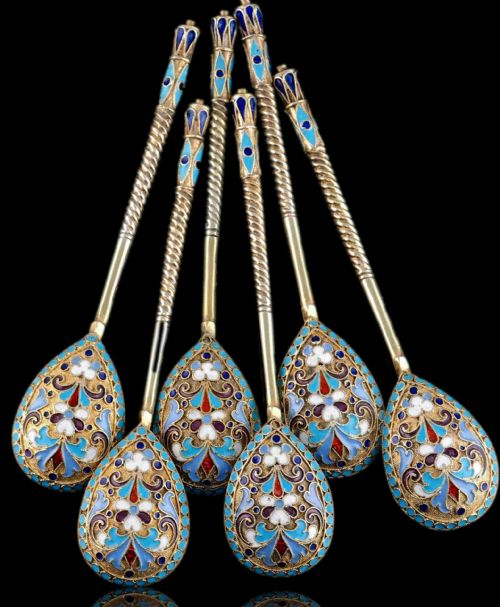
The pieces you meet most often on this page date from the early twentieth century, particularly the 1920s and 1930s, and frequently originate from British makers in Birmingham alongside Scandinavian and Russian workshops. They take the form of individual teaspoons or coffee spoons, sometimes accompanying ceramic coffee cans and saucers in larger service sets.
Collectors encounter various thematic designs within these sets, ranging from geometric Art Deco patterns to specific motifs like nautical sailing clubs and playing card suits. Most survive in their original fitted boxes, preserving the bright colours of the enamel bowls and stems against tarnished or silver-gilt backgrounds.
How they were made
These items combine solid sterling silver or silver gilt with applied vitreous enamel, a powdered glass fused to the metal surface through intense kiln firing. The metal handles and bowls provide a sturdy structural base, whilst the glass paste melts into vibrant coloured panels.
Silversmiths shaped the spoons using traditional stamping and casting methods before applying the enamel by hand into recessed cells or wire compartments. Many English examples bear hallmarks from Birmingham assay offices, confirming the standard of the silver used alongside the decorative glasswork.
Listings feature items from the 1890s through to the 1940s, encompassing Art Nouveau, Arts and Crafts, and Art Deco styles.
What varies in quality
Quality rests primarily on the crispness of the silver execution and the complexity of the enamelling technique, such as detailed cloisonné work compared to plain applied colour. The survival rate and condition of the vitreous glass surface dictate much of the appeal, alongside the presence of matching sets and original fitted presentation cases.
The reputation of the retailer or maker also influences desirability, with pieces retailed by firms like Harrods or designed for Liberty setting a distinct standard of design. Furthermore, the precision of the geometric Art Deco motifs or the intricacy of Imperial Russian styling separates standard production items from finer workshop output.
Dmitrii Nikolaevich Nikolaev·David Andersen·Liberty and Co
The Enamelled Silver Coffee Spoons Glossary
- Vitreous Enamel
- Glass powder fused to a metal surface at high temperatures to create a smooth, coloured decoration. This material provides the bright shades seen on the bowls and stems.
- Silver Gilt
- Silver covered with a thin layer of gold, giving a warm yellow metallic finish. This treatment protects the underlying metal and adds contrast to the coloured enamel.
- Hallmark
- Official stamps struck into precious metal indicating the maker, assay office, and standard of purity. Birmingham examples appear frequently among these pieces.
- Cloisonné
- An enamelling technique where fine metal wires form partitions to hold different colours of glass paste. This method creates detailed patterns visible across antique Russian and European items.
- Flatware
- Utensils used for eating and serving, including spoons, forks, and related cutlery. These listings focus specifically on small coffee and tea spoons.
Enamelled Silver Coffee Spoons: Frequently Asked Questions
What were enamelled silver coffee spoons used for?
These small spoons were designed specifically for stirring sugar into after-dinner coffee served in demitasse cups. Their decorative enamel bowls added a touch of colour to formal dining tables during the late nineteenth and early twentieth centuries.
Most were kept in fitted presentation boxes and only brought out for guests on special occasions. Because of this limited use, many surviving sets remain in remarkably preserved condition.
How do I date my silver enamel spoons?
You can date these spoons by checking the hallmarks stamped into the silver, which indicate the assay office and year of testing in cities like Birmingham. Stylistic clues such as geometric shapes point to the Art Deco period of the 1920s and 1930s, whilst flowing floral lines usually suggest earlier Art Nouveau or Arts and Crafts origins.
The presence of original fitted cases lined with velvet or satin also helps identify the manufacturing era. Makers' marks can further narrow down the exact decade of production.
Are these spoons made of solid silver?
Most pieces are made from sterling silver or silver gilt, which combines a solid silver base with a gold wash finish. The metal provides a durable and stable foundation for the fused vitreous enamel decoration.
Assay marks stamped directly onto the stems confirm the silver standard used by the silversmith. Some variations include silver-mounted components on ceramic coffee services.
How should I store cased silver spoons?
Keep the spoons inside their original fitted leatherette, satin, or velvet presentation cases to protect the fragile enamel surfaces from scratching. Storing them in a dry environment prevents the silver from tarnishing too quickly.
Avoid wrapping them in ordinary rubber bands or certain papers that can react chemically with the silver and enamel. Gentle handling preserves both the glasswork and the original box lining.