
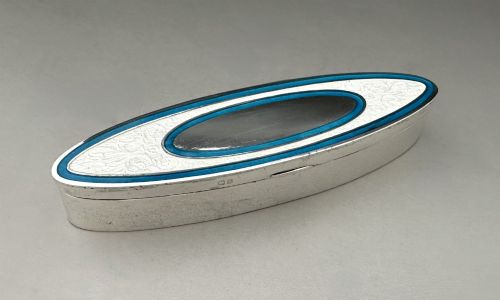
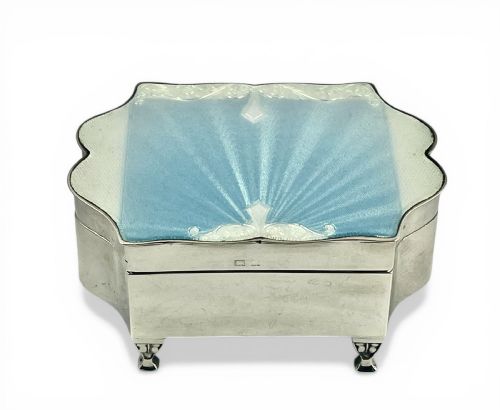


Vintage Enamel Vanity Box
A vintage enamel vanity box brings together coloured vitreous glass and silver or metal in forms designed to sit upon a dressing table or travel in a handbag.
Vintage Enamel Vanity Box
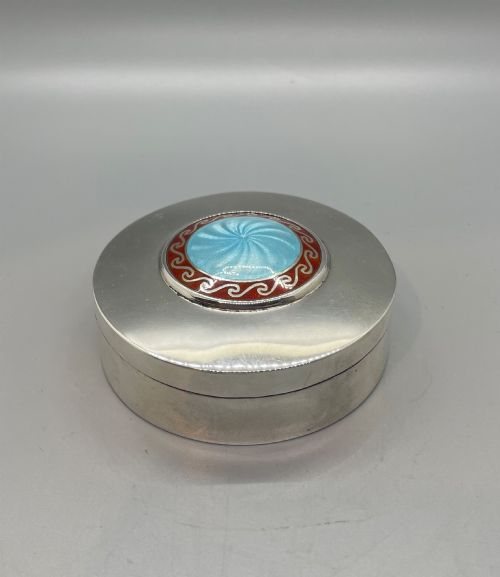
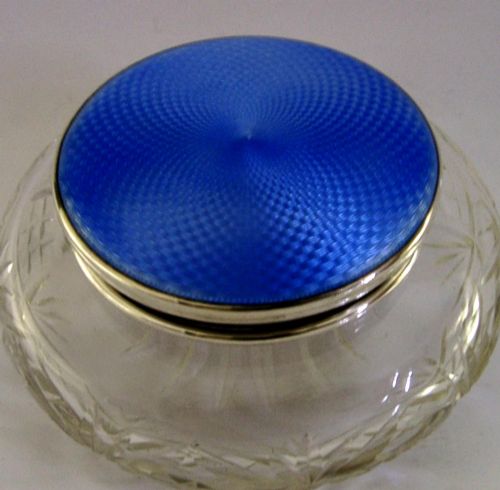
When you search for a vintage enamel vanity box, you are looking at small personal containers designed for powder, pills, trinkets, and cosmetics. The selection spans several decades, with Art Deco powder compacts, pill boxes, and dressing table jars forming a large part of what you will meet on this page.
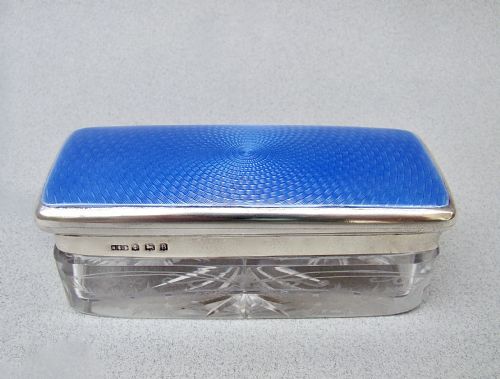
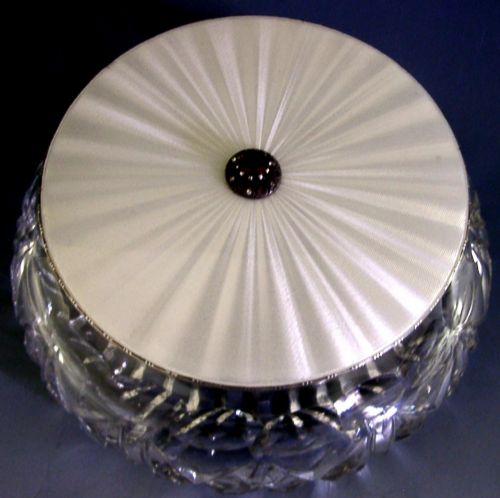
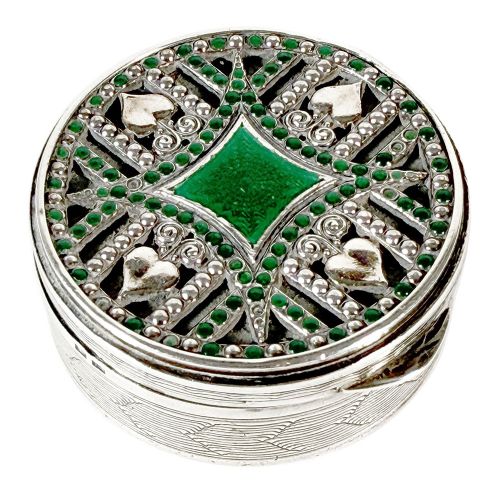
The objects take many functional shapes, including small trinket boxes, cigarette cases, rouge pots, fob watch cases, and larger cut glass jars with silver enamel lids. Origins range from British assay offices in Birmingham and London to continental workshops in France, Austria, and Italy, alongside 18th-century Bilston patch boxes.
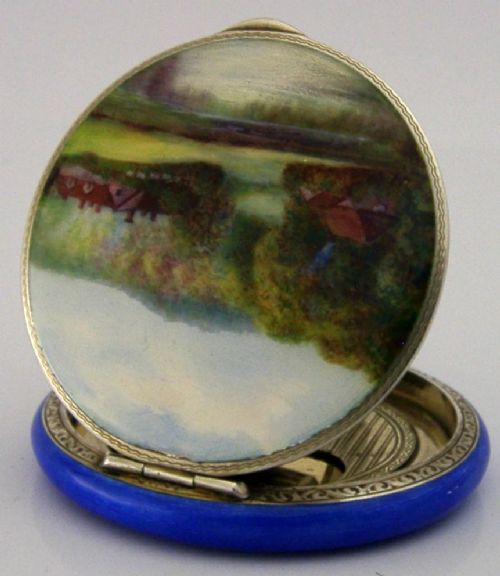
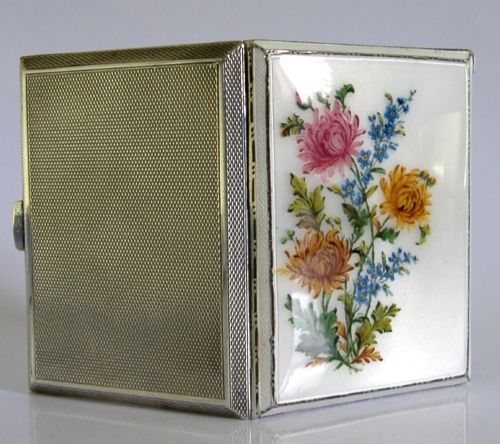
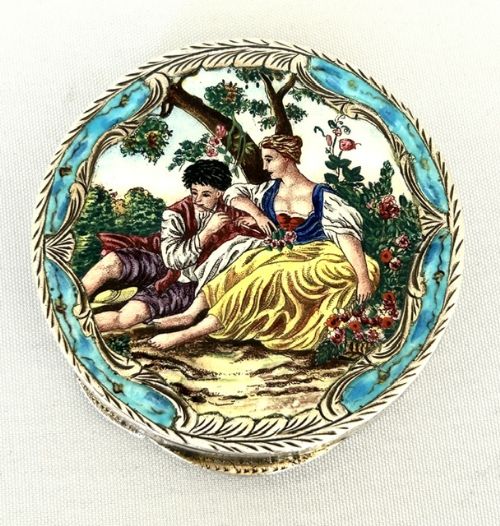
Stylistically, pieces transition from Edwardian and Art Nouveau floral motifs to geometric Art Deco designs and mid-century Italian work. Materials combine sterling silver, silver-gilt, chrome, and brass with various forms of enamel, including guilloche and hand-painted scenes.
How they were made
Makers fused powdered glass to metal surfaces at high temperatures to create a vitreous enamel layer. Many pieces utilise guilloche techniques, where the metal beneath the translucent enamel is machine-turned with precise geometric patterns that catch the light.
Metals such as sterling silver, 800 silver, brass, and chrome formed the structural bodies and bezels. Artisans frequently paired these metal mounts with cut glass or cranberry glass bodies, or lined compacts with suede for practical use.
Some Art Deco compacts came equipped with hidden spaces for miniature lipsticks and tiny suede powder puffs.
What varies in quality
The calibre of an enamel piece rests upon the complexity of its decoration and the precision of its metalwork. Hand-painted floral or scenic details and intricate engine-turned guilloche patterns under translucent enamel demand high skill, separating standard production items from finer workshop pieces.
Maker attribution and assay marks also influence standing, with signed pieces from known silversmiths or established firms carrying distinct weight. The thickness of the silver mounts and the crispness of the hinges and closures reflect the original tier of manufacture.
Henry Clifford Davis·George Adam Scheid·Henry Matthews·Giuliano Spinelli·Richard Hudnut·Goldsmith's and Silversmith's Co.
The Vintage Enamel Vanity Box Glossary
- Guilloche
- A decorative technique in which a precise repeating pattern or design is機械 mechanically engraved into a metal surface using a lathe. Translucent enamel applied over this engraving creates depth and shifting light effects.
- Vitreous Enamel
- A material made by fusing powdered glass to a substrate by firing, usually between 750 and 850 degrees Celsius. The resulting compound is a durable and smooth glass coating on metal.
- Compact
- A small portable case containing a mirror, cosmetic powder, and sometimes a puff or rouge compartment. They were popular accessories for women throughout the 20th century.
- Bilston Enamel
- Small decorated copper boxes and trinket containers produced in the English town of Bilston during the 18th century. They are noted for detailed hand-painting on a white enamel ground.
- Sterling Silver
- An alloy of silver containing 92.5% mass of silver and 7.5% mass of other metals, usually copper. It provides the rigid framework for many lidded boxes and vanity jars.
Vintage Enamel Vanity Box: Frequently Asked Questions
How do I date a silver enamel compact?
Dating relies heavily on hallmarks stamped into the silver frame, which indicate the assay office, standard of silver, and year letter.
Stylistic cues such as Edwardian floral motifs or Art Deco geometric layouts also help narrow down the decade of production.
Were these boxes used for cosmetics?
Many of these containers served functional roles on dressing tables or inside handbags for holding loose powder, rouge, and pills.
Others functioned purely as decorative trinket boxes or cases for holding cigarettes, fob watches, and small jewellery items.
What is the difference between a vanity jar and a pill box?
Vanity jars are typically larger vessels made with cut glass or crystal bodies and heavy silver enamel lids intended for dressing tables.
Pill boxes are much smaller pocket-sized containers designed to hold medicines or stamps while travelling.