




Vintage Drinkware Set
A vintage drinkware set brings period character and hospitality to the table, ranging from French Art Deco cocktail shakers to Victorian cranberry wine glasses.
Vintage Drinkware Set
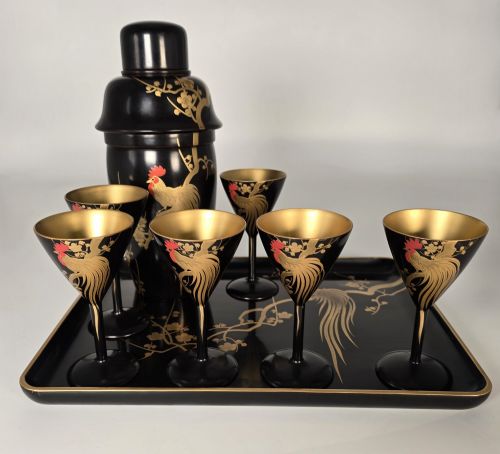
When searching for a vintage drinkware set, buyers encounter matched collections designed for specific beverages, from cordial glasses to punch bowls. These groupings originate across the nineteenth and twentieth centuries, reflecting the changing social habits of Edwardian, Victorian, and Art Deco periods.
The selections available here lean heavily toward European glass and silver plate, alongside Japanese lacquer and German folk art examples. Buyers will find suites tailored for wine, whiskey, liqueurs, and cocktails rather than single isolated vessels.
How they were made
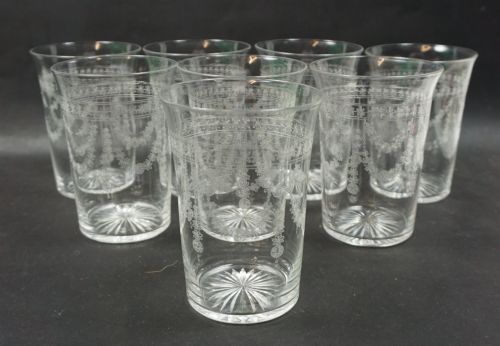
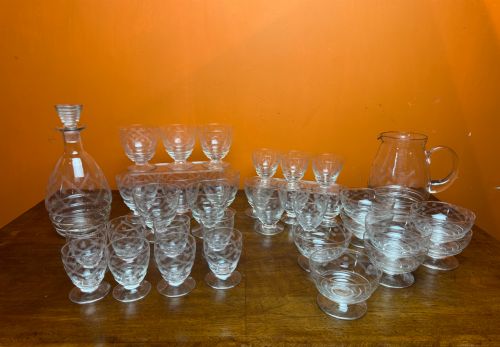
Glass production relies on techniques such as acid etching, cut decoration, and hand painting, creating surface texture and visual depth. Clear glass, crystal, and cranberry glass dominate the material record of these drinkware collections.
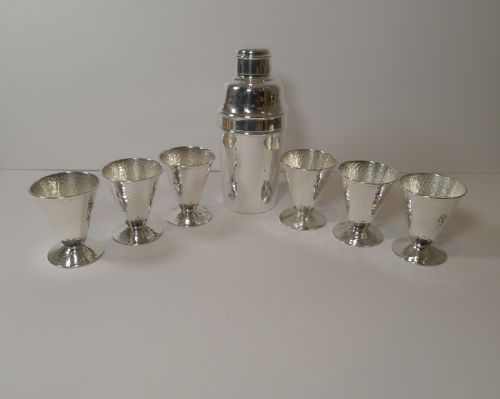
Metal components utilise silver plate and gold leaf, often hammered or polished to provide contrast against transparent or coloured glass bodies. Lacquer and wood also appear in specific regional craft traditions like the Taisho period.
Materials represented across the inventory include glass, silver plate, lacquer, wood, and gold leaf.
What varies in quality
Quality rests on the precision of the decorative execution, whether through deep crystal cutting, clean acid etching, or meticulous hand painting. Heavy crystal and substantial silver plate indicate superior substance compared to lighter, thinner alternatives.
Completeness dictates much of the appeal, where matched sets retaining all original tumblers, beakers, or glasses hold greater cohesion than partial survivors. The crispness of detail on engraved motifs and the integrity of applied metal finishes also separate ordinary production from finer output.
Maison Barra·St. Medard·Riihimaki Savoy
The Vintage Drinkware Set Glossary
- Acid etched
- A decoration technique where acid eats into exposed glass areas to create frosted or textured patterns. This method allows for delicate, permanent surface designs.
- Cranberry glass
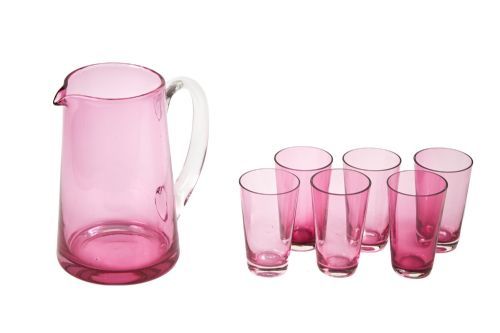
- A rich red glass coloured with gold chloride during manufacture. It became highly popular during the Victorian era for decorative tableware.
- Silver plate
- A base metal coated with a thin layer of pure silver. It provides the lustrous appearance of solid silver at a more accessible weight and cost.
- Tankard
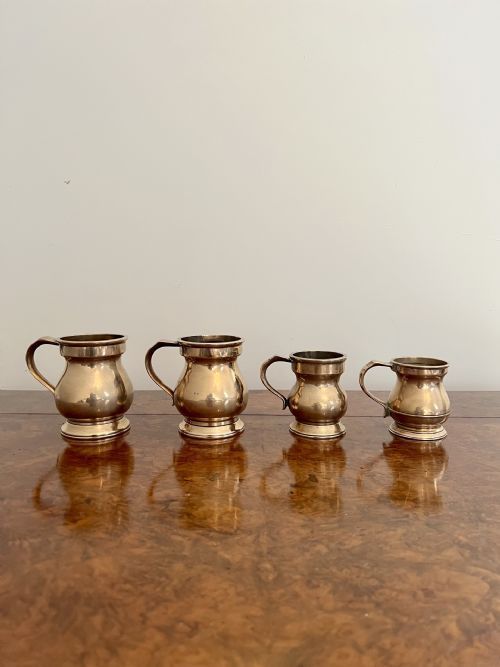
- A large, tall drinking vessel, typically featuring a single handle. Antique examples in this category often adopt bell shapes.
- Tumbler
- A flat-bottomed drinking glass without a stem or handle. These heavy vessels suit spirits and mixed drinks alike.
Vintage Drinkware Set: Frequently Asked Questions
Are these drinkware sets safe for daily use?
Many vintage drinkware sets remain fully functional for serving beverages, provided they are handled with proper care. Sturdy crystal tumblers and silver plate cocktail shakers easily accommodate modern entertaining.
Pieces featuring delicate hand painting, heavy gold leaf, or extremely thin historic glass are better reserved for occasional use or display. Inspect each set for stability before filling them with liquids.
How do I tell Art Deco from Victorian glassware?
Art Deco pieces from the nineteen-thirties favour geometric lines, streamlined forms, and stark contrast, often executed in clear glass or paired with silver plate. French and Czech makers dominated this sharp, modern aesthetic.
Victorian items from the nineteenth century lean toward ornate shapes, rich colours like cranberry, and botanical or traditional engraved motifs. The heft of the glass and the nature of the ornamentation clarify the stylistic period.
What constitutes a complete drinkware set?
A complete set generally includes a central serving vessel, such as a decanter, punch bowl, or cocktail shaker, accompanied by a matching group of beakers, tumblers, or wine glasses. The count typically ranges from pairs up to suites of thirty-four pieces.
Matched quantities of six or eight glasses are common for entertaining, though historic groupings vary widely based on their original purpose and manufacturer.