


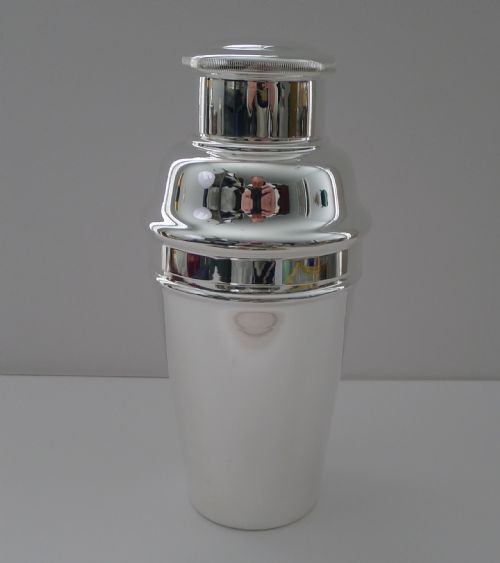


Vintage Silver Martini Shaker
A vintage silver martini shaker brings geometric lines and polished metal to the home bar, spanning the Art Deco and Mid-Century Modern periods.
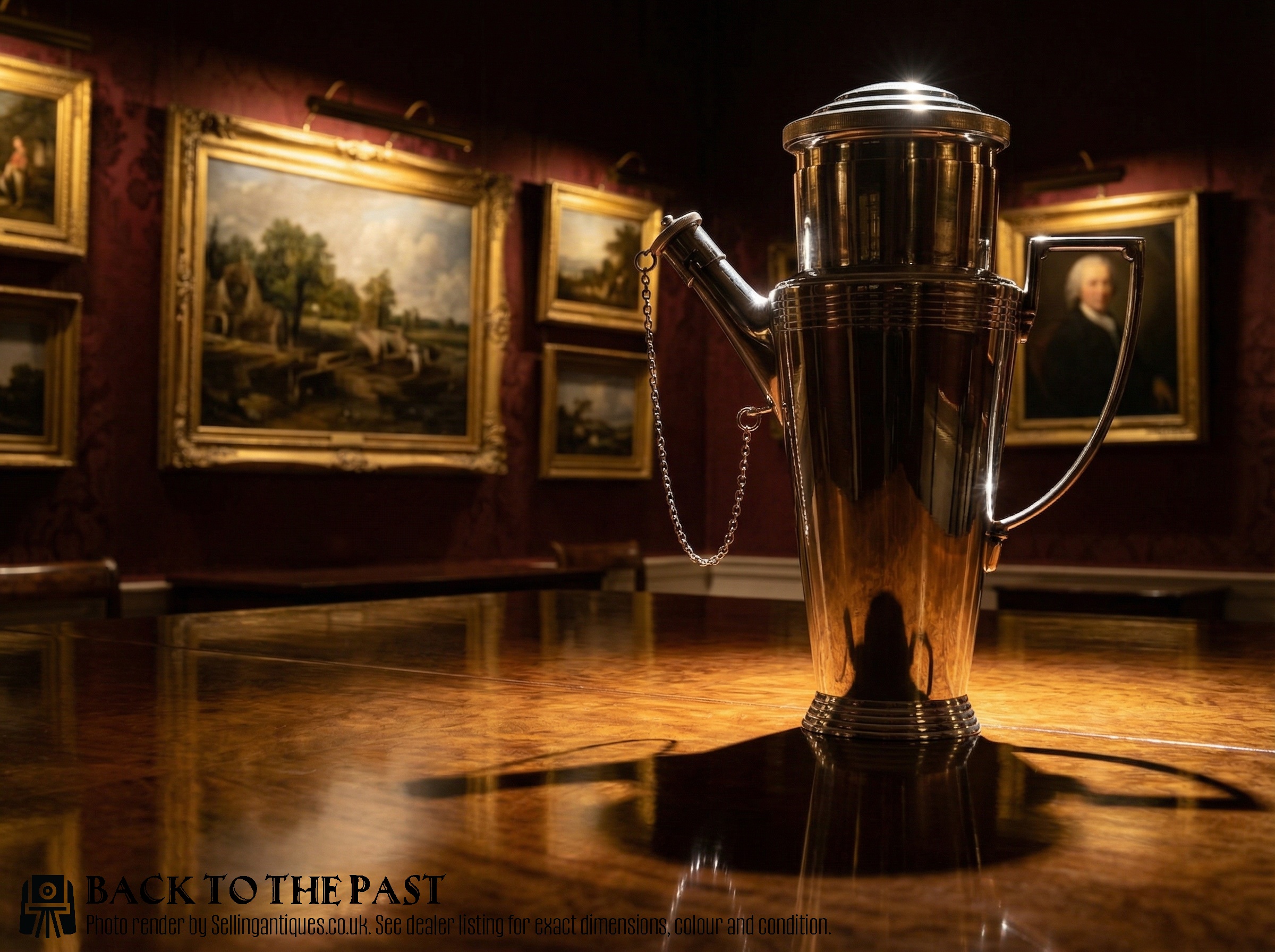
Vintage Silver Martini Shaker
A vintage silver martini shaker is a barware vessel designed for mixing drinks, predominantly appearing in styles from the 1920s, 1930s, and 1940s. These pieces take the form of cocktail shakers and mixers, often adopting striking geometric silhouettes influenced by the Art Deco movement.
Geographic origins span England, France, Switzerland, Norway, Germany, and America. Alongside standalone vessels, certain editions arrive paired with matching beaker sets or feature specialised surface decoration like engine turning and guilloche enamel.
How they were made
Metals such as base metal, electroplated nickel silver, and standard silver plate form the structural body of these shakers, while other examples utilise solid sterling silver. Artisans shaped these materials into cylindrical or bottle-like forms through spinning and pressing techniques.
Decorative surface treatments include engine turning, which carves precise geometric patterns into the metal, and guilloche enamel applied over silver fields. Certain French and English items combine metal bodies with cut glass components and fitted wooden elements.
Listings feature items spanning five distinct decades, with the 1930s representing the largest concentration of surviving cocktail shakers.
What varies in quality
Quality rests on the weight of the metal and the precision of the mechanics, particularly how snugly the removable lids and built-in strainers fit the body. Heavier gauges of silver plate and solid sterling silver provide a more substantial feel in the hand than lighter base metal alternatives.
The distinction between standard production items and premier examples often lies in integrated functional additions, such as built-in lemon squeezers or rolling recipe mechanisms, combined with named maker provenance from notable silversmiths and design houses.
Hukin and Heath·J. B. Chatterley and Sons·Christofle·William Suckling·Adie Brothers·Gaskell and Chambers·Maison Barra·William Hutton·Mappin and Webb·St. Medard·Tuttle·David Andersen·Lutz and Weiss
The Vintage Silver Martini Shaker Glossary
- Silver Plate
- A base metal substrate coated with a thin layer of pure silver. This technique allowed manufacturers to produce durable barware at a lower cost than solid silver.
- EPNS
- Electroplated Nickel Silver. A durable base alloy of copper, nickel, and zinc coated with silver through an electrolytic process.
- Engine Turned
- A surface decoration technique involving a machine that etches intricate geometric patterns into metal. This precise engraving adds texture and catches the light.
- Guilloche
- A decorative technique where a precise pattern is mechanically engraved into a metal surface beneath a translucent layer of enamel. It appears frequently on Scandinavian and European pieces.
- Sterling Silver
- An alloy consisting of pure silver and other metals, usually copper, to increase durability. Items made to this standard carry distinct hallmarks denoting their metal purity.
Vintage Silver Martini Shaker: Frequently Asked Questions
How do I clean a silver plated shaker?
Wash the interior with warm soapy water and a soft cloth, avoiding harsh abrasives that might strip the plating. Dry thoroughly immediately after washing to prevent water spots.
Use a specialised silver polish on the exterior only when necessary, working gently around engraved or engine turned details to preserve the finish.
Are these vintage shakers safe for mixing drinks?
Most vintage shakers are made from silver plate, sterling silver, or EPNS, which are traditional and safe materials for food and beverage contact. Inspect the interior to ensure the plating remains intact and clean before use.
Avoid leaving acidic liquids like lemon juice inside metal shakers for extended periods, as prolonged exposure can tarnish or react with the metal.
What is the difference between EPNS and sterling silver?
Sterling silver is a solid precious metal alloy right through to the core, stamped with official hallmarks indicating its purity. EPNS consists of a base metal core coated with a layer of silver via electrolysis.
Both materials offer a bright polished appearance, but solid sterling silver carries intrinsic precious metal value and resists base metal exposure over time.
How do I identify an Art Deco martini shaker?
Art Deco shakers typically feature clean geometric lines, stepped motifs, streamlined bottle shapes, and engine turned surface patterns. They date primarily from the 1920s and 1930s.
Many of these pieces also incorporate functional innovations like built-in ice breakers or lemon squeezers, reflecting the era's focus on modern convenience.