
Vintage Drinking Glasses
These vintage drinking glasses bring centuries of craft to the table, offering a tangible link to past social rituals and hosting traditions.
Vintage Drinking Glasses
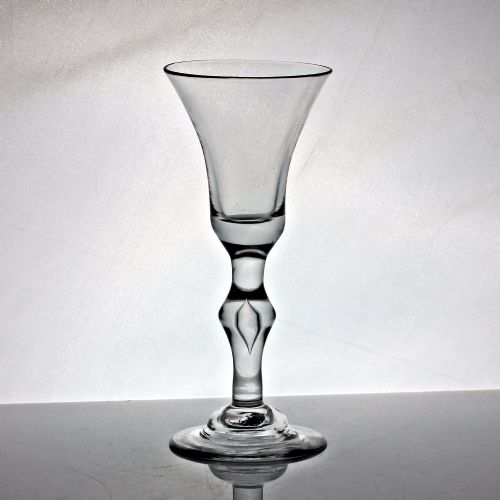
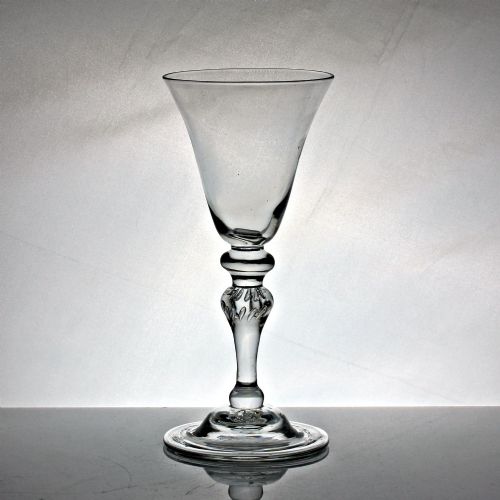
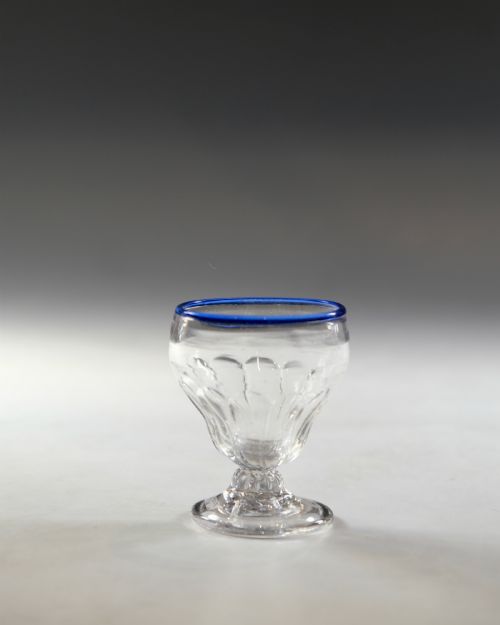
Vintage drinking glasses span centuries of domestic use, ranging from Georgian wine vessels and ale glasses to Victorian rummers and twentieth-century cocktail ware. Buyers searching for vintage drinking glasses encounter various forms including jelly glasses, bonnet glasses, and heavy crystal tumblers shaped for specific drinks. The selection draws heavily on eighteenth-century lead glass pieces and nineteenth-century glassware associated with formal dining and entertaining.
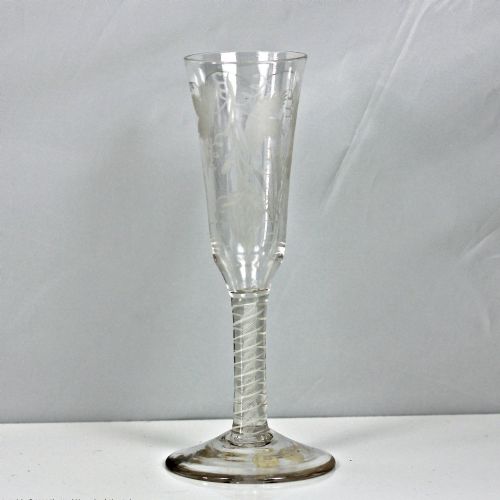
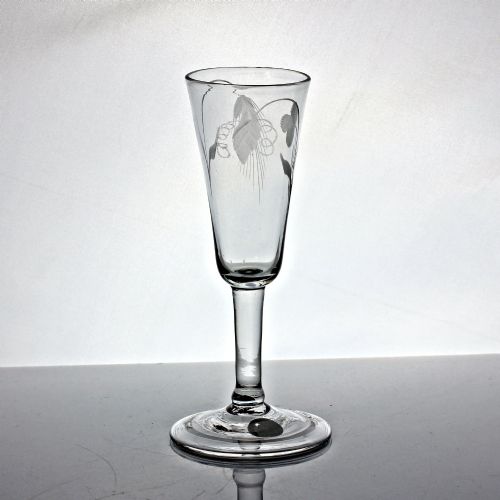
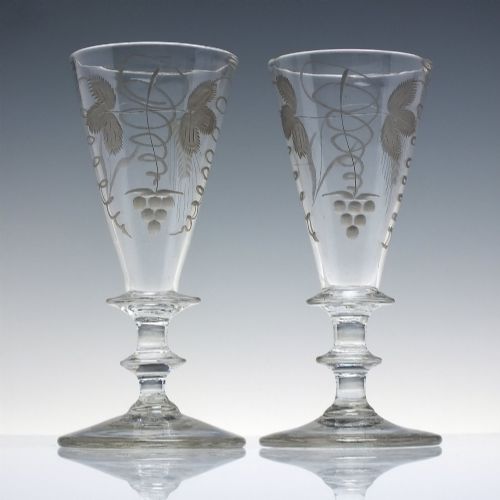
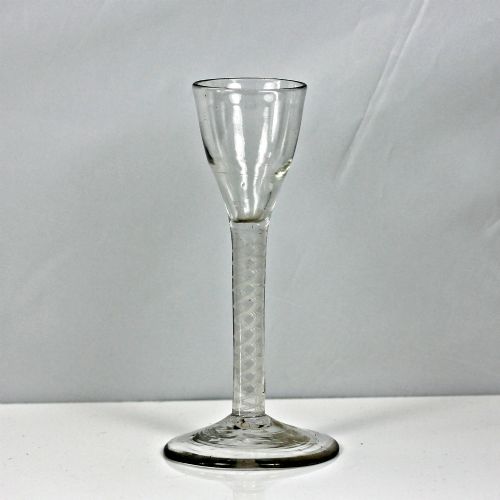
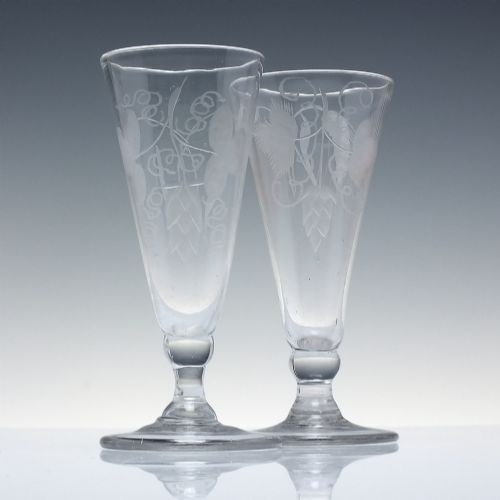
Earlier examples show delicate opaque twists and air twists within the stems, alongside cut or engraved bowls resting on wide foot bases. Later Victorian and twentieth-century pieces shift toward robust rummers, acid-etched tumblers, and matching suites designed for larger gatherings. These items reflect changing social habits across the Georgian, Victorian, Edwardian, and Art Deco periods.
Materials and Technique
Makers shaped these vintage drinking glasses using lead glass and lead crystal, which allowed for deep cutting, facet work, and engraving without losing structural integrity. Operators manipulated molten material through blowing and moulding, creating air twists, opaque twists, and inverted petal motifs directly within the stem or bowl.
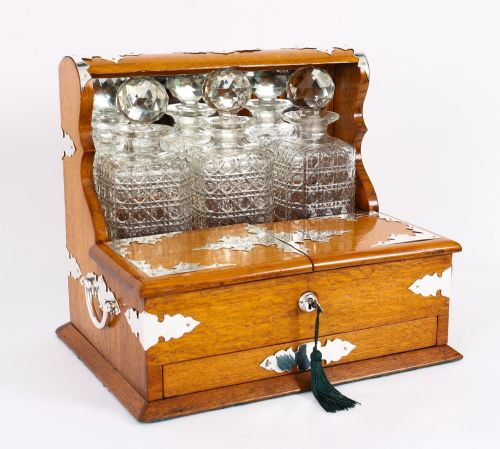
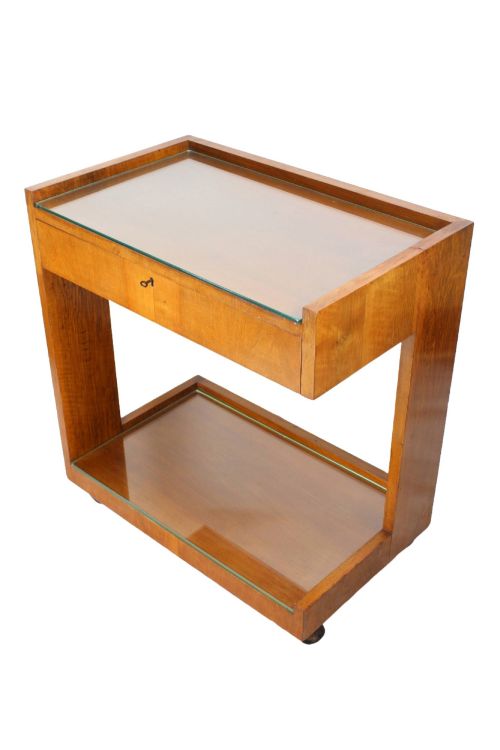
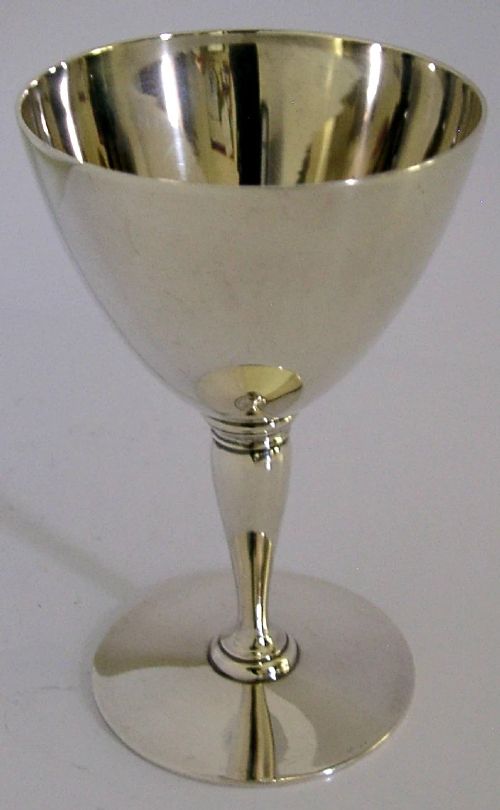
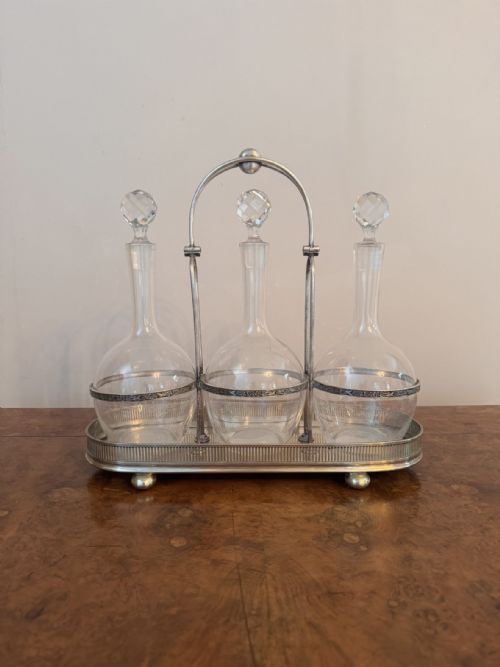
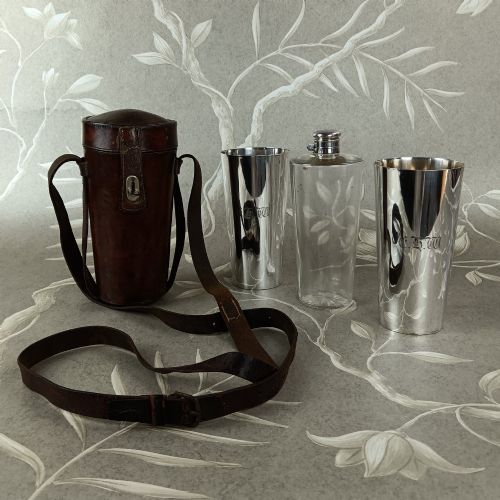
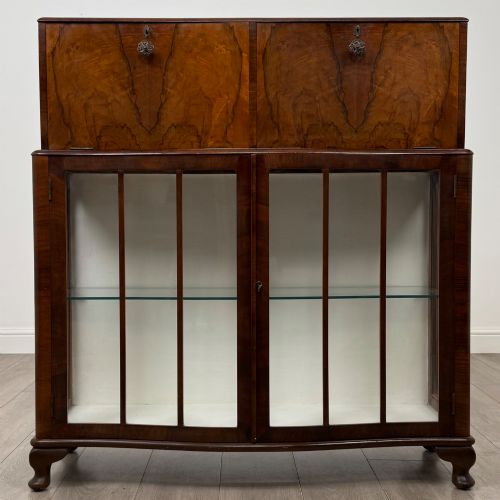
Decoration relied on skilled hand techniques such as wheel-engraving and acid etching to apply intricate patterns onto the clear glass surfaces. Metal mounts, silver plating, and brass often complemented the glassware in serving trolleys, tantalus sets, and fitted cabinets.
Gradations of Excellence
Quality rests in the crispness of the cutting, the clarity of the lead glass, and the precision of internal stem formations such as double series opaque twists. Superior examples display balanced proportions, clean engraving lines, and stability at the foot base without excessive distortion in the metal.
The degree of hand-finishing distinguishes standard utility items from higher-grade cabinet pieces. Consistency across a matched suite or harlequin set of vintage drinking glasses elevates the overall integrity of the grouping.
TIFFANY & Co·James Dixon & Sons·Betjemann’s·Maison Bagues
The Vintage Drinking Glasses Glossary
- Opaque twist
- A stem decoration formed by enclosing white or coloured enamel glass threads within the clear metal of the stem.
- Rummer
- A large, sturdy drinking glass popular in the eighteenth and nineteenth centuries, typically used for ale or wine.
- Air twist
- A decorative element inside a glass stem created by drawing out elongated air bubbles during the blowing process.
- Tantalus
- A locked wooden frame displaying decanters while preventing access to the contents without a key.
- Bonnet glass
- A small, tall-stemmed English drinking glass from the eighteenth century with a moulded ogee bowl.
Vintage Drinking Glasses: Frequently Asked Questions
How do I date an old wine glass?
Dating relies on observing manufacturing traits such as pontil marks on the base, stem construction methods like air or opaque twists, and bowl shapes characteristic of specific periods.
Changes in glass chemistry, particularly the introduction of lead crystal, also help narrow down the decade of production.
What is a rummer used for?
Rummers served as general-purpose drinking vessels for ale, beer, and wine during the Georgian and Victorian eras.
Their capacity and thick walls made them practical for daily tavern and household dining use.
Can I use these glasses daily?
Many vintage drinking glasses remain structurally sound for regular use, provided they receive careful hand washing.
Delicate eighteenth-century lead glass pieces with air twists are often reserved for special occasions due to their thin walls.
What is a tantalus?
A tantalus is a secure cabinet or frame holding decanters under a locking metal bar.
It allowed Victorian hosts to display spirits while keeping the contents locked away from household staff.