
Vintage Dressing Case
A vintage dressing case gathers personal items for travel, offering fitted interiors of velvet and glass suited to grooming essentials.
Vintage Dressing Case
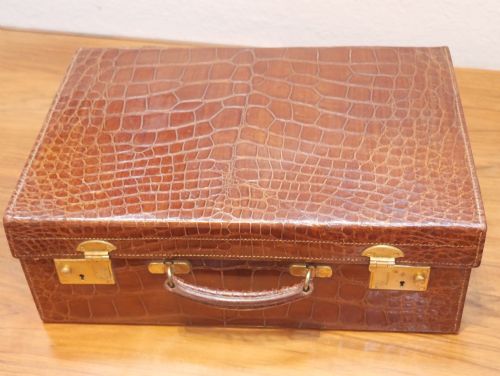
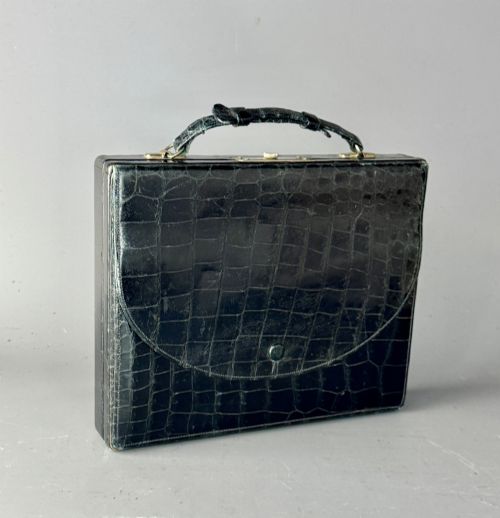
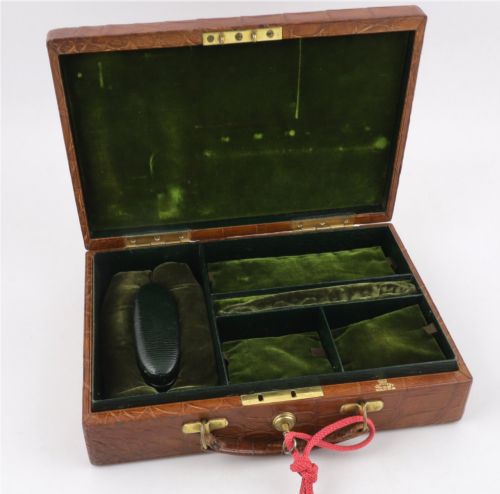
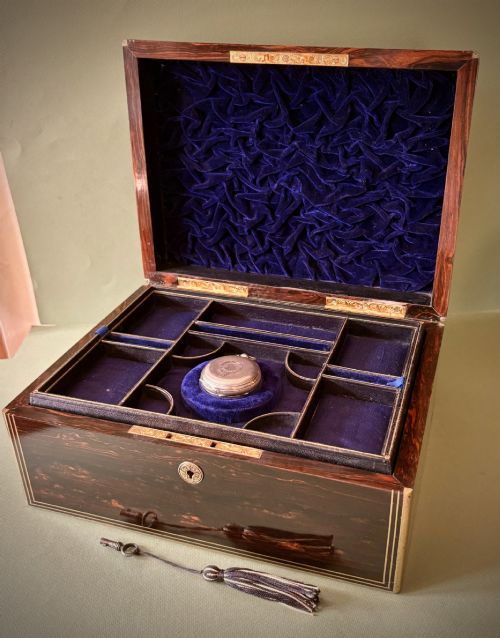
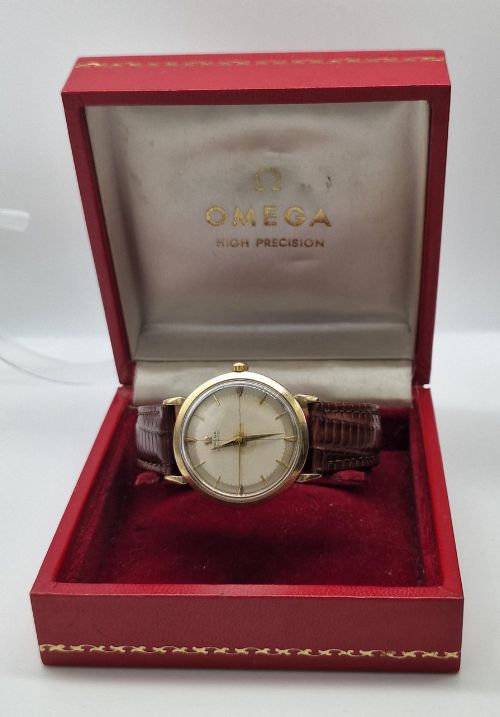
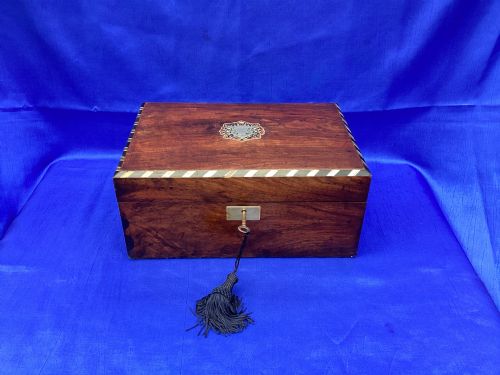
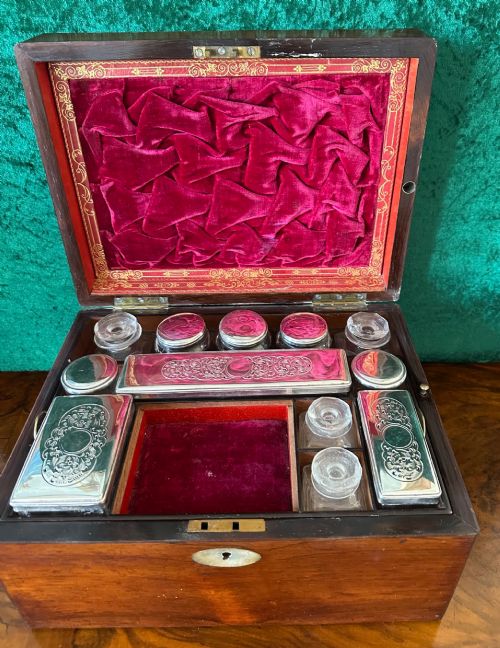
A vintage dressing case provides a structured enclosure for personal organisation during travel, often taking the form of a vanity box, luggage case or fitted travelling box. These pieces range from Victorian mahogany and rosewood containers to 1930s crocodile leather designs.
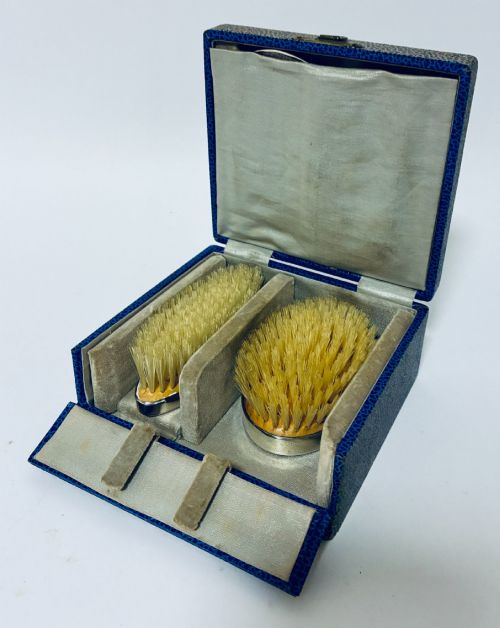
Many examples function as compact repositories for accessories, incorporating velvet linings and glass bottles alongside compartments for jewellery and watches. The selection spans periods from the nineteenth century through to the mid-twentieth century, including Edwardian and Art Deco iterations.
How they were made
Construction relies on timber foundations such as mahogany, oak and rosewood, frequently clad in crocodile leather or fitted with brass hardware. Interiors utilise velvet linings to cushion glass bottles, silver containers and accessories.
Metal components incorporate gold plate, silver, stainless steel and brass, shaped into hinges, locks and travelling accessories. Leatherwork and cabinetry define the exterior fabrication across all periods.
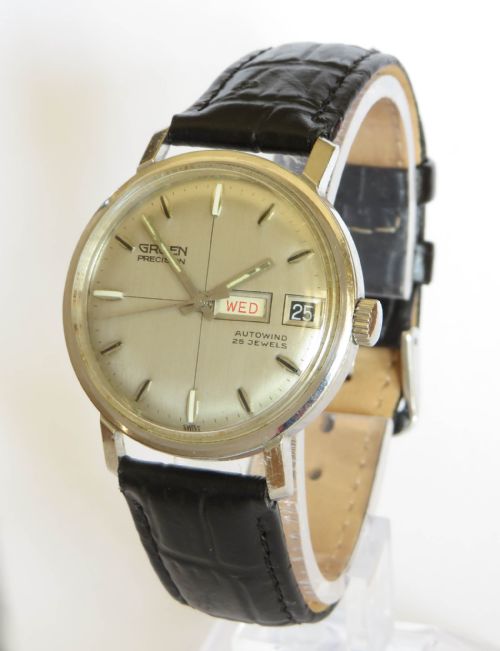
Listings feature items spanning from the nineteenth century through the 1960s, constructed in leather, glass, silver and brass.
What varies in quality
The standard of a piece rests on the integrity of its fitted interior, the preservation of its lining materials, and the precision of its lock mechanisms. Original glass bottles and matched silver or gold-plated fittings elevate the completeness of an object.
Materials dictate the tier of the piece, with solid exotic timbers and genuine crocodile leather representing superior craftsmanship compared to simpler fabrications. The robustness of internal compartments and the retention of original branded maker details also separate standard examples from finer works.
Dunhill London·Eade and Son·J C Vickery
The Vintage Dressing Case Glossary
- Vanity Case
- A rigid container designed specifically for carrying cosmetics, grooming tools and personal effects during travel. These pieces often feature internal mirrors and specialised compartments.
- Fitted Box
- An organizational container possessing designated internal slots, trays or holders for specific items such as bottles, brushes or instruments. The layout ensures every accessory remains secure in transit.
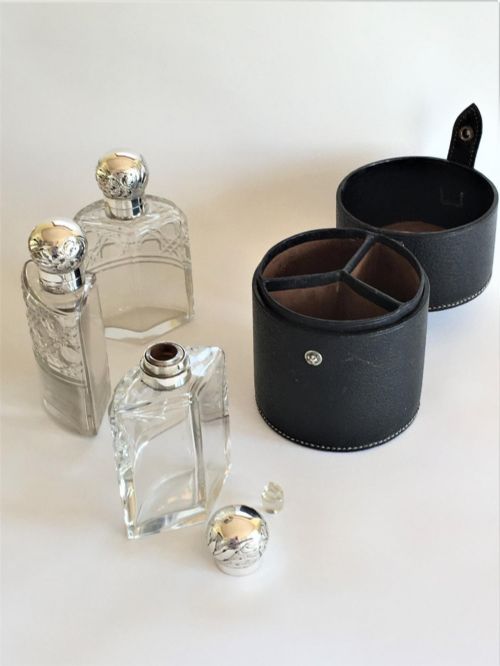
- Travelling Bottle
- A glass container fitted with a secure metal lid, designed to hold liquids like cologne or water without leaking inside luggage. They frequently appear as matched trios within leather cases.
- Crocodile Leather
- An exotic hide utilised for exterior cladding on luxury luggage and vanity boxes during the early twentieth century. It provides a durable and textured surface finish.
- Velvet Lining
- A soft pile fabric used to cover the interior bases and partitions of boxes to protect delicate items from scratching. It adds a tactile layer of refinement to the containment space.
Vintage Dressing Case: Frequently Asked Questions
What fits inside a vintage dressing case?
These containers hold grooming implements, glass cologne bottles, silver sets and personal jewellery items within dedicated compartments. Their internal architecture accommodates specific travel necessities.
Smaller trinket boxes and jewellery containers focus primarily on watches and accessories rather than full travelling sets. The contents vary depending on whether the piece was intended for a gentleman or a lady.
How do I care for leather cases?
Leather-clad surfaces require gentle dusting and occasional conditioning to maintain the suppleness of the hide. Avoiding excessive moisture protects the underlying timber structure and exterior finish.
Internal velvet linings benefit from careful vacuuming using a low-suction attachment to remove dust without disturbing the fabric pile.
How do I identify Victorian examples?
Victorian pieces typically employ dense hardwoods like mahogany and rosewood, featuring robust brass hardware and traditional joinery. Their interiors often showcase hand-stitched velvet and dedicated spaces for pocket watches.
Proportions tend to be heavier and more substantial than later twentieth-century iterations, reflecting the travel habits of the period.
Were these used for daily storage?
While designed primarily for transit, many pieces functioned as permanent dressing table accessories for holding daily jewellery and pocket watches. Their secure locks kept valuables protected at home.
Travelling versions were built specifically to accompany owners on journeys by rail or steamer, housing grooming equipment in a single unit.