




Vintage Double Inkwell
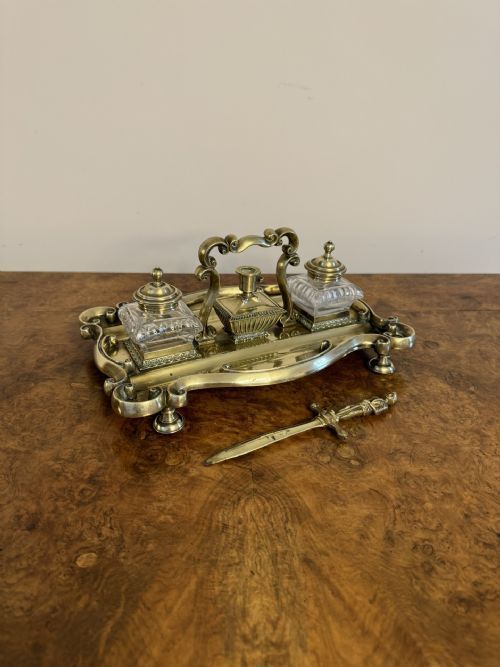
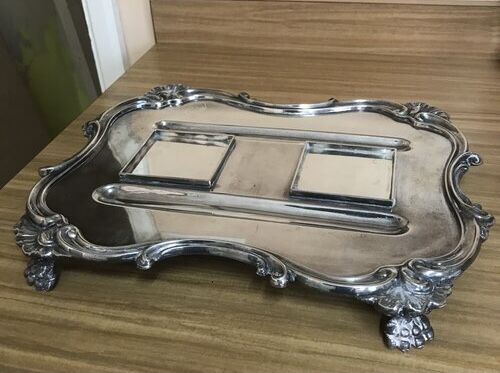
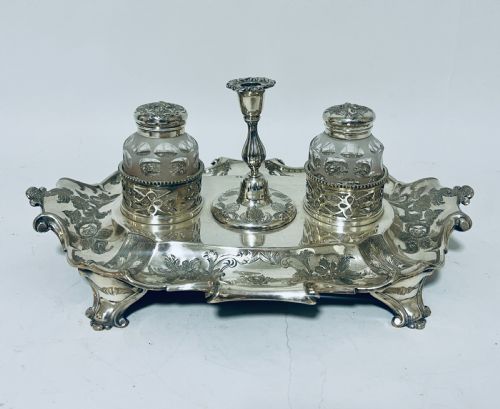
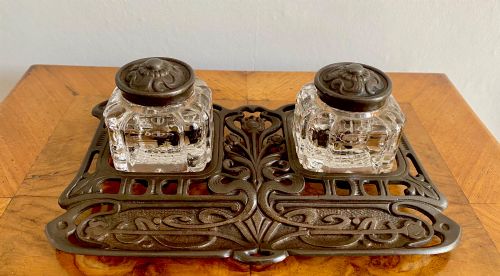
A vintage double inkwell sits ready on the desk, holding two glass inserts and offering a weighty centrepiece for correspondence.
Vintage Double Inkwell
When you search for a vintage double inkwell, you encounter desk accessories designed to hold ink for writing with nib pens, typically housing two separate glass bottles within a shared stand. These pieces serve as functional desk furniture and decorative items, originating across the nineteenth and twentieth centuries.
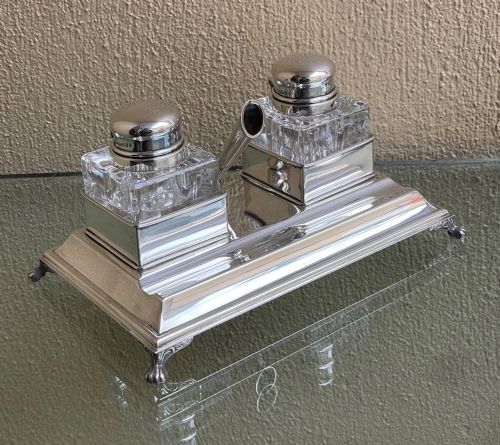
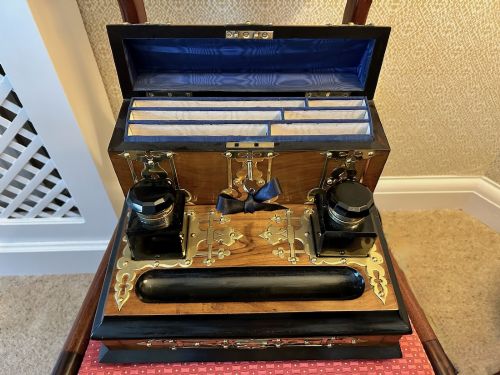
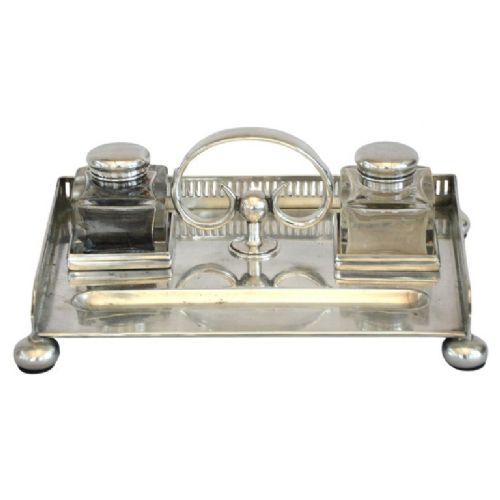
The versions you meet most often on this page combine brass, silver plate, or mahogany with cut glass or faience inserts. They span Victorian, Edwardian, and Art Nouveau styles, often incorporating pen rests, drawers, or letter holders into the base stand.
Materials and construction
The construction relies on sturdy foundations of brass, mahogany, walnut, or marble, cast or turned to form the base stand. Metal components undergo casting and silver plating, while wooden stands utilise rich veneers like burr walnut or ebony.
Cut glass and faience form the ink pots that sit within the mounts, frequently retaining their original hinged lids. Artisans mounted these elements together, combining metalwork, woodwork, and glassblowing into a unified desk set.
Materials represented include brass, cut glass, sterling silver, mahogany, horn, marble, and faience.
Distinctions in quality
Quality shows in the weight and substance of the materials used, from heavy cast brass and solid silver to dense hardwoods like mahogany. Substantial metalwork and thick, well-cut glass inserts indicate superior manufacture.
The refinement of ornamentation distinguishes finer examples, visible in intricate carving, ormolu mounts, or distinct Art Nouveau and Rococo styling. Complete sets retaining their original matching ink bottles demonstrate higher preservation.
Walker And Hall·Harrods·James Cartland And Sons·Martin Hall·Maurice Dufrene
The Vintage Double Inkwell Glossary
- Inkstand
- A complete desk accessory comprising a tray or stand fitted with inkwells, pen rests, and sometimes a drawer or taper holder. These pieces organise writing equipment on a desk.
- Faience
- Tin-glazed earthenware produced in various European traditions, seen here in blue and white desktop stands. This ceramic material provides a colourful alternative to metal and glass.
- Ormolu
- Gilded bronze applied as mounts and decorative trim on nineteenth-century desk stands. This technique adds metallic lustre to wooden and marble bases.
- Encrier
- The French term for an inkstand or inkwell. You encounter this designation on continental pieces.
- Cut glass
- Glass shaped by facet-cutting on a wheel, used for the heavy ink inserts held within the stands. This material catches the light and resists staining from ink.
Vintage Double Inkwell: Frequently Asked Questions
How do I date a vintage double inkwell?
Dating relies on the stylistic markers of periods such as Victorian, Edwardian, and Art Nouveau, alongside material choices like silver plate or solid brass. Construction techniques and registration marks can also point to a specific decade.
Examining the glass inserts and any maker stamps helps confirm the production era of the piece.
Were these stands used with fountain pens?
These inkwells date from an era when writers used dip pens that required a separate ink reservoir for refilling. The dual wells allowed a writer to keep different coloured inks ready on the desk.
Fountain pens became common later, making these traditional inkstands redundant for everyday writing.
How do I care for silver plated stands?
Silver plate requires gentle cleaning with a soft cloth to remove dust and tarnish without wearing through the thin silver layer. Avoid harsh chemical dips that damage the underlying base metal.
Glass inserts lift out for separate washing in warm soapy water to remove dried ink residue.
What is the difference between an inkwell and an inkstand?
An inkwell is simply the small pot or container that holds the ink, whereas an inkstand is the larger base or tray that holds the inkwell alongside pens and other desk items.
Double inkstands incorporate two ink pots within a single framework.