
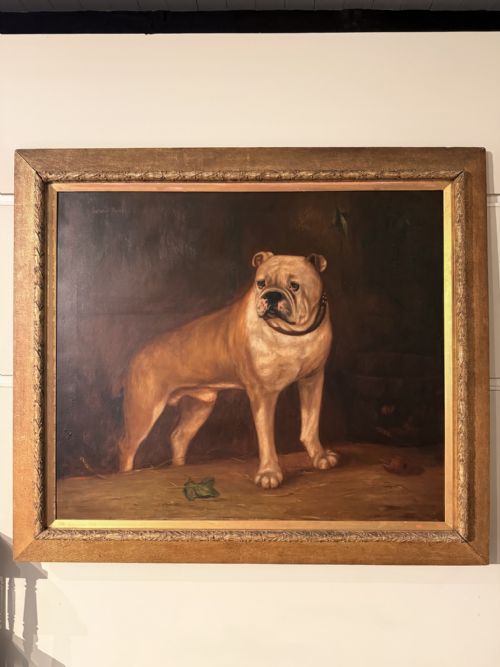


Vintage Dog Canvas Painting
These vintage dog canvas painting works capture canine subjects across centuries of sporting and domestic portraiture.
Vintage Dog Canvas Painting
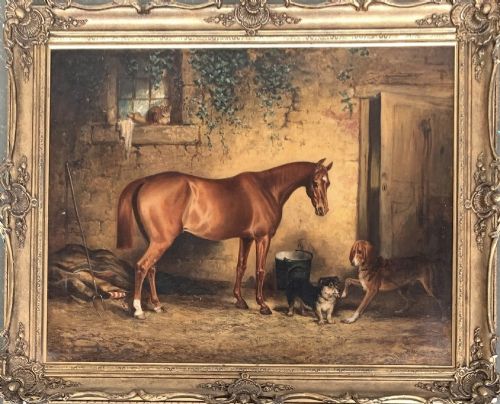
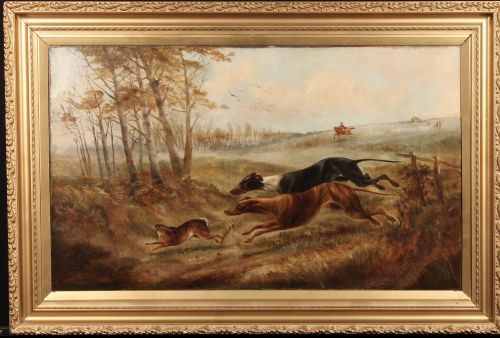
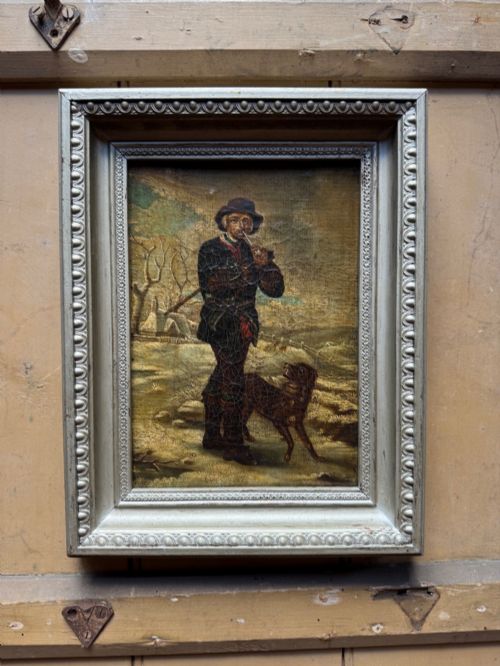
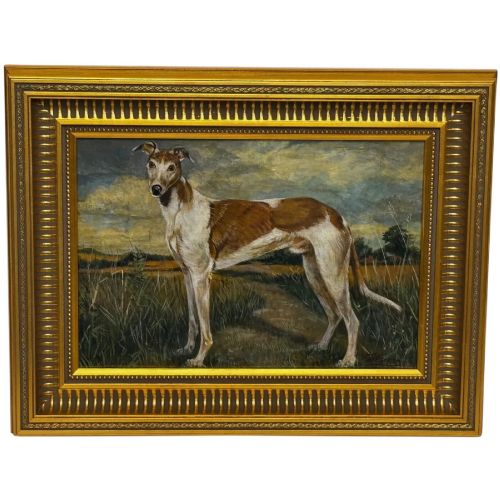
A vintage dog canvas painting brings together centuries of canine portraiture, ranging from dedicated sporting art to intimate domestic studies. Buyers searching this phrase encounter works executed in oil on canvas, housed in period frames, capturing everything from working terriers to aristocratic hounds.
The selections span the nineteenth century through the mid-twentieth century, with strong representation from the Victorian and Edwardian eras. Formats vary from small intimate portrayals of single pets to large scale canvases depicting hunting packs and working dogs in landscapes.
How They Were Made
Artists applied oil paint directly onto stretched canvas substrates, building up rich textures and deep tones over wooden support structures. Many of these canvases remain secured within their original gilt and giltwood frames, showing the craftsmanship of period framers.
Brushwork techniques range from tight, academic realism seen in formal sporting commissions to looser, more expressive strokes employed in mid-century animal studies.
Listings feature oil paint on stretched canvas supported by wooden frames across the nineteenth, twentieth, and Edwardian periods.
What Varies In Quality
Quality rests primarily in the anatomical precision of the animal and the expressiveness of the brushwork. Master painters capture the distinct personality and intelligent gaze of breeds like terriers, spaniels, and hounds with unerring accuracy.
The integration of the subject within its background landscape also separates exceptional works from standard decorative pieces. Superior compositions demonstrate a harmonious balance between the canine subject and its surrounding environment, whether a structured courtyard or an open moorland.
Henry Barraud·George Armfield·John Emms·Thomas Hicks·LM Webb·C R Breytle·William Barraud·George E Sharpe·Sir Edwin Landseer·J Cecil Bradshaw·Paul Jones·John Charles Tunnard·Jules Chardigny·Michael Lyne·Henri Schouten·M E Hankinson·Valentine Thomas Garland·Molly Maurice Latham·Florence Mabel Hollams·Dixon Clark·Richard Waitt
The Vintage Dog Canvas Painting Glossary
- Canvas
- A heavy woven fabric used as a surface for painting, typically stretched over a wooden frame before application of ground and oils.
- Giltwood
- Wood carved and covered with a thin layer of gold leaf or gilt paint, commonly used for traditional picture framing.
- Sporting Art
- A genre of art depicting bloodsports, racing, and animals associated with rural pursuits, prominent in British painting.
- Realism
- An artistic movement focused on the accurate, unvarnished depiction of everyday subjects and animals without idealisation.
- Provenance
- The chronology of the ownership, custody, or location of a historical painting.
Vintage Dog Canvas Painting: Frequently Asked Questions
How do I identify Victorian dog paintings?
Victorian dog paintings often display characteristic brushwork and heavy gilt frames typical of the nineteenth century. Subjects frequently include working terriers, hunting hounds, or pampered pets rendered in realistic detail.
Signatures, dates, and stretcher construction on the reverse of the canvas provide further clues to the exact period of creation.
What subjects are common in these paintings?
Common subjects include gundogs, terriers guarding property, and formal portraits of named canine companions. Landscapes and rural settings frequently frame the animals.
Artists also depicted specific hunting scenes involving hounds and horses across moorland and courtyard settings.
How should I care for an oil painting?
Keep oil paintings away from direct sunlight and fluctuating humidity to protect the canvas and paint layers. Dust the surface gently with a soft, dry brush without applying pressure.
Avoid using liquid cleaners or abrasive cloths on either the canvas or the period frame.
Where were these paintings created?
These works originate primarily from British and European artistic traditions, reflecting regional schools of animal painting. Many pieces align with the British sporting art tradition of the nineteenth and early twentieth centuries.
Artists worked both in urban studios from life and on country estates documenting specific animals.