

Vintage Document Storage
Vintage document storage brings together utilitarian filing cabinets, mahogany deed boxes and brass-bound travelling chests designed to keep important papers secure.
Vintage Document Storage
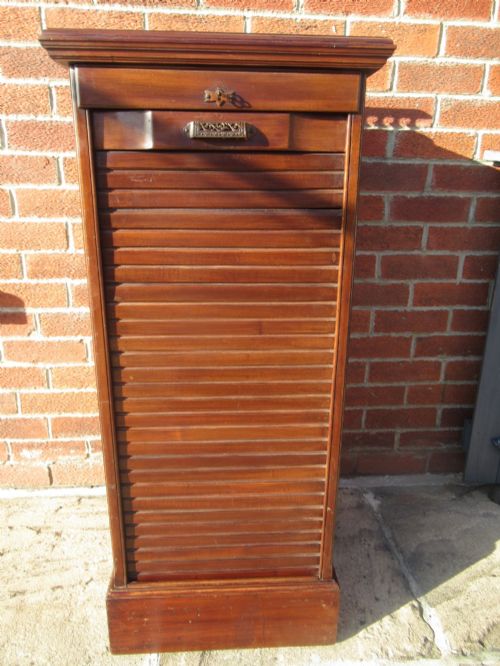
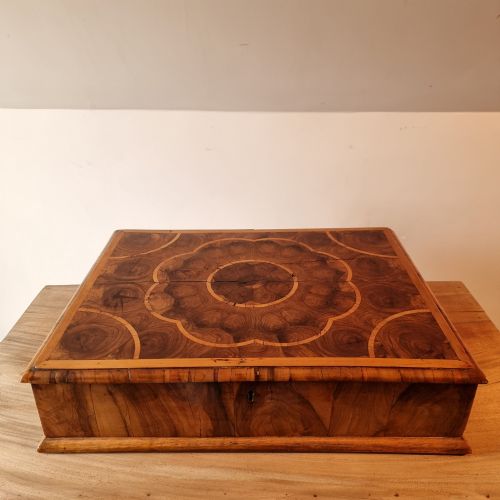
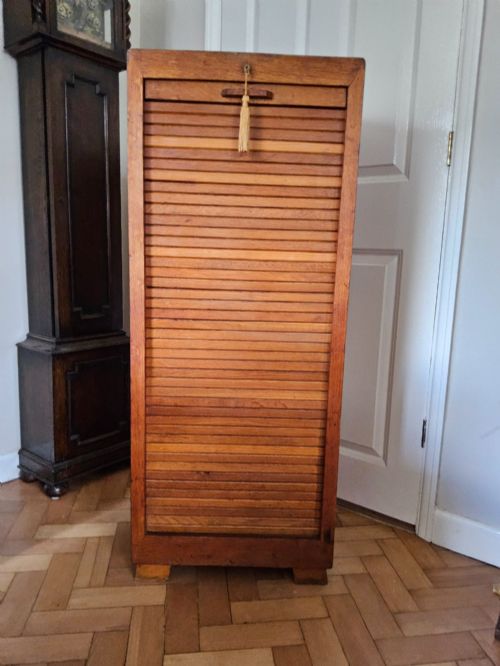
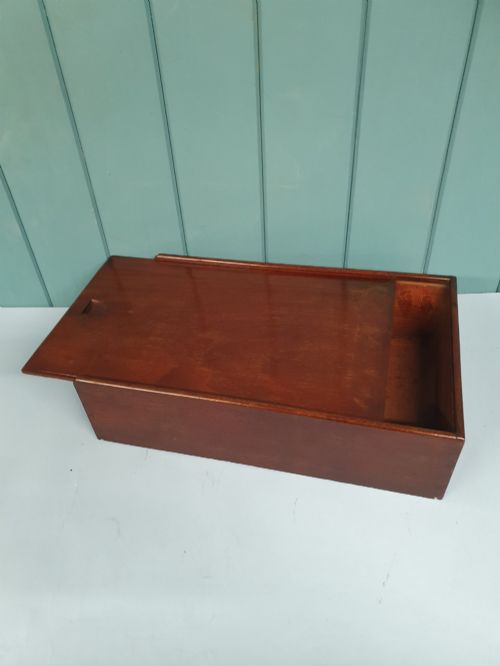
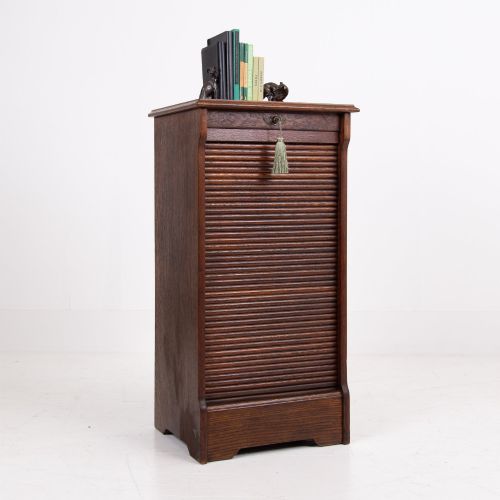
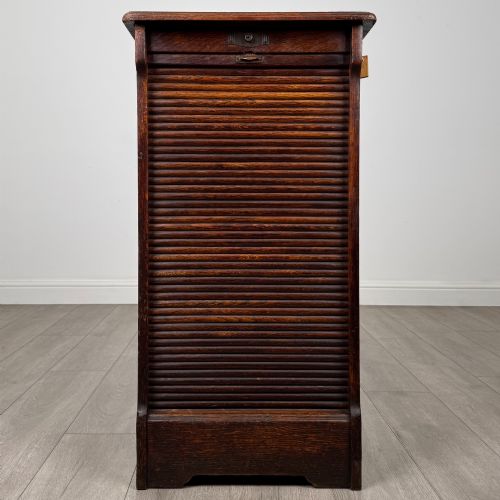
When searching for vintage document storage, buyers encounter everything from Georgian mahogany sliding lid document boxes to Edwardian oak tambour front filing cabinets. These pieces span the eighteenth, nineteenth and early twentieth centuries, reflecting the changing administrative needs of offices, railways and private homes.
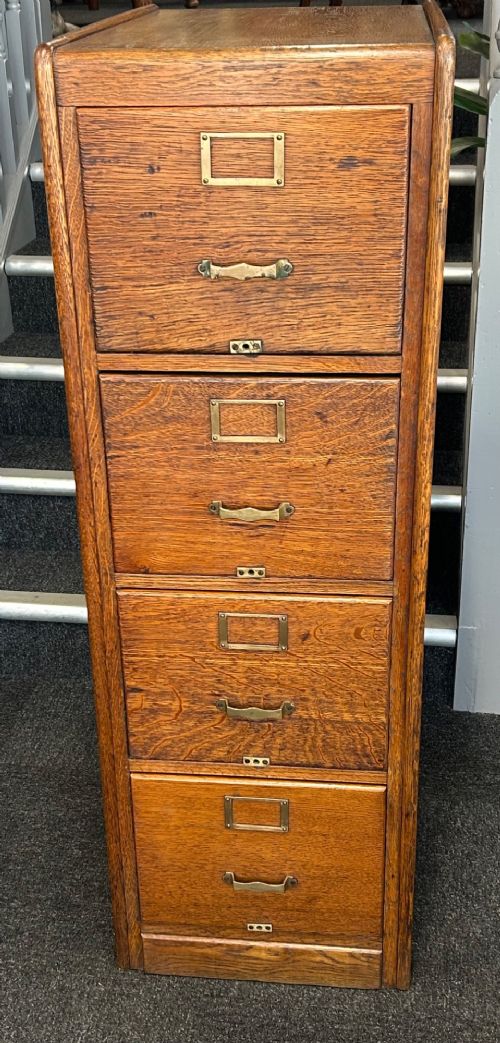
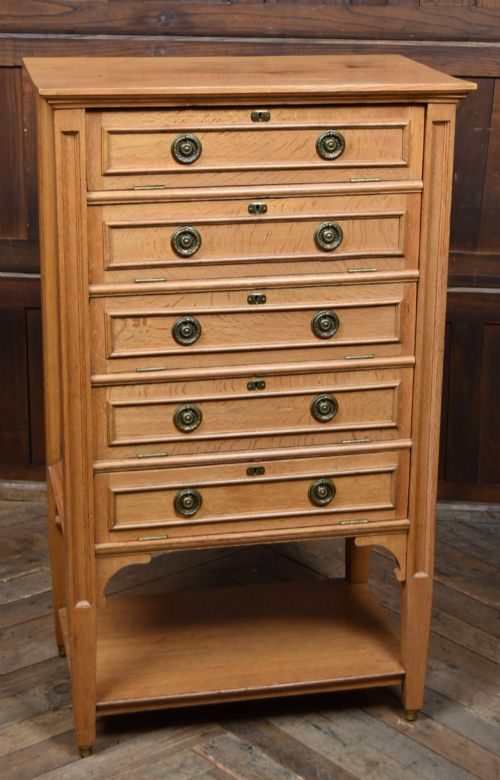
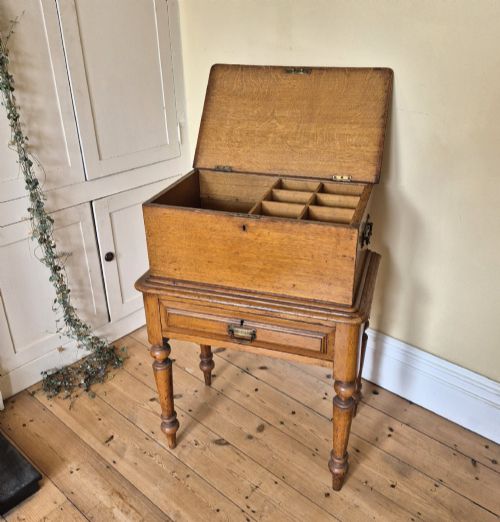
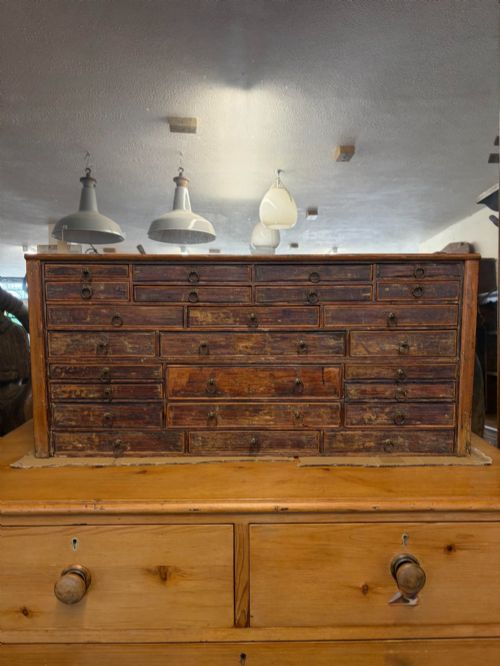
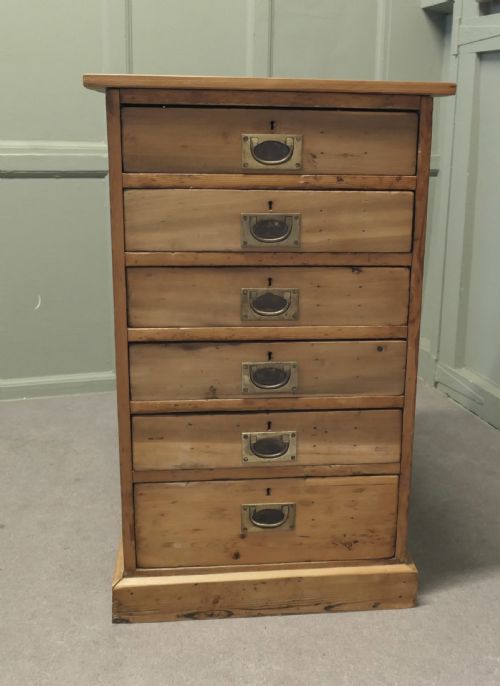
The most common forms on this page include multi-drawer filing cabinets in oak or mahogany, industrial banks of drawers, and smaller desktop boxes lined in leather. Pieces range from utilitarian pine filing drawers to campaign style collectors' cabinets and railway ticket dispensing boxes.
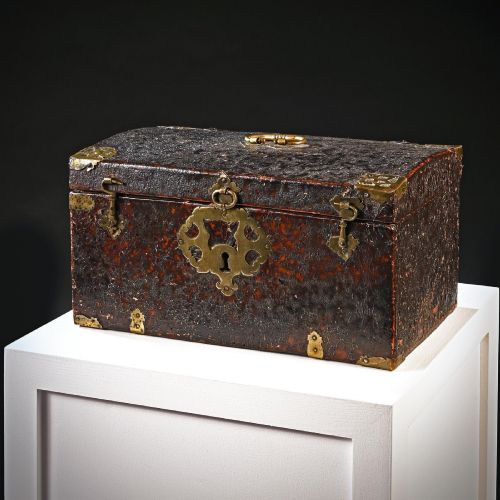
Origins vary widely across the inventory, encompassing English office furniture, French post office filing shelves, and Scandinavian folk art boxes. Buyers find specialised items such as solicitor's document tins, musician's cabinets and strongboxes bound in iron and elm.
Materials and Construction Techniques
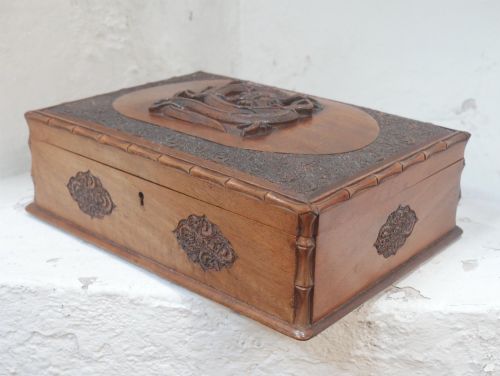
Makers utilised a robust palette of timbers including solid oak, mahogany, pine, elm and camphor wood, often paired with structural iron, brass handles and leather coverings. Tambour doors required meticulous joinery of narrow wooden slats running in grooved tracks, allowing flexible closure for office filing cabinets.
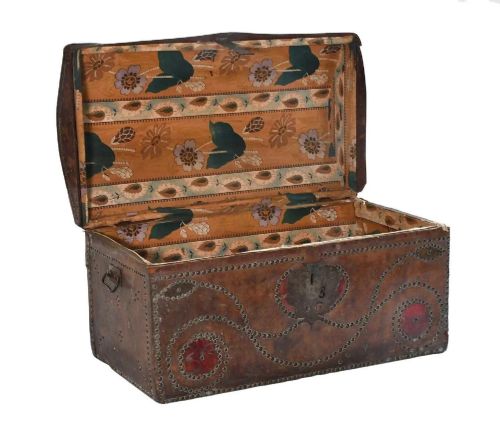
Metalwork played a critical functional role, seen in original shell pulls, label holders, brass inlays and iron banding on strongboxes. Leather work appears as tooled surfaces on pen boxes, deed boxes and faux book caskets, while folk art boxes display hand-painted decoration.
Vintage Document Storage Retail Price Guide 2026
Typical asking prices for vintage document storage among the pieces listed under this phrase on Sellingantiques today, from the lower quarter to the upper quarter. They describe what is for sale here now, not the wider market.
Among the documents hide a railway ticket dispensing box and a faux book safe disguised to look like a library volume.
Assessing Build Quality and Authenticity
Quality in vintage document storage rests on the integrity of the timber, the retention of original hardware such as brass label holders and shell pulls, and the smooth operation of mechanical elements like tambour shutters and sliding lids. Solid mahogany and oak pieces with dovetail joints represent superior cabinet-making compared to lighter utility pieces.
The presence of original fittings, from railway ticket dispensing mechanisms to internal pigeon holes and tooled leather linings, elevates a piece. Provenance, indicated by institutional connections or maker details like original shell pulls, separates standard commercial storage from distinguished examples.
The Vintage Document Storage Glossary
- Tambour
- A flexible door or shutter made of narrow strips of wood glued to canvas or leather backing, sliding smoothly in vertical or horizontal tracks.
- Deed box
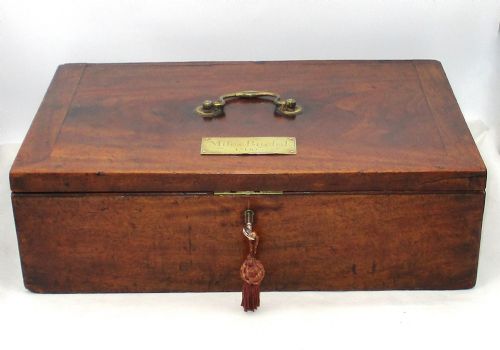
- A secure container, frequently constructed from mahogany or iron-bound pine, utilised for storing legal documents and title deeds.
- Campaign style
- Furniture designed to be easily dismantled and transported, typically featuring recessed brass handles, corner brackets and durable timbers.
- Toleware
- Enamelled and painted metalware, often shaped into solicitor document tins or storage boxes.
- Pigeon holes
- A series of small recessed compartments fitted inside cabinets or desks for sorting correspondence and papers.
Vintage Document Storage: Frequently Asked Questions
How do I date an oak filing cabinet?
Dating an oak filing cabinet involves examining the hardware, construction methods and timber selection visible across different historical periods.
Edwardian and early twentieth-century examples frequently employ quarter-sawn oak with distinct medullary rays, combined with cast brass label holders and panelled sides.
Were deed boxes always made of wood?
Deed boxes utilised various durable materials depending on their intended security level and the era of manufacture.
While early examples relied on solid mahogany or elm with iron reinforcement, later Victorian and Edwardian iterations shifted towards heavy metal construction and tooleware tins.
How do I care for leather on antique boxes?
Leather surfaces on antique document and pen boxes require gentle cleaning and minimal moisture to preserve the original tooling and colour.
Avoiding direct sunlight and applying specialised microcrystalline wax helps protect the surface without softening the historical leather.