
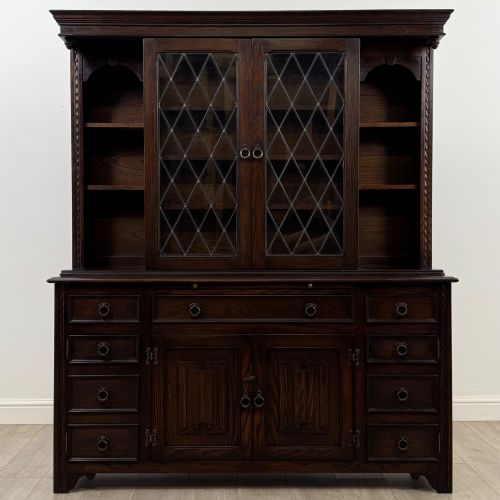
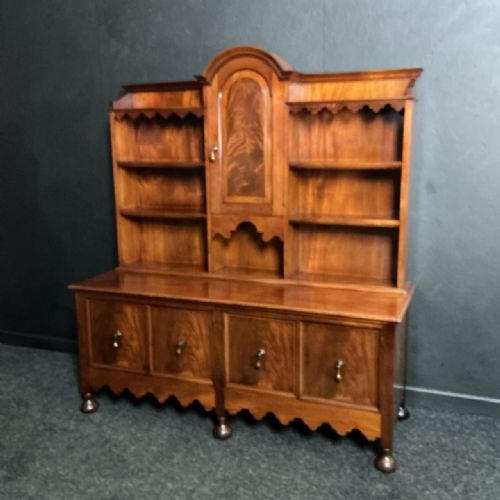
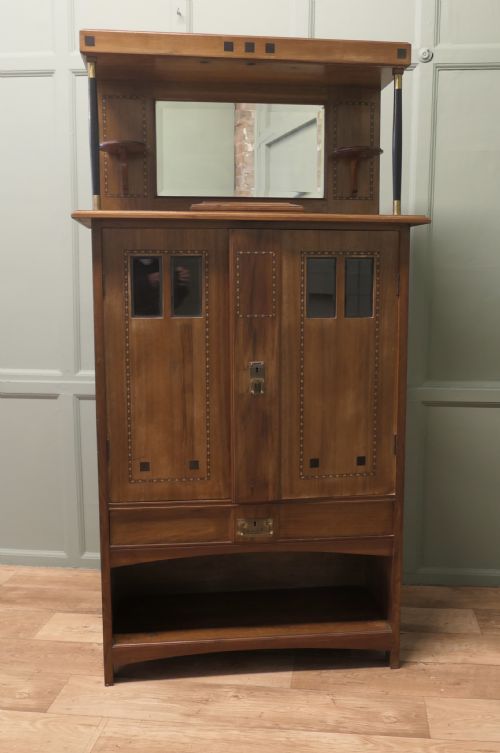
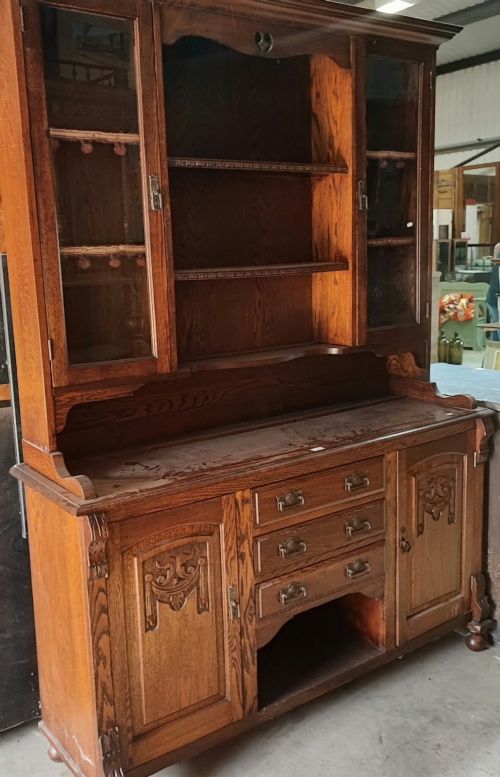
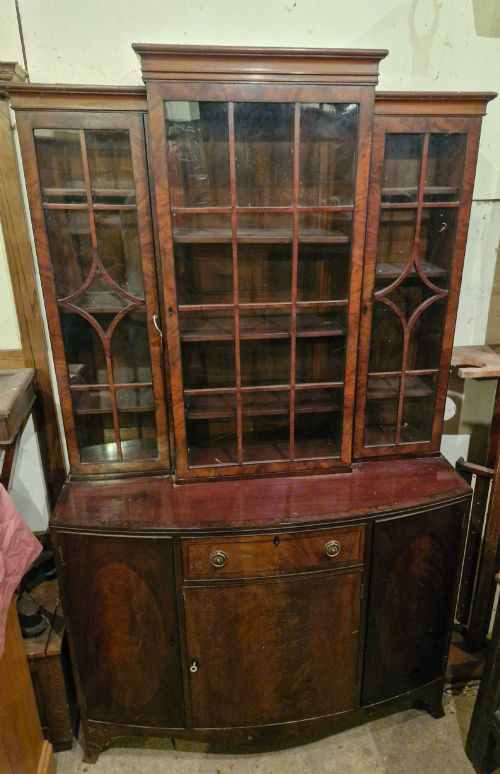
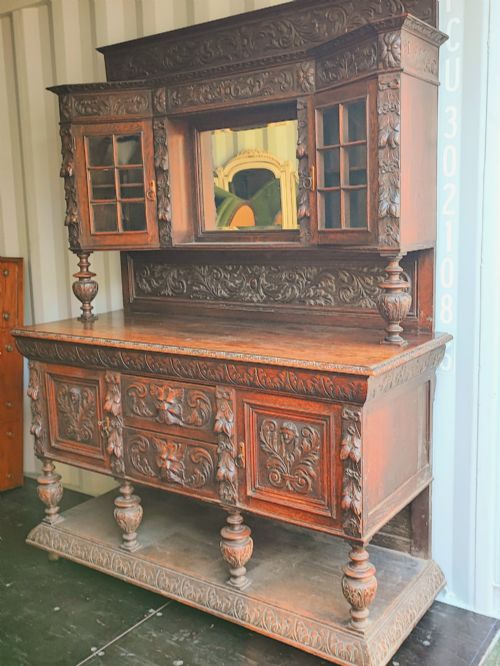
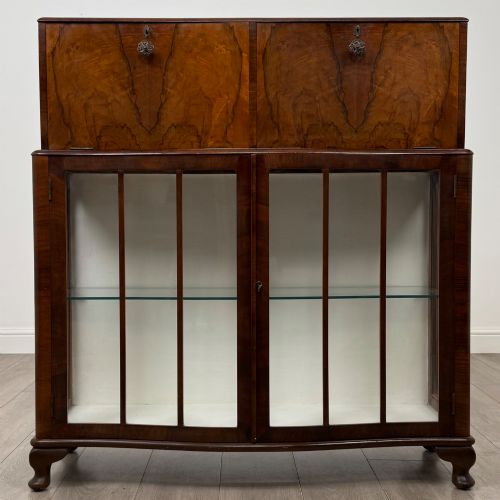
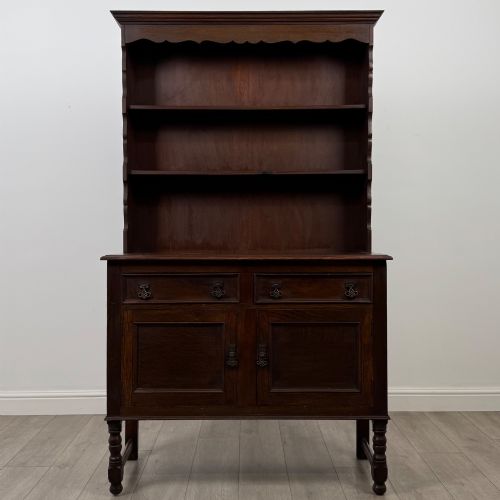
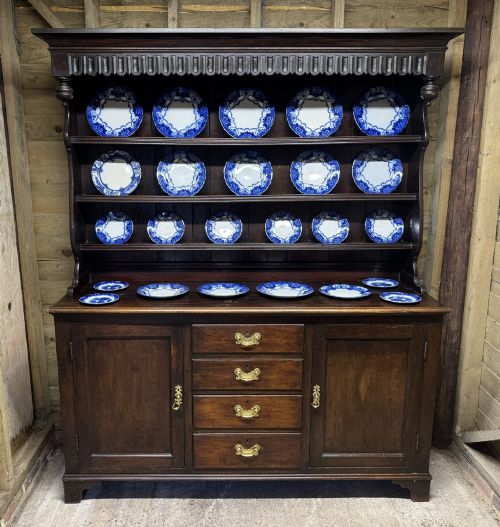
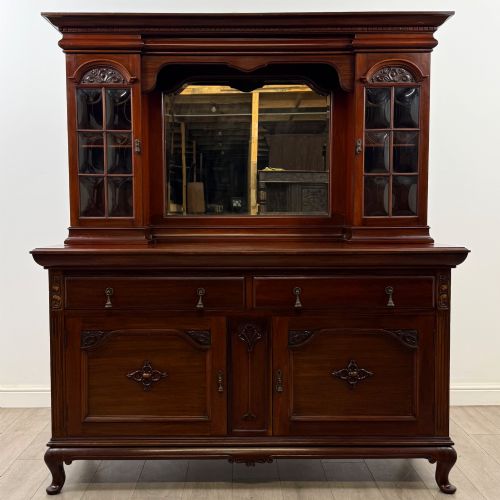

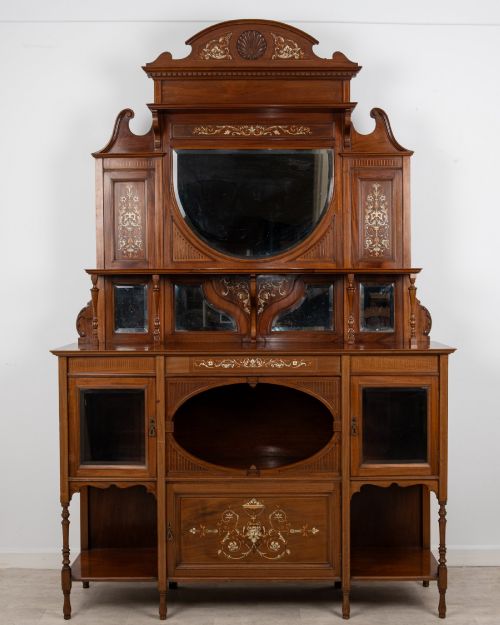
Vintage Display Sideboard
These vintage display sideboards combine timber storage and glazed presentation, offering a practical centrepiece for living spaces.
Vintage Display Sideboard
A vintage display sideboard brings together storage cabinets and shelving units, encompassing forms such as dressers, cabinets, and bookcases. These pieces originate across the eighteenth, nineteenth, and early twentieth centuries, spanning Edwardian, Victorian, and Art Deco periods.
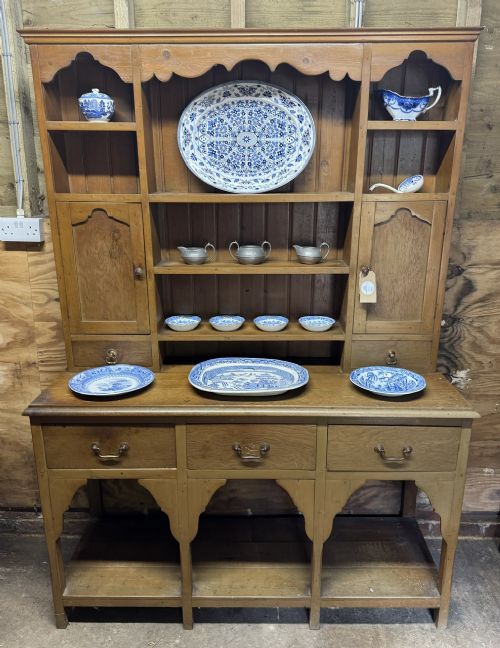
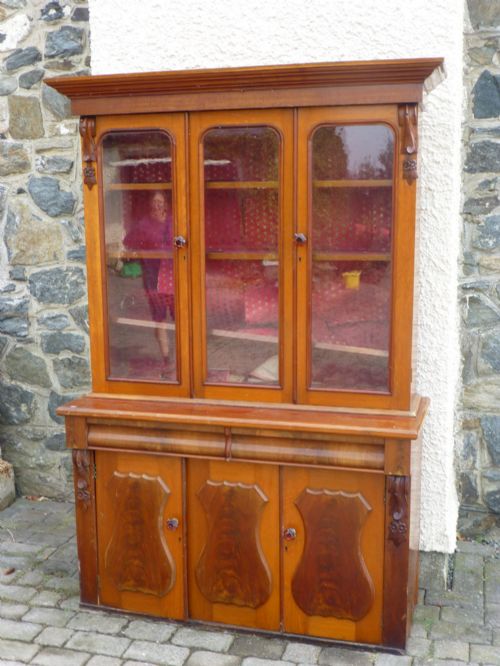
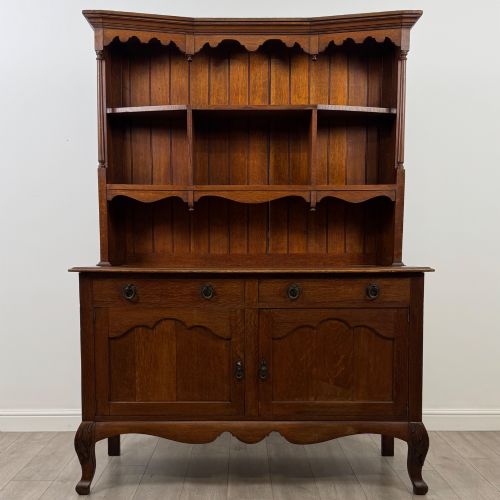
Buyers will most frequently encounter oak and mahogany examples on this page, often featuring glazed doors or open plate racks. Regional varieties like Welsh dressers sit alongside English country styles and continental pieces.
The underlying forms range from simple pine kitchen furniture to heavily carved Jacobean revival sideboards and inlaid satinwood display cabinets. Each piece merges a low storage base with upper display capacity in varying proportions.
Materials and construction methods
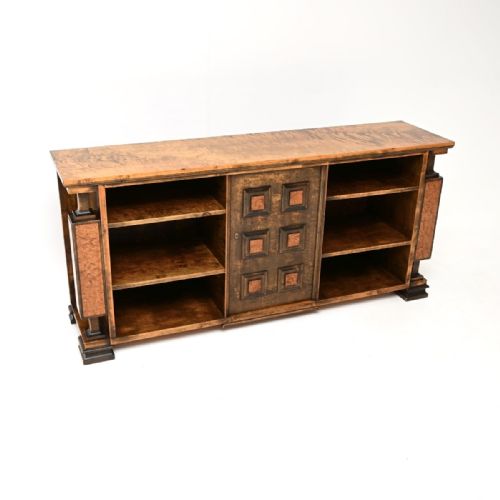
Cabinet makers utilised solid timbers like oak, mahogany, walnut, and pine, frequently applying decorative veneers such as satin birch or figured walnut to prominent surfaces. Brass hardware, mirrored glass panels, and copper details appear as functional and decorative accents.
Construction relies on traditional joinery methods appropriate to each period, from eighteenth-century country framing to Edwardian inlaid marquetry and Art Deco geometric assembly. Surfaces received original wax finishes, paint layers, or polished patinas that record the handling of generations.
Several glazed cabinets retain their original nineteenth-century wavy glass, which gently distorts reflections of the room inside.
Distinguishing quality in display sideboards
Quality rests upon the selection of timber figures, the crispness of hand-carved details, and the precision of inlaid marquetry work. Finer examples display harmonious proportions and intact original glass panels or hardware.
Structural integrity through well-fitted joints and smooth-running drawers separates standard utility items from exhibition pieces. The depth of the original patina and the restraint in decorative carving further mark the standard of the workshop.
Hugh Wallis·Heals of London
The Vintage Display Sideboard Glossary
- Welsh dresser
- A traditional timber storage unit featuring a base of cupboards or drawers surmounted by open plate racks for display. This form is frequently constructed in oak or pine.
- Chiffonier
- A compact sideboard or cabinet developed in the nineteenth century, typically featuring enclosed lower cupboards beneath a drawer or small upper shelf.
- Credenza
- A grand dining room or reception cabinet, often low in profile and decorated with intricate marquetry or serpentine shapes. These pieces frequently showcase exhibition-level craftsmanship.
- Marquetry
- The art of applying decorative veneer pieces in wood to create pictorial or geometric patterns on furniture surfaces. This technique appears on fine Edwardian and Victorian cabinets.
- Patina
- The surface sheen and colour acquired by timber through age, wear, and regular waxing. Original patinas are valued by collectors for recording the history of the piece.
Vintage Display Sideboard: Frequently Asked Questions
How do I clean timber sideboards?
Dust surfaces regularly with a soft, dry cloth to prevent the accumulation of grit in carved details or joints. Avoid modern silicone sprays that can damage historic finishes.
Apply a traditional beeswax sparingly to nourish the wood and maintain the natural patina. Buff gently after application to restore the soft sheen characteristic of older furniture.
Where should I place my cabinet?
Position your display sideboard away from direct sunlight and heat sources to prevent timber from warping or veneers from lifting. Stable room temperatures preserve the structural integrity of antique wood.
Ensure the floor surface is level so that heavy glazed doors hang straight and close evenly. Allow sufficient clearance around opening doors and fold-down compartments.
Are these pieces suitable for kitchens?
Many items listed as kitchen dressers or painted cupboards were built specifically for domestic culinary storage. They offer deep shelving and sturdy surfaces suited to everyday use.
Protect timber surfaces from excessive moisture by using mats under damp items. Regular waxing helps guard against everyday spills in active environments.
How do I date a sideboard?
Examine the secondary woods inside drawers and the style of the hardware to establish a baseline period. Hand-cut dovetails and timber shrinkage patterns often indicate eighteenth or early nineteenth-century origins.
Compare decorative motifs such as satinwood inlay, carved oak strapwork, or geometric Art Deco lines against known period styles. Construction techniques provide the most reliable guide to age.