



Vintage Dinner Service
A vintage dinner service brings a gathered table to life with nineteenth and twentieth-century porcelain, earthenware and patterned borders.
Vintage Dinner Service
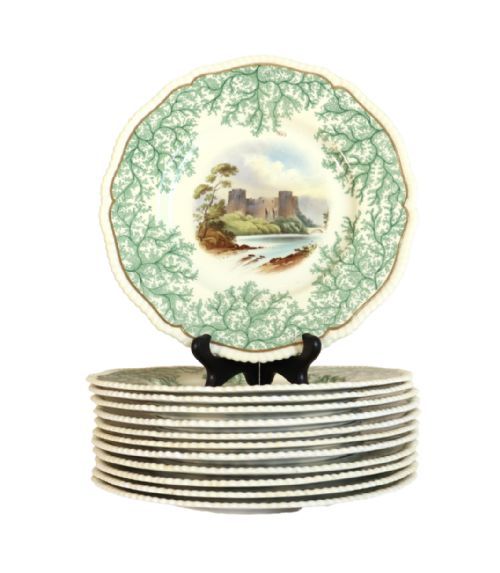
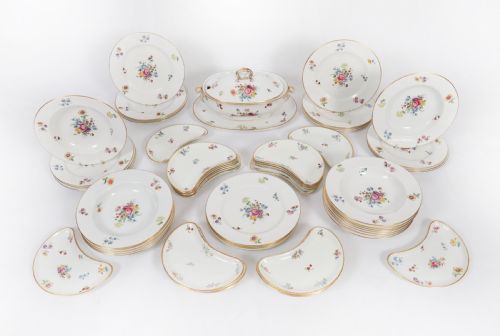
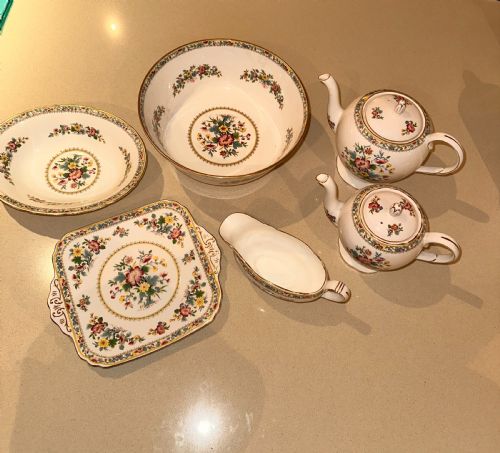
A vintage dinner service comprises matching plates, services and settings spanning the Victorian, Edwardian, and mid-twentieth-century eras. The evidence shows these dining sets range from large Copeland Spode services to smaller Limoges settings and hand-painted earthenwares.
Buyers seeking a vintage dinner service will find traditional English patterns alongside continental European porcelain and twentieth-century designs. Sets vary from substantial sixty-piece collections to individual plates and smaller settings.
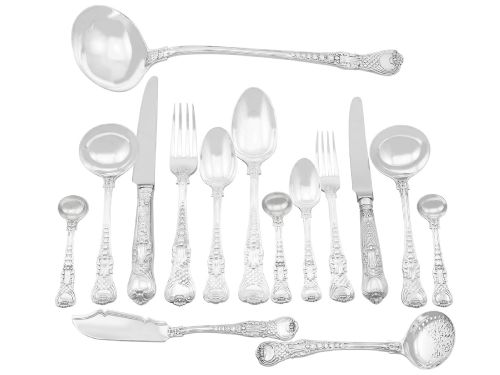
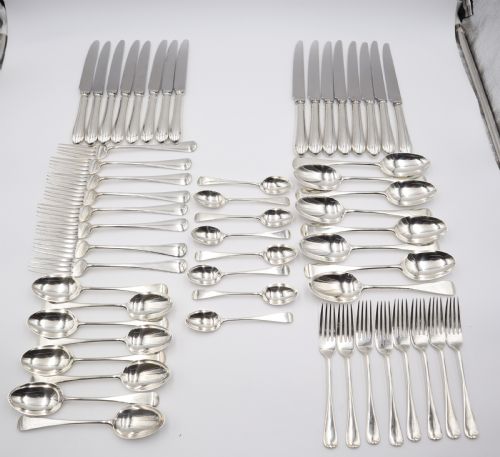
The category incorporates related dining elements such as cutlery sets, table bells, and silver chargers that complete a formal table arrangement. Most pieces reflect traditional styles alongside Art Deco and French Provincial influences.
Materials and production methods
Potteries shaped these pieces from porcelain and earthenware, applying complex glazes and hand-painted details before kiln firing. Many items feature gilt highlights, enamel decoration, and transfer-printed borders produced by established English and continental works.
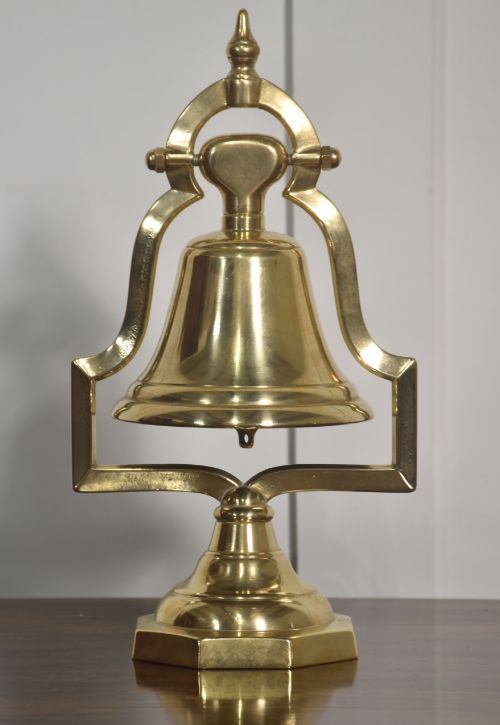
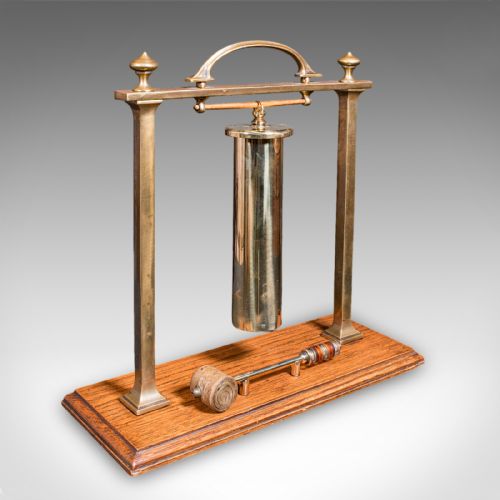
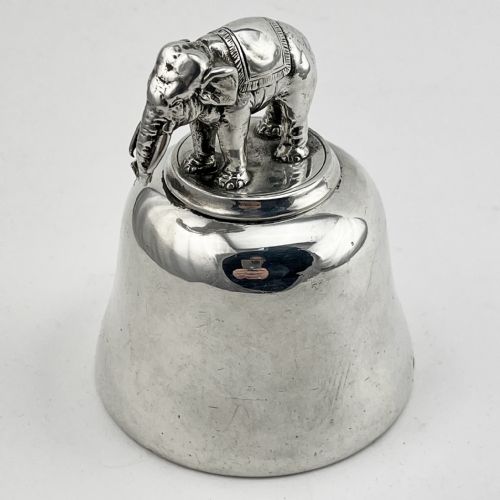
Metal table appointments utilise brass, bronze, steel, and sterling silver, often combined with oak mounts or silver plating. These companion pieces range from cast bronze schoolmaster bells to heavy sterling silver table bells.
Several services include brass table bells and afternoon tea gongs ready to summon guests to the dining table.
Distinctions in quality and execution
Quality rests in the crispness of the transfer printing, the precision of hand-painted details, and the preservation of the glaze. Finer services maintain complete matching components and crisp gilt accents across every plate and serving piece.
The reputation of the maker and the provenance of the service also shape the character of the set. Pieces associated with notable potteries or specific historical collections carry distinct craftsmanship in their modelling and decoration.
Spode·Copeland·Booths·Müller Volkstedt MV Co.·Doulton·Coalport·Richmond China
The Vintage Dinner Service Glossary
- Earthenware
- A porous pottery body fired at lower temperatures, requiring an impermeable glaze to hold liquids. It forms the foundation of many traditional dining services.
- Porcelain
- A vitrified ceramic material made from china clay, fired at high heat to produce a hard, white, translucent body. It represents the finer end of table services.
- Gilt
- A thin layer of gold applied to the surface of ceramics or metal mounts for decoration. It is frequently seen edging plates and highlight handles.
- Transfer-printed
- A decoration technique where an engraved metal plate transfers a design onto paper, which is then stamped onto the ceramic body. This method allowed consistent patterned borders on large dinner services.
Vintage Dinner Service: Frequently Asked Questions
How do I care for a vintage dinner service?
Wash vintage porcelain and earthenware gently by hand in warm water using mild soap rather than placing them in a modern dishwasher. Avoid abrasive sponges that can wear away hand-painted details and gilt borders over time.
Store large services with felt dividers between plates to prevent surface scratching on glazed and decorated surfaces. Handle serving pieces and tureens by their main bodies rather than relying solely on delicate handles.
Can I use these sets for everyday dining?
Many sets remain robust enough for regular use, provided they receive careful hand washing and gentle handling at the table. Sturdier earthenware services handle daily meals well when treated with appropriate caution.
Consider the presence of delicate enamel, intricate hand-painting or fragile gilt edges when selecting a service for frequent meals. Some collectors prefer to reserve delicate porcelain settings for special occasions.
How are different periods identified?
Victorian and Edwardian services often display heavy floral borders, deep glazes, and traditional transfer-printed scenes reflecting nineteenth-century tastes. Maker marks stamped or painted on the underside provide the most reliable clue to exact dating.
Twentieth-century settings, particularly those from the 1920s and 1930s, lean towards cleaner lines and Art Deco influences. Examining the backstamps helps link specific patterns to known production decades.
What items typically complete a service?
A complete dinner service generally includes dinner plates, side plates, serving platters, and covered vegetable tureens. Larger antique services may also incorporate sauce boats and specialised bowls.
Complementary dining items like table bells, gongs, and silver cutlery sets often accompanied these services in period homes. Together, these elements created a coordinated arrangement for formal nineteenth and twentieth-century dining.