

Vintage Dining Armchairs
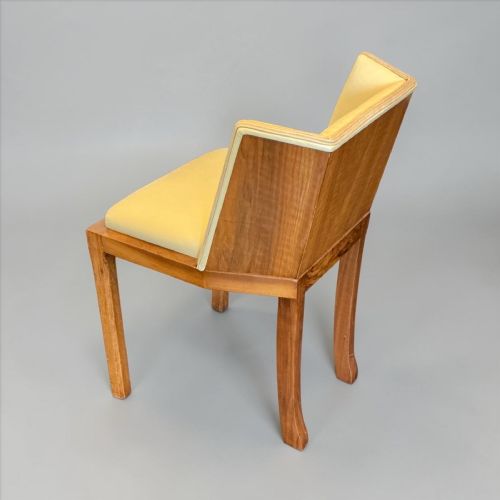
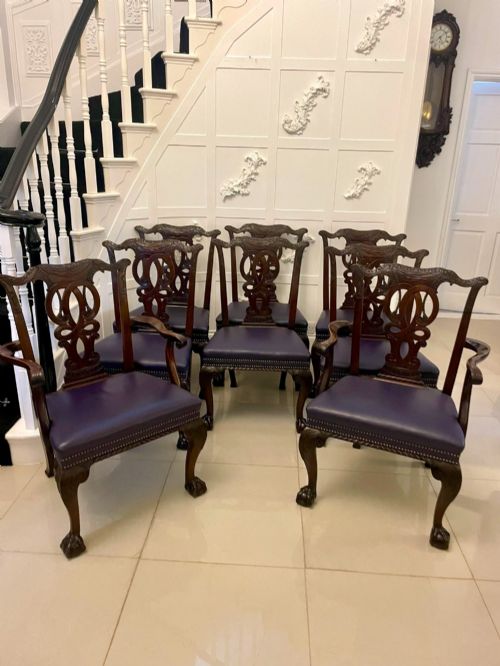
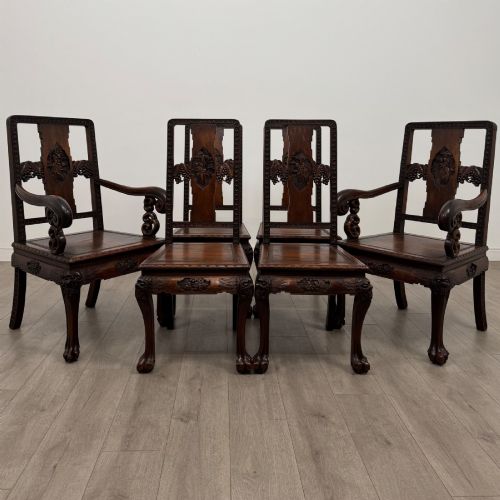
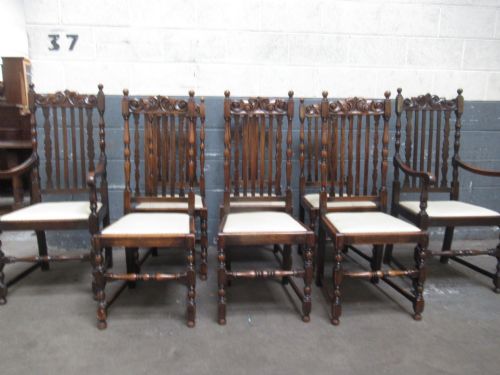
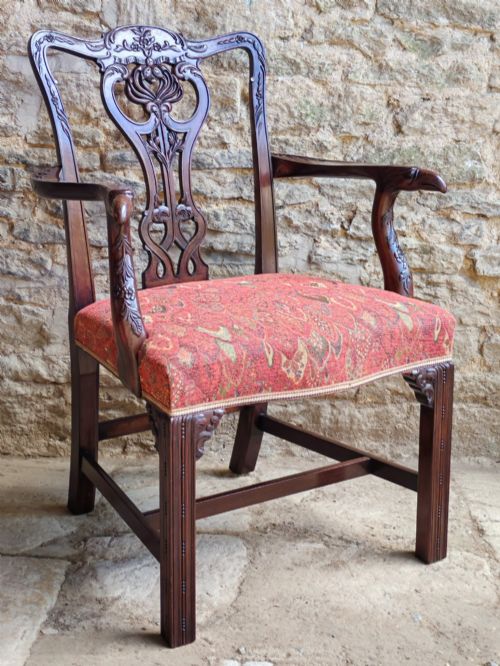
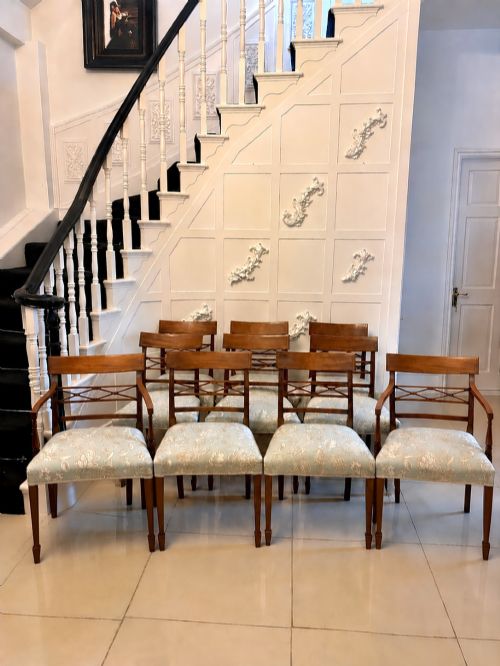
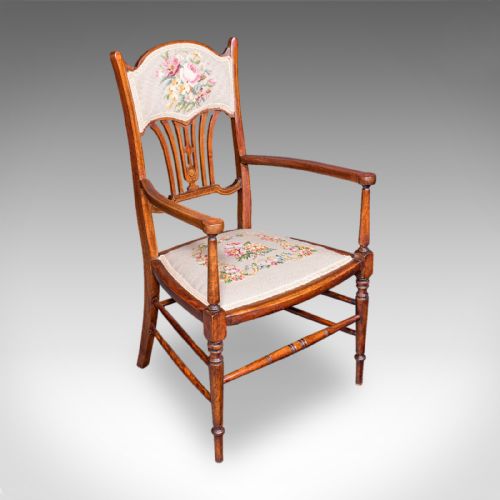
These vintage dining armchairs bring substance to the table, offering the support of a carver alongside the character of past centuries.
Vintage Dining Armchairs
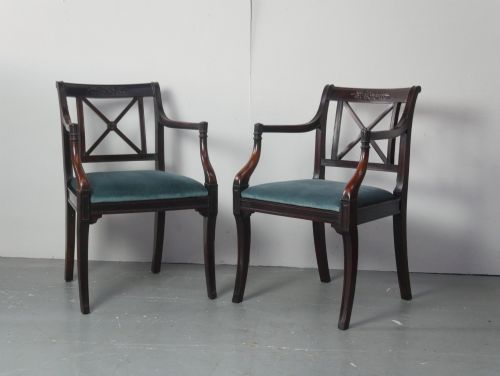
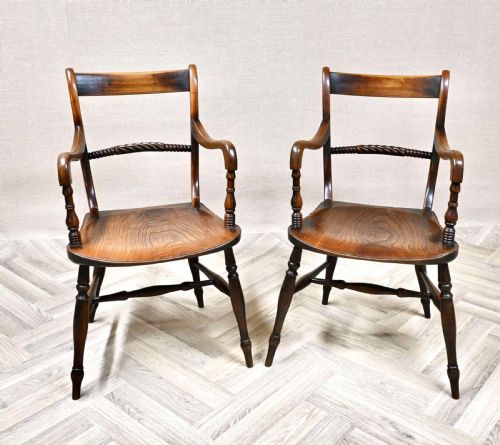
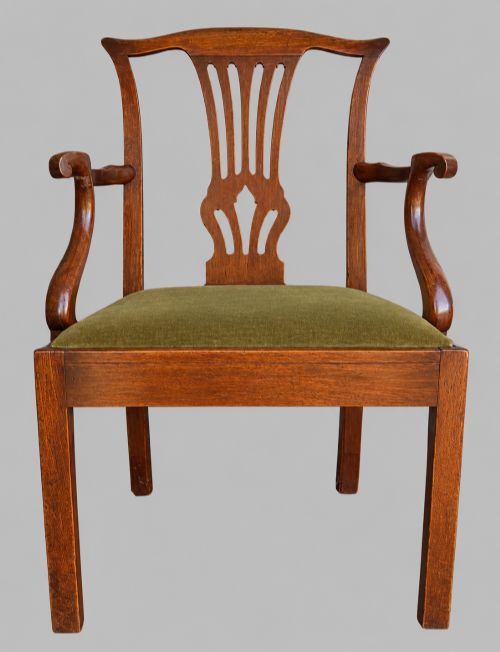
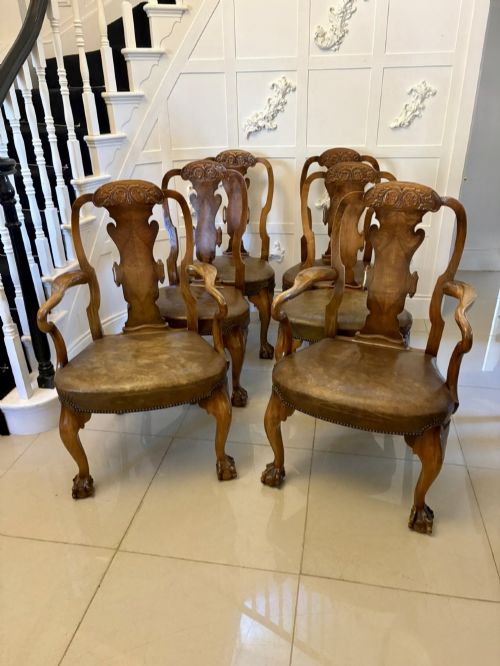
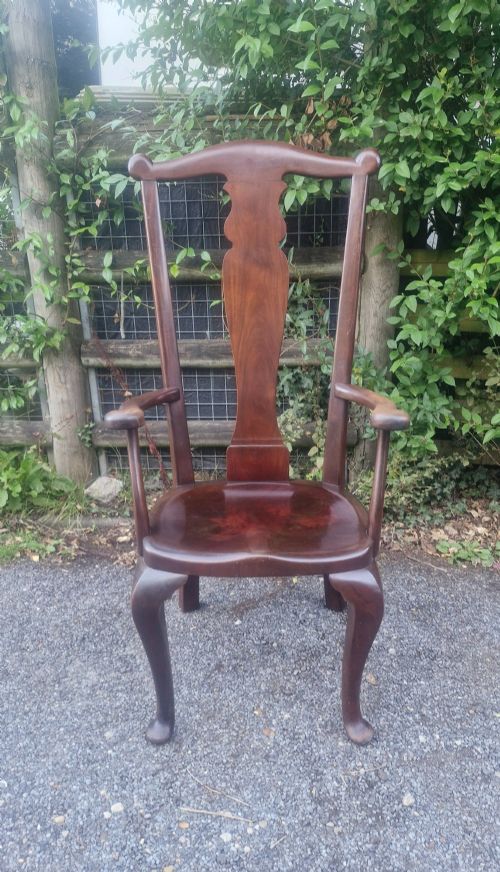
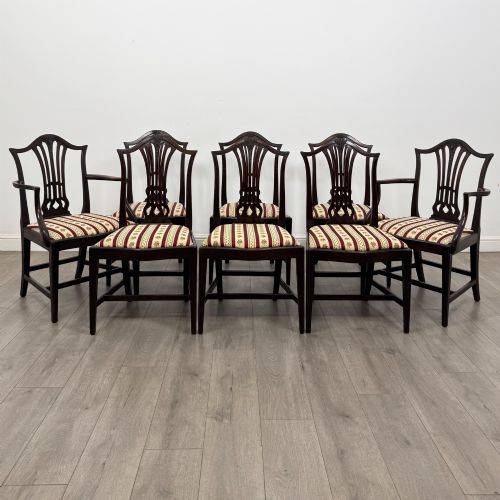
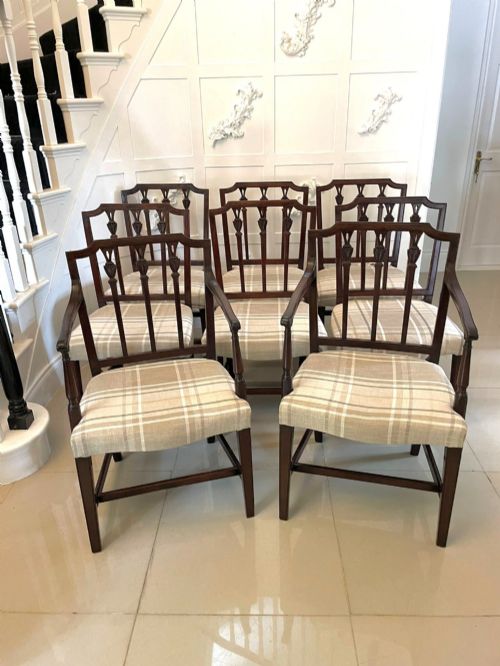
Vintage dining armchairs cover seating designed to sit at the head of a table or to pair with matching side chairs, appearing across eighteenth, nineteenth and early twentieth century periods. Buyers searching for vintage dining armchairs encounter styles ranging from plain country windsors in elm and ash to formal mahogany revival pieces influenced by Chippendale and Hepplewhite designs.
The most common forms on this page include pairs and sets of mahogany carvers alongside sturdy oak and beech ladder backs or stick backs. Makers utilised traditional regional patterns, meaning a shopper might find an Arts and Crafts rush seat alongside a Regency open armchair or an Edwardian inlaid model.
Materials and Construction
Makers relied heavily on dense hardwoods such as mahogany, oak, walnut and elm, often combining timbers like ash and beech for structural frames and Windsor spindles. Joinery involved traditional methods including mortise and tenon joints, turned components and steam bending for curved elements like hoop backs.
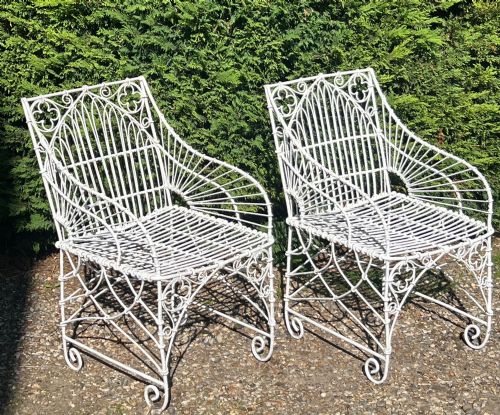
Several items on this page double as garden furniture, proving that historic seating occasionally preferred fresh air over the dining room.
Factors of Quality
Quality rests in the crispness of carved details on splats and arms, the integration of timber grain, and the rigidity of the frame under use. Finer examples display carefully proportioned shield backs, lyre backs or pierced splats executed by skilled hands rather than hurried production.
Durability depends on the original timber selection and how well joints withstand centuries of sitting. Pieces constructed with native elm and yew or dense Cuban mahogany show greater resilience than softer or more hastily assembled revival equivalents.
Howard and Sons·Maple and Co·Alfred Allen of Birmingham·Edward Barnsley
The Vintage Dining Armchairs Glossary
- Carver chair
- An armchair designed specifically for use at a dining table, often matching a set of smaller side chairs. It provides wider seating and armrests for the head of the table.
- Windsor
- A traditional wooden chair built with a solid carved wooden seat into which the legs and back spindles are wedged directly. Common regional forms include stick backs, hoop backs and smokers bows.
- Shield back
- A chair back shaped like a heraldic shield, popularised in the eighteenth century by designers like Hepplewhite and frequently copied in later revival periods.
- Ladder back
- A chair back featuring horizontal wooden slats between the upright stiles, typical of vernacular and country seating in oak and ash.
- Elbow chair
- An alternative term for a carver or armchair, describing a seat with low armrests intended to support the elbows during dining or desk work.
Vintage Dining Armchairs: Frequently Asked Questions
What is the difference between a carver and a dining armchair?
In practical terms, the two words describe the same seating form at a dining table. Carver is a traditional British term often used interchangeably with dining armchair.
Historically, carvers were placed at the head and foot of the table to allow the host more room to carve meat, hence the name.
Can I mix vintage armchairs with modern tables?
Mixing vintage wooden armchairs with contemporary tables adds texture and contrast to a dining space. The key is ensuring the arm height clears the underside of the modern table.
Checking the seat height and arm clearance prevents awkward positioning when pushing the chair underneath.
How do I identify a revival piece from an original period chair?
Revival pieces often display machine tooling marks, standardised timber cuts, and construction methods characteristic of later manufacturing. Eighteenth century originals show hand-carved nuances and timber shrinkage consistent with age.
Examining the underside and joint construction reveals clues regarding whether a chair dates to the Georgian era or a later nineteenth century revival.
Are rush and cane seats durable for daily dining use?
Natural rush and woven cane seats offer surprising resilience if treated with care and kept away from excessive moisture. They provide flexible support that yields slightly under weight.
Over decades, historic seating materials may require re-weaving by a specialist craftsperson to maintain structural integrity.