


Vintage Desk Pen Holder
A vintage desk pen holder gathers your writing instruments with period character, turning a simple writing surface into an organised workspace.
Vintage Desk Pen Holder
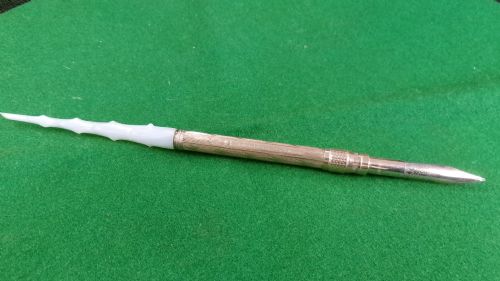
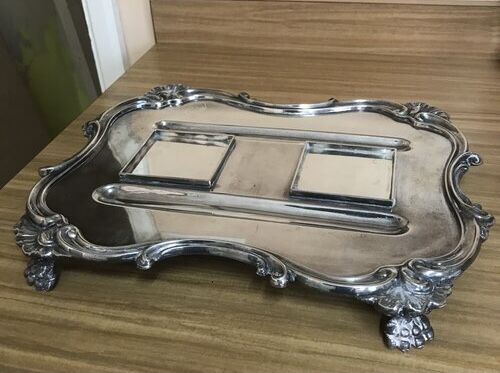
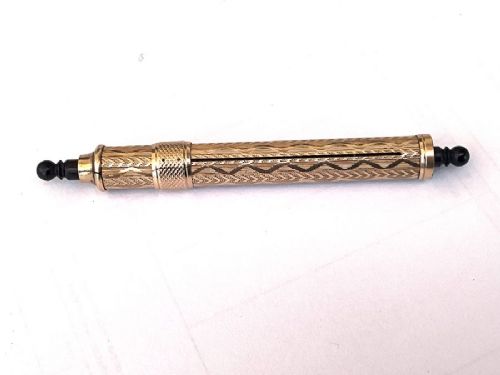
A vintage desk pen holder encompasses desk accessories, inkstands, writing instruments, inkwells, brush pots, desk tidies, and trays designed to keep writing tools orderly. These objects span from the eighteenth century through the Victorian era and into the mid-twentieth century, capturing utilitarian domestic and office needs.
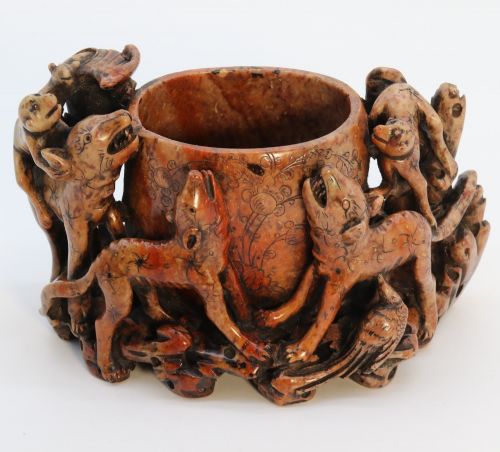
The selections on this page range from ornate brass sets and solid silver inkstands to carved soapstone brush pots and horn and silver plate vessels. You will encounter styles including Victorian, Art Nouveau, Art Deco, Rococo Revival, and traditional Chinese forms, reflecting varied global craftsmanship.
Originating from English, French, American, Chinese, Dutch, and Ottoman workshops, these pieces often combine inkwells, pen rests, and letter holders into unified desk arrangements. Each item demonstrates the specific writing habits and desk organisation of its respective period.
Materials and construction methods
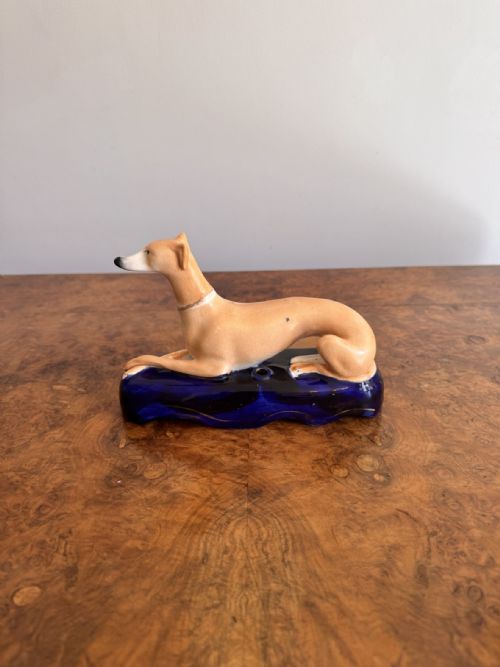
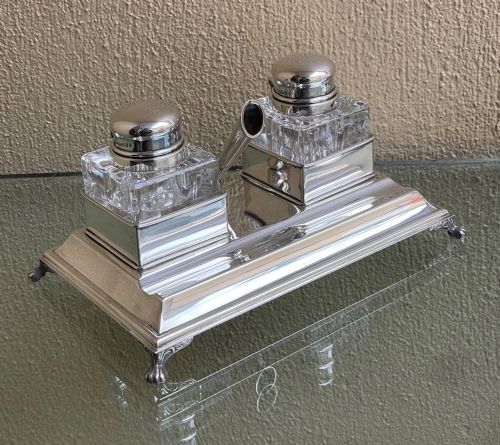
Metals dominate the construction of these desk pieces, utilising cast brass, bronze, silver plate, sterling silver, and gold plate shaped through casting, stamping, and plating. Makers frequently incorporated glass elements, cut glass, and ceramic components like Dutch Delft and Staffordshire pottery to hold ink or water.
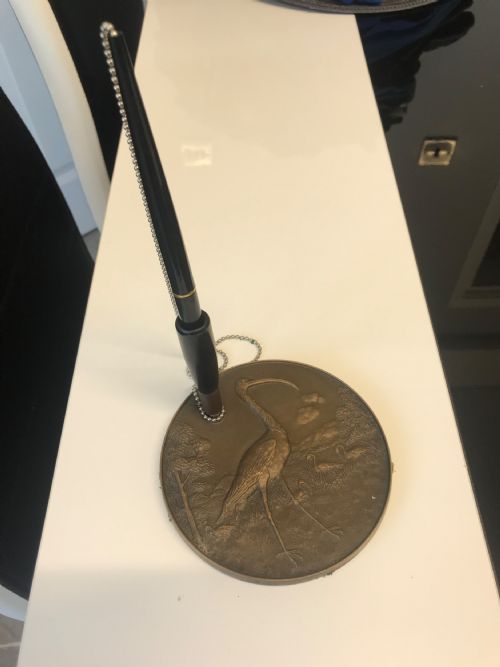
Organic materials also appear in the evidence, including carved soapstone, papier-mâché, and horn combined with mounted metal rims and rests. Artisans applied hand-carving, detailed chasing, and figural casting to create subjects such as birds, elephants, and owls alongside geometric and floral motifs.
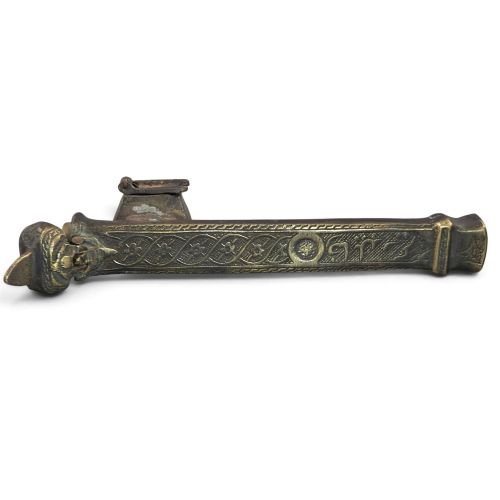
An eighteenth-century traveller can keep their ink and quills securely contained in a brass divit qalamdan.
Factors of execution and design
Quality rests in the crispness of casting or carving detail, distinguishing a sharply rendered figural bronze or carved stone from a softer, mass-produced commercial casting. Heavy gauge metals and substantial glass liners indicate a higher standard of manufacture compared to lighter, thinner alternatives.
The integration of multiple functions within a single desk tidy or inkstand demonstrates superior planning and assembly by the maker. Finer examples display balanced proportions, secure mounts, and harmonious combinations of materials like horn, silver plate, and brass.
A.Cohen & Co Ltd London·Mabie Todd & Co·Harrods·Edward Todd & Co New York·Creswick·Marson & Jones Birmingham·Ernest Louis Adnin
The Vintage Desk Pen Holder Glossary
- Inkstand
- A fitted tray or stand holding one or more inkwells, sanders, and pen rests for a writing desk.
- Brush pot
- A cylindrical vessel, often carved from stone or wood, traditionally used in East Asian studies to hold writing brushes.
- Desk tidy
- A compartmentalised desk accessory intended to organise letters, pens, and small stationery items.
- Pen rest
- A small support or cradle designed to keep dipping pens elevated above the writing surface to prevent ink smudges.
Vintage Desk Pen Holder: Frequently Asked Questions
What is a vintage desk pen holder used for?
These pieces organise writing implements such as dip pens, fountain pens, and quill holders upon a desk or writing table. Many designs incorporate integrated inkwells and trays to keep daily correspondence tools readily accessible.
Historically, they served as central fixtures in studies, offices, and drawing rooms. Today, they provide practical desktop organisation while displaying period materials and craftsmanship.
How do I identify the age of my desk accessory?
Dating relies upon stylistic markers such as Victorian ornamentation, Art Nouveau curves, or Art Deco geometry, alongside any maker marks or hallmarks. Materials like papier-mâché, horn, and specific silver plate techniques further indicate the period of manufacture.
Comparative analysis of object types, from eighteenth-century travelling cases to mid-twentieth-century Elizabeth II silver pieces, helps narrow the production era.
Are these pen holders suitable for modern pens?
Many vintage pen rests and desk tidies accommodate modern fountain pens, rollerballs, and pencils just as effectively as nineteenth-century dip pens. Wider channels and open trays easily hold contemporary writing instruments.
Enclosed inkwells within these sets are often best used for display rather than holding liquid ink, preserving the interior condition of older glass and ceramic inserts.
What materials are common in these pieces?
The evidence shows a wide array of materials including brass, bronze, silver plate, sterling silver, gold plate, and cut glass. Organic and decorative elements such as soapstone, horn, papier-mâché, and Dutch Delft ceramics also appear frequently.
Combinations of metal and glass or stone were standard practice, providing durability and weighted bases for active writing desks.