


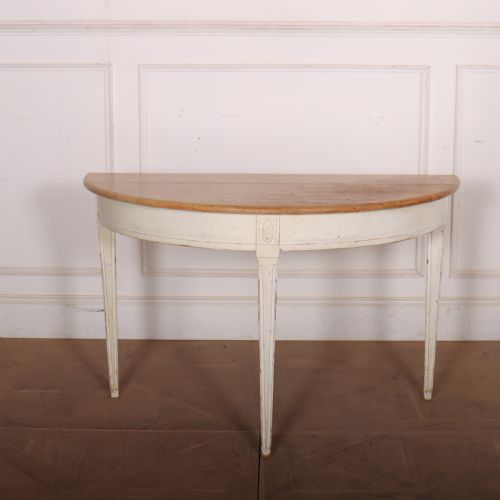

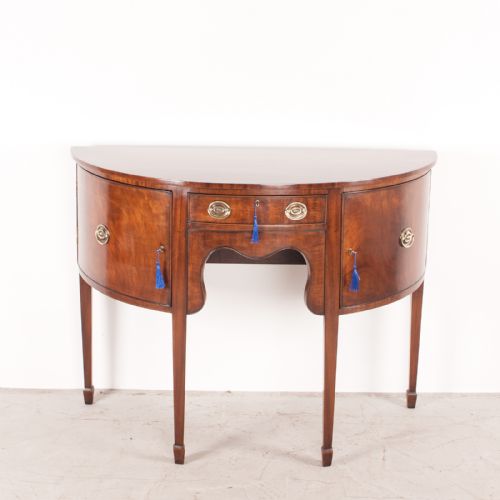


Vintage Demi Lune Table
A vintage demi lune table brings half-moon elegance to a hallway or drawing room, offering a flat back to hug the wall.
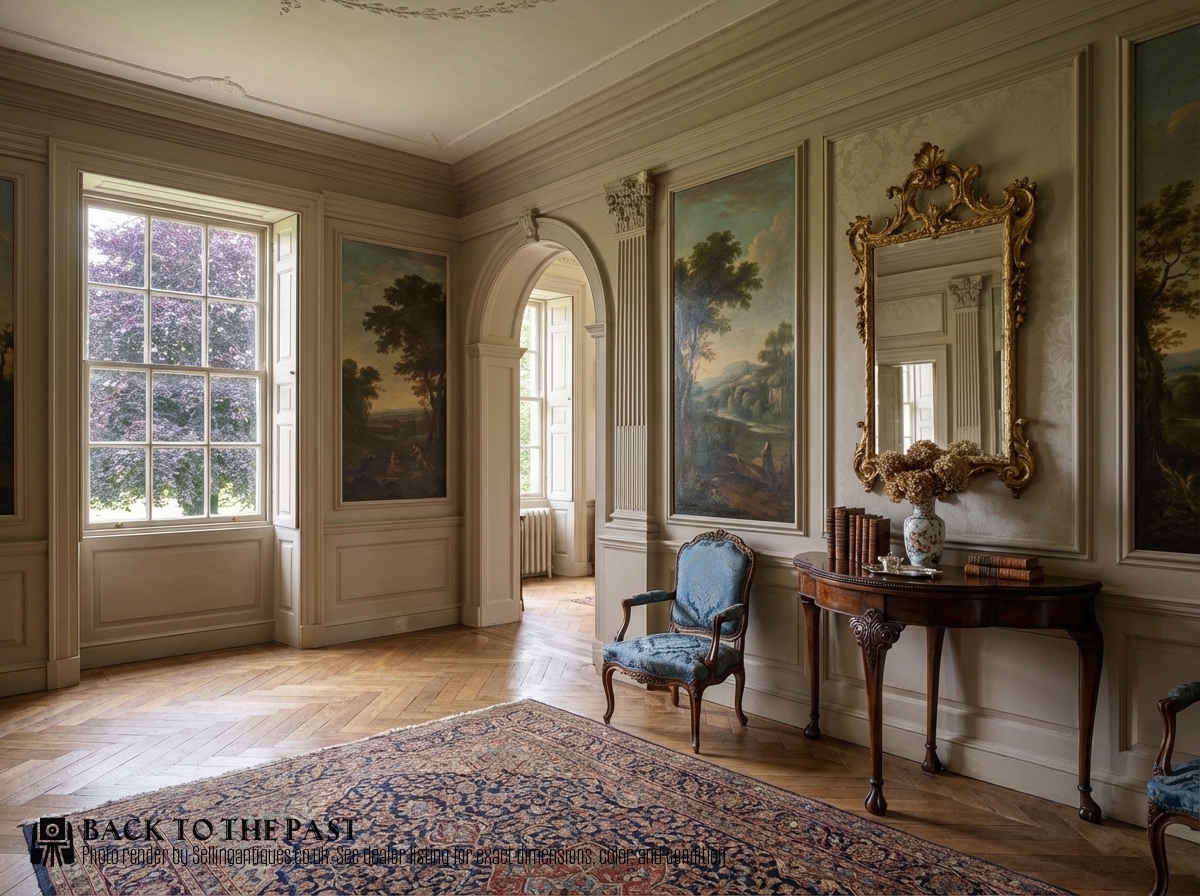
Vintage Demi Lune Table
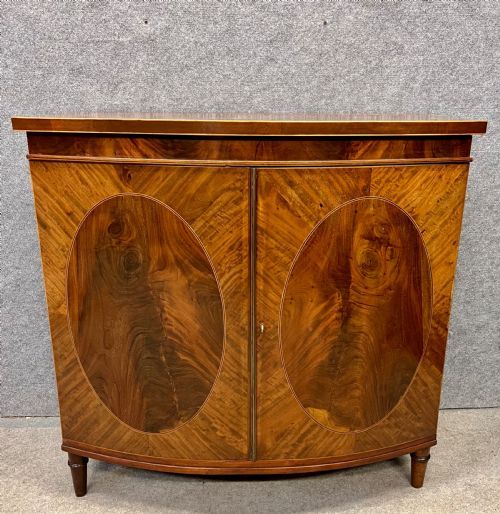
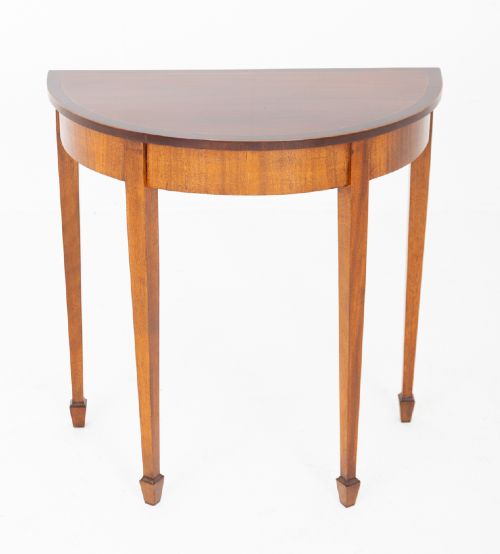
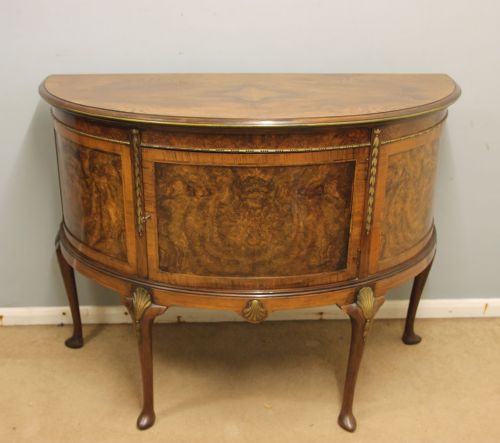
A vintage demi lune table is a half-circle piece designed to stand flush against a wall, frequently appearing as console tables, card tables, and side cabinets. The selection spans the nineteenth century, the Edwardian era, and the 1920s and 1930s, reflecting classical revivals from George III styles to Queen Anne forms. These semicircular items function practically as serving surfaces, hallway drop spots, or expandable gaming tables.
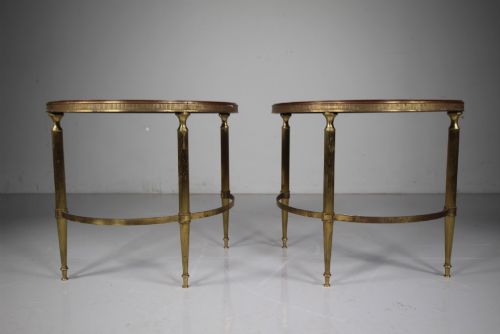
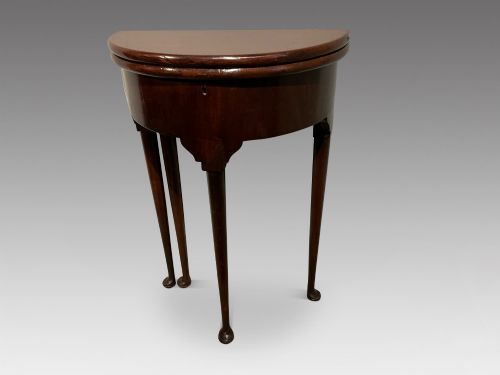
Console and side table variations dominate the listings, alongside fold-out card and tea tables with hinged tops. Cabinets and sideboards also emerge in these semicircular proportions, providing storage within the distinctive curved footprint. Buyers encounter both single statement pieces and matched pairs suitable for balancing a room.
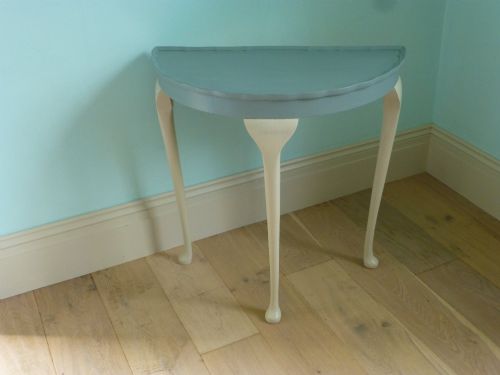
Origins stretch from English workshops to Swedish interiors, bringing regional interpretations in painted finishes and native timbers. Georgian and Victorian examples sit alongside Edwardian satinwood and twentieth-century walnut interpretations. This variety allows collectors to match a specific period aesthetic to their interior space.
Materials and construction
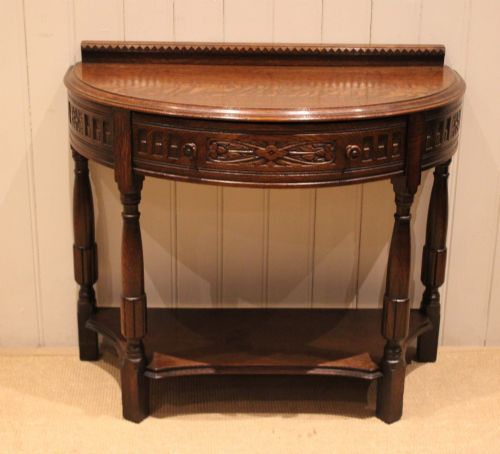
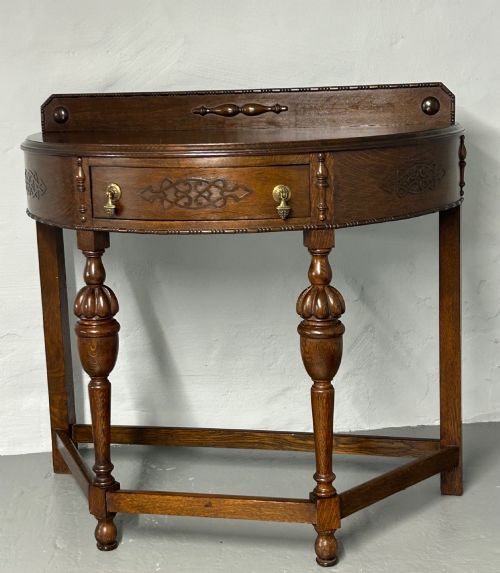
Cabinetmakers utilised rich hardwoods including mahogany, walnut, burr walnut, and satinwood, frequently highlighting the grain through book-matching and delicate inlay work. Oak and pine appear in regional pieces, while painted wood finishes define the Swedish and country styles. Surfaces often display hand-painted decorations or subtle brass mounts and handles.
Construction techniques balanced decorative impact with functional engineering, particularly in folding card and tea tables that conceal a second leaf or swing out to support a baize-lined surface. Solid timber frames support curved aprons and tapered or cabriole legs. Joinery relies on traditional traditions suited to curved rails and stable wall-mounted console configurations.
Vintage Demi Lune Table Retail Price Guide 2026
Typical asking prices for vintage demi lune table among the pieces listed under this phrase on Sellingantiques today, from the lower quarter to the upper quarter. They describe what is for sale here now, not the wider market.
The listings show a strong presence of mahogany and walnut timbers alongside painted finishes originating from Swedish and English workshops.
Assessing quality and craftsmanship
The distinction between tiers rests upon the choice of timber veneer, the crispness of any inlaid stringing, and the hand-painted detailing on the top surface. Superior examples display carefully selected burr walnut or figured mahogany matched seamlessly across the semicircular top. Simpler pine or solid oak pieces rely on honest construction rather than decorative marquetry.
Mechanical integrity in folding mechanisms separates fine games tables from basic side furniture. A well-made card table operates smoothly on its swing leg, aligning flush when closed without sagging at the straight edge. The proportion of the curved apron to the legs dictates the visual balance of the piece.
Maple and Co
The Vintage Demi Lune Table Glossary
- Demi lune
- French for half-moon, describing furniture with a semicircular flat side meant to place against a wall. This profile saves floor space while offering a decorative surface.
- Console table
- A table fixed to a wall or designed to stand against one, supported by console brackets or legs. They often feature elaborate front legs with a plain back edge.
- Card table
- A folding table designed for playing games, featuring a hinged top that opens to double the surface area. Many contain a hidden well for storing cards and counters.
- Inlay
- A technique where pieces of contrasting timber, shell, or metal are inserted into depressions in the base wood to form decorative patterns. It defines many Edwardian and Georgian revival pieces.
- Cabriole leg
- A furniture leg that curves out and then in, resembling the leg of an animal. This form is common on Queen Anne and Chippendale style tables.
- Satinwood
- A hard, durable timber with a golden-yellow sheen and satiny texture. It is prized for fine eighteenth-century and revival side tables.
Vintage Demi Lune Table: Frequently Asked Questions
How do I use a demi lune table in a hallway?
Because the flat back sits directly against the wall, these pieces occupy minimal depth while providing a useful surface for keys, lamps, or small sculptures. They fit narrow entryways where rectangular tables would jut out into the walkway.
Pairs of demi lune tables can also be pushed together to form a freestanding circular dining or centre table when extra surface area is needed.
How do I identify a revival style piece?
Revival furniture mimics the proportions and decorative motifs of earlier eras, such as George III or Queen Anne, but is constructed during the Victorian, Edwardian, or 1920s periods. Cabinetmaking techniques, secondary woods on the interior, and cleaner machine-cut dovetails often betray a later manufacturing date.
Examining the underside and drawer linings helps determine whether a piece belongs to the eighteenth century or a later twentieth-century interpretation.
Are painted demi lune tables authentic?
Painted finishes appear frequently on Swedish and continental pieces, particularly from the nineteenth century, as well as on specific English country furniture. These surfaces range from simple distressed paint to delicate hand-painted floral motifs.
Buyers should inspect the paint layers for signs of age and wear that match the underlying timber construction and period.