








Vintage Delft Charger
A vintage delft charger brings rich tin-glazed earthenware and bold blue-and-white palettes to a wall or table.
Vintage Delft Charger
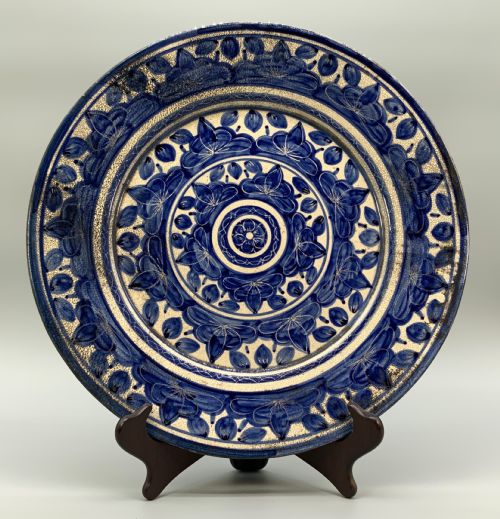
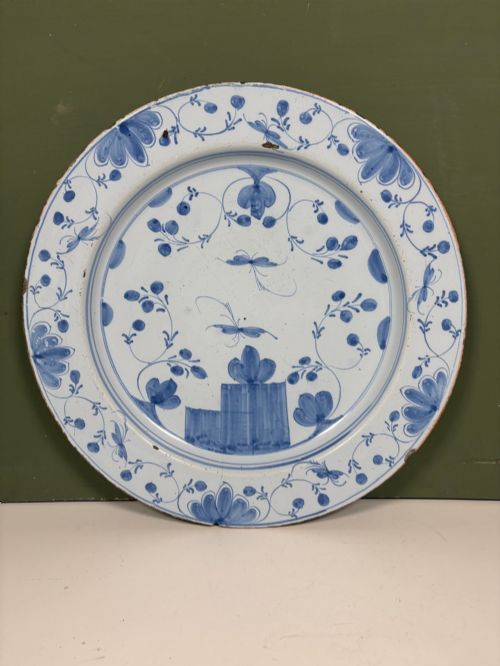
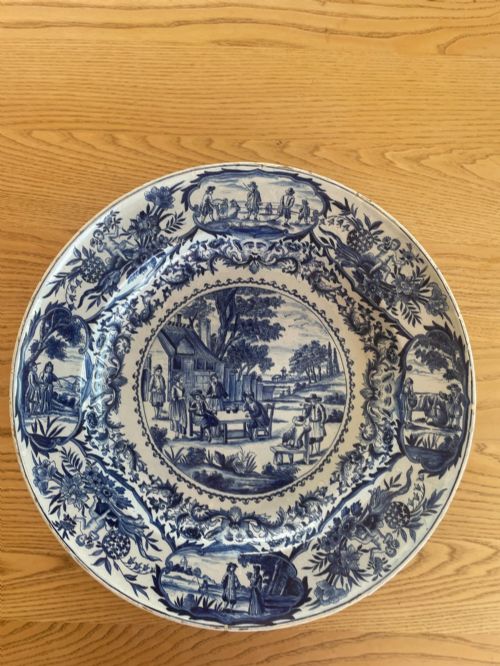
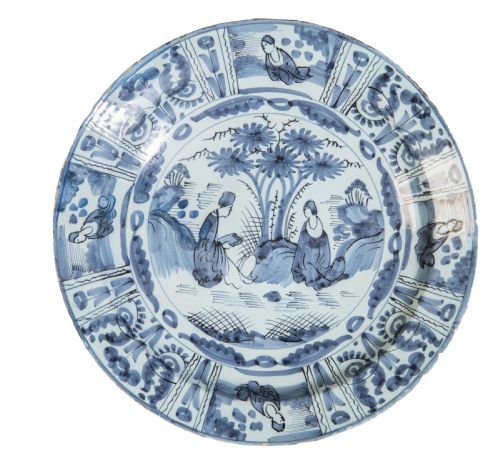
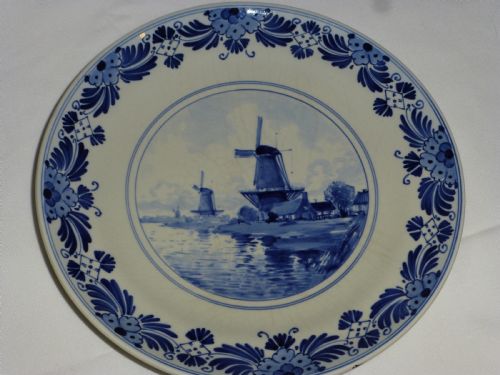
A vintage delft charger is a broad decorative plate or dish finished in tin glaze, designed primarily for display rather than dining. When searching for a vintage delft charger, a buyer encounters substantial round earthenware vessels spanning from the seventeenth century through to later revivals.
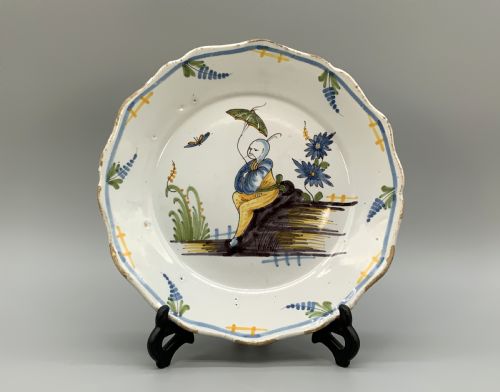
Most examples originate from Dutch workshops, though English polychrome and French faience pieces also appear. Forms range from shallow bowls to expansive wall chargers featuring floral or Chinoiserie motifs.
Materials and technique
Potters formed these chargers from basic earthenware bodies before coating them in an opaque tin glaze that provided a smooth white surface for painting. Artisans applied cobalt oxide and other pigments directly onto the porous unfired glaze, a technique requiring immense skill because the pigment absorbed instantly.
Grand feu painting involved firing the pigments and tin glaze together at high temperatures, fusing the colours deeply into the surface. Some later or continental pieces incorporated manganese, yellow and polychrome pigments to achieve richer pictorial depth.
Vintage Delft Charger Retail Price Guide 2026
Typical asking prices for vintage delft charger among the pieces listed under this phrase on Sellingantiques today, from the lower quarter to the upper quarter. They describe what is for sale here now, not the wider market.
Some chargers spent centuries quietly staring at dining room walls, collecting nothing more than stories and the occasional Sunday roast aroma.
Judging quality and character
Quality rests in the crispness of the hand-painted decoration and the purity of the tin glaze across the surface. Superior chargers display confident brushwork and balanced pictorial composition rather than stiff or muddy execution.
The weight and uniformity of the earthenware body also signal a better-made piece, alongside the stability and depth of the glaze firing.
The Vintage Delft Charger Glossary
- Charger
- A large decorative plate or dish, typically measuring over twelve inches across, intended for wall display on plate rails or dresser backs.
- Tin-Glazed Earthenware
- Pottery covered with a white lead glaze made opaque by the addition of tin oxide, serving as a canvas for painted decoration.
- Grand Feu
- A high-temperature ceramic firing method where pigments are applied directly to the raw glaze before entering the kiln.
- Faience
- European tin-glazed earthenware, a term frequently applied to French and continental wares similar in construction to Dutch delft.
- Chinoiserie
- European artistic styles reflecting Chinese motifs and landscapes, commonly hand-painted in blue on seventeenth and eighteenth-century ceramics.
Vintage Delft Charger: Frequently Asked Questions
How do I hang a delft charger safely?
Use a properly fitted spring-loaded brass wall hanger that distributes pressure evenly around the rim without biting into the earthenware body. Ensure the wall fixing is secure, as these large ceramic pieces carry considerable weight.
Position the charger away from high-traffic zones or direct sunlight to protect the tin glaze and historical pigments from accidental impacts and fading.
Can I use these chargers for serving food?
Vintage delft chargers are intended for display and decorative wall hanging rather than culinary use. The historic tin-glaze surfaces can be porous or sensitive to modern acidic foods and dishwashing.
Display them on stands or walls to preserve the painted cobalt and polychrome decoration for future generations.
How do I clean an antique delft plate?
Dust the surface gently with a soft, dry cloth or a clean artist brush to remove everyday particles. Avoid using water, soaking, or chemical cleaning agents, as moisture can penetrate hairline cracks in the historic earthenware.
Professional restoration advice should be sought if deeper cleaning is required to protect the integrity of the glaze.
How do I distinguish seventeenth-century pieces from later ones?
Early seventeenth and eighteenth-century chargers often show heavier earthenware bodies, subtle glaze irregularities, and deep cobalt tones characteristic of traditional Dutch delftware. Later nineteenth-century pieces and twentieth-century revivals typically display more uniform factory bodies and brighter, thinner glaze applications.
Examining the foot ring and the character of the hand-painted brushwork provides further clues to the manufacturing era.