


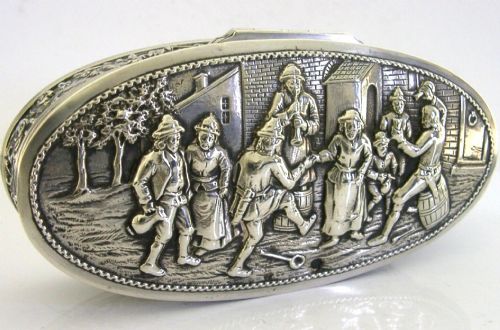


Vintage Decorative Storage Box
These vintage decorative storage box finds bring both surface artistry and everyday containment to a room, drawing on centuries of global cabinet-making traditions.
Vintage Decorative Storage Box
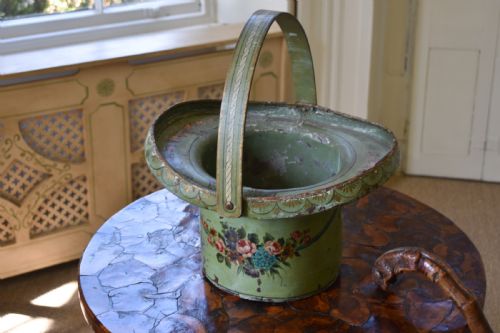
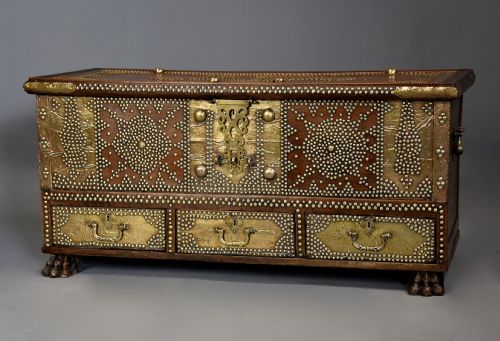
A vintage decorative storage box gathers portable vessels designed to hold tea, lace, stationery, or small keepsakes while adding visual interest to a surface. When you search for a vintage decorative storage box on this page, you meet pieces ranging from modest wooden tea caddies to substantial traders chests and travel trunks.
The selection draws on varied global traditions, including Anglo-Indian woodwork, French leather-bound caskets, Japanese cloisonné, and Victorian papier-mâché. Makers across the nineteenth and early twentieth centuries produced these containers for specific domestic tasks, employing forms that span from tea canisters and trinket boxes to larger storage crates and coal scuttles.
Most examples rely on durable hardwoods like walnut, rosewood, and ebony, alongside painted leather, metal, and lacquer. Smaller trinket and jewellery boxes sit alongside novelty biscuit tins and book-shaped containers, showing how utility and ornament merged in domestic interiors.
How they were made
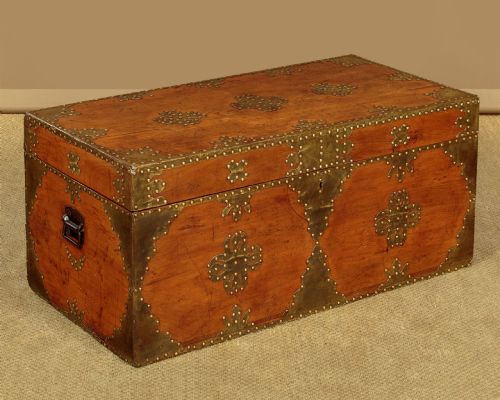
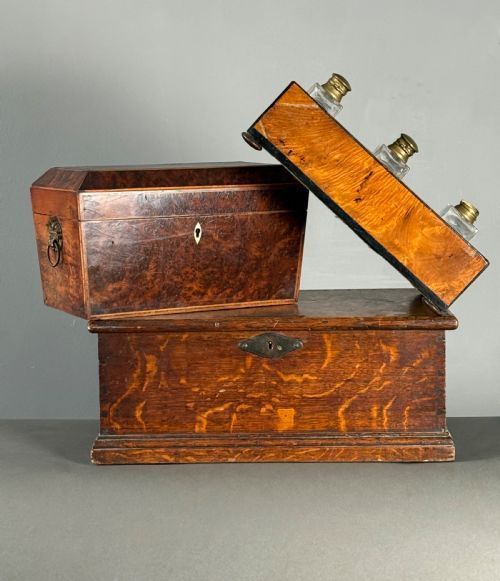
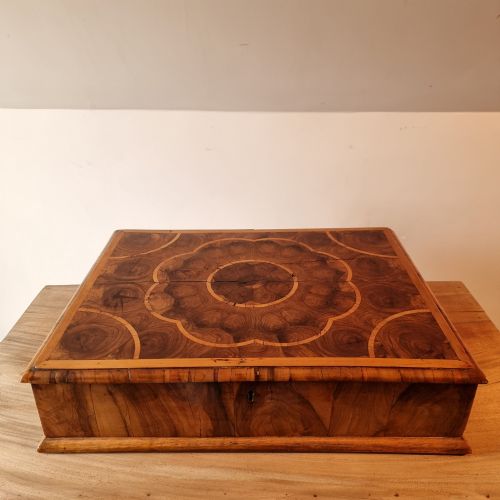
Cabinet-makers constructed these containers using solid timbers such as walnut, rosewood, and ebony, frequently applying intricate veneers of burr maple or olive wood to the exterior. Surfaces often received rich lacquer, paint, or tooled leather finishes to enhance their decorative appeal.
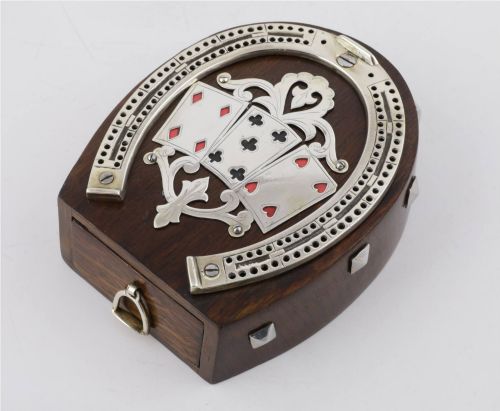
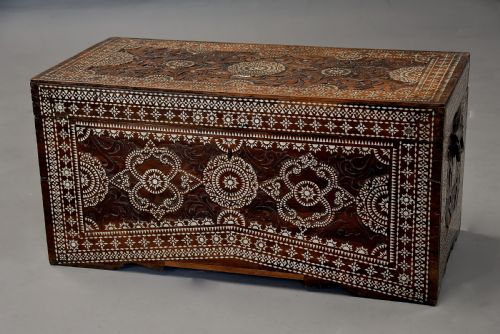
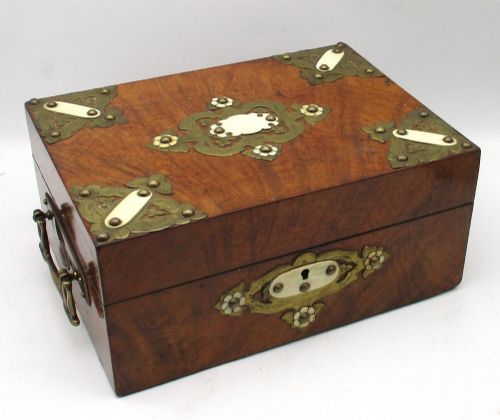
Many specimens incorporate detailed inlay work, utilising mother-of-pearl, bone, and brass studding to create geometric or floral patterns. Metal elements like solid silver, silver gilt, and brass provided structural reinforcement as well as ornamental hinges, locks, and handles.
Listings feature containers made from brass, iron, walnut, leather, paint, rosewood, and metal across multiple centuries.
What varies in quality
The distinction between standard containers and exceptional pieces lies in the precision of the joinery and the complexity of the surface decoration. Hand-carved hardwood, intricate mother-of-pearl inlay, and finely preserved lacquer finishes elevate a piece beyond simple mass-produced storage.
Material choice and maker execution dictate overall merit, with solid silver mounts, specialised woods like rosewood and ebony, and complex marquetry showing superior workshop standards. The integrity of internal linings, original locks, and well-fitted lids also mark out finer examples.
Peek Frean and Co·Hunter and Palmer
The Vintage Decorative Storage Box Glossary
- Tea caddy
- A small container originally built to store and preserve loose tea leaves. These often featured internal compartments and lockable lids to protect expensive tea.
- Marquetry
- The art of applying thin slices of wood veneer to a structural carcass to form decorative patterns or pictures. Craftsmen selected contrasting timbers to achieve tonal depth.
- Papier-mâché
- A composite material made from paper pulp or layers of paper bound with glue, then moulded and lacquered. It allowed makers to create smooth, decorated surfaces on stationery boxes and trays.
- Cloisonné
- An enamelling technique where metal wire soldered to a metal base creates cells that are filled with coloured paste and fired. This method produced vibrant floral motifs on small vessels.
- Tunbridge ware
- A specific type of woodwork featuring tiny mosaic tiles made from different coloured natural woods to form geometric or pictorial designs. It became particularly popular on Victorian trinket boxes.
Vintage Decorative Storage Box: Frequently Asked Questions
What were tea caddies used for?
Tea caddies served to store precious tea leaves safely away from moisture and light in nineteenth-century homes. Because tea was an expensive commodity, these containers typically included locking lids and internal divisions for different blends.
Over time, they evolved into highly ornamental tabletop objects placed in reception rooms. Their interiors often retained traces of foil lining or glass mixing bowls.
How do I identify Victorian boxes?
Victorian boxes frequently employ woods like rosewood and walnut, often enhanced with mother-of-pearl inlay or papier-mâché construction. Their decorative styles reflect the period's fondness for heavy ornamentation and domestic utility.
Look for interior fittings lined in silk or velvet, alongside brass or steel hardware. Maker marks or stamps inside the lid can sometimes confirm the manufacturing era.
How should I clean a lacquered box?
Lacquered surfaces require gentle dusting with a soft, dry cloth to prevent scratching the delicate finish. Avoid using water, household sprays, or chemical solvents that might lift the lacquer or paint.
Keep the box away from direct sunlight and steady heat sources to protect the wood and surface decoration from warping. Regular care preserves both the sheen and the structural integrity of the piece.