







Vintage Decorative Stoneware Vases
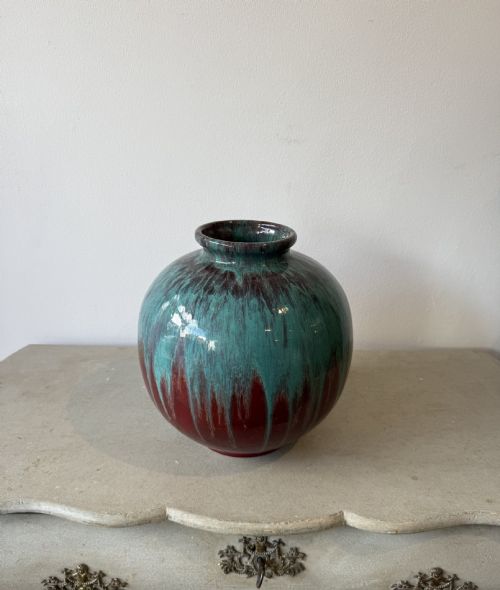
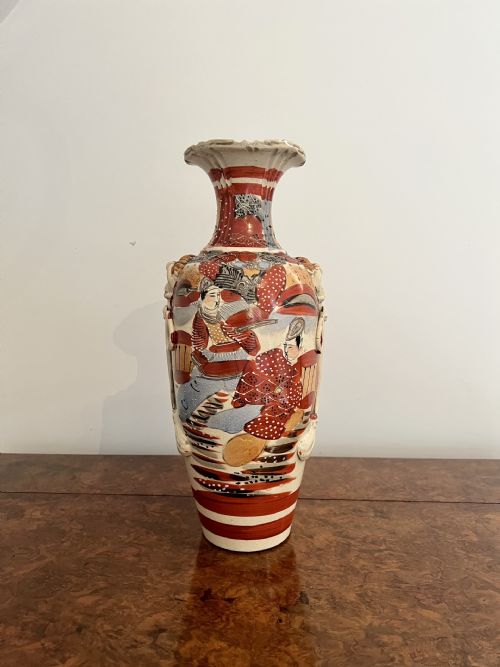
These vintage decorative stoneware vases bring robust clay bodies and rich glazes into a room, offering both sculptural presence and enduring utility.
Vintage Decorative Stoneware Vases
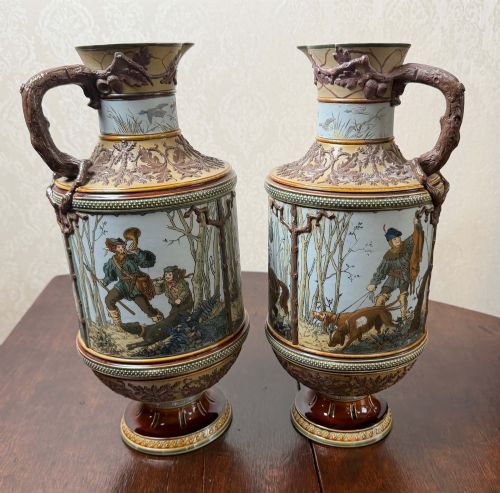
Vintage decorative stoneware vases span robust utilitarian forms turned into ornamental showpieces, frequently surfacing in Victorian and early twentieth-century iterations. Buyers seeking vintage decorative stoneware vases will encounter heavy, high-fired vessels designed to hold dried stems or stand alone as focal points on a mantel or sideboard.
The selection ranges from large Doulton Lambeth ewers and pairs of shaped vessels to individual French studio pottery pieces and lustred art pottery. Most examples emerge from the late nineteenth century through the interwar decades, showing strong ties to the Arts and Crafts and Art Nouveau movements.
How They Were Made
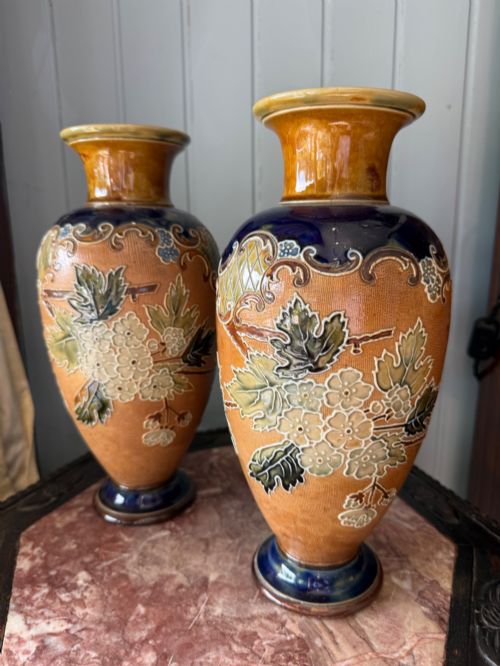
Makers utilised dense, vitrified clay bodies fired at high temperatures to ensure complete impermeability before applying heavy glazes, enamel floral decor, or metallic leaf. Techniques such as Slater's patent texturing pressed lace or fabric into the damp clay surface to create intricate patterns beneath the glaze.
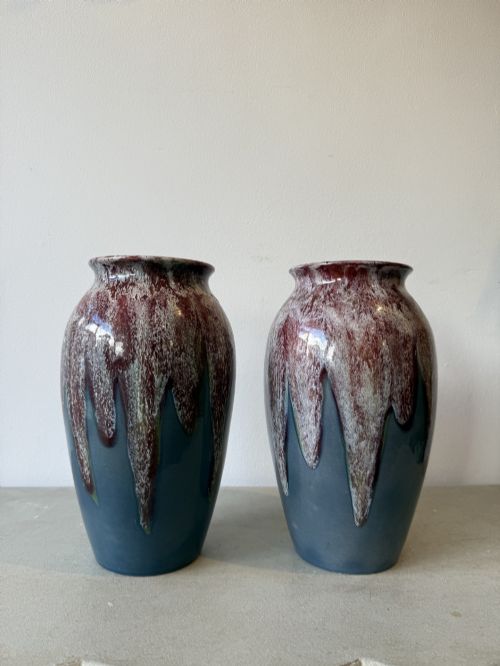
Art pottery studios employed specialist throwers and painters who combined slip-trailing, drip glazes, and lustre techniques to achieve varied surface textures. These methods produced durable vessels where the interaction between heat, metallic oxides, and clay bodies remains permanently fixed.
Vintage Decorative Stoneware Vases Retail Price Guide 2026
Typical asking prices for vintage decorative stoneware vases among the pieces listed under this phrase on Sellingantiques today, from the lower quarter to the upper quarter. They describe what is for sale here now, not the wider market.
Listings feature stoneware alongside earthenware and porcelain, spanning Victorian production through to the 1940s with a strong concentration of late nineteenth-century Doulton pieces.
What Varies in Quality
Quality rests upon the crispness of the modelled or incised decoration, the control of the glaze reactions during firing, and the presence of named artists or patent techniques. Superior examples display confident hand-thrown proportions and deliberate surface detailing rather than flat, repetitive factory stamping.
The sophistication of the palette and the ambition of the form separate standard production pieces from exceptional works by notable potteries. Intricate enamel work, well-preserved lustre surfaces, and balanced pairs elevate individual items within the wider field of ceramic output.
Royal Doulton·Doulton Lambeth·Mettlach Pottery·Royal Lancastrian·Carter Stabler Adams·Roger Guerin
The Vintage Decorative Stoneware Vases Glossary
- Stoneware
- A dense, hard pottery fired at high temperatures until the clay body vitrifies and becomes non-porous. This material withstands heavy daily use and takes deep, rich glazes.
- Ewer
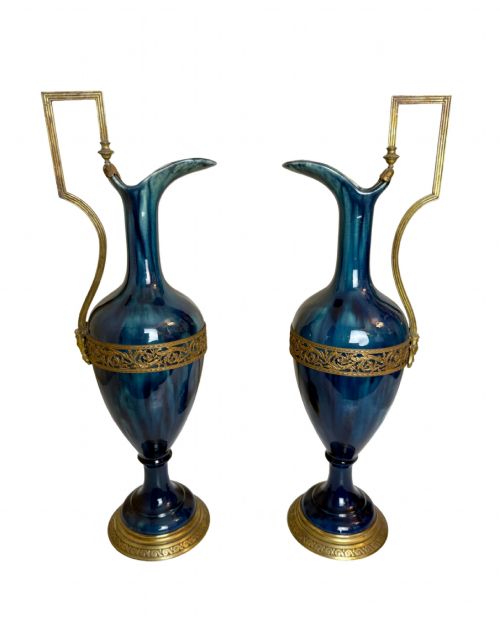
- A large jug with a wide spout and a looped handle, often made as an ornamental counterpart to a vase. These vessels derive their shapes from historical metalwork forms.
- Lustre
- A metallic surface sheen achieved by firing pottery in a reduced oxygen atmosphere with metallic salts. This technique creates iridescent flashes of colour across the glaze.
- Slater's Patent
- A decorative ceramic technique involving pressed lace or woven mats rolled into damp clay to create textured backgrounds. It appears frequently on late Victorian art pottery.
- Art Nouveau
- A design style characterised by flowing, organic lines and floral motifs that influenced ceramic decoration around the turn of the twentieth century. Makers translated these sinuous curves into incised and painted vase designs.
Vintage Decorative Stoneware Vases: Frequently Asked Questions
How do I clean a stoneware vase?
Wash the piece gently in warm water using a mild soap and a soft cloth to protect any surface enamel or delicate gilding. Avoid harsh scourers and do not submerge vessels that feature applied metal leaf or porous repairs.
Dry the vase thoroughly with a lint-free towel immediately after washing. Keeping moisture away from unglazed base rings prevents staining over time.
Can I put water in these vases?
Most high-fired stoneware vessels hold water safely due to their vitrified clay bodies and internal glazing. However, older pieces with hairline cracks or porous earthenware elements require a small glass liner to protect the interior.
Change the water frequently and avoid leaving stagnant liquid inside antique ceramics for extended periods. This simple habit prevents mineral deposits from forming on the inner walls.
How do I date a ceramic vase?
Examine the base for stamped factory marks, impressed registry numbers, or painted artist monograms that correspond to historical production periods. Stylistic indicators such as Art Nouveau plant motifs or Victorian colour palettes also help narrow down the decade of manufacture.
Compare the weight, clay texture, and glaze characteristics with documented examples from the same pottery. Consultation with specialist reference books provides precise verification for marked pieces.
Where should I display heavy stoneware?
Place substantial vessels on sturdy low furniture or heavy sideboards where the weight is fully supported and accidental tipping is minimised. Ground-level display stands or deep fireplace mantels often suit large ewers and urns best.
Ensure the piece sits out of direct, prolonged sunlight to prevent fading in painted enamel or lustre decorations. Adequate clearance around the vase allows its sculptural silhouette to stand out clearly.