

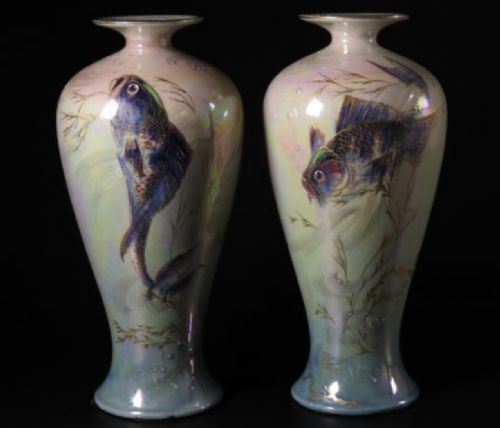


English Art Pottery Pair
An English art pottery pair brings balance to a room, offering matched ceramic forms from the nineteenth and early twentieth centuries.
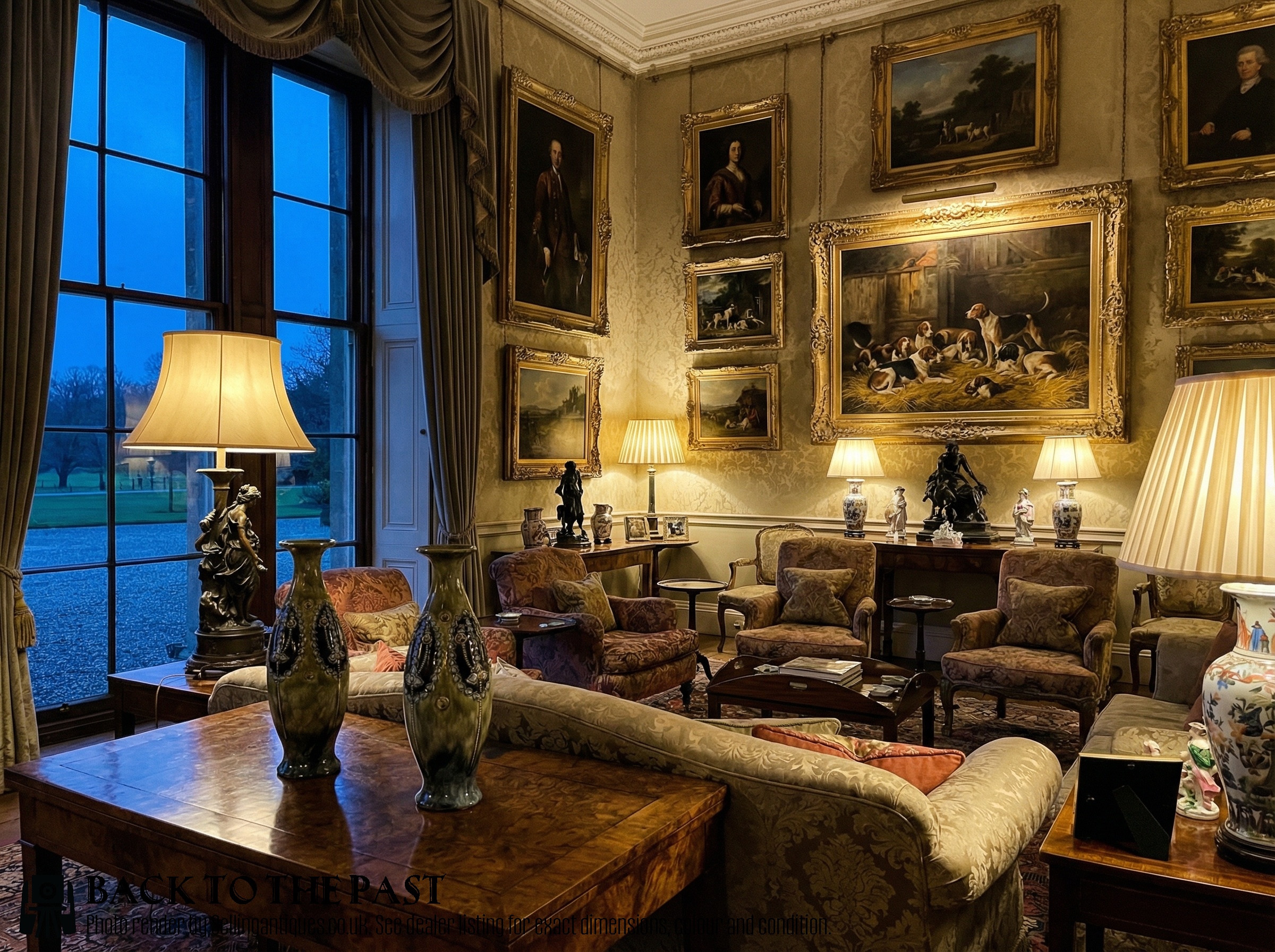
English Art Pottery Pair
When you search for an english art pottery pair, you are looking at matched sets of ceramic vessels, figures, and table wares produced across Victorian, Edwardian, and later twentieth-century periods. These groupings most commonly take the form of vases, candlesticks, and jardinieres designed to sit symmetrically on a mantelpiece or sideboard.
The selections on this page span several notable design movements, including Art Nouveau, Art Deco, Arts and Crafts, and Victorian Folk Art. You will encounter earthenware and stoneware pieces originating from major workshops and smaller factories alike, reflecting the shifting tastes in British ceramic design from eighteen-seventy onwards.
The most frequent examples you meet on this page are matched pairs of decorative vases and candlesticks from the early twentieth century and the Victorian era. These items demonstrate how pottery makers catered to the domestic desire for symmetry, often employing distinct glaze techniques to tie the two objects together.
Materials and Techniques
Potters shaped these vessels using earthenware and stoneware bodies, which provided the structural foundation for subsequent surface decoration. Once formed, the clay bodies received various treatments including lead glaze, enamel, and metallic lustre applications to achieve the desired surface finish.
Makers utilised specialised glaze chemistry to create deep colouration and textural contrast across the matched surfaces. Techniques such as transfer printing appeared on earlier domestic wares, while later studio and factory pieces relied on flowing coloured glazes and hand-painted motifs.
English Art Pottery Pair Retail Price Guide 2026
Typical asking prices for english art pottery pair among the pieces listed under this phrase on Sellingantiques today, from the lower quarter to the upper quarter. They describe what is for sale here now, not the wider market.
Listings feature ceramic objects spanning from the nineteenth century through the nineteen-thirties, utilising earthenware and stoneware.
Assessing Quality and Execution
Quality in an english art pottery pair rests on the precision of the form and the consistency of the glaze between the two companion pieces. Stronger examples show uniform firing results and deliberate, well-executed hand-painting or moulding that aligns closely across both items.
The reputation of the maker and the individuality of the design also dictate the standing of a pair within the broader ceramic field. Pieces bearing the mark of notable designers or distinct studio patterns command greater attention than standard commercial output.
Walter Slater·Royal Doulton·Ethel Beard·Doulton Lambeth·Poole Pottery·Pilkingtons Royal Lancastrian·Decoro England·Charlotte Rhead
The English Art Pottery Pair Glossary
- Earthenware
- A porous ceramic body fired at lower temperatures, requiring a glaze to render it waterproof. It serves as the primary base for many traditional British decorative wares.
- Stoneware
- A dense, vitreous ceramic fired at higher temperatures until the clay body vitrifies and holds liquids without a glaze. This material offers greater durability and weight.
- Lustre
- A type of ceramic glaze containing metallic elements that produce an iridescent, reflective surface sheen when fired in a reduced oxygen environment.
- Jardiniere
- A large ornamental pot or stand designed to hold a live plant or floral arrangement. These vessels frequently form part of a matched decorative interior scheme.
- Flat Back
- A ceramic figure style moulded with a finished front and a flat, unadorned reverse designed to sit flush against a wall or mantelpiece.
English Art Pottery Pair: Frequently Asked Questions
What defines an art pottery pair?
An art pottery pair consists of two matching ceramic vessels or figures created together as a symmetrical set by a potter or factory.
These pieces share identical forms, decorative motifs, and glaze treatments to display harmoniously in a domestic interior.
How were these ceramic pairs used?
Owners placed these items on mantelpieces, sideboards, and tables to create visual balance within a room.
Vases held floral displays, candlesticks provided illumination, and jardinieres housed indoor plants for decorative effect.
How do I care for antique pottery?
These ceramic objects require gentle dusting with a soft, dry cloth to prevent the accumulation of dirt on glazed surfaces.
Avoid using harsh chemical cleaners or submerging older earthenware in water, as moisture can penetrate through tiny crazing lines in the glaze.
Can I separate a matched pair?
Splitting a matched pair diminishes the historical and decorative integrity of the set, as they were conceived and produced together.
Keeping companion pieces united preserves their design intent and collective presence.