


Vintage Dappled Rocking Horse
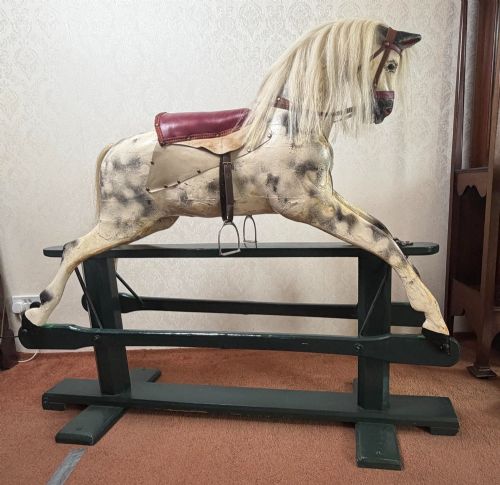
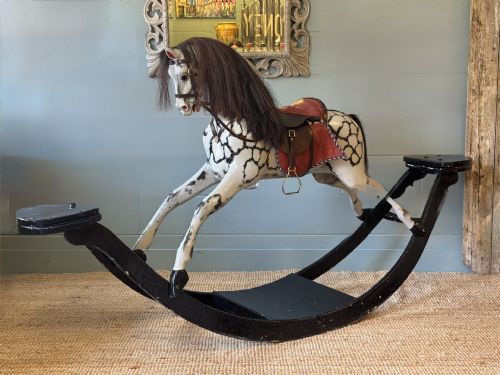
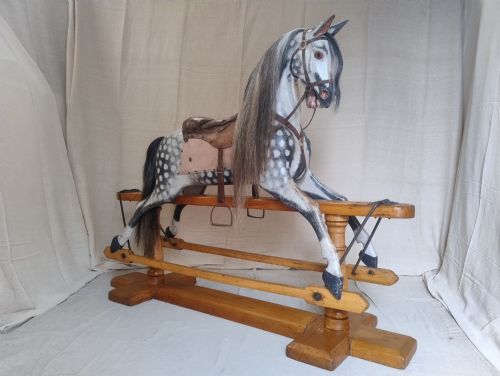
A vintage dappled rocking horse brings traditional nursery charm into a room, fashioned from carved wood and mounted on curved rocking stands.
Vintage Dappled Rocking Horse
The most common pieces on this page stem from the decades between eighteen eighty and nineteen forty, reflecting the golden age of British toy manufacturing. Makers such as G & J Lines, F.H. Ayres, and Collinsons dominate the larger formats, while unsigned folk art pieces appear frequently.
Most examples display the signature painted dappled coat over carved pine or timber, accompanied by leather tack and horsehair manes. They survive either mounted on safety stands or sitting directly upon their original curved wooden rockers.
Judging quality and originality
Quality rests heavily upon the survival of the original painted dappled surface rather than a later repaint. Master makers like Ayres and Lines achieved superior anatomical carving in the head and shoulders, distinguishing them from simpler vernacular workshop pieces.
The presence of original leather tack, horsehair manes, and glass eyes elevates an example significantly above those stripped or heavily restored over generations. Original curved rockers and maker stampings provide further distinction for the serious collector.
Many surviving horses retain their original glass eyes, which peer out with mild concern over generations of nursery adventures.
G & J Lines·F.H. Ayres·Collinson·Lines Bros
The Vintage Dappled Rocking Horse Glossary
- Dappled
- The traditional painted spot pattern mimicking a grey horse coat. This finish defines the classic nursery aesthetic.
- Bow rocker
- The curved wooden arc upon which older rocking horses mounted. It allows the toy to swing back and forth across the floor.
- Tack
- The harness, saddle, and reins fitted to the horse. These elements utilise genuine leather and metal hardware.
- Gesso
- A plaster mixture applied to the carved wooden base before painting. It provided a smooth ground for the dappled finish.
- Folk art
- Pieces created by regional makers or anonymous workshops without factory branding. They display individual character and vernacular construction methods.
Vintage Dappled Rocking Horse: Frequently Asked Questions
How do I date a rocking horse?
Dating relies on stylistic shifts in the carving of the head, the shape of the body, and the construction of the stand. Victorian examples often feature deeper carving and separate wooden ears, whereas interwar models show smoother profiles.
Maker stamps on the wooden frames or metal brackets offer the most definitive dating evidence. Comparing the nail types and paint layers also helps narrow down the decade of manufacture.
Are these horses safe for children?
While many antique rocking horses were built robustly for play, vintage pieces are generally treated as decorative objects or collectibles today. The older leather tack and original wooden rockers may not meet modern safety standards.
Supervision is essential if younger children use them, particularly larger examples mounted on traditional curved rockers that can travel across a room during vigorous motion.
How should I clean the painted surface?
Dust the horse gently with a dry, soft microfiber cloth to remove everyday particle buildup. Avoid using water, solvent cleaners, or modern household sprays, which can lift the aged gesso and historic paint layers.
Professional conservators should handle any deeper cleaning or consolidation of flaking paint to preserve the original dappled finish.
What is the difference between bow rockers and safety stands?
Bow rockers consist of two curved wooden strips placed directly on the floor, allowing the horse to rock in a sliding motion. Safety stands use an iron swing-arm mechanism that keeps the horse's base stationary while the animal moves.
Safety stands were introduced later to prevent the horse from tipping over or moving across the nursery floor during use.