



Vintage Dapple Grey Toy
These vintage dapple grey toy pieces bring classic playroom charm into modern interiors, offering authentic historical character through traditional craftsmanship.
Vintage Dapple Grey Toy
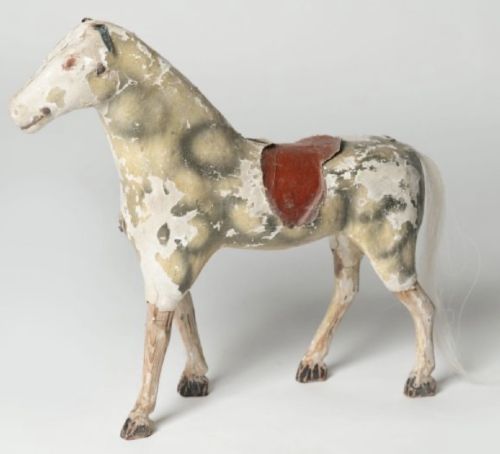
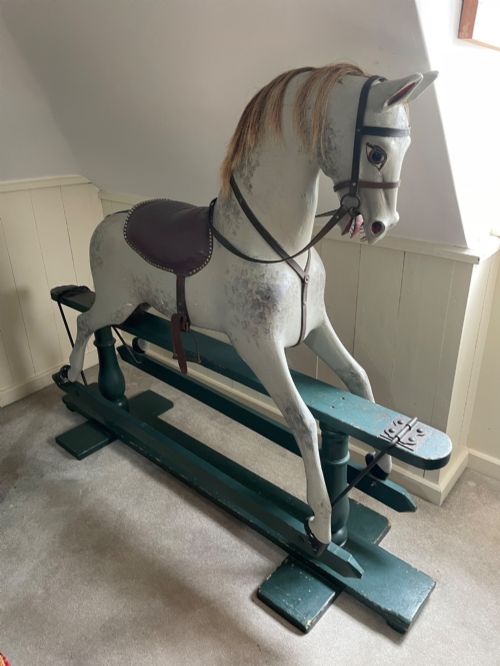
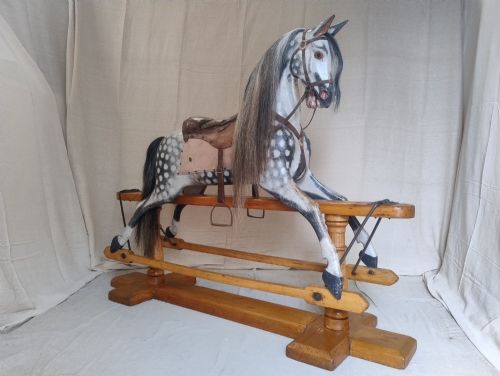
When you search for a vintage dapple grey toy, you encounter substantial carved wooden rocking horses originating from periods spanning the Victorian era through the mid-twentieth century. These items were built as nursery playthings or decorative objects, adopting substantial forms that demand floor space.
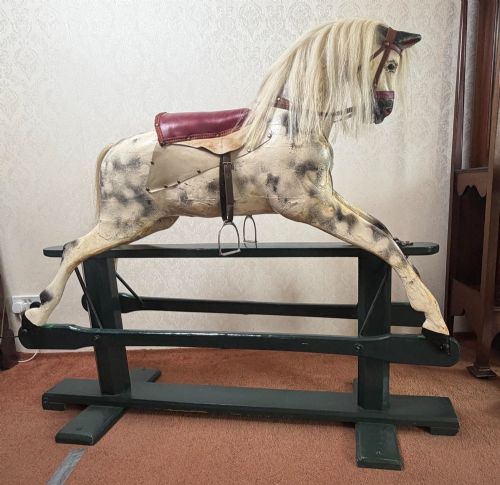
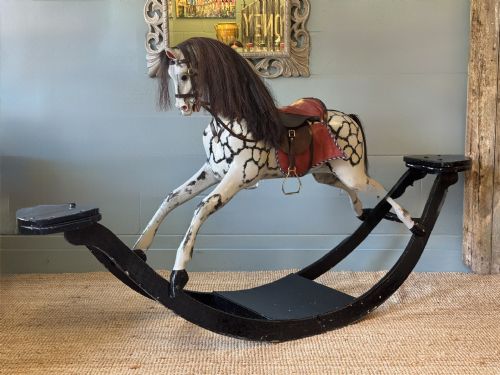
The pieces listed on this page predominantly take the form of rocking horses mounted on original wooden rockers or safety stands. Makers constructed these items using carved wood and pine, applying dapple grey paint schemes that define the classic visual appeal.
How they were made
Craftsmen built these toys using carved wood and pine carcasses, shaping the bodies and heads by hand before applying layers of paint. Metal and iron components reinforce the mechanical rocking actions and secure the structural joints.
Makers finished the horses with genuine horsehair manes and tails, complemented by leather tack such as saddles and bridles. Steel parts and paint complete the traditional fabrication methods recorded across the eras.
Vintage Dapple Grey Toy Retail Price Guide 2026
Typical asking prices for vintage dapple grey toy among the pieces listed under this phrase on Sellingantiques today, from the lower quarter to the upper quarter. They describe what is for sale here now, not the wider market.
Many of these sturdy wooden steeds outlived several generations of enthusiastic children without losing their balance.
What varies in quality
Quality depends upon the depth of the carving and the original maker's workshop execution, distinguishing standard production items from masterworks. Proportions and anatomical definition separate simpler folk art interpretations from sophisticated commercial models.
The preservation of original surface paintwork and traditional tack influences the character of each piece. Retaining genuine horsehair and authentic wooden rockers maintains the integrity of the object.
G & J Lines of London·F.H.Ayres·Collinson·Lines Bros Sportiboy
The Vintage Dapple Grey Toy Glossary
- Rocking horse
- A toy horse mounted on curved wooden rockers or a swing frame designed for children to ride. These objects serve as traditional nursery furnishings and decorative sculptures.
- Pine
- A softwood utilised extensively for constructing the bodies and frames of nineteenth and twentieth-century toys. Carvers valued this material for its workability.
- Horsehair
- Natural hair harvested from the mane and tail of equines, used traditionally for stuffing and for creating realistic manes and tails on toy horses.
- Leather
- Animal hide treated for durability, utilised on these toys for saddles, bridles, and harnesses. It provides authentic tactical detail to the finished piece.
Vintage Dapple Grey Toy: Frequently Asked Questions
How old are these rocking horses?
The pieces span from the late Victorian period through the mid-twentieth century, encompassing dates from the eighteen-eighties to nineteen-forty.
Individual pieces display construction traits and maker marks characteristic of their specific decade of manufacture.
What materials make up the toys?
Construction relies primarily on carved wood and pine to form the animal bodies and supporting rocker bases.
Makers incorporated metal, iron, and steel for structural reinforcement alongside horsehair and leather for the final details.
Are these toys safe for children?
These items function primarily as historical decorative objects, antiques, and collector display pieces rather than modern nursery toys.
Their heavy wooden construction and age require careful placement in contemporary homes.
How do I identify the maker?
Makers marked their rocking horses using painted signatures, metal plaques, or distinct structural characteristics native to specific workshops.
Comparing carving styles and rocker designs helps attribute pieces to known makers like Lines or Ayres.