


Vintage Carved Toy Horse
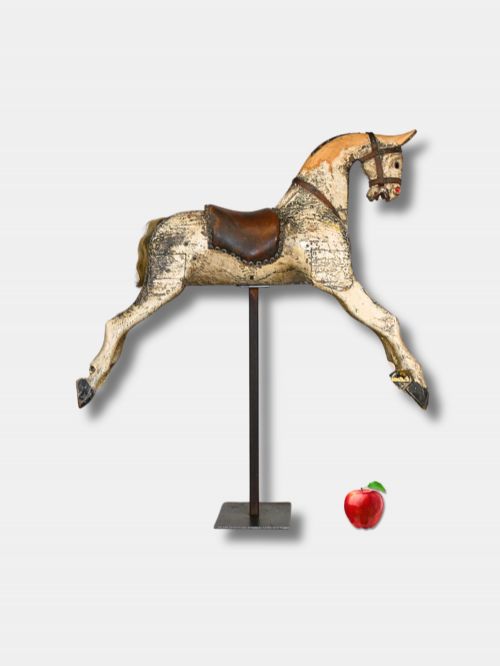
These vintage carved toy horse examples unite nineteenth-century craftsmanship with folk art charm, offering tactile playthings that double as striking sculptural objects for the home.
Vintage Carved Toy Horse
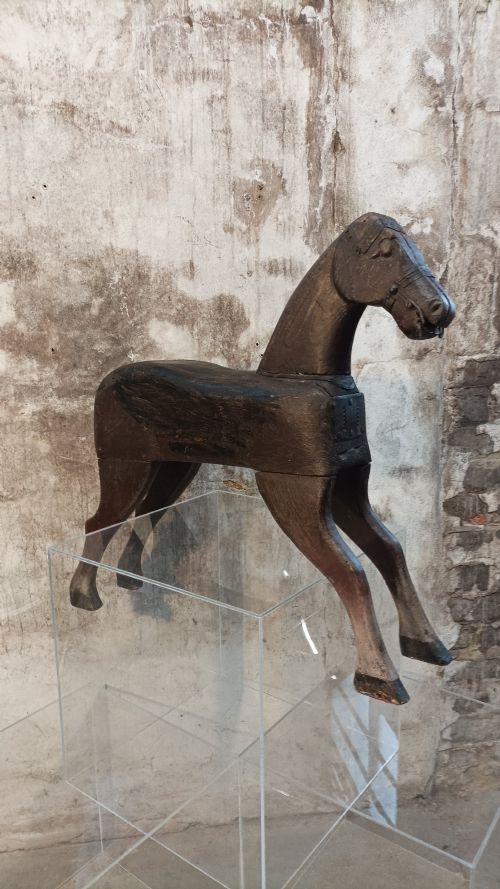
A vintage carved toy horse encompasses antique rocking horses, ride-on toys, and naive wooden sculptures created across the nineteenth and early twentieth centuries. These objects reflect both domestic children's play and vernacular folk art traditions originating from Britain, America, France, and Spain.
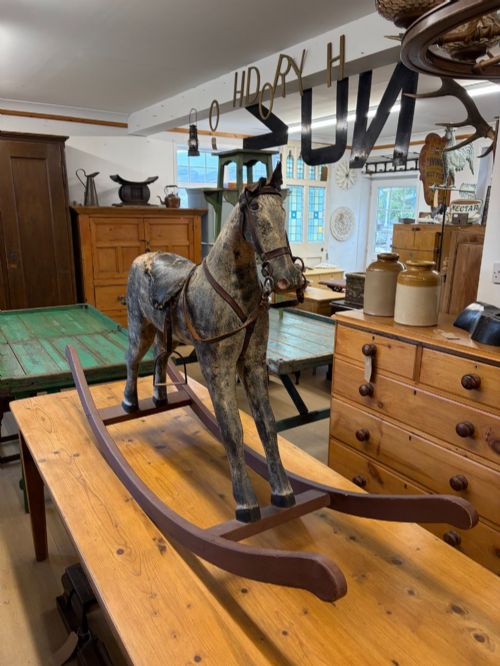
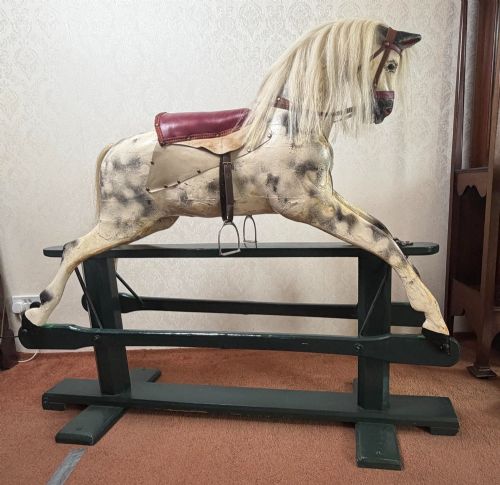
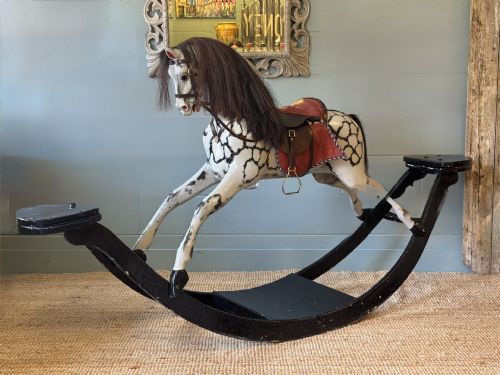
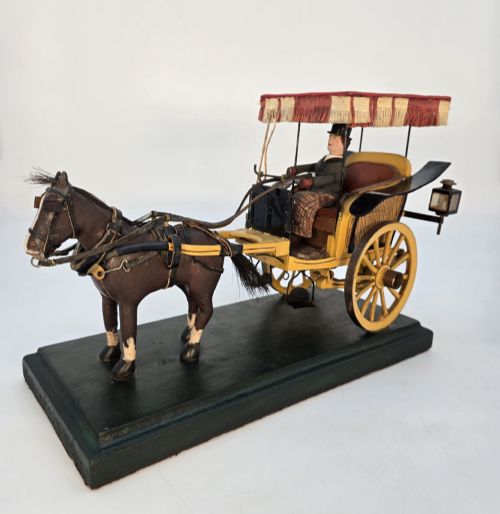
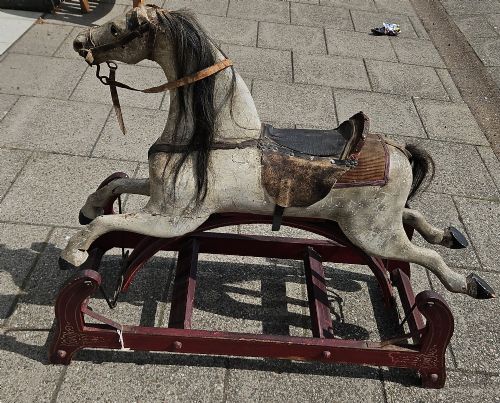
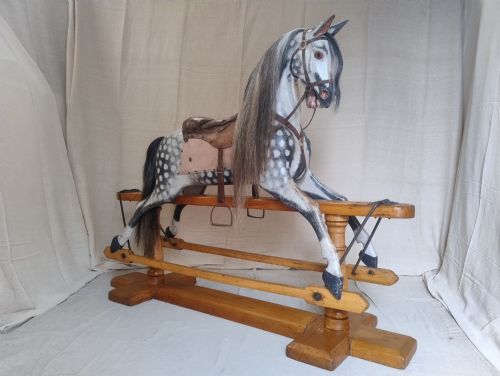
The version most likely to meet a buyer on this page is the traditional wooden rocking horse mounted on safety stands or curved wooden rockers. These range from substantial pine and carved wood models to smaller decorative sculptures and scratch-built models.
Makers and regional styles shape the selection, spanning simple primitive forms in original paint alongside robust workshop productions. Each piece captures a distinct period of toy-making history, from the Victorian era through the interwar period.
How they were made
Makers fashioned these figures primarily from carved wood and pine, often structuring large rocking horses around robust internal iron frameworks to support movement. Artisans shaped bodies from solid blocks or laminated planks before applying surface treatments.
Finishes relied on traditional paint layers, sometimes leaving exposed carved wood or retaining original dapple patterns. Details frequently incorporated leather tack, horsehair manes and tails, and metal fixings to complete the illusion of a real animal.
What varies in quality
The survival of original paint surfaces and early tack largely defines the upper tier of these pieces. Objects retaining their untouched period finishes command greater interest than those stripped or heavily restored in later decades.
G and J Lines·F H Ayres·Collinson·Lines Bros
The Vintage Carved Toy Horse Glossary
- Rocking horse
- A toy horse mounted on bow-shaped rockers or a swinging safety stand designed for children to ride. These toys were central to nineteenth-century nurseries.
- Folk art
- Artistic work created within a traditional culture by self-taught makers, often displaying naive proportions and regional materials. These pieces prioritize expressive character over academic precision.
- Original paint
- The initial decorative coating applied to an object, preserved without later overpainting. Collectors prize this surface layer for revealing authentic period colours and wear.
- Dappled
- A spotted or mottled coat pattern painted onto horses to mimic specific grey horse markings. Makers executed these spots by hand using specialised brushing techniques.
- Ride-on toy
- A wheeled or mechanical plaything designed to support a child's weight during movement. Examples include chain-driven tricycles shaped like animals.
Vintage Carved Toy Horse: Frequently Asked Questions
How do I date a wooden rocking horse?
Dating relies on construction methods, ironwork types, and paint layers visible across the body. Earlier nineteenth-century examples often feature simpler pine construction and hand-forged metal components.
Later Victorian and Edwardian pieces from established makers introduce sophisticated safety stands and refined tack. Comparing these structural markers against known workshop timelines clarifies the era.
Are these horses safe for children?
Most antique toy horses function primarily as decorative objects or sculptural display pieces rather than modern playthings. Their historic construction and aged materials may not meet contemporary safety standards.
Buyers generally acquire them for interior styling and historical appreciation rather than active nursery use.
How should I clean original paint?
Preserving historic surfaces requires minimal intervention using dry cloths or very soft brushes to remove surface dust. Moisture and chemical cleaners risk lifting fragile nineteenth-century paint layers and patination.
Consulting a specialist restorer ensures proper care for delicate leather and horsehair elements.