

Vintage Cutlery
Vintage cutlery spans centuries of dining refinement, offering everything from canteens housed in mahogany cabinets to individual silver spoons designed for fruit, grapefruit, and coffee.
Vintage Cutlery
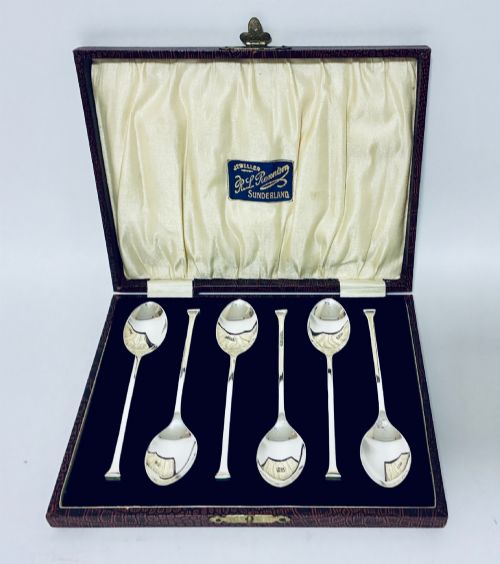
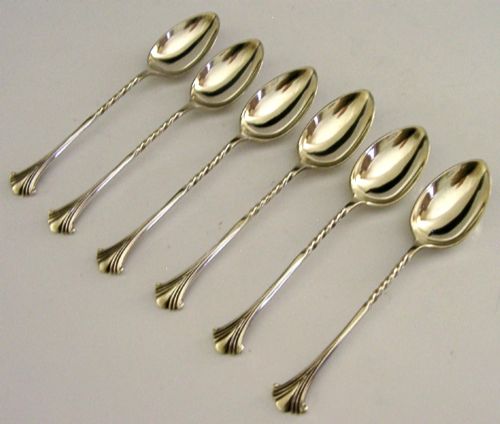
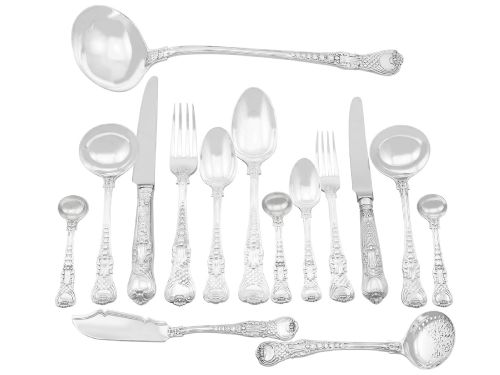
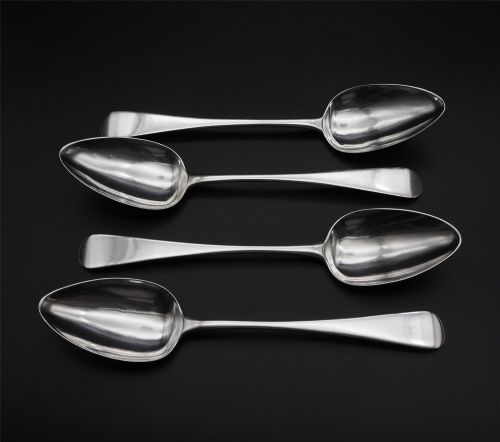
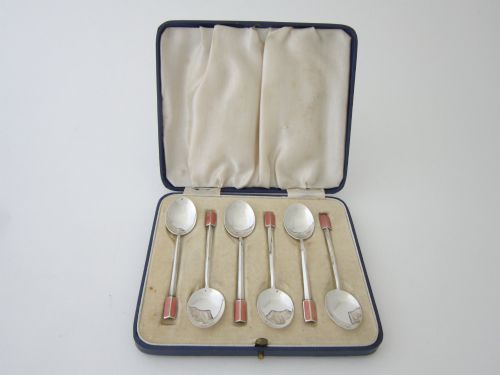
Vintage cutlery encompasses a broad range of dining implements and serving utensils, from complete canteens for thirty persons down to matched sets of six coffee or apostle spoons. Pieces span the nineteenth century through the Georgian, Victorian, Edwardian, and Art Deco periods, reaching into the mid-twentieth century.
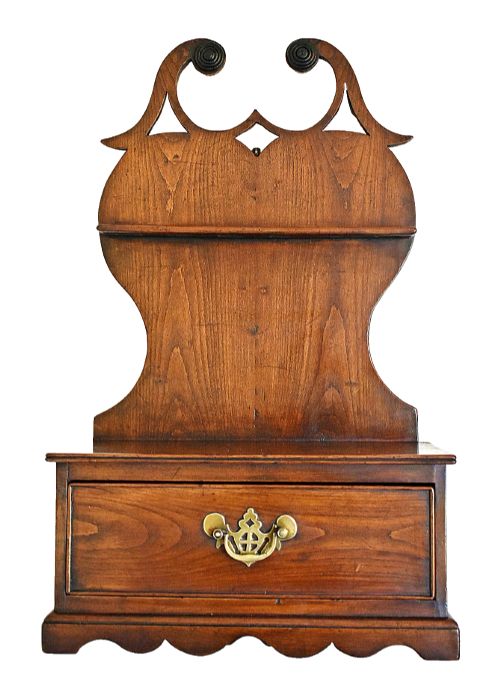
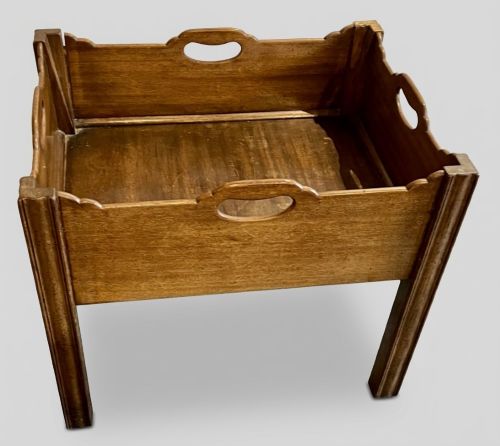
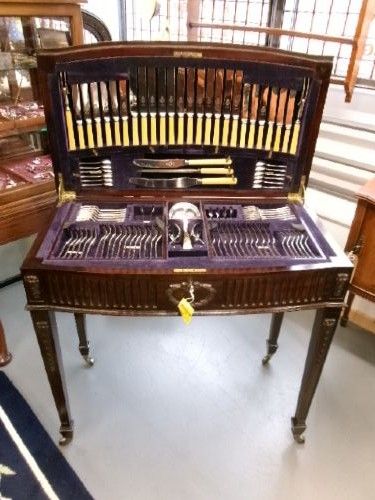
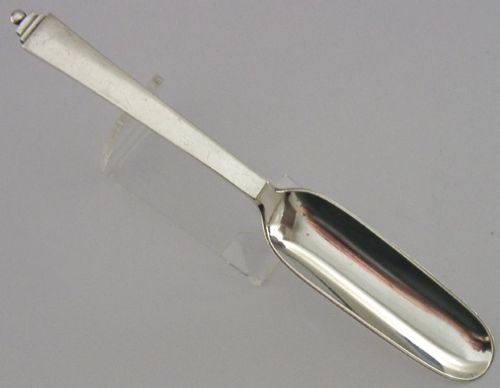
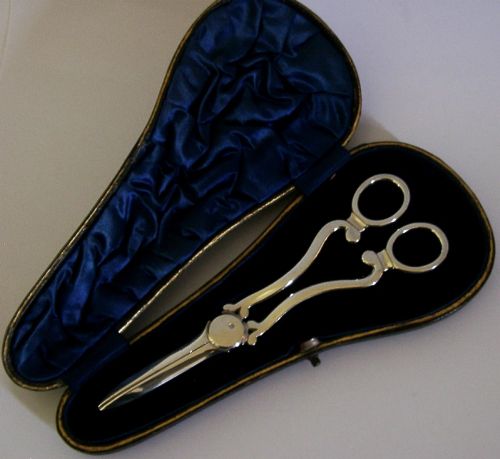
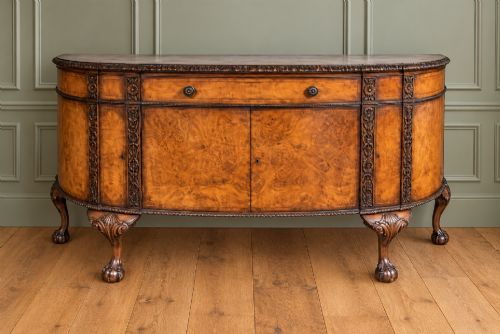
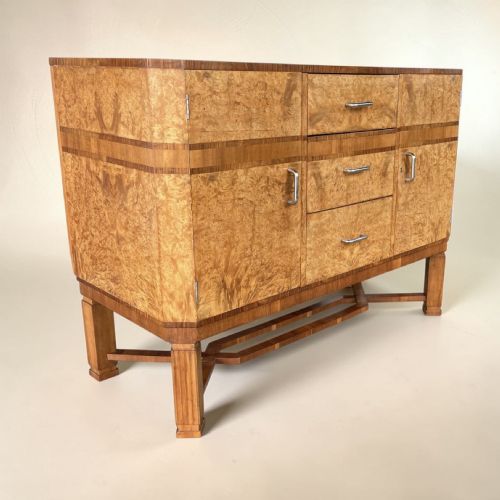
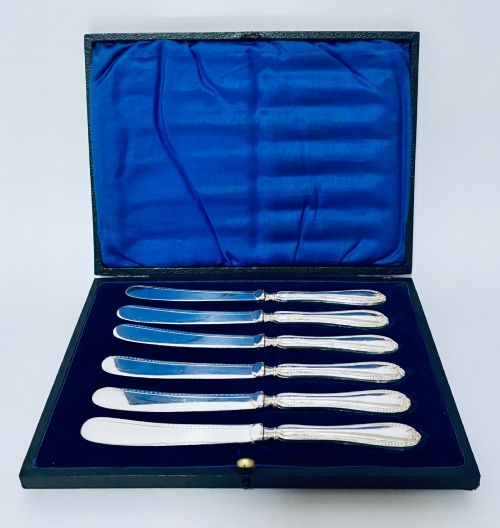
The most common forms met on this page include canteens, dessert sets, butter knives, knife rests, and specialised serving items such as grape shears, lobster picks, and asparagus tongs. Many of these items survive alongside their original fitted boxes, cabinets, or trays made from mahogany and burr walnut.
Origins stretch across English, Scottish, Welsh, Ottoman Turkish, Dutch, and Egyptian Revival workshops. Buyers encounter solid sterling silver, silver-gilt, and silver plate, frequently paired with organic handles like mother-of-pearl, agate, antler horn, and velvet-lined presentation cases.
Distinctions in quality
Quality rests upon the weight and gauge of the metal utilised in the construction of each utensil, alongside the crispness of chased details, crests, and figural work. Substantial weight in silver components and tight, uncompromised joints in handles separate standard production from superior output.
The integrity of fitted storage cases and cabinetry heavily influences overall standard. Canteens and boxes retaining intact velvet linings, working locks, and original fitted interiors reflect a higher tier of preservation compared to loose or later-associated pieces.
Materials paired with metalwork include mother-of-pearl, agate, antler horn, velvet, satin, and mahogany.
Georg Jensen·Deakin and Francis·Garrard·Hamilton and Inches·Connell
The Vintage Cutlery Glossary
- Sterling silver
- A silver alloy containing 92.5 percent pure silver by mass, standard for British dining silver. It carries hallmark stamps indicating assay office and date.
- Silver-gilt
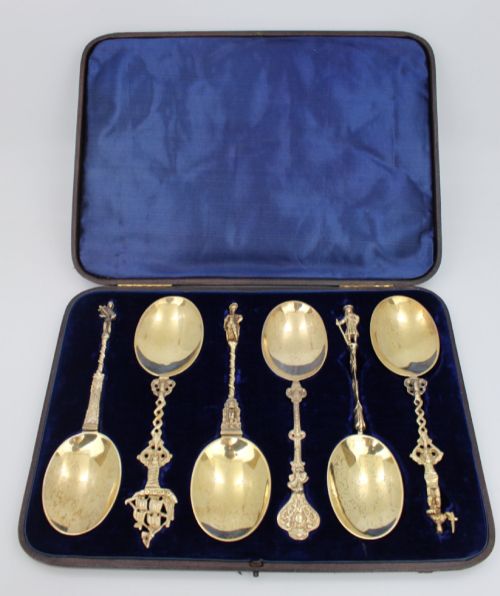
- Sterling silver that has been coated with a thin layer of gold on its surface, often seen on apostle and decorative spoons. This technique provides a rich two-tone appearance.
- Knife rests
- Small horizontal supports designed to keep carving or table knives elevated above the tablecloth between courses. They appear in matching pairs and diverse metals.
- Grape shears
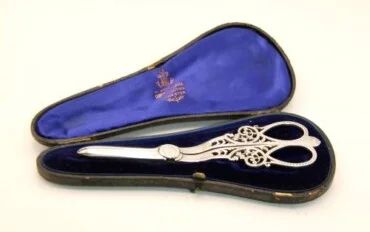
- Specialised curved scissors utilised for snipping individual grapes from the cluster at the dining table. They frequently feature ornate chased handles or figural designs.
- Canteen
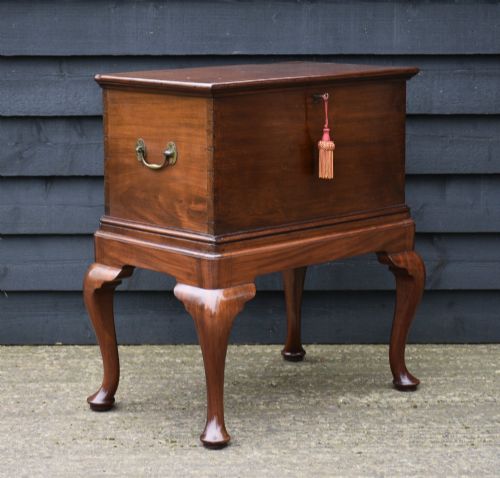
- A fitted box, chest, or cabinet designed specifically to store a complete matched service of cutlery. Interiors contain tailored slots and velvet linings for every individual piece.
Vintage Cutlery: Frequently Asked Questions
What is included in a vintage cutlery set?
Sets vary widely depending on their intended use, ranging from simple groupings of six coffee or fruit spoons to extensive canteens equipped for thirty persons.
Buyers also encounter specialised serving pieces such as asparagus tongs, lobster picks, butter knives, and grape shears designed for specific dining rituals.
How do I identify the period of silver cutlery?
British silver typically carries hallmarks stamped directly into the metal, denoting the assay office, standard, and a specific date letter corresponding to the year of manufacture.
Stylistic cues such as Edwardian restraint, Victorian elaboration, or geometric Art Deco lines further help place items within their historical era.
Are storage cabinets original to the cutlery?
Many canteens and sets remain housed in their original fitted mahogany or burr walnut cabinets, retaining period brass hardware and tailored interior slots.
Some collections are assembled over time and paired with later storage boxes or trays that match the general period of the utensils.
How should I care for silver cutlery?
Regular, gentle use prevents tarnish accumulation, as the natural oils from handling help maintain the surface finish of sterling silver.
When not in use, storing pieces in lined wooden cabinets or antitarnish rolls protects delicate organic handles like mother-of-pearl and agate from damage.