


Vintage Cut Glass Pots
These vintage cut glass pots combine heavy facets with precious metal mounts, serving dressing tables, desks, and dining rooms alike.
Vintage Cut Glass Pots
Vintage cut glass pots encompass a varied group of functional containers spanning the Georgian, Victorian, Edwardian, and Art Deco periods. Buyers seeking vintage cut glass pots encounter utilitarian items ranging from desktop inkwells and match strikers to dressing table jars and dining cruet sets.
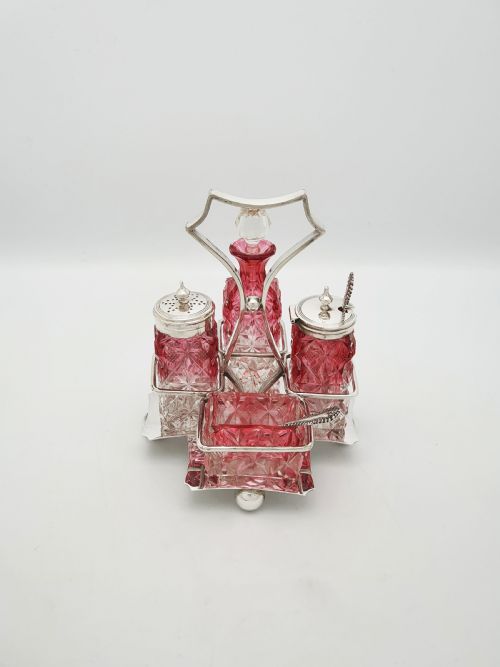
The assortment on this page draws heavily from Edwardian and Art Deco aesthetics, featuring vessels designed for daily personal or domestic use. Forms include lidded butter dishes, preserve jars, trinket boxes, and condiment sets housed in silver plate or sterling silver mounts.
Origins stretch from nineteenth-century Georgian and Victorian works to mid-century pieces, reflecting shifts in interior decoration and social dining habits. These containers frequently integrate decorative elements such as coloured enamel lids or brass frames alongside traditional transparent crystal.
How they were made
Manufacturing these vessels relied on heavy glass-cutting techniques, where wheel-cut facets were ground and polished into lead crystal or standard glass blanks to catch the light. This structural glass body provided the necessary weight and durability for desktop inkwells and dressing table jars.
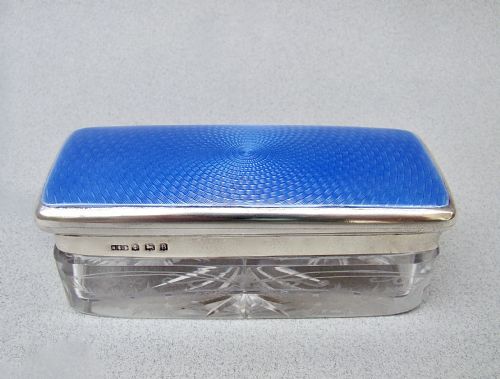
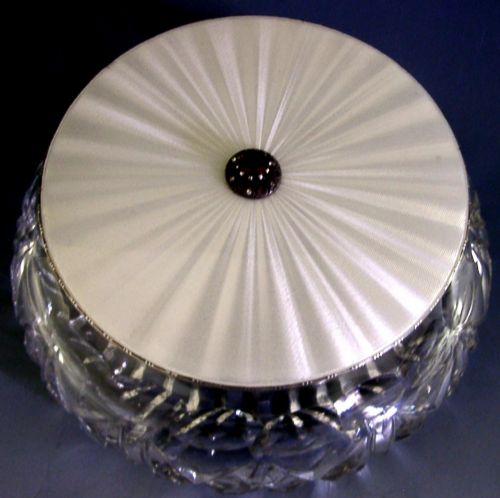
Craftsmen fitted the glass bodies with metal mounts, using sterling silver or silver plate to secure rims, collars, and hinged lids. Many Edwardian and Art Deco examples incorporate guilloche enamel or coloured glass overlays to accent the metalwork.
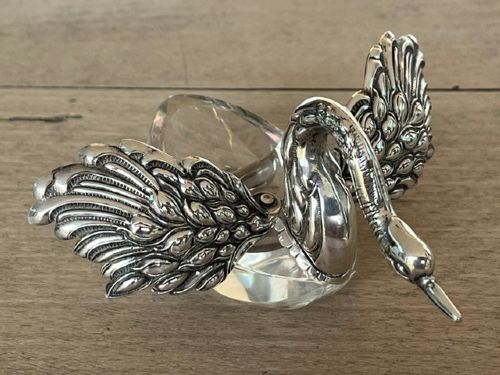
Specialised items required fitted components, such as movable silver wings on salt cellars or star-cut bases on condiment jars, demonstrating precise metal-to-glass assembly.
Materials documented across the inventory include cut glass, lead crystal, sterling silver, silver plate, brass, and enamel.
What varies in quality
Quality rests upon the depth and crispness of the glass cutting, where sharp, clean facets indicate superior workmanship compared to soft, rounded edges. The weight and clarity of the crystal or glass blank also distinguish finer items from simpler production pieces.
The standard of the metal mount influences the overall calibre of the piece, with hallmarked sterling silver and intricate guilloche enamel work representing a higher tier than basic silver plate. Maker attribution further elevates the standing of specific dressing jars and inkwells.
Proportion and structural integrity dictate the distinction between standard domestic wares and exceptional examples, particularly in multi-piece cruet sets or novelty animal forms.
Henry Clifford Davis·Asprey & Co.·Tiffany & Co.
The Vintage Cut Glass Pots Glossary
- Guilloche enamel
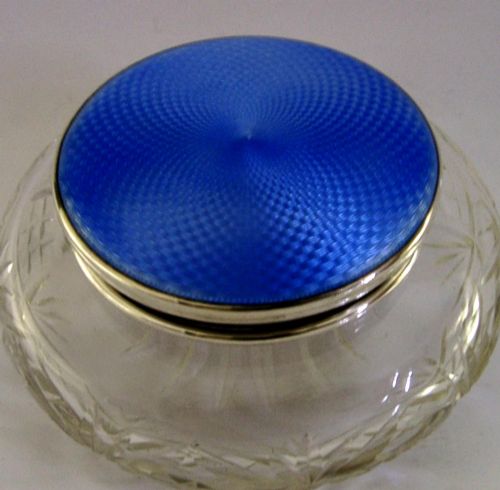
- Enamel decorated with intricate engine-turned geometric patterns beneath a translucent coloured layer. This technique appears frequently on Art Deco dressing table jar lids.
- Cruet set
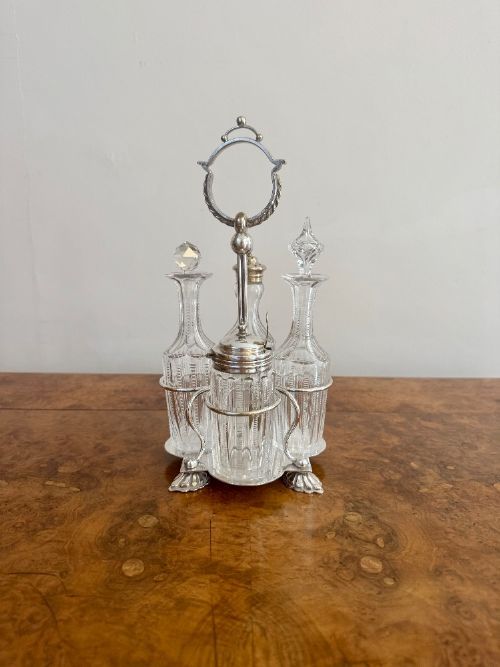
- A matched collection of condiment bottles or jars held in a shared frame or stand. These sets typically hold vinegar, oil, mustard, and salt for the dining table.
- Match striker
- A textured glass container designed for igniting safety matches against its abrasive surface. Victorian and Edwardian examples often feature sterling silver collars.
- Lead crystal
- Glass containing a high proportion of lead oxide, which increases brilliance and weight. This material allows for deeper, sharper facet cutting.
- Overlay
- A layer of coloured glass fused over a clear glass base before being cut through to reveal the contrast. Amethyst and blue overlay glass feature in several Art Deco rouge pots.
Vintage Cut Glass Pots: Frequently Asked Questions
How do I date a cut glass jar?
Dating relies heavily on hallmarks stamped onto the silver mounts, which indicate the assay office and year of production. Stylistic markers, such as geometric Art Deco enamelling or ornate Edwardian floral chased silver, also help narrow down the decade.
Unmarked pieces require examination of the glass-cutting style, manufacturing technique, and overall form to place them within Georgian, Victorian, or mid-century periods.
What were dressing table jars used for?
Dressing table jars held powders, creams, pins, and trinkets used in daily personal grooming routines. Lidded pots kept cosmetics protected from dust while displayed on vanity surfaces.
Many incorporate decorative enamel or coloured glass tops to match other accessories on a Victorian or Edwardian vanity tray.
Are silver-mounted glass pots fragile?
The thick lead crystal or cut glass bodies are remarkably robust due to their heavy walls and deep facets. However, the silver mounts and hinged lids require gentle handling to avoid loosening from the glass.
Cleaning should involve warm soapy water, avoiding harsh abrasives that could scratch the enamel or damage the silver plating.
What is the difference between cut glass and crystal?
True crystal contains lead oxide, which adds substantial weight and allows the glass to refract light with greater brilliance. Cut glass generally refers to soda-lime glass that has been wheel-cut, lacking the specific lead content of crystal.
Both materials were utilised across different periods for decorative tableware and vanity items.