

Vintage Curved Armchairs
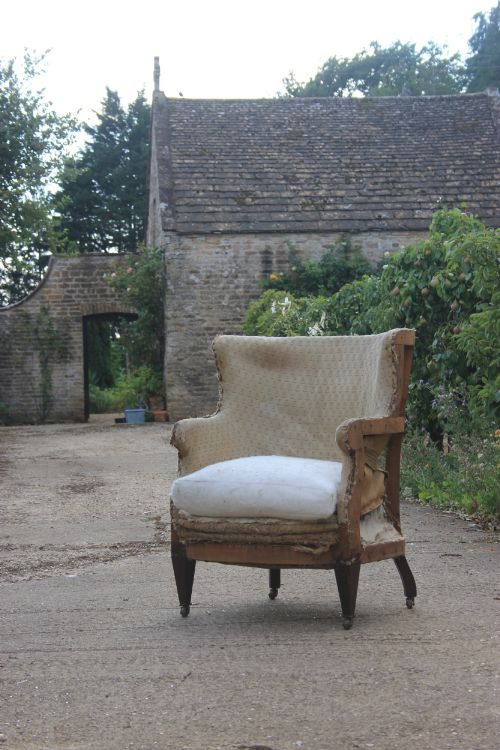
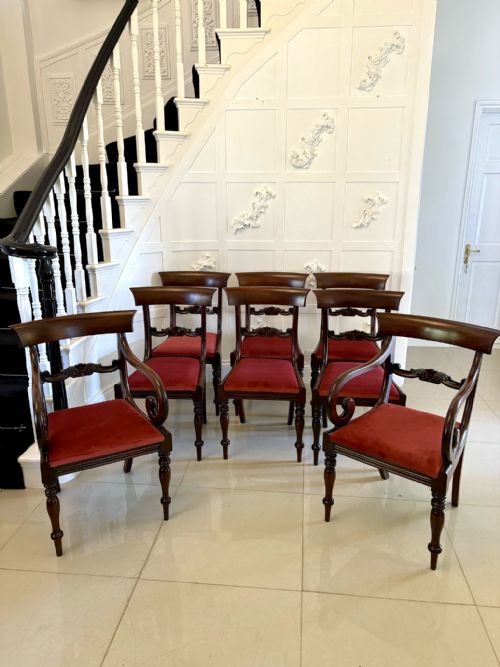
Vintage curved armchairs encompass seating with sweeping lines, ranging from Art Deco club chairs to Victorian tub designs.
Vintage Curved Armchairs
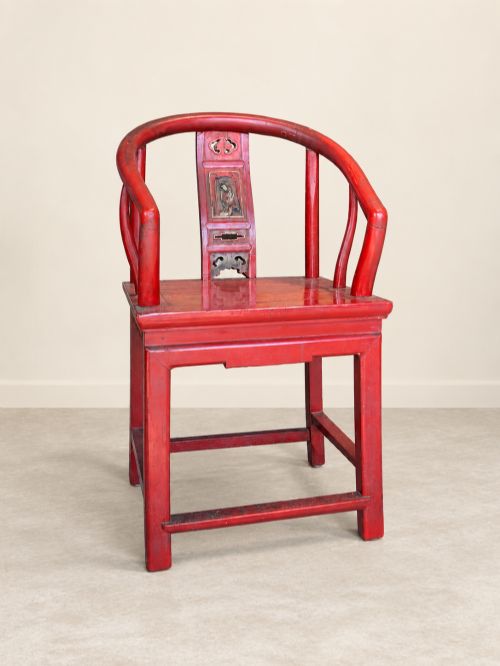
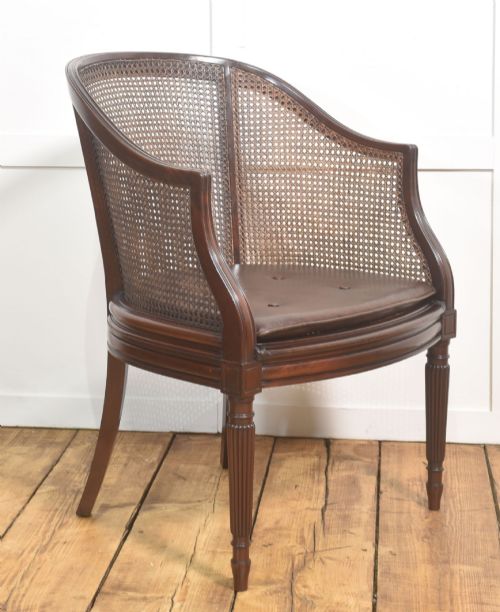
When searching for vintage curved armchairs, buyers encounter seating designed with rounded backs, enveloping forms, and sweeping armrests. The selection spans distinct eras, including Victorian, Edwardian, and Art Deco periods, each contributing specific shapes from barrel backs to deep club chairs.
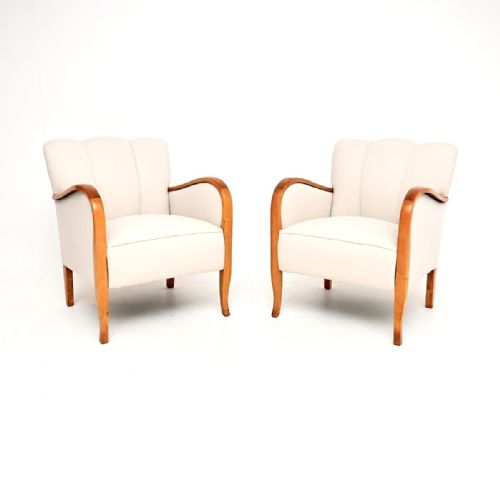
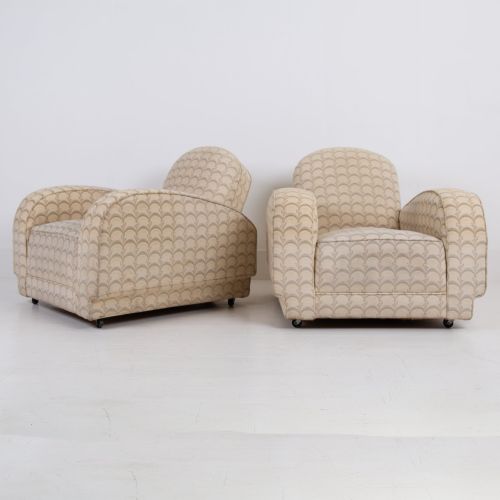
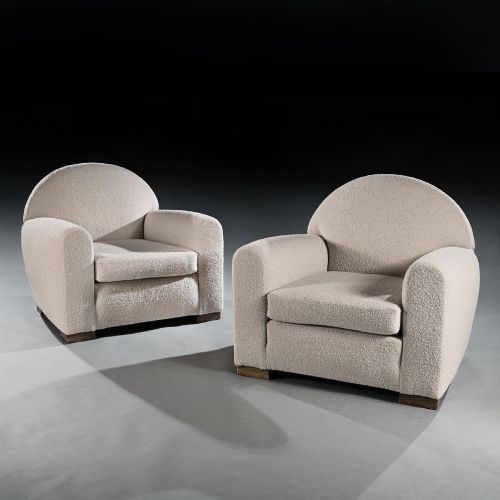
The version most commonly met on this page is the Art Deco armchair from the 1930s, often appearing in pairs alongside desk chairs and swivel models from the early 20th century. These pieces combine structural woodwork with upholstered comfort, utilising frames that emphasise the curved silhouette.
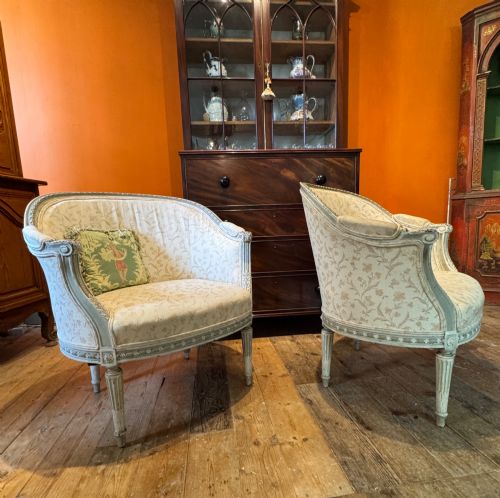
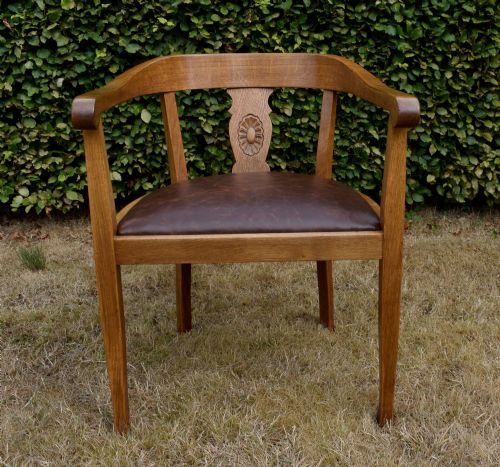
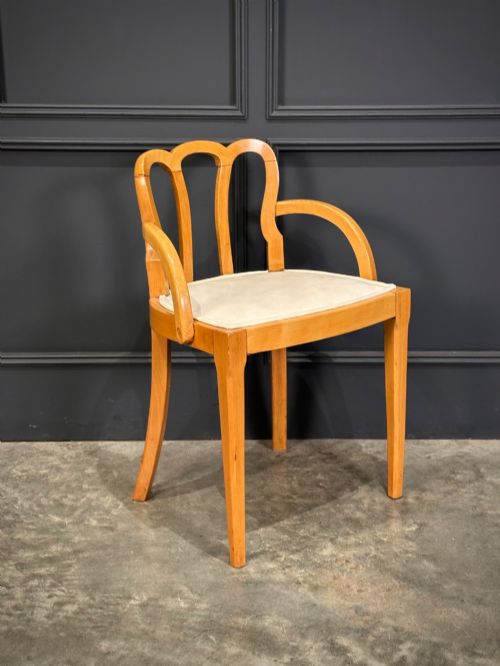
Originating from diverse European and domestic workshops, these chairs include French bergere styles, Swedish satin birch designs, and English oak desk seating. The forms serve both functional seating roles and decorative functions within residential spaces.
Materials and construction techniques
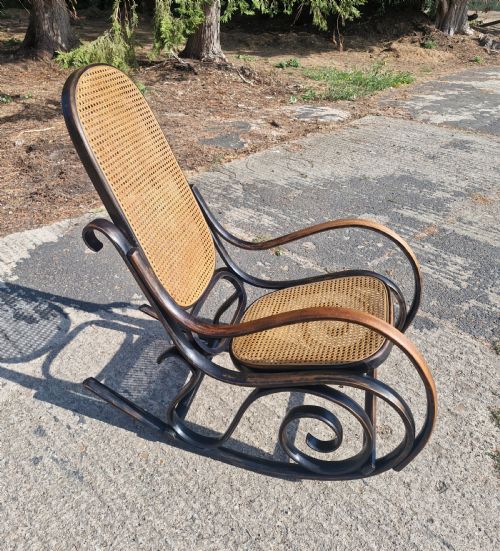
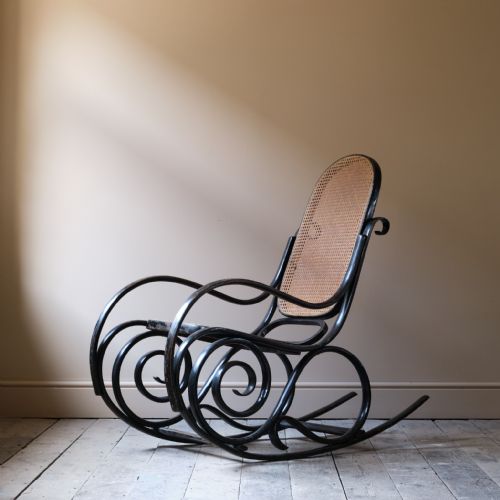
Makers utilised solid timbers such as mahogany, oak, walnut, beech, elm, and satin birch to build the structural frames of vintage curved armchairs. Bending techniques were applied to woods like beech and elm, creating smooth, continuous arcs for bentwood rocking chairs and carvers.
Upholstery forms a primary component of these pieces, incorporating leather, fabric, cane panels, and rattan webbing supported by internal padding. Brass fittings, swivel mechanisms, and inlaid satinwood details frequently appear as finishing elements on desk chairs and occasional seating.
Listings span from 1800 to the mid-20th century, encompassing mahogany, leather, oak, and fabric materials across diverse global styles.
Factors that separate top examples
Quality in vintage curved armchairs rests upon the integrity of the timber frame and the precision of the joinery shaping the curves. Chairs retaining original painted finishes, specific maker attributions, or high-grade materials like satin birch and birds eye maple represent the upper tier.
The refinement of the upholstery work and the retention of period-correct materials determine the overall execution. Pieces that preserve their balanced proportions and harmonious lines without heavy structural alterations command greater appreciation from collectors.
Hille·Heals·Harry and Lou Epstein
The Vintage Curved Armchairs Glossary
- Tub armchair
- A fully upholstered chair with a continuous curved back and arms forming a low, enclosed basin.
- Bergere
- A closed-arm French armchair featuring an exposed wooden frame and cane or upholstered side panels.
- Bentwood
- Wood softened by steam and bent into curved shapes, commonly utilised in chairs from the 19th and 20th centuries.
- Captain's desk chair
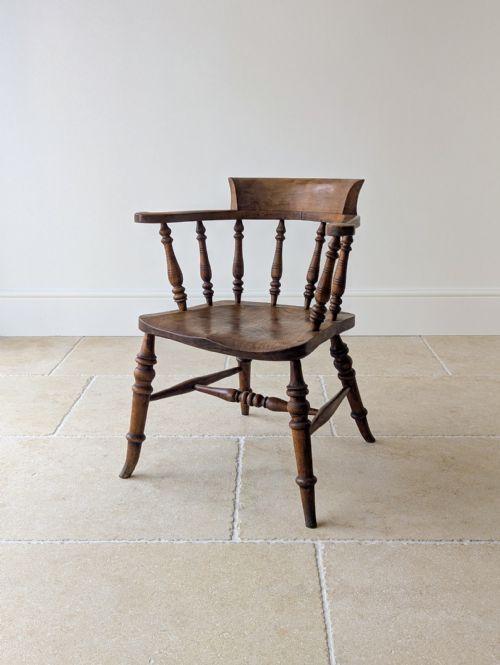
- A sturdy wooden swivel or fixed armchair with a rounded spindle back, designed for office use.
- Smokers bow
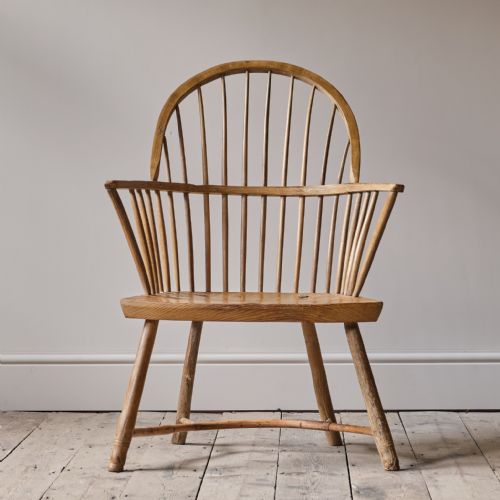
- A low-backed wooden armchair featuring a rounded continuous arm rail supported by turned spindles.
Vintage Curved Armchairs: Frequently Asked Questions
How do Art Deco armchairs differ from Victorian ones?
Art Deco armchairs from the 1930s emphasise streamlined curves, smooth wood veneers like satin birch, and geometric simplicity.
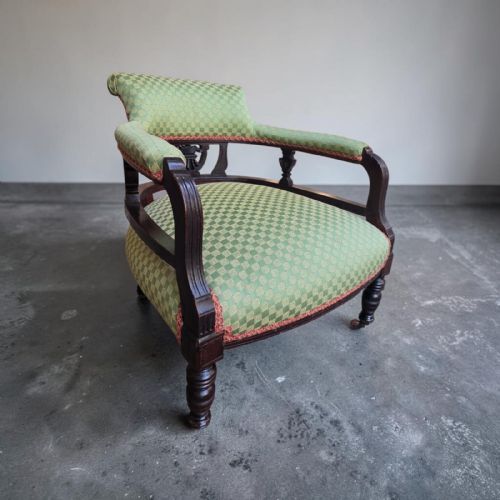
Victorian and late 19th-century variants tend to display turned wooden elements, buttoned upholstery, and traditional timber frames.
Were swivel chairs made in the nineteenth century?
Yes, office and desk chairs with swivel mechanisms appear in late 19th-century and early 20th-century designs using solid walnut and oak.
These functional pieces combined mechanical mobility with traditional carver frames.
How should I care for leather tub chairs?
Leather tub chairs require regular dusting and occasional conditioning to maintain the suppleness of the hide.
Positioning them away from direct heat sources prevents the leather and internal wooden frames from drying out.