



Satinwood Tub Chairs
Satinwood tub chairs combine light timbers and curved backs to bring elegance and comfort to any room.
Satinwood Tub Chairs
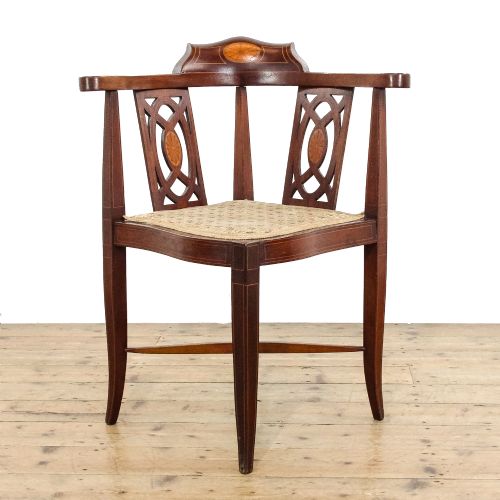
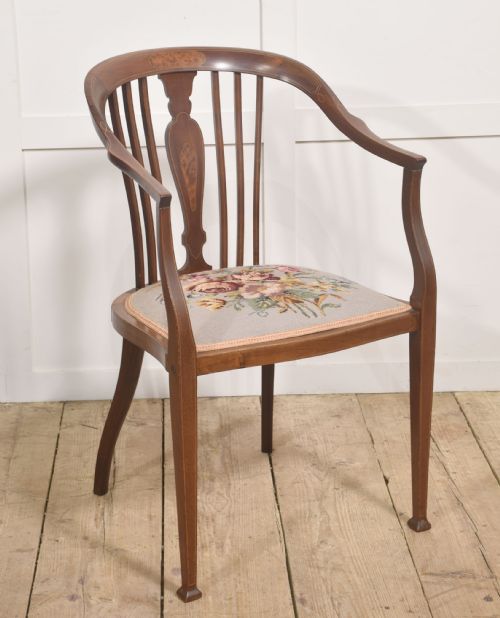
When you search for satinwood tub chairs, you encounter seating built during the Edwardian period, the Victorian era, and the nineteen thirties. These items take the form of armchairs, occasional chairs, desk chairs, and corner chairs.
Most examples you meet on this page hail from the Edwardian period and feature mahogany structures enhanced with satinwood elements, alongside pieces displaying Chinoiserie decoration or Art Deco design.
Makers such as Hille contributed to this selection, alongside anonymous cabinet makers working in mahogany, timber, and veneered wood.
How they were made
Craftsmen built these frames using mahogany, satinwood, and general timber, applying veneers where patterned grain was desired. They embellished surfaces with boxwood inlay to create contrasting borders and decorative motifs.
Workers upholstered the seats and backs using fabric, leather, and needlepoint tapestry, securing cushions within the curved frames of the armchairs and desk chairs.
Some chairs are small enough for children yet sturdy enough to have survived a century of enthusiastic nursery tea parties.
What varies in quality
The standard of an item rests on the crispness of its boxwood inlay and the precision of its veneered wood surfaces. Finer examples display meticulous attention to detail in their timber selection and marquetry work.
Upholstery choices also distinguish pieces, with traditional fabric or leather finishes matching the integrity of the underlying woodwork and structural framing.
Hille
The Satinwood Tub Chairs Glossary
- Satinwood
- A pale, lustrous timber often used for veneers and decorative highlights on antique furniture. It provides a bright contrast against darker woods like mahogany.
- Tub chair
- An armchair featuring a continuous curved back and arms that form a deep, rounded enclosure. This shape offers enveloping support for the sitter.
- Boxwood inlay
- Narrow strips of pale boxwood set into recesses within a darker wood surface to form geometric patterns or borders. This technique requires steady hands and precise woodworking skills.
- Chinoiserie
- A decorative style reflecting European interpretations of Chinese artistic traditions. It frequently appears on furniture surfaces through painted scenes or lacquered finishes.
- Needlepoint tapestry
- Hand-stitched canvas embroidery used historically to cover seat pads and chair backs. It introduces texture and traditional patterns to upholstered seating.
Satinwood Tub Chairs: Frequently Asked Questions
What are satinwood tub chairs?
These pieces are seating furniture featuring curved backs and timber frames finished with pale satinwood veneers or inlay. They encompass armchairs and occasional chairs produced across several decades.
Such items serve as functional seating while adding decorative character to bedrooms, libraries, and studies through their light timber tones and inlaid details.
How were they used historically?
People placed them in reception rooms, bedrooms, and dressing areas where their compact forms and comfortable curved backs provided convenient seating. Desk and office variants also supported writing and administrative tasks.
Their versatile designs allowed them to function equally as occasional chairs for guests or as dedicated library armchairs for reading.
How do I live with them?
Position them out of direct sunlight to protect the pale satinwood finishes and sensitive fabric or leather upholstery from fading. Regular dusting with a dry cloth keeps the polished timber surfaces in good condition.
Pair them with complementary mahogany or inlaid furniture to maintain a cohesive interior scheme that respects their period origins.
How do I tell periods apart?
Edwardian and Victorian pieces typically display boxwood inlay, mahogany structures, and traditional needlepoint tapestry or upholstered pads. Nineteen thirties examples often show distinct Art Deco lines or Chinoiserie decoration.
Examining the construction methods, timber choices, and decorative styles helps determine whether a piece originates from the late nineteenth century or later decades.