



Vintage Crystal Fruit Bowl
These heavy glass and lead crystal vessels bring sparkle and substance to a table, and a vintage crystal fruit bowl anchors a room with light and weight.
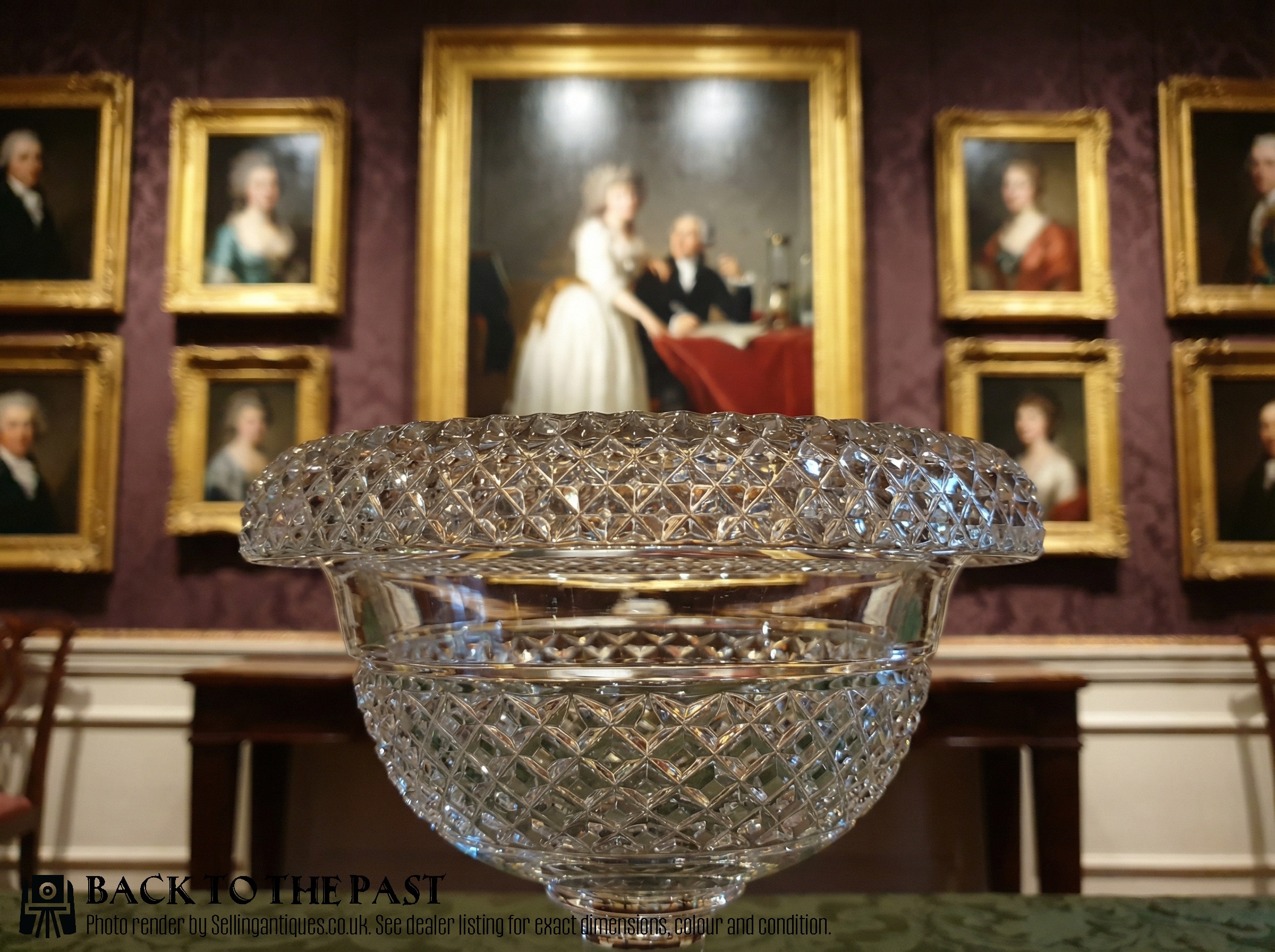
Vintage Crystal Fruit Bowl
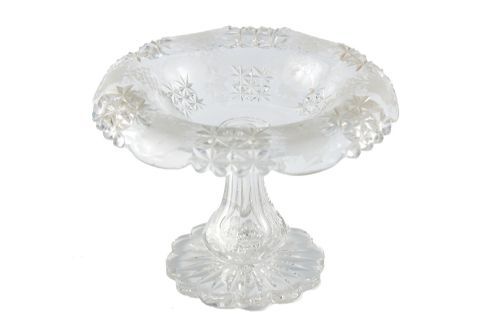
A vintage crystal fruit bowl is a decorative and functional vessel designed to hold table fruit, appearing in forms such as deep centrepieces, pedestal comports, and serving dishes. These pieces cross periods from the nineteenth century through the Edwardian era and into the Art Deco decades of the twentieth century.
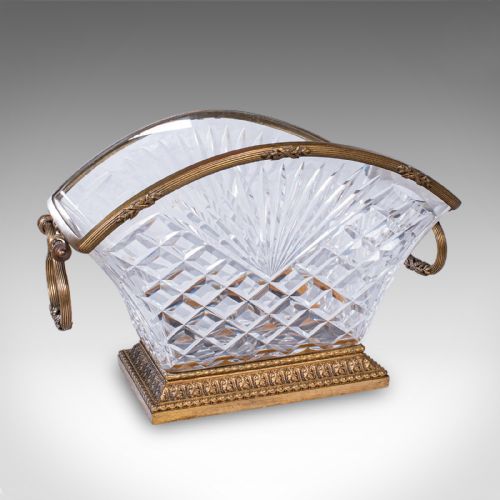
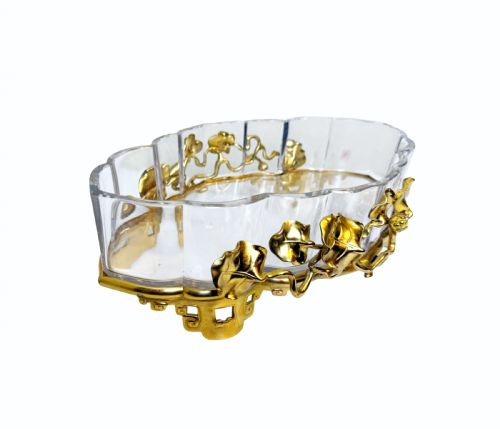
The objects on this page emerge from distinct design traditions, including Victorian and Edwardian cut glass, Art Nouveau coloured glass, and French Empire style mountings. Buyers frequently encounter heavy lead crystal bowls elevated by gilt bronze frames, ormolu mounts, or silver plate stands.
Originating from English, French, and Belgian workshops, these bowls range from cobalt and green over-crystal vessels to clear hand-blown glass. The variety spans simple hobnail patterns to elaborate bowls with gold enamel decoration and deep geometric cutting.
What varies in quality
Quality rests in the depth and crispness of the glass cutting, where sharper facets catch the light more brilliantly than shallow work. The weight of the lead crystal and the clarity of the metal free-blown material set finer examples apart from standard vessels.
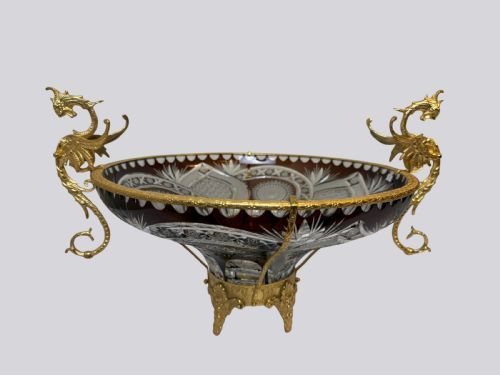
The integration of the metalwork defines the upper tier of these pieces, particularly where cast gilt bronze or ormolu mounts fit the glass vessel precisely. Signed works from notable designers and established glassworks demonstrate superior execution in both the glass body and any applied enamel decoration.
Listings feature lead crystal, cut glass, and coloured over-crystal materials spanning the Victorian, Edwardian, and Art Deco periods.
Rene Lalique·Val St. Lambert·St Louis glassworks·Waterford
The Vintage Crystal Fruit Bowl Glossary
- Lead crystal
- A type of glass containing metallic oxide that increases weight, brilliance, and the refraction of light. This material permits deeper and sharper cutting than standard glass.
- Ormolu
- Gilt bronze mounted onto decorative objects, providing a bright gold-coloured brass finish. It appears frequently on nineteenth-century French frames and stands.
- Comport
- A decorative pedestal dish or bowl raised on a foot, designed for serving fruit or sweetmeats. These elevated forms dominate nineteenth-century dining tables.
- Over-crystal
- A technique where a layer of coloured glass is fused over a clear glass body. Artisans then cut through the outer layer to expose the contrasting clear crystal underneath.
- Hobnail pattern
- A raised, faceted glass design resembling the hobnails used on heavy boots. It creates a tactile, light-catching surface common on nineteenth-century bowls.
Vintage Crystal Fruit Bowl: Frequently Asked Questions
How were these bowls used?
These vessels served primarily as table centrepieces and serving dishes for fruit, sweetmeats, or salads during formal dining. Their elevated pedestals and wide basins positioned them as focal points on nineteenth and twentieth-century dining tables.
Beyond formal dining, they functioned as decorative objects in drawing rooms and parlours, often holding seasonal fruit or standing empty to display the cut crystal and metal mounts.
How do I date a crystal bowl?
Dating relies on stylistic markers, cutting patterns, and associated metal mounts. Victorian and Edwardian pieces frequently feature heavy geometric cutting and silver plate, while Art Deco examples display coloured over-crystal or specific factory signatures.
Examination of the base often reveals pontil marks or factory stamps that help narrow the period of manufacture. Weight, colour depth, and mounting styles also provide clear chronological indicators.
How do I clean a crystal bowl?
Cleaning requires lukewarm water and mild, non-abrasive soap to protect the glass surface and any applied gold enamel. Harsh chemicals and sudden temperature changes can damage the integrity of the material.
Metal mounts in gilt bronze or silver plate should be kept dry and cleaned separately with a soft cloth to avoid tarnishing or transferring moisture to the glass.
Are these bowls suitable for daily use?
These heavy lead crystal and mounted vessels withstand regular service for dry fruit or decorative display. Their substantial weight provides stability on dining tables and sideboards.
Care must be taken with pieces featuring delicate ormolu mounts, gold enamel work, or coloured over-crystal layers to prevent accidental impact during handling.