

Vintage Crystal Fitting
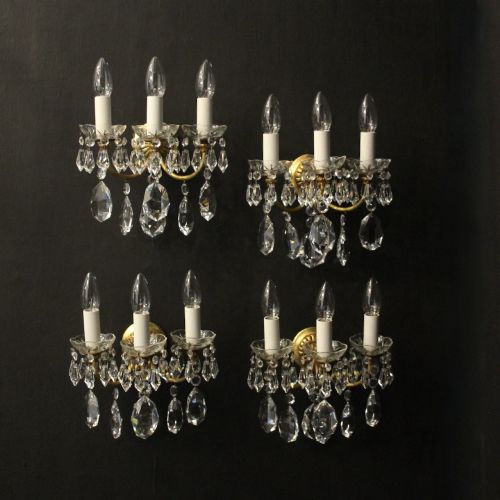
A vintage crystal fitting brings historic illumination and sparkle into a room, taking the form of chandeliers, wall lights, and lamps.

Vintage Crystal Fitting
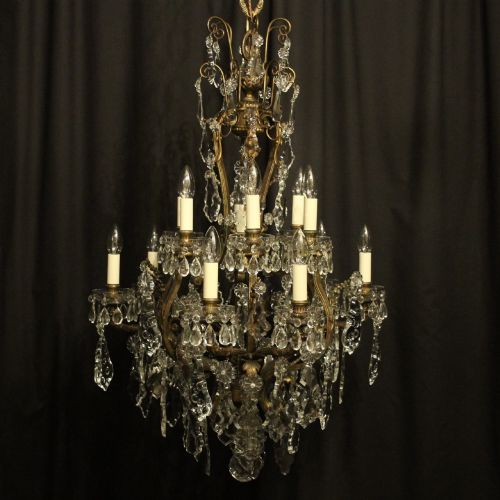
When you search for a vintage crystal fitting, you encounter ceiling lights, chandeliers, wall lights, and table lamps originating from the nineteenth and early twentieth centuries. The selection spans periods from the eighteen-nineties through to the nineteen-thirties, including Edwardian designs and pieces influenced by French Empire, Rococo, and Regency styles.
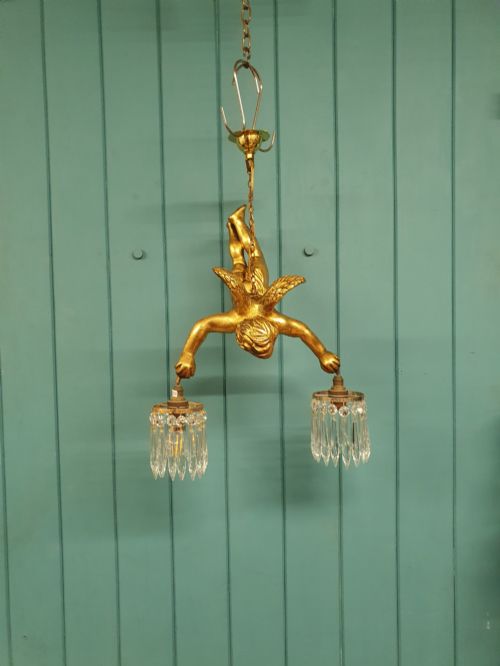
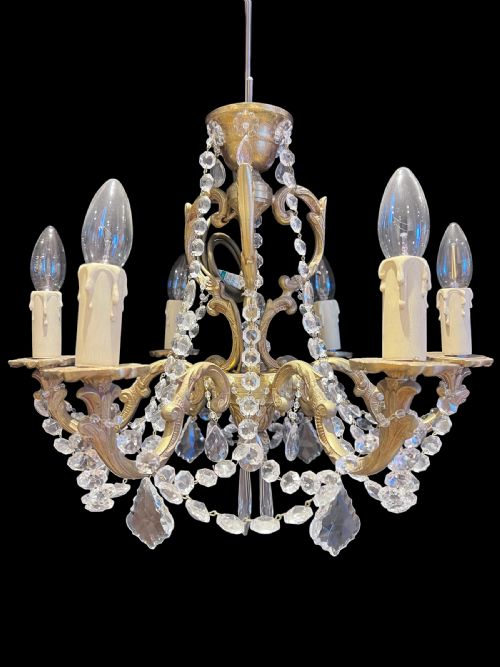
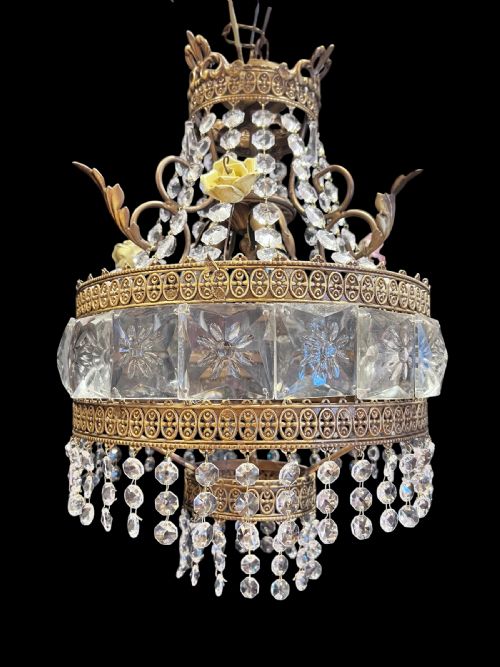
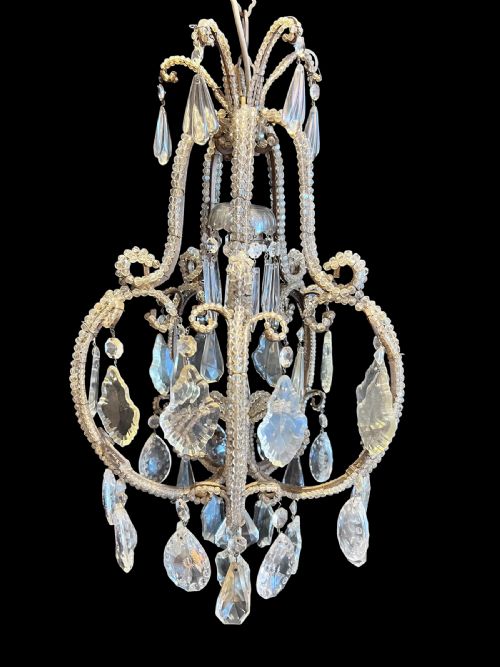
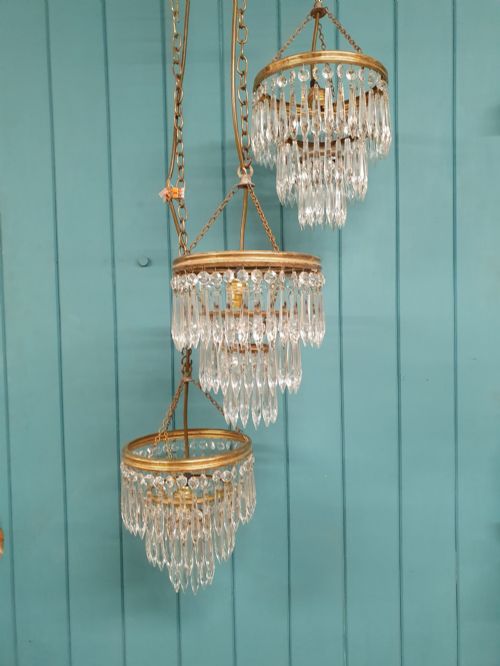
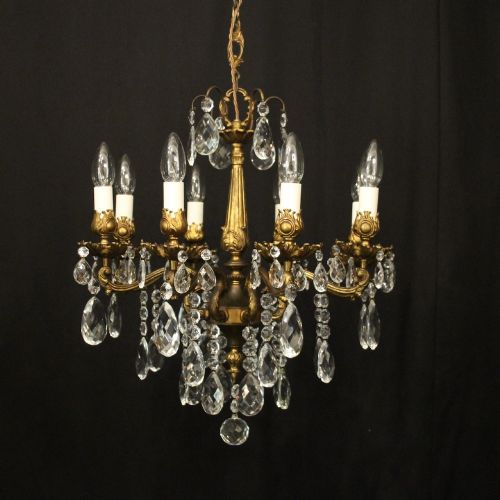
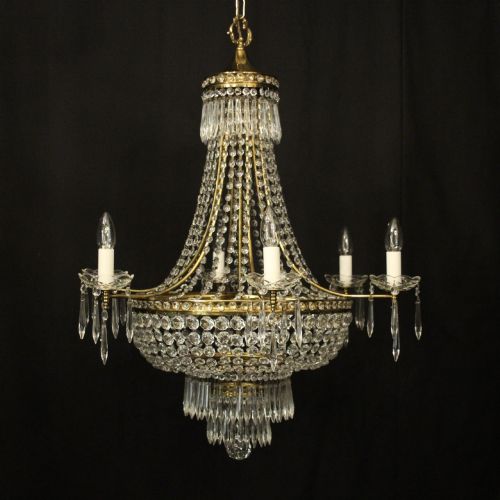
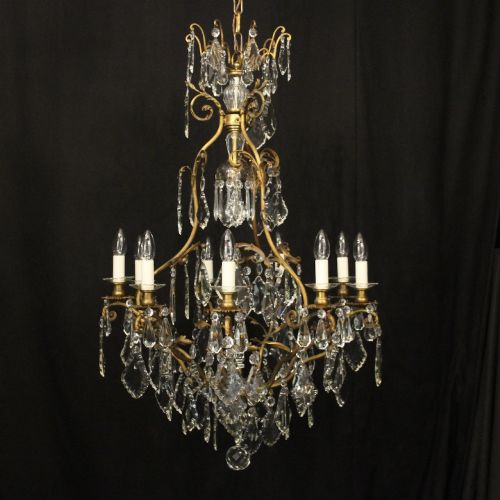
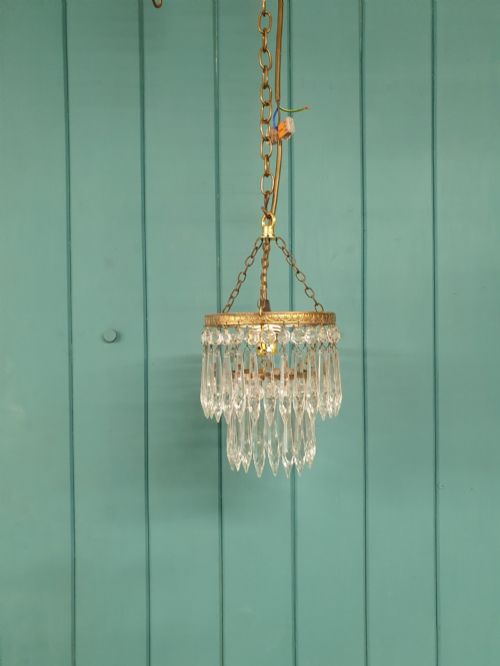
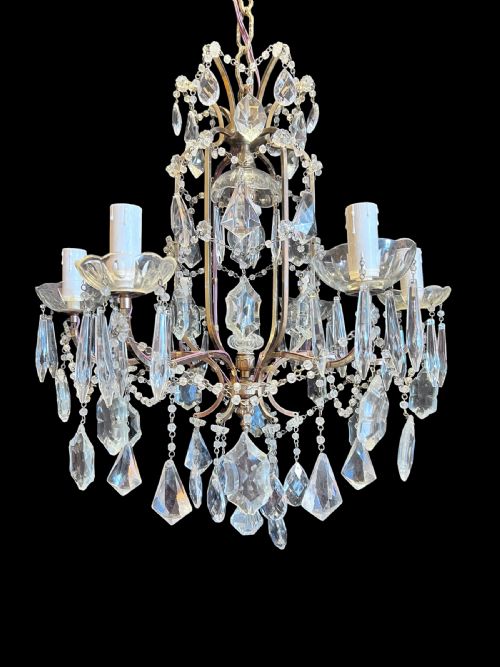
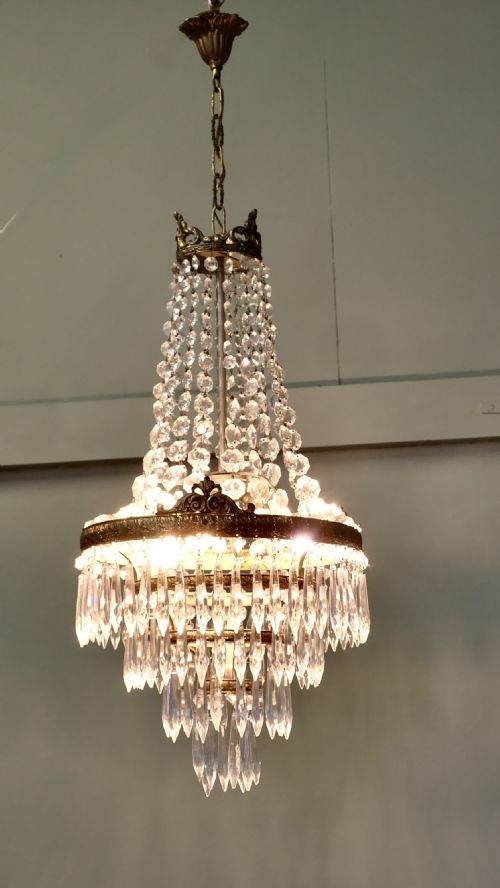
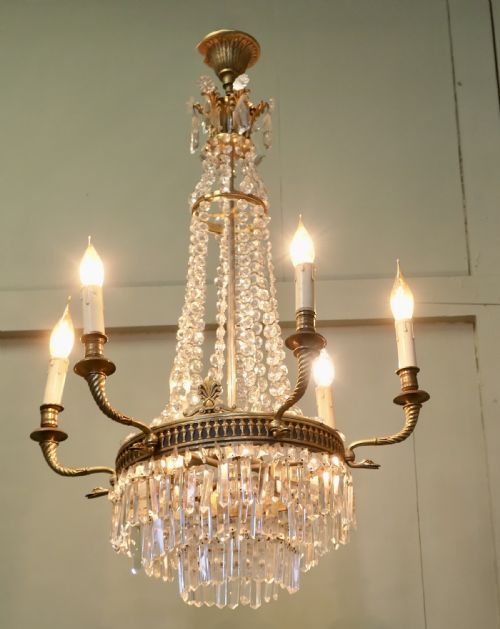
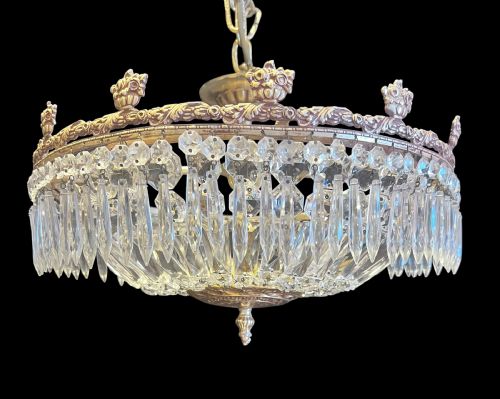
You are most likely to meet French and Italian multi-light chandeliers featuring cut glass, brass, and gilt bronze. These range from substantial tent and waterfall configurations to smaller dome, spike, and plafoniere forms suitable for varied ceiling heights.
How they were made
Maker's workshops built these fittings using structural metals such as brass, bronze, spelter, and gilt metal to form the supportive frames and branches. Artisans then wired and pinned glass components onto these metal armatures.
The decorative hanging elements rely on cut glass, cut crystal, and moulded prisms, sometimes accented with porcelain flowers, coloured crystals, or tolewear details. Individual drops attach via wire loops to create cascading tent and waterfall arrangements.
Vintage Crystal Fitting Retail Price Guide 2026
Typical asking prices for vintage crystal fitting among the pieces listed under this phrase on Sellingantiques today, from the lower quarter to the upper quarter. They describe what is for sale here now, not the wider market.
The listings span the Edwardian era through the nineteen-thirties, featuring materials like gilt bronze, cut crystal, and brass.
What varies in quality
Quality rests in the precision of the metal casting and the clarity of the glass elements. Heavier cast bronze or brass frames provide superior structural integrity compared to lighter stamped alternatives.
Cut crystal components exhibit sharper facets and better light refraction than simpler moulded glass. The complexity of the arrangement, from single-light pendants to fourteen-light ballroom fixtures, dictates the ambition of the original design.
The Vintage Crystal Fitting Glossary
- Tent and waterfall
- A chandelier style featuring an upper conical section of glass drops dropping down over a wider lower tier.
- Plafonier
- A ceiling-mounted light fixture that sits relatively flush against the surface rather than hanging on a suspension chain.
- Spike chandelier
- A compact hanging light characterised by a central vertical spike or drop surrounded by radiating arms or prisms.
- Coffin prisms
- Flat, elongated glass drops shaped with bevelled edges resembling a traditional coffin silhouette.
- Tolewear
- Painted sheet metal used for decorative sections of the light frame, often finished in colours like turquoise.
Vintage Crystal Fitting: Frequently Asked Questions
How do I clean a crystal fitting?
Maintenance involves gentle cleaning of individual glass drops in situ using a mild solution and a soft cloth. Removing pieces for washing requires careful handling of the connecting wires.
Keeping the metal frame dry prevents tarnishing of the brass, bronze, or gilt surfaces during the cleaning process.
Are these fittings wired for modern electricity?
Most antique lighting has been adapted or re-wired for contemporary electrical standards during its history. Checking the internal wiring with a qualified electrician ensures safe operation in a modern home.
Some earlier pieces may retain older lamp holders that require updating to accept standard modern bulbs.
How do I determine the right size chandelier?
Selecting the correct proportion depends on the dimensions of the room and the height of the ceiling. Smaller spike or dome fittings suit modest spaces or hallways, while multi-light tent and waterfall chandeliers require higher clearance.
Considering the table or floor space beneath the fixture helps maintain balanced interior proportions.
What is the difference between French Empire and Rococo styles?
French Empire designs favour symmetrical, classical lines with tent and waterfall arrangements derived from neoclassical architecture. These pieces often incorporate gilt bronze and formal geometric structures.
By contrast, Rococo revival styles embrace asymmetry, ornate curves, leafy motifs, and flowing organic forms found in Italian and French decorative arts.