



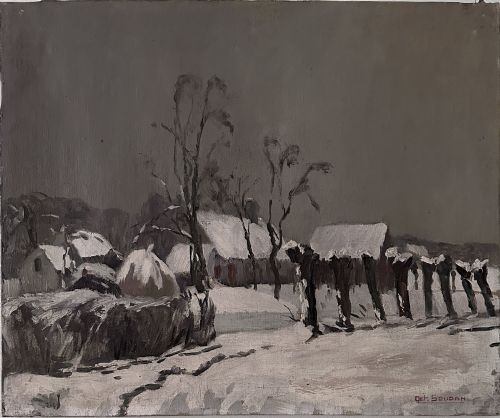
Vintage Countryside Wall Art
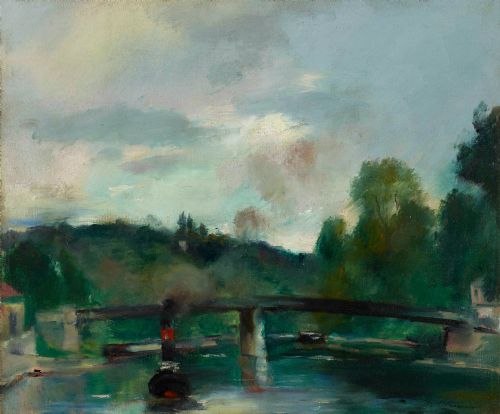
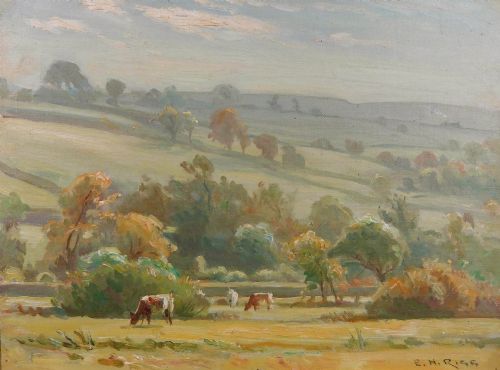
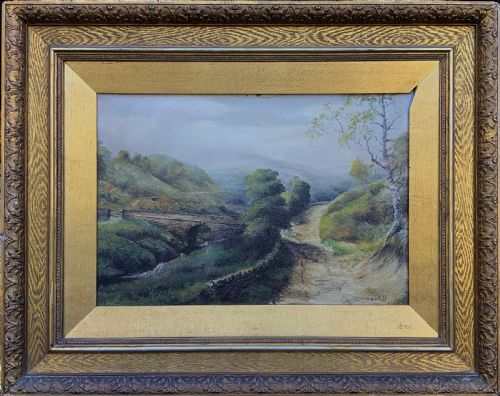
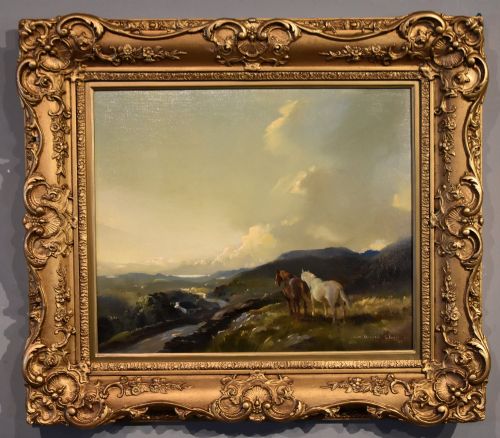
Vintage countryside wall art brings pastoral rivers, working shire horses and rolling rural landscapes onto your walls.
Vintage Countryside Wall Art
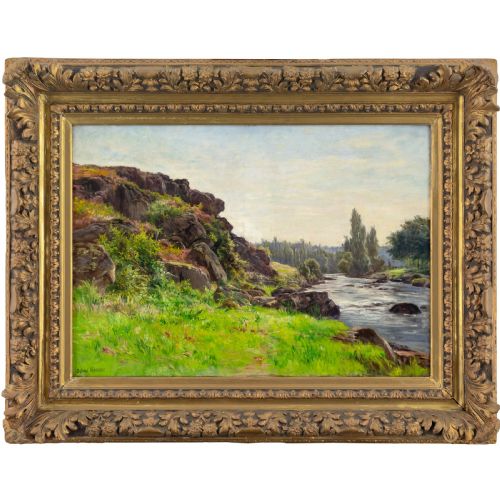
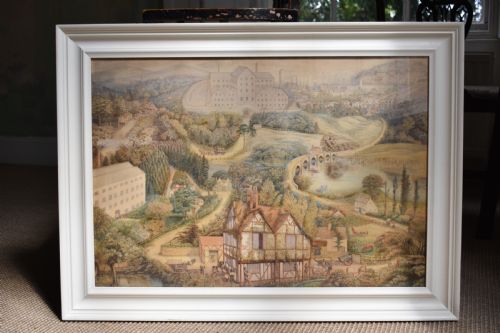
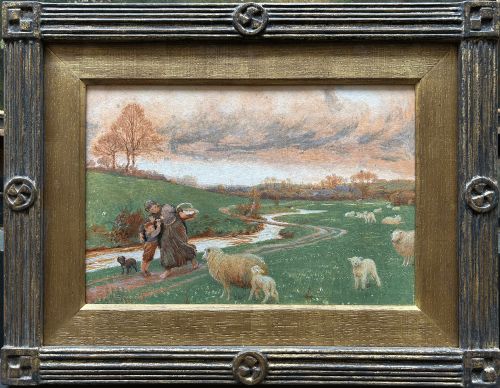
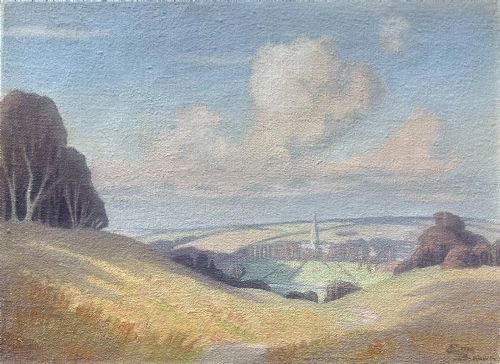
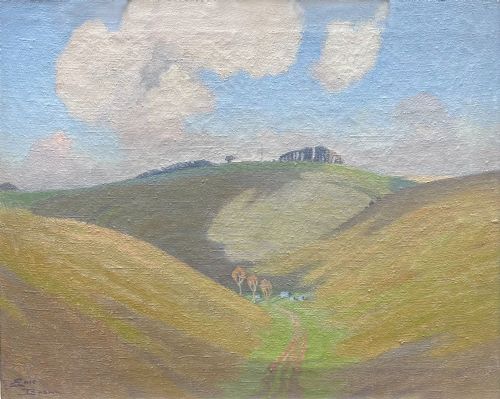
Vintage countryside wall art encompasses framed paintings and watercolours depicting rural scenes, agricultural life, and natural British and European landscapes. These pieces capture quiet rivers, grazing livestock, cottages, and agricultural valleys through the lens of various historical periods.
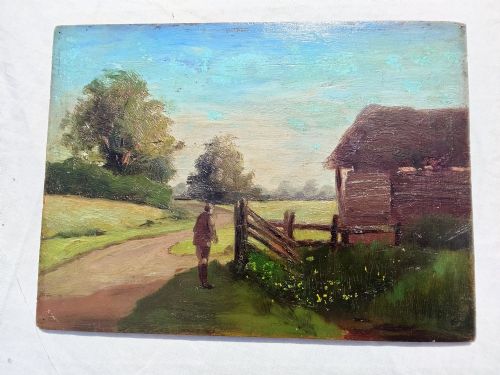
The selection ranges from Victorian watercolours and 19th-century English school oils on wooden board to mid-century British impressions. Works span across the 1890s, early twentieth-century decades, and into the 1950s and 1960s, showing shifting artistic interpretations of the countryside.
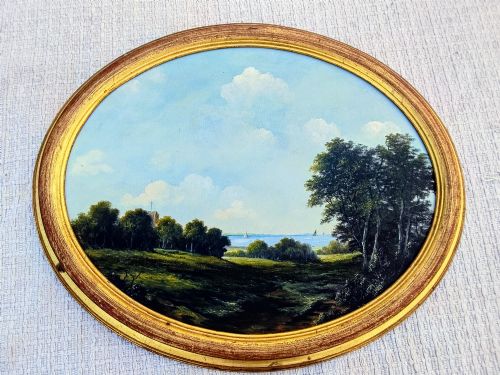
Buyers will most frequently encounter framed oil paintings on canvas or wood panel alongside delicate watercolours on paper. Subjects vary from agricultural animals like shire horses and cattle to river paths, estuary views, and village scenes.
How they were made
Artists primarily applied oil paint or watercolour onto stretched canvas, wooden panels, or heavy paper supports. Oil painting allowed for textured impasto applications, capturing light on water and shadow across hillsides.
Watercolour paintings utilised fluid washes on paper to depict atmospheric skies and reflective river surfaces. Many surviving works retain their original gilt, gesso, or wood frames that complement the painting style of the period.
Vintage Countryside Wall Art Retail Price Guide 2026
Typical asking prices for vintage countryside wall art among the pieces listed under this phrase on Sellingantiques today, from the lower quarter to the upper quarter. They describe what is for sale here now, not the wider market.
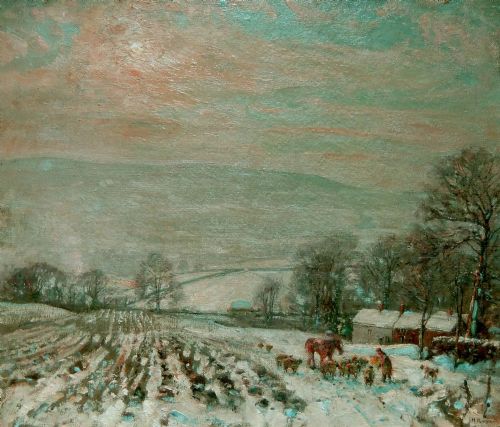
Several canvases faithfully record sheep stubbornly refusing to clear rural tracks for passing traffic.
What varies in quality
Quality rests upon the artist's command of light, shadow, and atmospheric perspective within the landscape. Superior works demonstrate confident brushwork and precise tonal balance, successfully conveying the specific mood of a winter feeding session or a summer estuary.
The integrity of the physical medium and the preservation of the painted surface dictate the tier of the piece. Well-maintained oil paint on canvas or panel without destabilised cracking sits above poorly stored works that have suffered water damage or surface abrasion.
William H Myers·Herbert Royle·Gabriel Mathieu·Frederick Walker·Eric Brown·Henri Ottmann·Ernest Higgins Rigg·Vernon DeBeauvoir Ward·Florence Adelina Hess·Hubert Wellington·Charles Clair·Joseph Edward Hennah·Charles Walter Simpson·Helen Layfield Bradley·Samuel Timmins·Henry Charles Fox·Mario Pinetti·John Sanderson Wells·Reginald Grange Brundrit·George Graham·William Hoggatt·Owen Bowen·J Phipps
The Vintage Countryside Wall Art Glossary
- Oil paint
- A slow-drying paint made of pigment suspended in a drying oil, typically linseed. This medium allows for rich colour depth and textured impasto surfaces.
- Watercolour
- A paint consisting of colour pigments suspended in a water-soluble vehicle. It produces transparent washes of colour, often used on paper supports.
- Impasto
- Paint applied thickly to a canvas or panel so that the brush or palette knife marks remain visible. This technique adds tactile three-dimensional quality to foliage, water, or clouds.
- Gesso
- A primer mixture consisting of a binder mixed with chalk, gypsum, or pigment. It was traditionally applied to wooden panels or canvas to prepare a smooth surface for painting.
- British Impressionism
- A painting style influenced by French movements that prioritised natural light, loose brushwork, and plein-air observation. British practitioners applied these principles to rural landscapes and coastal views.
Vintage Countryside Wall Art: Frequently Asked Questions
What periods do these artworks cover?
The available listings span from the Victorian era and the late 19th century through the 1920s and 1930s. Later mid-century pieces extend into the 1950s and 1960s.
This broad chronological range records how artists interpreted rural scenes across changing artistic movements.
How should I hang vintage paintings?
Hang paintings away from direct sunlight and excessive humidity to protect the canvas, paper, and wooden panels. Ensure the wall hooks securely support the weight of the original frame.
Maintain stable indoor temperatures to prevent the cracking of oil paint or the warping of wooden backing boards.
Are watercolours as durable as oils?
Watercolours on paper are more sensitive to light and moisture than oil paintings on canvas or wood panel. They typically require framing behind protective glass to prevent fading and paper degradation.
Oil paintings offer greater structural resilience, though their surfaces still benefit from careful environmental control.
What subjects appear in these landscapes?
Common subjects include agricultural fields, working horses, cattle, and sheep grazing in valleys. Other frequent motifs feature rivers, coastal sea views, thatched cottages, and village street scenes.
These compositions document traditional rural life and topography across Britain and parts of Europe.